Hagaman receives funding to continue peer recovery studies
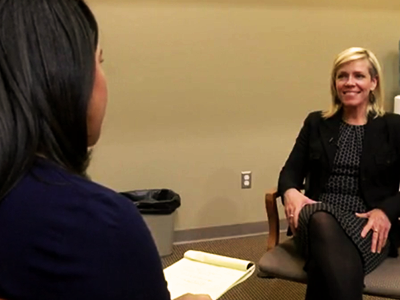
Dr. Angela Hagaman, Operation’s Director for East Tennessee State University College of Public Health’s (ETSU) Addiction Science Center (ASC), received $10,000 to extend her dissertation work through the Oregon Social Learning Center’s JEAP institute. In December 2021, Dr. Hagaman received her Doctorate of Public Health (DrPH) at East Tennessee State University. Her dissertation, titled Peer Recovery Support Specialists: Role Clarification and Fit Within the Recovery Eco-Systems of Central Appalachia, will serve as a foundation for future research.
The JEAP Initiative aims to advance research on the efficacy/effectiveness of peer recovery supports and recovery residences for emerging adults and justice-involved adults with substance use disorder. Over the course of five years, the JEAP Initiative is funding a total of six pilot studies focused on recovery support services, which aim to gather preliminary data to support grant applications to the National Institutes of Health.
Dr. Hagaman’s project is titled “Measurement Matters: A Peer-Driven Pilot Study to Enumerate the Core Components of Peer Recovery Support Service Delivery in Five U.S. Sub-Regions.”
Overdose death and the pervasive collateral consequences of substance use disorder (SUD) including justice system involvement, ill-health and personal and family distress have reached epidemic proportions in the U.S. Peer recovery support specialists (PRSS) are certified, trained professionals who identify as being in recovery from a SUD and are uniquely poised to engage persons across the service continuum; however, rigorous research on the impact of this expanding field is limited due in part to the wide array of service activities and settings in which PRSS work. This study will engage persons with lived experience of SUD and justice system involvement in the design of a quantitative survey instrument that will enumerate core components of PRSS service delivery which could advance recovery among individuals with SUD and serve as a valuable resource to the wider scientific and recovery community.
Dr. Hagaman provides leadership and support for the Center’s interdisciplinary research agenda and collaborates on a number of regional prevention and treatment initiatives. She has lived experience with familial substance use disorder (SUD) and grew up on a tobacco farm in Central Appalachia.