Primary Sources
🎙️Listen: Tema Stauffer
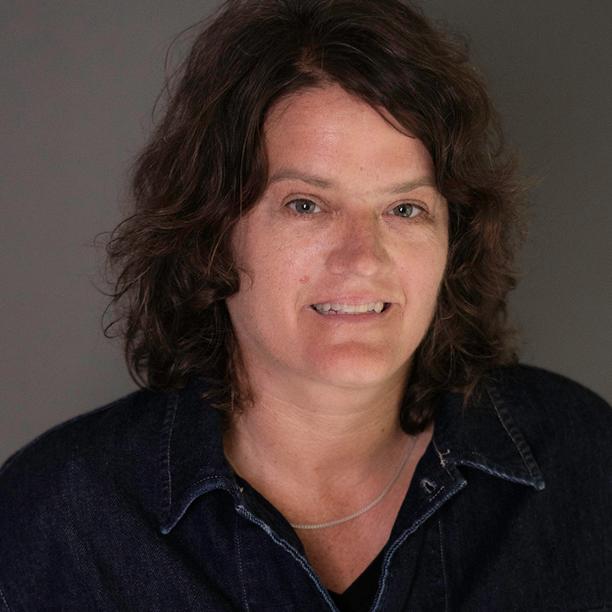
Tema Stauffer is an award-winning photographer and associate professor of photography
at East Tennessee State University. Exhibited nationally and internationally, her
work has earned many awards and recognitions.
A recent exhibition, “Southern Fiction,” was hosted at the Reece Museum earlier this
year. She has taught at ETSU since 2017.
Transcript:
Tema Stauffer
This project was shot entirely with a large format camera; it’s a four-by-five camera.
It was shot on film, so that’s a very slow, meditative process – the nature of photographing
with a four-by-five camera. And I’m also photographing settings where very little
is happening. It's sort of ... it is a kind of meditation on place.
O.J. Early
Joining us today on Primary Sources is Tema Stauffer. She’s an award-winning photographer
and associate professor of photography at East Tennessee State University. As a photographer,
she has examined the social, economic, and cultural landscape of various American
spaces. Her work has been exhibited nationally and internationally. The Reece Museum,
located on the main campus of ETSU, hosted an exhibition of her photographs called
“Southern Fiction.”
This work explored the history of the American South using literary tradition as a
road map. In 2018, Daylight Books published a monograph of her “Upstate” series portraying
the lingering legacy of American industrial and agricultural history in and around
Hudson, New York. The book was nominated for the Unveiled Photo Book Award 2018, and
the prints were exhibited at ETSU’s Reece Museum, Tracy Morgan Gallery, Ilon Art Gallery,
and Hudson Hall.
Her work is represented by Tracy Morgan Gallery in Asheville, North Carolina, where
“Southern Fiction” was exhibited in Fall 2021. The production of this body of work
received support from ETSU’s Research Development Committee through small grant awards
in 2019 and 2021 and major grant awards in 2020 and 2022. She was also the recipient
of a Tennessee Arts Commission Individual Artist Fellowship in 2021.
Daylight Books released her second monograph, “Southern Fiction,” in October of last
year.
Thank you so much for being here.
O.J. Early
To begin, tell us a little bit about what drew you to a career in photography.
 Tema Stauffer
Well, I was interested in art … since my earliest childhood memories are of taking
art classes. My mom enrolled me in art classes at the local art center in Kalamazoo,
Michigan, and I took everything from ceramics and sculpture and drawing and painting.
But, in high school, she suggested that I take a photography class. And pretty much
from when I took my first photography class, I was completely captivated by the medium,
and then began studying photography as a student at Oberlin College in the ’90s, and
then went to Chicago after I graduated and got a master's degree in photography. And
it just became my focus and vocation for the next 30 years.
O.J. Early
That’s a fascinating journey. The recent exhibition at the Reece Museum focused on
the American South. Why that topic for you?
Tema Stauffer
Oh, well, I was also – from early childhood and my adolescence – a big reader of literature,
and was particularly interested in Southern literature. And in high school, I was
a fan of Carson McCullers and Truman Capote and other Southern writers. And when I
took the job – this is now jumping ahead decades – but prior to coming ETSU, I was
living in Montreal and teaching at Concordia University.
And, in a limited-term appointment, I taught there for three years, and during th
e last year I was searching for a tenure-track position and ended up taking this job
at ETSU. I was really excited about moving to the South, as someone who has had this
interest in Southern literature and also Southern photography. And so the idea of
making this project, exploring the South through the framework of the Southern literary
trail, and kind of mapping out where these writers lived and traveling to their homes
and visiting their homes, but also making work about the settings that inspired them.
That came to me even ahead of moving down here. And so I started doing the research,
reading biographies of some Southern writers and revisiting some of their literary
works. And during the year before, I actually jumped into making these photographs,
which was around June of 2018 that I made my first trip, and that was to Andalusia
Farm, where Flannery O’Connor lived and wrote during the latter part of her life.
O.J. Early
That’s really interesting. Let me just ask you, do you have a favorite writer that
you chronicled?
Tema Stauffer
So, I’ve talked about this in other interviews as well. Really, you know, Carson McCullers
was kind of one of the core inspirations for this project; however, she’s the least
represented in the series. And, you know, Eudora Welty, who I knew less about ahead
of coming down to the South and beginning this project -- I got to know a lot more
about her work, and made several trips to Jackson, Mississippi, and she is heavily
represented in the book.
And so I grew to know her as a writer and to respect her work a lot more through the
process of making this project. But honestly, I am equally interested in all of the
writers and in their work, and that’s including Faulkner, Alice Walker, Richard Wright,
Tennessee Williams, and others.
O.J. Early
A reviewer of your work once said that your photos are “a meditation on the force
of place a
nd the feeling of time going by.” Tell us a little bit about how you achieved that.
Tema Stauffer
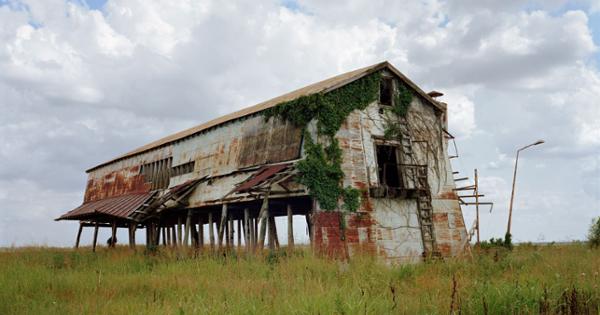
Well, for one thing, this project was shot entirely with a large format camera; it’s
a four-by-five camera. It was shot on film, so that’s a very slow, meditative process
– the nature of photographing with a four-by-five camera. And I’m also photographing
settings where very little is happening. It’s sort of ... it is a kind of meditation
on place.
And most of these places, there’s a sense of history. In some cases, there’s also
a sense of decay, and there may be a focus on sort of what had been there or what
human activity, human presence, still remains there. Sort of traces of the past.
O.J. Early
You have captured so many awards, recognitions, grants. Which one means the most to
you?
Tema Stauffer
Well, I want to take this opportunity really to acknowledge ETSU’s support for this
project, because turning this project into a large-scale traveling exhibition, the
support I received from the Research Development Committee through several small grants
and two major grants made both the traveling exhibition and the publication of this
body of work possible. So, it’s those – the combined support of a number of grants
from the university that really, you know, made this work exist and be able to be
exhibited.
And it was exhibited at Tracy Morgan Gallery last fall. It’s exhibited at the Reece
Museum. Currently it’s traveling to Middle Tennessee University and ETSU was crucial
in making that happen.
O.J. Early
So, as we finish up this episode, share with us, if you would, some projects that
you might be considering in the future.
Tema Stauffer
I’m already in the early stages of starting a new project, which is actually ... I’m
photographing closer to home, and that being I actually live in Asheville, North Carolina,
and I’m shooting this project in western North Carolina. So, it’s more about Appalachia,
whereas this last project was about the Deep South, and I was inspired by a book written
by my mentor, Charles Baxter, who’s a writer, who recently published a book about
the craft of fiction called “Wonderlands.”
And so I’ve asked him if I can borrow that title for my next body of work. And there’s
a chapter in the book which talks about wonderlands in fiction. And I’m kind of applying
some of the ideas about the psychology of these environments, the psychological atmosphere,
but thinking of it in terms of looking at the kind of strange and potent intersection
in Appalachia – particularly that area of Appalachia, the Smoky Mountains and in other
parts of Western North Carolina – of the culture of tourism, recreation, and escapism
kind of coming together with this natural beauty, religion, and conservative politics.
O.J. Early
That sounds fascinating.
Tema Stauffer
Thank you.
O.J. Early
Thank you so much for being here.
Tema Stauffer
Thank you.