
Dr. David L. Williams has been awarded a R21 grant titled “Glucan glycomimetics: A new approach to stimulating innate immune training” by the National Institute of Allergy and Infectious Diseases in the amount of $412,000.
Dr. Williams says, "For many years a central dogma of immunology was that 'immunologic memory’ could not be induced within the innate immune system.However, recent findings have challenged this long held paradigm. There is now compelling evidence that the innate immune system can be ‘trained’ to respond more rapidly and effectively to pathogens. This response is referred to ‘innate immune memory’ or ‘trained immunity.’ Trained immunity is important because it elicits broad resistance to infection that persists for weeks to months and is not specific with respect to the causative agent. The development of immune training drugs would make it possible to harness the potential of trained immunity for the prevention and/or treatment of disease."
Dr. Williams goes on to explain, “β-Glucan, a fungal cell wall constituent, confers resistance to infection with Gram-negative and Gram-positive bacteria as well as viral and fungal pathogens. Numerous studies have shown that β-glucans will induce innate immune training. In fact, β-glucans are now recognized as the ‘gold standard’ for induction of the ‘trained immune phenotype.’” However, β-glucan is a natural product that is isolated from fungal sources. Large scale isolation of natural product β-glucans is plagued by problems, including the uniformity and reproducibility of the end product. A solution to this problem is the development of methods for the complete chemical synthesis of (1→3,1→6)-β-glucans with specific structural characteristics.
In this exploratory research, Dr. Williams and his colleagues, Drs. Zuchao Ma, Harry Ensley, Doug Lowman, and Tammy Ozment, will develop approaches for the de novo synthesis of (1→3,1→6)-β-glucans with specific structural characteristics. These synthetic compounds are referred to as “glycomimetics” because they mimic the structure and biology of natural product glucans. The researchers will also evaluate the ability of synthetic glucan glycomimetics to induce the immune trained phenotype. This may lead to the development of glycomimetic drug candidates that can prophylactically and/or therapeutically induce immune training and alter the course of disease. In addition, this research may also provide new and novel data on the structure activity relationships of glucans in trained immunity.
Dr. Williams is a Professor in the Department of Surgery. He holds the Carroll H. Long Chair of Excellence in Surgical Research and is a Co-director of the Center of Excellence in Inflammation, Infectious Disease, and Immunity. Please joins us in congratulating him on the new R21 award.
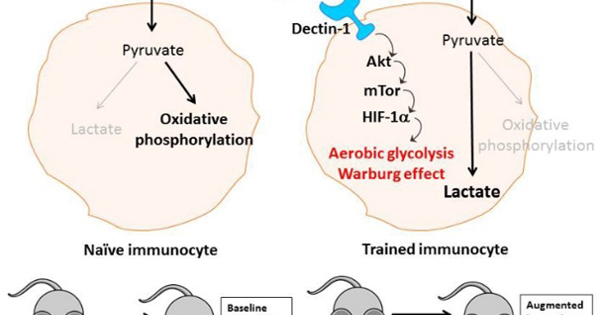 |
Glucan-induced immune training is characterized by increased antimicrobial activity and metabolic reprogramming of immunocytes. This results in increased resistance to a variety of pathogens. |
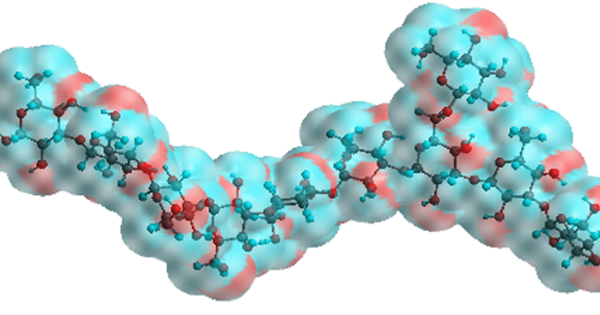 |
Molecular model of a (1→3,1→6)-bglucan glycomimetic that will be synthesized during this research. |