 Master of Arts in Communication and Storytelling Studies
The Master of Arts in Communication and Storytelling Studies is a one-of-a-kind graduate degree. The program offers a unique combination of academic rigor in communication studies and practice in the art of storytelling. Completion of the program provides graduates with first-hand knowledge in crafting and delivering both traditional folktales and personal stories coupled with an extensive understanding of how and why stories affect groups and individuals differently. An advanced degree in Communication and Storytelling Studies highlights the skills and knowledge necessary to succeed as a professional storyteller or in the corporate landscape.
Connecting cultural understanding and critique, oral performance, communication knowledge, and marketable skill.
The Master’s in Communication & Storytelling Studies is:
-
-
an advanced platform for understanding and practicing the art and application of communication, story, and narrative.
-
a two-year program with options for longer spans for part-time students.
-
filled with faculty who:
-
bring divers talents, experiences, and credentials which bridge theoretical and applied knowledge.
-
work individually with every student to craft a program of study that helps each one meet thier personal, professional, and intellectual goals.
-
-
an edgy, emerging, and practical program that focuses on three interrelated areas:
-
-
First
Our students hone their craft as professional communicators and storytellers, with an emphasis on practical performance in a variety of settings. Additionally, they critically examine personal narratives, folktales, organizational stories, and pop culture narratives. -
Second
Our students examine how communication and story shape social meaning and foster social transformation, how they can be used to facilitate stronger connections within and across populations, and how we might draw richly from and give generously back to the communities we study. -
Third
Our students develop workplace-ready skills to build careers as professionals and practitioners in a variety of fields, businesses, and nonprofits. Our graduates are well-positioned in the workforce as more organizations use storytelling and narrative internally as a way to recruit, train, and strengthen corporate identity, and externally as a tool for branding, facilitating client experience, and educating communities.
Click Here to Begin Your Application!
Admission Requirements
Prior to submitting any application materials, all prospective applicants are strongly encouraged to talk with the graduate coordinator, Dr. Christine Anzur at (423) 439-8108, anzurc@etsu.edu.
Each applicant is evaluated on the basis of the following criteria:
- At least a 3.0 overall undergraduate grade point average.
- A WRITING SAMPLE or GRE test scores that indicate strong potential for success in our program. The writing sample is to be an essay on the uses of storytelling and communication in a particular domain of contemporary professional or community practice (performance, education, health and well-being, law, ministry, social justice, business, non-profit organizations, community advocacy, peace promotion, etc.). The writing sample topic must be approved by the Graduate Coordinator before the sample is submitted. Email your topic to Dr. Anzur at anzurc@etsu.edu. For more detailed information about writing sample criteria, please visit our page in the ETSU catalog here.
- Three letters that recommend admission to graduate study and that sufficiently evidence the applicant's potential for success in the Communication & Storytelling Studies program. When selecting persons to write recommendation letters, please choose people who can address your academic/intellectual abilities. Optimally, applicants should supply at least two letters from former or current professors. Letters from professionals should address the applicant's applicable academic skills (e.g., research and writing abilities), potential for intellectual growth, ability to work on multiple projects, under pressure, and autonomously, and overall work ethic.
- The strength of an application essay (personal statement) that discusses both interest and fit. The graduate school requires 150-300 words; the Master’s Program in Communication & Storytelling Studies faculty strongly encourage applicants to write in the high end of that range. The essay should explain why the applicant is interested in our particular graduate program. Additionally, the essay should discuss why the applicant is a good fit for our program, the courses we require, and the research or creative activity of our faculty. If there are weaknesses in the applicant’s materials (e.g., low grades or GRE score), these should be addressed in the essay as well.
For information about ETSU Graduate Admissions, contact the Graduate School at: (423) 439-4221, gradschool@etsu.edu. Also, visit their application instructions page for more details for both domestic and international applicants.
For information about the Master's in Communication & Storytelling Studies program, please contact the Communication Studies and Storytelling graduate coordinator Dr. Christine Anzur, at (423) 439-8108, anzurc@etsu.edu.
Course Requirements for the Master’s in Communication & Storytelling Studies (pdf).
For information about the Master’s in Communication & Storytelling Studies, please
contact the graduate coordinator, Dr. Christine Anzur at (423) 439-8108, anzurc@etsu.edu.
Course Requirements
Completion of this degree means the completion of 36 credits of course study distributed across the following categories:
-
Core Courses: 15 credits
- COMM 5300 Qualitative Research Methods
- COMM 5330 Communication Theory
- STOR 5140 Foundations of Storytelling Performance
- STOR 5230 Advanced Solo Performance
- STOR 5890 History of Performance Traditions
-
Directed Electives: 6 credits
One course from each of the following blocks:
Discourse and Meaning (Choose One)
- COMM 5065 Communication Ethics
- COMM 5200 Gender & Communication
- COMM 5250 Issues in Communication & Culture
- COMM 5317 Rhetoric & Public Address
- COMM 5327 Popular Communication
Professional Applications (Choose One)
- COMM 5377 Health Communication
- COMM 5350 Organizational Communication & Consulting
- STOR 5647 Applied Storytelling
- STOR 5840 Story Dramatization
- STOR 5850 Story Performance
-
General Electives: 9 credits
Choose any courses in the program not used to meet another requirement.
You may take up to 9 elective hours outside the department. -
Culminating Experience: 6 credits
One culminating experience chosen from the following options:
- COMM/STOR 5960 Thesis, taken in both 3rd and 4th semesters
-OR- - STOR 5241 + 5961 Storytelling Practicum + Capstone Project
-OR- - Comprehensive Exams + 2 additional Directed Electives
- COMM/STOR 5960 Thesis, taken in both 3rd and 4th semesters
For information about ETSU Graduate Admissions, contact the Graduate School at: (423) 439-4221, gradschool@etsu.edu. Also, visit their application instructions page for more details for both domestic and international applicants.
For information about the Master's in Communication & Storytelling Studies program, please contact the Communication Studies and Storytelling graduate coordinator Dr. Christine Anzur, at (423) 439-8108, anzurc@etsu.edu.
Course Requirements for the Master’s in Communication & Storytelling Studies (pdf).
For information about the Master’s in Communication & Storytelling Studies, please
contact the graduate coordinator, Dr. Christine Anzur at (423) 439-8108, anzurc@etsu.edu.
Funding
The Department of Communication & Performance offers two types of funding for our full-time graduate students:
-
Tuition Scholarships (TS)
A tuition scholarship is a merit-based award available to graduate students admitted to the program for the first time. TS funding pays tuition in exchange for 8 hours of work per week.
New students may be awarded a TS within the Department of Communication & Performance. Students who do not receive funding from our department can look for other available TS positions through the Graduate School’ Available GA/TS Positions page.
-
Graduate Assistantships (GA)
GA funding pays tuition plus a part time stipend in exchange for 20 hours of work per week. These are competitive positions. We offer four kinds of Graduate Assistantships:
- TEACHING: assisting a faculty member in teaching specific courses, generally COMM 2025: Fundamentals of Communication, and other duties as assigned.
- RESEARCH: assisting a faculty member with their research program, and other duties as assigned.
- SPEECH & DEBATE TEAM: assisting the director and assistant director in running the team, coaching team members, recruiting for the team, hosting and judging tournaments, and other duties as assigned.
- STORYTELLING: assisting the program coordinator service work or research assignments for the Storytelling Program. Service responsibilities include organizing, publicizing, and executing the community Story Slams; booking school and community storytelling gigs for our student TaleTellers group; serving as President of TaleTellers, maintaining strong relations with the International Storytelling Center in nearby Jonesborough, publicizing for programs and concerts we host, ensuring that the program webpage is current, and completing general office duties and other duties as assigned.
- OTHER GA POSITIONS: Students who do not receive GA funding from our department can look for other available GA positions on the Graduate School’ Available GA/TS Positions page.
First-time graduate students outside the state Tennessee (including international students) who are pursuing storytelling and who are awarded neither a Graduate Assistantship nor Tuition Scholarship from ETSU, may be eligible for a Creative Arts Scholarship. This scholarship reduces your tuition dramatically, so that you would only pay in-state tuition. If you are awarded a GA or a TS, your tuition would be waived so the Creative Arts Scholarship would not apply.
Course Requirements for the Master’s in Communication & Storytelling Studies (pdf).
For information about the Master’s in Communication & Storytelling Studies, please
contact the graduate coordinator, Dr. Christine Anzur at (423) 439-8108, anzurc@etsu.edu.
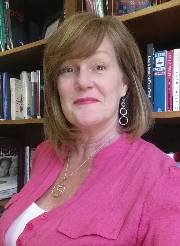
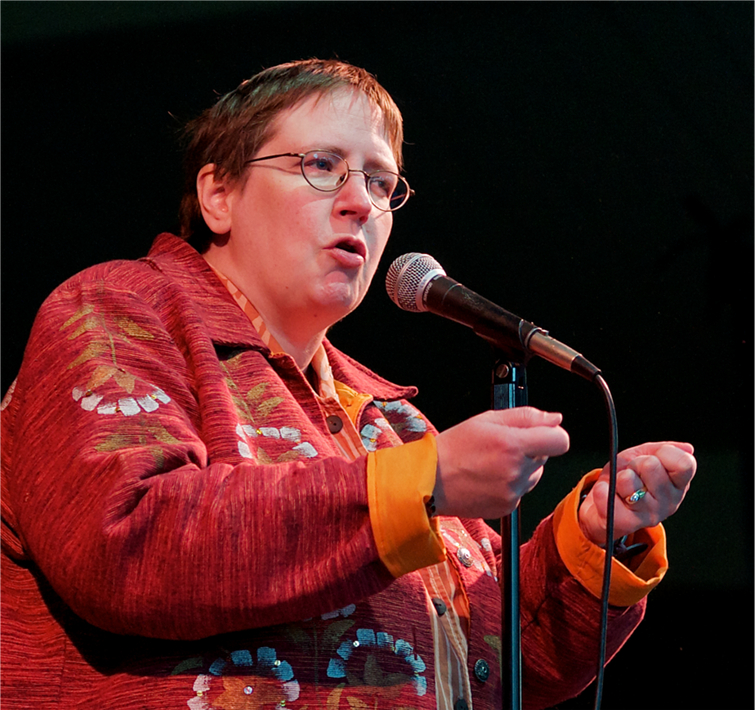
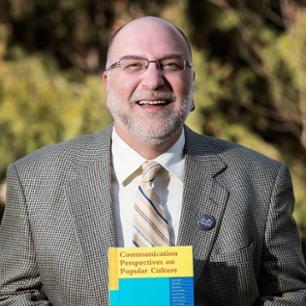
Graduate Faculty
Click on each faculty member to learn more.
 |
 |
 |
 |
 |
|
 |
Course Requirements for the Master’s in Communication & Storytelling Studies (pdf).
For information about the Master’s in Communication & Storytelling Studies, please
contact the graduate coordinator, Dr. Christine Anzur at (423) 439-8108, anzurc@etsu.edu.
Previous Masters Theses & Capstone Projects
Separated by primary Faculty Advisor
-
Amber Kinser
2022 Travis Wolven It’s About the Two Selves’: Experiences in Code-Switching between Home and Academic Environments (Thesis) 2022 Emily Sikora Katt A Frayed Edge: A Qualitative and Poetic Inquiry Analysis of White Antiracist Protest in 2020 (Thesis) 2021 Debora Garrison "We're Sinking and We're Sinking Quick”: Family and Feeding Work During COVID-19 for Single, White, Middle-Class Mothers(Thesis) 2021 Claire D. Selleck Strategies of Stigmatized Grief Management (Thesis) 2021 Christopher Walonski Skin Deep: Body Modification and Agentic Identities among Individuals with Skin Conditions(Thesis) 2020 Donna Paulsen "No One's Gonna Say That at Church:" Women's Experiences with Infertility in Christian Faith Communities (Thesis) 2019 Tama Lunceford Stories of Color: An Exploration of Storytelling and Racial Microaggression (Thesis) 2019 Alana
ClaxtonCooking Lessons: Oral Recipe Sharing in the Southern Kitchen (Thesis) 2019 Kallie
GayBecoming a Master Manager: An Analysis of SNAP Recipient Stories of Navigating Government Assistance (Thesis) 2018 Tessa McCoy-Hall Up on the Mountain, Down in the Valley: An Examination of the Impacts of Maternal Incarceration (Thesis) 2017 Melissa Nipper Divergent Discourse: A Case Study Analyzing the Effects of Campus Communication About Sexual Assault (Thesis) 2016 Brandon Brewer O Brother, Where Art Thou? Understanding Culturally-Produced Limitations On Gay Male Community Formation in South Central Appalachia (Thesis) 2016 Taylor Manning Obstacles, Transitions, & Perspectives: An In-Depth Look at the Spectacle of Deviant Bodies (Thesis) -
Nancy Donoval
2021 Dylene Cymraes Exploring Belonging and Othering with Story Circles: A Proposed College Writing Course Design (Capstone) 2021 Wendy Folsom Only Love: Parental and Community Support of Transgender Youth in Conservative Faith Communities (Capstone) 2021 Cynthia Restivo Between What Was and What Will Be - A Capstone Concert of Stories (Capstone) 2021 Tejaswini Menon Vijayakumar Embodied Storytelling: A Curriculum for Ages 4 to 12 Combining Yoga and Story to Enhance Focus (Capstone) 2021 Megan Duff Sewage Runoff: The Stories and Experiences of Unmarried Women in Rural Appalachia (Capstone) -
Delana Reed
2021 Lydia Githinji Women-Run Businesses: How Small Businesses Coped with the COVID-19 Pandemic (Capstone) 2020 Mary Davis American Wartime Wives: Discovering the Lives of Women during Wartime through their Correspondence 2020 Kristi Rivas Constructing a Celtic Identity in the Contemporary United States (Capstone) 2019 Joshua Whitehead Creating Post-Black Stories and Poetry: Bringing Awareness to Toxic Blackness (Capstone) 2018 John Brooks The Revolutionary Narrative of Olaudah Equiano: Crafting Historical Solo Performance (Capstone) 2018 Gleason Holt Digging into Playwriting (Capstone) 2017 Brandon Bragg Mystery, Mirth, & Magic: A True Houdini Experience (Capstone) 2017 Wendolin Elrod Mountain Empire Literacy Outreach: Literacy Through A Community Based Organization Action Research Study (Capstone) 2017 Lee Lindsay Who Am I? Discovering My Stage Persona (Capstone) -
Christine Anzur
2020 Paul Taylor "A Lot of Prayer, and Some Wine In-Between": Applying the Relational Turbulence Model to the Stepparent-Biological Parent Marriage (Thesis) -
Wesley Buerkle
2014 Jordan Powers Femininity, Pinterest, and the Appropriation of Jane Austen (Thesis) -
Kelly Dorgan (no longer with ETSU)
2019 Matthew
DaggettThe Ill Man: An Exploration of Chronic Illness Disclosure Within Masculine Culture (Thesis) -
Joseph Sobol (no longer with ETSU)
2017 Charis Hickson The Tale of Three Sisters and the Horsemen (Capstone) 2016 Patricia Wheeler Love On - The Life of a Suicide Survivor: A Performance Autoethnographic Study (Thesis) 2016 Tzitel Voss Combining Storytelling and Cross-Age Teaching in a Curriculum to Learn About Race and Culture (Capstone) 2015 Chris Adams The Capstone Project: An Analysis of Courtroom Storytelling (Capstone) -
Bobby Funk
2017 Opal Clark Opal Clark on Directing Stop Kiss: An Exploration of the Directorial Process (Capstone) 2016 Kathryn Patterson An Actor’s Approach to Claire in Proof by David Auburn (Thesis)
Course Requirements for the Master’s in Communication & Storytelling Studies (pdf).
For information about the Master’s in Communication & Storytelling Studies, please
contact the graduate coordinator, Dr. Christine Anzur at (423) 439-8108, anzurc@etsu.edu.
Contact Us
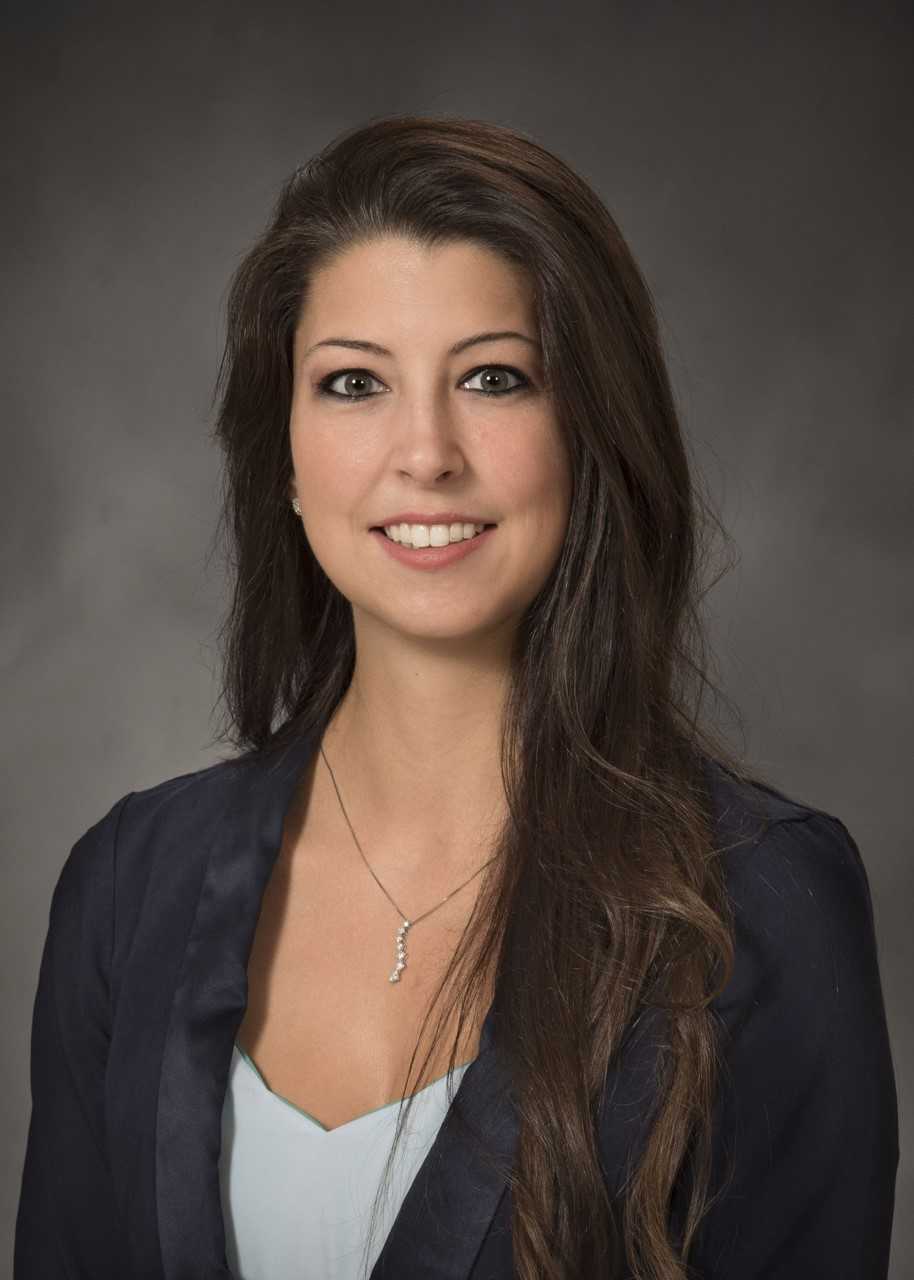
Dr. Christine Anzur
Graduate Coordinator, Communication & Storytelling Studies M.A.
Office: Campus Center Building 223
Email: anzurc@etsu.edu
Phone: (423) 439-8108
Ms. Rickie Carter
Program Specialist, Graduate School
Office: Burgin-Dossett Hall
Email: carterrh@etsu.edu
Phone: (423) 439-6165
Course Requirements for the Master’s in Communication & Storytelling Studies (pdf).
For information about the Master’s in Communication & Storytelling Studies, please
contact the graduate coordinator, Dr. Christine Anzur at (423) 439-8108, anzurc@etsu.edu.