Arts and Health
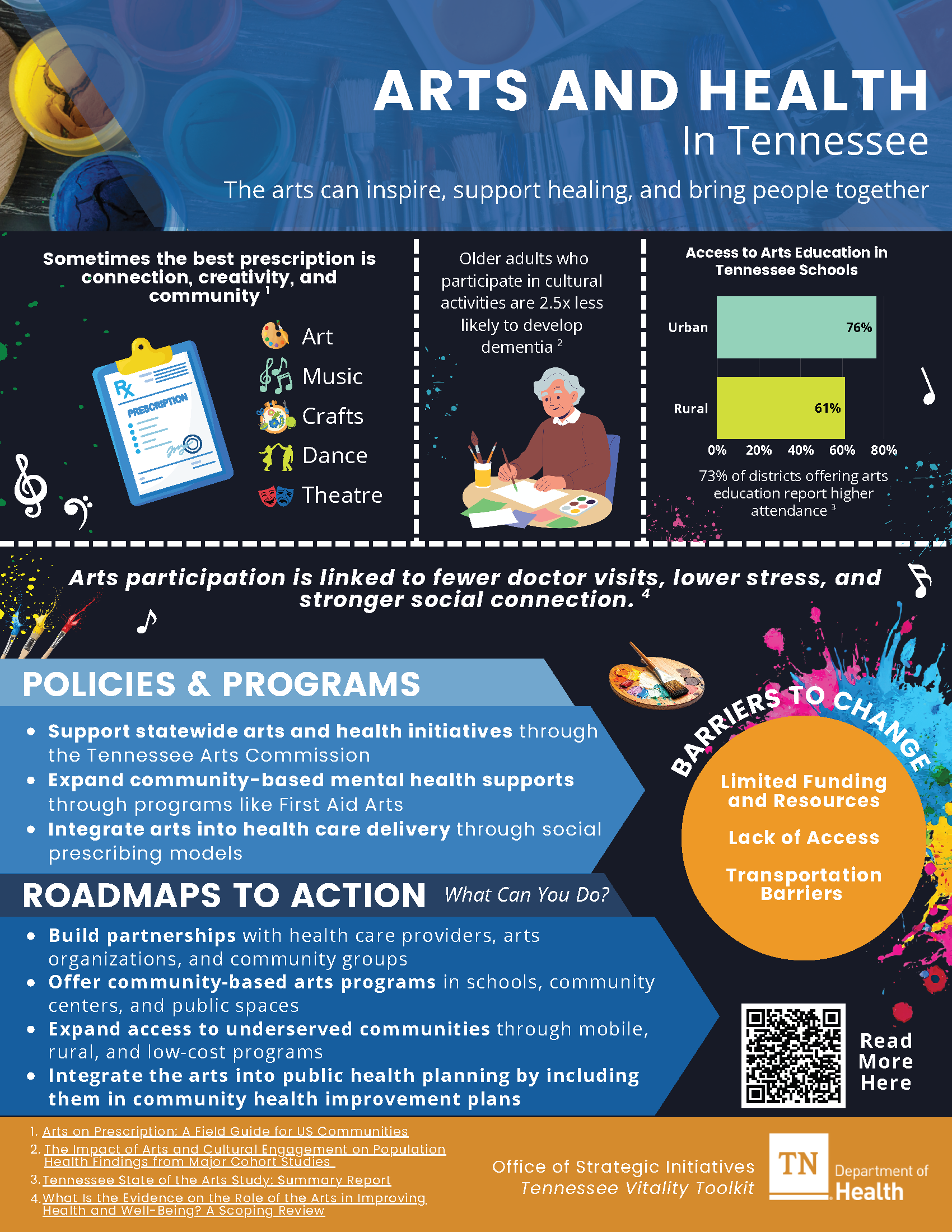
Arts and culture are fundamental to the vitality and well-being of communities. Culture includes shared traditions, music, food, stories, and creative activities, and the arts are one of the main ways people express and share that culture with others.1 The arts can inspire, support healing, and bring people together. Growing research shows that participating in the arts can also improve health, strengthen social connections, and reduce reliance on health care services such as doctor visits and prescription medications.2 The arts can also support public health by drawing attention to important issues, such as mental health, and helping reduce stigma.3
Tennessee’s musical heritage has played a major role in shaping American music. The state is widely recognized as the birthplace of country music and rock ’n’ roll, the home of the blues, and the starting point of soul music.4 Tennessee also helped introduce bluegrass to national audiences through early performances at the Grand Ole Opry.5 Legendary artists connected to Tennessee—including B.B. King, Dolly Parton, Johnny Cash, and the Fisk Jubilee Singers—have helped shape American music and inspire generations of performers.4,5 Music remains one of Tennessee’s most recognizable cultural assets.
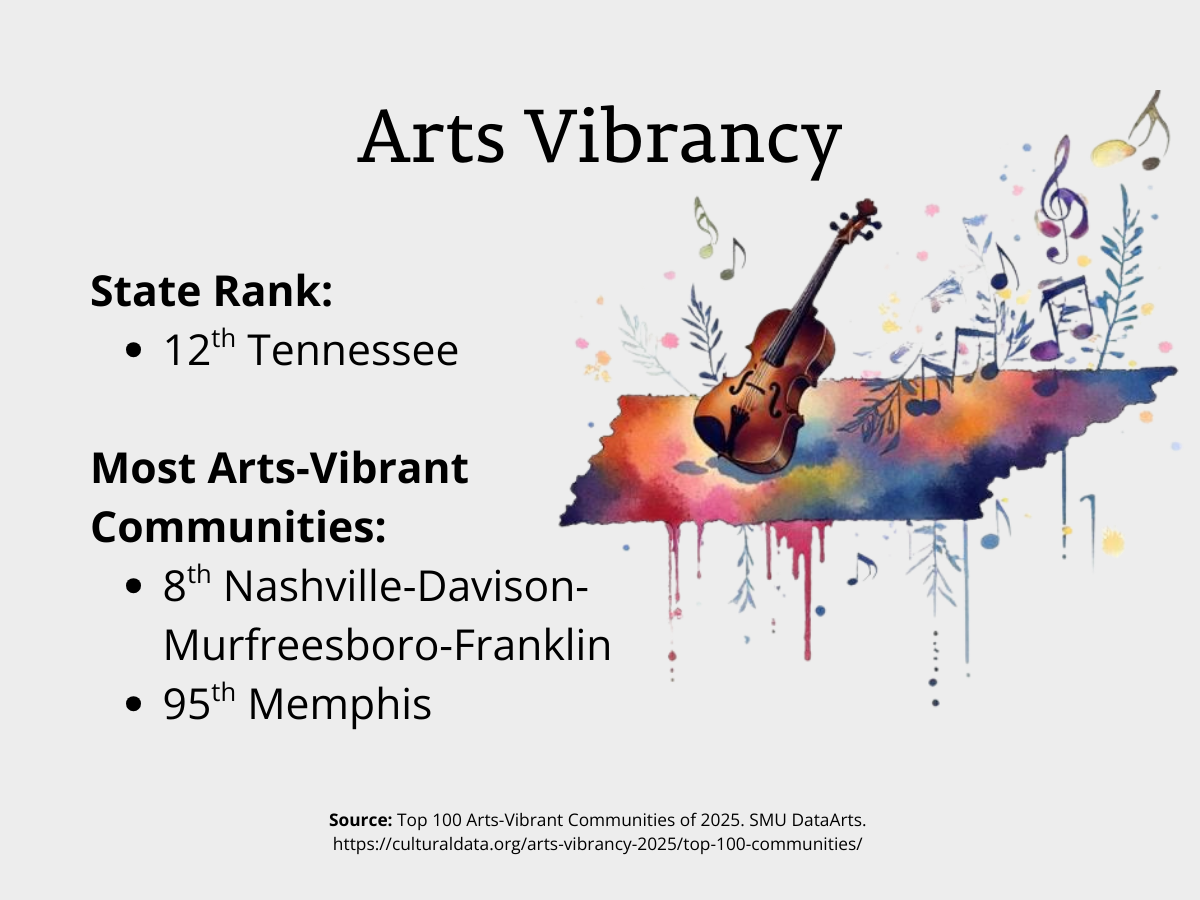
With a rich history in the arts and a music legacy that helped shape genres from blues to country, Tennessee continues to build on its creative traditions. According to the 2025 Arts Vibrancy Index, which measures how well communities support and participate in the arts, Tennessee ranks 12th among all U.S. states.6
Among the Top 100 Most Arts-Vibrant Communities of 2025, both the Nashville metropolitan area and the Memphis metropolitan area are recognized among the nation’s most arts-vibrant communities.7
Investing in the arts is one way communities can support health and well-being.10 Communities can strengthen arts and health by supporting creative spaces, expanding access to arts programs, and encouraging participation across all ages.
-
Why are the Arts Important for Community Well-Being?
Creative activities bring people together, strengthen social connections, and provide opportunities for self-expression. Research shows that arts participation can reduce stress, support mental health, and help people feel more connected to their communities.2,8,9
Health Benefits of the Arts
Arts have meaningful impacts at both the individual and community levels. In both settings, arts engagement has been associated with improved care experiences, potential cost savings within health care systems, and enhanced overall quality of life.2
The arts have the power to transform communities into healthier, more connected places. Whether through painting, music, dance, or other creative activities, engaging in the arts does not require special talent—just participation. Research shows that even short periods of creative activity can help people feel happier, more energized, less lonely, and more confident.8
Public health organizations also recognize the arts as a valuable tool for preventing illness and supporting recovery.10 Evidence suggests that arts-based interventions can reduce reliance on pain medication, shorten hospital stays, strengthen immune function, alleviate symptoms of depression, enhance memory and cognitive performance, and improve communication and behavioral skills.2,8 These benefits extend to patients, caregivers, and health care systems.
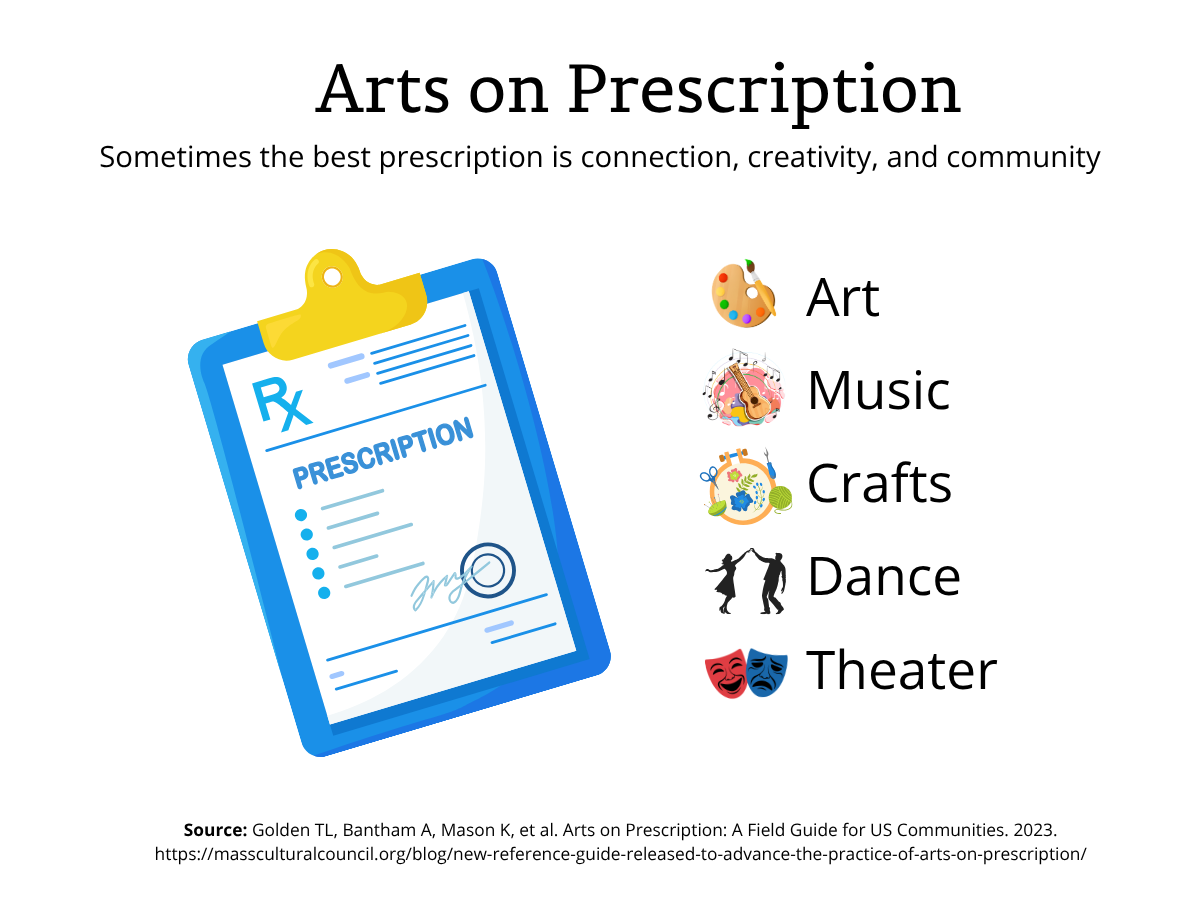
As research on the health benefits of the arts continues to grow, new approaches are emerging that integrate the arts into health care. One example is “arts on prescription,” also known as social prescribing.11 In this model, health care providers can refer patients to arts activities, cultural experiences, or time in nature to support health, well-being, and social connection.11
Research on social prescribing has found improvements in social connection, mental health, and overall well-being among participants.12,13 In Tennessee, the Tennessee Person-Centered Music Program uses personalized music playlists for nursing home residents with dementia and Alzheimer’s disease, helping improve quality of life and reduce behavioral symptoms while supporting more person-centered care.14
In 2023, the U.S. Surgeon General declared loneliness and social isolation a public health crisis because of their impacts on physical and mental health, including increased risks of heart disease, diabetes, depression, and premature death.15 Research shows that music can have an “extraordinary, instantaneous effect” on patients and helps strengthen social bonds.16,17 Like music, other art forms—such as painting and dance—and cultural activities such as participation in faith communities or visits to cultural sites can reduce depression and anxiety, support healing after trauma, and lower the risk of suicide.18,19
In addition to improving individual health outcomes, the arts can also strengthen community health efforts.
Arts in Public Health
Researchers, health experts, and policymakers are increasingly recognizing the role of the arts in addressing public health challenges. Public art can inspire change by sharing powerful stories and images. These creative messages often connect with people in ways traditional health messaging often cannot. Just as a film or poem can evoke strong emotions, the arts have a unique ability to communicate complex ideas, humanize health issues, and help prevent illness.
Data indicates that participation in the arts can:
- Promote public safety20
- Encourage civic engagement20
- Improve mental well-being3
- Reduce stigma around sensitive health topics2,21
Examples from across Tennessee demonstrate the impact of public art on community well-being. Erlanger, one of the state’s major hospital systems, promotes a healing environment by displaying art galleries throughout its facilities, creating welcoming spaces for patients and visitors.22 Programs such as Musicians On Call extend this approach by bringing live music to health care settings, helping reduce stress, support patient recovery, and improve the experience of patients, families, and caregivers.23
In Nashville, public murals appear throughout the city, often featuring messages that celebrate music, culture, creativity, and connection.24 Similar efforts are taking place in smaller communities across the state, where public art projects foster local pride, preserve community history, and highlight local artists.24–27
At the heart of public health is community—and that is where the arts shine. By combining creative expression with public health initiatives, communities can build stronger relationships, promote well-being, and support healthier environments for everyone.
-
What are the Disparities?
Many Tennesseans may face limited access to the arts because of their age, economic status, disability status, ethnicity, or where they live. In some communities, arts programs, cultural spaces, and creative opportunities may be limited or difficult to reach. Expanding access to the arts can help ensure that everyone has the opportunity to experience the health, social, and cultural benefits they offer.
Children
Arts education plays an important role in healthy child development. Through school and community programs, the arts help children build cognitive and critical thinking skills, strengthen social connections, and increase community involvement.28
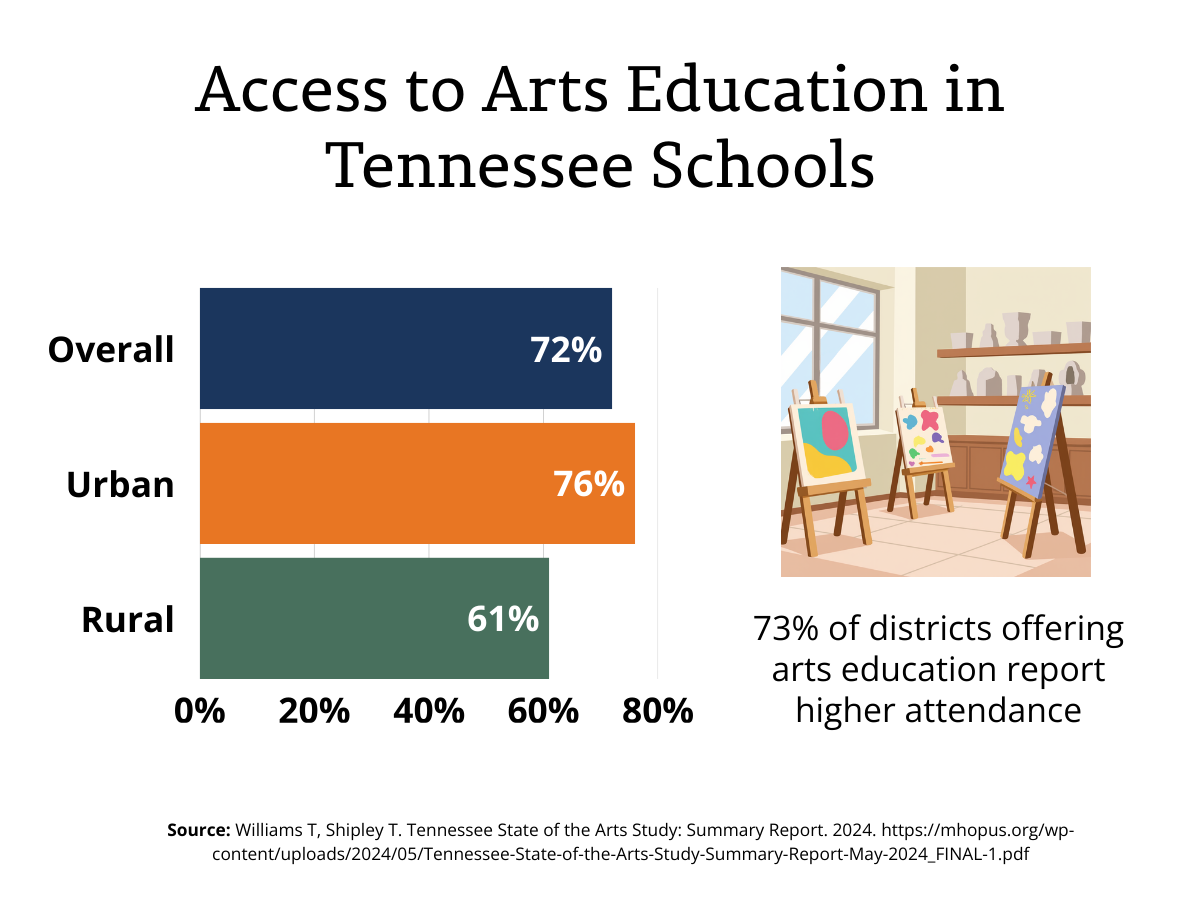
In Tennessee, many students participate in arts education, but access varies across communities. During the 2023–2024 school year, 72% of public-school students were enrolled in arts courses, with higher participation in urban schools (76%) than in rural schools (61%).29 Access to arts education shows heavy correlation with increased student engagement—73% of Tennessee school districts that offer arts programs report higher annual attendance rates.29
Arts engagement can reduce stress, support mental health, and build confidence.2 Students who participate in extracurricular arts activities are less likely to display behavioral challenges later in school.30 Arts-based programs can also promote healthy behaviors. For example, a school drama program improved children’s knowledge of nutrition and body image by using a theater-in-health-education approach. Students acted out health-focused scripts to practice responding to real-life social pressures.31
For some children, the arts can also act as a protective factor. Creative activities can help children cope with adversity, process traumatic experiences, and build self-esteem and problem-solving skills.28,32 Arts-based approaches can also provide psychosocial support for children with serious illnesses. One study found that children with advanced cancer used digital storytelling—such as photos, videos, and music—to share meaningful experiences and connections with family and friends.33
Arts experiences shared within families can also strengthen social connections. Parent-child music programs can increase social engagement and community connection and may support communication development in autistic toddlers.34,35
The benefits of arts education can extend into adulthood. Adults who had arts education as children are about twice as likely to participate in the arts later in life.28 Expanding access to arts education helps equip children with lifelong skills and supports healthier communities.
Older Adults
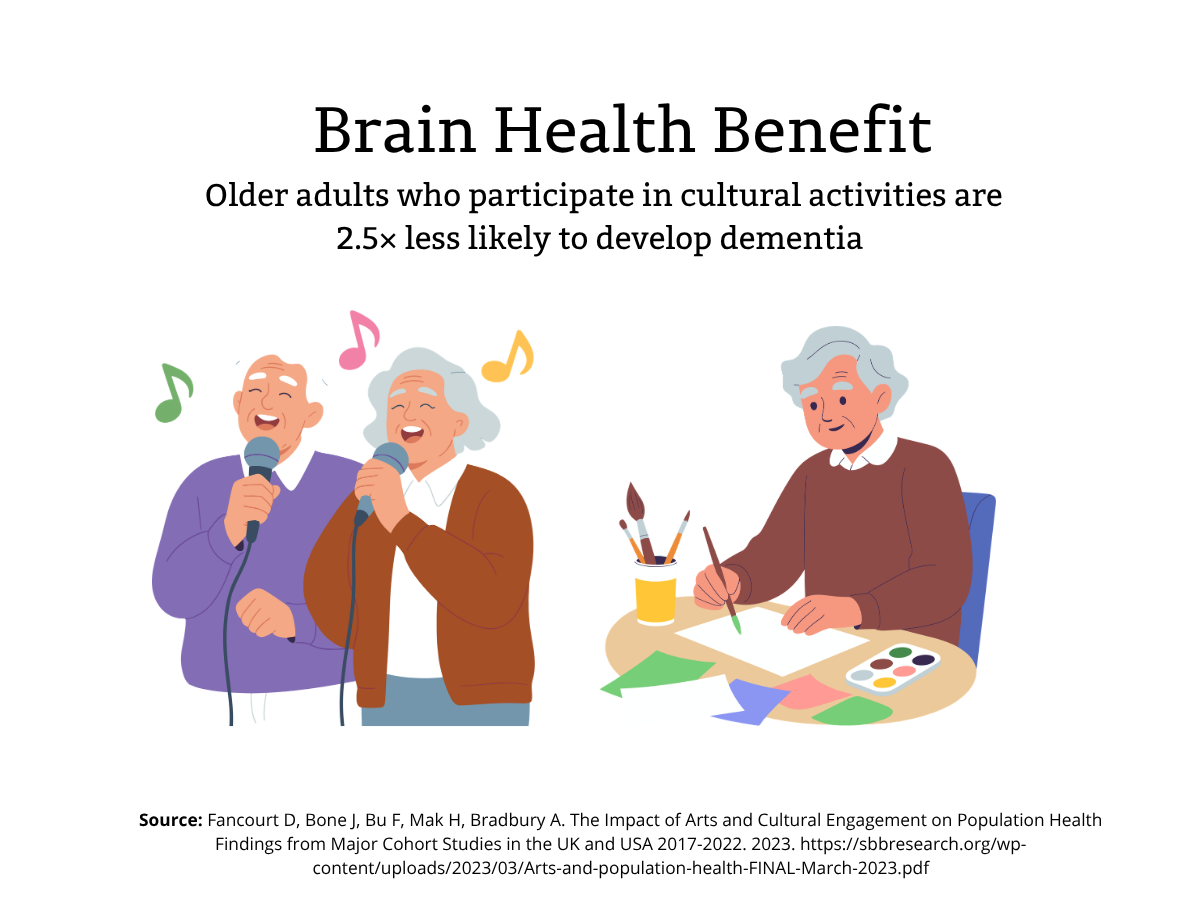
Engaging in the arts can support healthy aging. Research shows that adults age 50 and older who attend or volunteer at cultural events—such as museums, concerts, or theater performances—are 2.5 times less likely to develop dementia and 25% less likely to experience chronic pain later in life.8,36 Arts programs for older adults have also been linked to fewer falls, fewer doctor visits, and less reliance on prescription medications.37
Tennessee’s population of older adults is growing, increasing the need for opportunities that support connection and well-being. About 17.7% of Tennessee residents are age 65 or older, representing more than 1.28 million people statewide.38 As this population grows, communities will need more programs that support healthy aging and social engagement.
The arts can also help address social isolation. About 50% of adults age 60 and older are at risk of social isolation, which can negatively affect mental and physical health.39 Arts activities—such as music, dance, poetry, and visual arts—can create opportunities for older adults to build relationships and stay connected to their communities.40,41
Research in Tennessee highlights the role of the arts in strengthening these connections. A Vanderbilt University study examining therapeutic music in assisted living communities found that older adults valued both live music performances and the opportunity to interact with young musicians afterward, showing how the arts can foster meaningful social and intergenerational connections.42
Despite these benefits, some older adults face barriers that make it harder to participate in arts and cultural activities. Transportation challenges, financial limitations, mobility issues, and sensory disabilities can reduce participation opportunities.43 Older adults who report poorer health are also less likely to participate in the arts.43 Expanding accessible and community-based arts opportunities can help more older adults experience the social, physical, and mental health benefits of participating in the arts.
Racial and Ethnic Minorities
Sometimes words alone cannot fully capture an experience. The arts offer powerful ways to express complex stories, cultures, and perspectives, helping communities better understand the lived experiences of racial and ethnic minorities.
Across the United States, patterns show that racial and ethnic minority populations are more likely to develop conditions such as diabetes, hypertension, obesity, asthma, and heart disease, and have shorter average life expectancy compared with White populations.44 Stress related to social challenges can contribute to poor health outcomes. Arts-based approaches can help promote healing, support mental well-being, and create opportunities for communities to share experiences and build resilience.
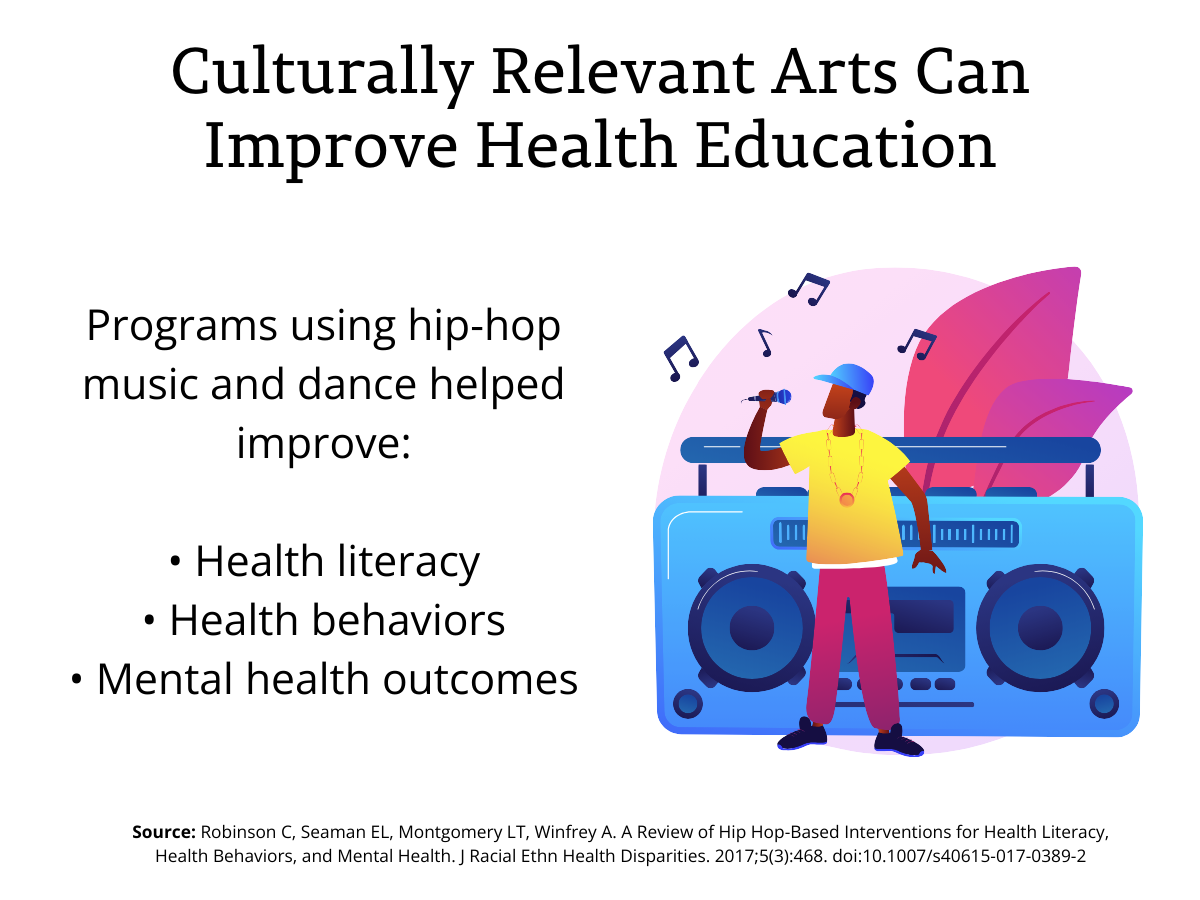
Arts and culturally relevant creative activities can also be used to improve health knowledge and encourage community engagement. A review of health programs that used hip-hop music and dance found that these arts-based approaches helped improve health literacy, health behaviors, and mental health outcomes among Black and Latino youth.45 These findings suggest that culturally meaningful art forms can help make health education more engaging and accessible in communities experiencing health gaps.
Access to arts and cultural opportunities differs across communities. The 2024 U.S. Census Bureau Household Pulse Survey found differences in arts participation across racial and ethnic groups, with Hispanic and Black adults less likely than White and Asian adults to attend in-person arts events.46 These differences highlight ongoing disparities in access to arts and cultural spaces.
Representation in the arts is not equal. One national study found that racial and ethnic minorities are about half as likely to be represented in fields such as art, fashion, film, and music.47 Arts organizations led by people of color have also historically received less funding than primarily White-led organizations, making it harder for these groups to grow and sustain their work.48
Tennessee highlights diverse cultural voices through institutions such as the National Museum of African American Music, which celebrates the influence of African American artists on American music and culture.49 Cultural institutions like this help preserve history, share diverse stories, and build understanding across communities.
Expanding access to the arts and supporting diverse cultural voices can help build stronger communities and improve health and well-being for all.
Rural Communities
Rural communities face challenges in accessing both health care and arts opportunities. Geographic isolation can limit access to hospitals, cultural spaces, and creative programs.50,51 Economic hardship and limited resources can limit arts and health programs in rural areas. These barriers may include limited broadband access, funding, and supportive policies.52
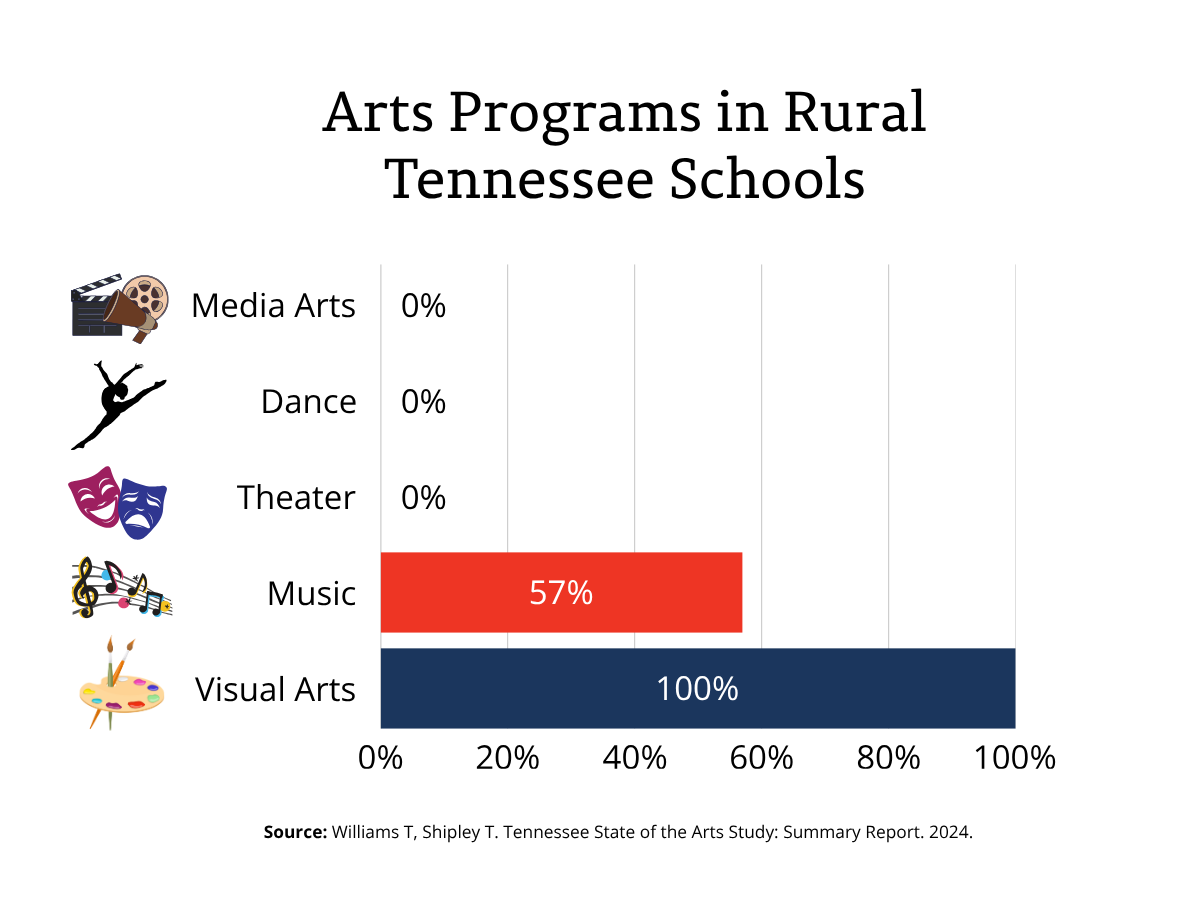
Access to arts education also varies across rural communities in Tennessee. The 2024 Tennessee State of the Arts Study found that no rural and remote schools in the state offered theater, dance, or media arts programs.29 Only 57% of schools in rural areas offered music programs, while all of them offered visual arts programs, showing that students in rural areas have limited access to different types of art.29
Research shows that arts participation is closely tied to access to cultural spaces and organizations. Communities with fewer arts venues—such as theaters, museums, and cultural centers—often have fewer opportunities for residents to attend performances, exhibitions, or classes.53 A national study found that youth living in rural communities are about 7-13% less likely to visit museums than those in urban areas.54 These differences may reflect barriers such as limited transportation, fewer arts organizations, and fewer cultural spaces in rural communities.54
Rural communities may also have limited access to specialized arts programs. A study of music therapists found that rural communities often experience geographic barriers to care, limited awareness of music therapy, and inconsistent funding for programs.55
Despite these challenges, the arts can play an important role in strengthening rural communities. Research shows that expanding arts and cultural programs—such as performing arts groups—can support local businesses and contribute to economic growth.51 Strong arts communities can also encourage civic engagement, community development, and improved health and well-being for rural residents.
-
Community-Driven Solutions
Community-driven solutions are practical steps that local partners can take to strengthen arts and health. These actions help expand access to creative opportunities, support local artists and organizations, and encourage community connection. They are evidence-informed, achievable in the short term, and designed to address the most important needs in each community. By working together, communities can help more Tennesseans experience the social, cultural, and health benefits of the arts.
- Partner with local cultural organizations and community groups. Work with libraries, theaters, museums, art galleries, festivals, restaurants, and other venues to expand arts programming. Arts events can also be hosted in nontraditional venues such as parks, hospitals, airports, or malls—places where 70% of Tennesseans say they enjoy experiencing the arts.43
- Offer community arts programs that support mental and emotional well-being. Activities such as dance classes, painting workshops, pottery lessons, or creative writing sessions can help reduce stress and create opportunities for social connection. Community leaders can partner with County Health Councils or local health departments to expand participation.
- Team up with mental health organizations to expand arts and health initiatives. Collaborate with counselors, health departments, and community groups to raise awareness about the role of the arts in supporting mental health. These partnerships can help share resources, coordinate programs, and reach more residents.
- Invite artists from diverse backgrounds to participate in community programming. Including artists with different cultural perspectives can help communities learn about a wider range of traditions, beliefs, and artistic styles. Multilingual arts programs can also help engage residents who may not otherwise participate.
- Use creative projects to raise awareness about health issues. Artists can help communicate important public health messages through murals, performances, or exhibits. For example, the Tennessee Arts & Rural Health Initiative awarded $175,000 in 2026 to support arts-based projects in 10 rural hospitals, using murals, art therapy, and creative programs to support healing and improve patient well-being.56
- Create community murals or public art that promote well-being. Public art projects can reflect community stories while raising awareness about topics such as mental health, substance misuse prevention, or healthy lifestyles. Collaborative art projects can also strengthen community pride and connection.
- Support artist-in-residence programs in community spaces. Artists can work with schools, libraries, community centers, or health care facilities to lead creative activities that support learning, healing, and social connection. These programs also provide opportunities to support local artists.
- Bring arts programming to communities with limited access. Mobile arts programs, traveling performances, and pop-up exhibits can reach rural communities, older adults, and other groups who may face barriers to participation. These programs help expand access to creative experiences.
- Create youth arts programs that support positive development. Mentorship programs that connect young people with local artists can help build confidence, strengthen social connections, and provide positive outlets for self-expression.
- Host community arts events that encourage connection and self-expression. Open mic nights and performances create welcoming spaces where residents can share their stories, reduce social isolation, and support local artists.
-
Making Change Through Policies and Systems
Policy and systems change help organizations work together to strengthen arts and health over time. This section highlights long-term strategies communities can use to expand access to the arts and support community well-being.
- Encourage health care providers to prescribe arts, culture, or nature experiences as part of patient care. These referrals—often called “social prescribing”—can improve mental health, physical health, social connection, and quality of life.11
- Support partnerships between rural community colleges, employers, and arts organizations. These collaborations can strengthen workforce development in creative fields and encourage creativity-driven economic growth in rural communities.
- Adopt creative placemaking strategies to strengthen communities. Creative placemaking brings together artists, cultural organizations, community developers, and residents to improve public spaces and support community-led change.57 The Tennessee Arts Commission supports these efforts across the state through grants and partnerships, with a focus on rural communities.58
- Increase support for minority-led and Indigenous arts organizations. Expand fundraising opportunities, strengthen professional networks, and promote equitable access to grant funding to help these organizations grow and sustain their work.
- Expand financial support to make arts experiences more accessible. Provide low-income families and individuals with disabilities with discounted tickets, scholarships, or transportation support so more residents can participate in arts and cultural activities.
- Develop policies that integrate arts and culture into schools and community programs. Support legislation and local policies that expand arts education and creative programming. For example, in 2024, Tennessee created the Certified Professional Music Therapist (CPMT) credential, increasing access to qualified music therapy services statewide.59
- Encourage cross-sector collaboration between community leaders and arts organizations. Partnerships among local governments, nonprofits, health care providers, and cultural groups can strengthen arts programming and expand participation.
- Implement accessible design standards in arts and cultural spaces. Features such as assistive listening technology, clear signage, large-print materials, and barrier-free entrances help ensure older adults and people with disabilities can fully participate in arts experiences.
- Include arts and culture in community health improvement plans. Local health departments can partner with arts organizations to incorporate creative programs into public health initiatives and prevention efforts.
- Invest in rural arts infrastructure and creative spaces. Funding community theaters, studios, and cultural centers can expand access to arts opportunities and support local economic development.
-
Community Spotlight
The Health Council Community of Practice (CoP) connects Tennessee Health Councils through shared learning and discussion around health priorities. The links below provide access to recent CoP conversations related to this topic. To learn more about the Community of Practice, click here.
There are no Community Spotlight features available for this topic yet. If you have a relevant story, resource, or presentation you'd like to share, please email Health.Councils@tn.gov.
-
Partners and Resources
Tennessee Resources
- Tennessee Arts Commission
- The Tennessee Arts Commission works to stimulate and support the visual, literary, music, and performing arts across the state while encouraging public interest in Tennessee’s cultural heritage. Learn more about the Commission’s goals and priorities in the Tennessee Arts Commission 2025-2030 Strategic Plan.
- Arts & Health Program
The Arts & Health program uses the arts to improve health and wellness outcomes for Tennesseans. Through initiatives such as Creative Aging, the Tennessee Person-Centered Music Program, Tennessee Military, Veterans & the Arts, and Arts & Rural Health, the program provides funding to expand arts opportunities that support health and well-being in communities across the state. - Creative Aging Tennessee
This initiative expands arts programming for older adults in rural and culturally diverse communities. The program supports partnerships with traditional artists, provides training opportunities, and offers funding to increase accessible arts programs for older adults throughout Tennessee. - TN Military, Veterans & the Arts (TNMVA)
This initiative encourages organizations serving Tennessee’s military members, veterans, and their families to use the arts to support well-being and community connection. It also helps arts organizations engage military audiences through creative programs that strengthen communities. - Arts for All Grants
This grant program supports projects that increase access to the arts for Tennesseans who face barriers to participation. These grants help ensure that individuals and communities with limited access can experience the benefits of arts and culture.
- Tennessee Department of Mental Health & Substance Abuse Services
- Art for Awareness
This annual Tennessee event highlights the role of art in recovery and healing. Community members share their artwork and participate in group activities and discussions about the personal meaning of art, while state legislators and other leaders learn how creative expression can support recovery from mental health and substance use challenges. - First Aid Arts
First Aid Arts teaches simple creative tools—such as drawing, movement, and storytelling—that help people manage stress, process emotions, and support mental health in everyday situations. Workshops are available in Tennessee through TDMHSAS State Peer Wellness Coaches, who use these activities to support wellness and recovery in communities.
- Art for Awareness
- Arts Education Data Project
- The Tennessee Arts Education Data Project provides interactive dashboards that allow users to explore statewide arts education data from the Tennessee Department of Education. The platform includes information on district-level arts programs, arts disciplines, student participation, trends over time, school profiles, and a course finder tool.
- CMA Foundation – State of the Arts Initiative
- The CMA Foundation’s State of the Arts initiative is a statewide study and needs assessment of music and arts education programs in Tennessee schools. Developed through a partnership with the Tennessee Department of Education and the Mr. Holland’s Opus Foundation, the initiative provides data, recommendations, and resources to help school districts expand access to high-quality arts education.
- National Museum of African American Music (NMAAM)
- Located in Nashville, the National Museum of African American Music celebrates the central role African Americans have played in shaping American music. Through exhibitions, education programs, and community events, the museum highlights the cultural and social impact of music across generations.
- Musicians on Call
- This Nashville-based organization brings live and recorded music to the bedsides of patients, families, and caregivers in health care settings across the United States. The program uses music to reduce stress, provide comfort, and support healing in hospitals and other health care environments.
- Music for Seniors
- This Nashville-based nonprofit connects musicians with older adults through live and interactive music programs. These programs are designed to engage and educate participants while promoting health and well-being, reducing social isolation, and enriching the lives of older adults across Middle and East Tennessee.
- Arts Commissions and Craft Centers
- Arts Alliance Mountain Empire
Arts Alliance Mountain Empire is a regional arts council serving Northeast Tennessee and Southwest Virginia. The organization supports artists and arts organizations, promotes collaboration, and highlights the cultural and economic value of the arts in the Tri-Cities and surrounding area. - Chattanooga Public Arts Commission
Public Art Chattanooga oversees temporary and permanent public art projects on City of Chattanooga property and maintains a collection of more than 180 artworks across the city. The program works with artists, community members, and local partners to create public art that reflects the culture and identity of Chattanooga’s neighborhoods. - Dogwood Arts
Dogwood Arts is a nonprofit organization that promotes art, culture, and natural beauty across East Tennessee through public art projects, festivals, exhibitions, and community events. These programs help connect residents with creative experiences and celebrate the region’s cultural identity. - Metro Nashville Arts Commission (Metro Arts)
Metro Arts works to promote a vibrant and inclusive arts community in Nashville by supporting artists, arts organizations, and public art initiatives. Through grant programs, public art projects, and community partnerships, Metro Arts helps expand access to arts experiences and creative opportunities across the city. - UrbanArt Commission
UrbanArt Commission works with artists and communities across Memphis and Shelby County to create public art and community-driven design projects. These initiatives use art to strengthen neighborhoods, encourage civic engagement, and improve public spaces.
- Arts Alliance Mountain Empire
- Arts Themed Trails
- Music Trails
- Music City Walk of Fame
This downtown walking trail features star markers honoring artists, songwriters, and music leaders who helped shape Nashville’s reputation as a global center for music. - Tennessee Music Pathways
This statewide music heritage trail connects hundreds of historic sites across Tennessee, guiding visitors to recording studios, music venues, museums, and communities that helped shape genres such as blues, country, rock, gospel, and soul.
- Music City Walk of Fame
- Literary Trails
- Storybook Trails
This program presents a children’s storybook along a short trail. Families can walk, read, and play together as they explore child-height story panels—building literacy, encouraging movement, and creating meaningful moments outdoors.
- Storybook Trails
- Quilt Trails
- Appalachian Quilt Trail
This barn quilt trail is a self-guided driving tour featuring more than 130 large, colorful quilt patterns painted on barns, homes, and community buildings across six counties in Northeast Tennessee. - Rutherford County Quilt Trail
This barn quilt trail is a self-guided driving tour featuring a growing collection of large, colorful quilt patterns displayed on barns and historic buildings across Rutherford County in Middle Tennessee. - Upper Cumberland Quilt Trail
This barn quilt trail is a self-guided driving tour featuring dozens of large, colorful quilt designs displayed on barns, businesses, and community buildings across 17 counties in the Upper Cumberland region of Middle Tennessee.
- Appalachian Quilt Trail
- Public Art/Mural Trails
- West Tennessee Delta Heritage Center Artisan Trail
This regional arts trail highlights local artisans, craft studios, and cultural sites across West Tennessee that showcase traditional crafts, folk art, and regional heritage. - Great Smoky Arts & Crafts Community Trail
This 8-mile loop road in Gatlinburg features one of the largest groups of independent artisans in North America, with dozens of studios and galleries showcasing traditional Appalachian crafts such as pottery, woodcarving, weaving, and painting. - Johnson City Public Art Walking Tour
This self-guided walking tour highlights murals, sculptures, and other public art installations throughout downtown Johnson City, celebrating local artists and community creativity. - Chattanooga Public Art Trail
This walking and biking trail connects dozens of murals, sculptures, and public art installations across downtown Chattanooga and nearby neighborhoods.
- West Tennessee Delta Heritage Center Artisan Trail
- Music Trails
- Tennessee Arts Commission
-
To Learn More
- Americans for the Arts
- Americans for the Arts is the nation’s leading nonprofit organization advocating for the arts at the federal level and supporting local arts agencies and organizations across the country. Through research, policy advocacy, and partnerships, the organization promotes the role of the arts in strengthening communities and improving well-being.
- Arts on Prescription: A Field Guide for U.S. Communities
- Developed by the University of Florida Center for Arts in Medicine and the Mass Cultural Council, this field guide provides a roadmap for communities interested in developing arts on prescription programs that integrate arts, culture, and nature into local health and social care systems. These programs allow health care providers and social service agencies to “prescribe” arts activities, cultural experiences, or time in nature to support health, well-being, and quality of life.
- Healing Arts Project, Inc. (HAPI)
- Healing Arts Project, Inc. provides free art classes and creative opportunities for individuals in mental health and addiction recovery. Through workshops led by professional artists, exhibitions, and outreach events, participants use art to express their experiences, support healing, and build community awareness. The program serves about 500 individuals each year, with most participants reporting increased confidence, coping skills, and a sense of self-worth.
- National Endowment for the Arts (NEA)
- The National Endowment for the Arts is an independent federal agency and the largest funder of the arts and arts education in communities across the United States. Through grants, research, and national partnerships, the NEA supports artists, arts organizations, public arts agencies, schools, and tribal communities while promoting the role of the arts in health, community development, and education.
- National Organization for Arts in Health (NOAH)
- The National Organization for Arts in Health is a national membership organization that brings together artists, health care professionals, researchers, and community leaders working at the intersection of arts and health. NOAH provides leadership, education, and advocacy to advance the field of arts in health and promote the role of creative activities in improving health and well-being.
- Substance Abuse and Mental Health Services Administration (SAMHSA)
- SAMHSA leads national efforts to improve mental health and substance use recovery services. Programs such as National Recovery Month and the Art of Recovery Project highlight how creative expression can support recovery, reduce stigma, and promote mental health awareness.
- The Healing Power of Art & Artists – Art and Healing Organizations Directory
- The Healing Power of Art & Artists website provides a global directory of nonprofit organizations and programs that use art to support healing, community well-being, and social change. The directory includes descriptions and links to more than 100 regional, national, and international organizations that offer art programs addressing issues such as trauma, illness, recovery, community development, and emotional expression.
- Americans for the Arts
Give us your feed back on the TVT.