Attainable Housing
Safe, affordable housing is the foundation of a healthy community. When people feel safe and comfortable in their homes, they are better able to care for their health, get to work or school, and meet daily needs, like buying food and receiving services such as healthcare, child care, and transportation assistance. Stable housing also helps people build financial security.
Housing stability supports more than just individual health. Living in a safe, reliable home can improve mental health, lower stress, and help people plan for the future.1,2 For children, having a stable home makes it easier to focus in school and supports healthy growth and development.3,4
When affordable housing is limited, people may face serious challenges. High housing costs can strain household budgets and make it harder to afford other necessities. A lack of affordable options can also lead to overcrowding, unsafe conditions, or people losing their homes. These situations can increase health risks and lower the overall quality of life.
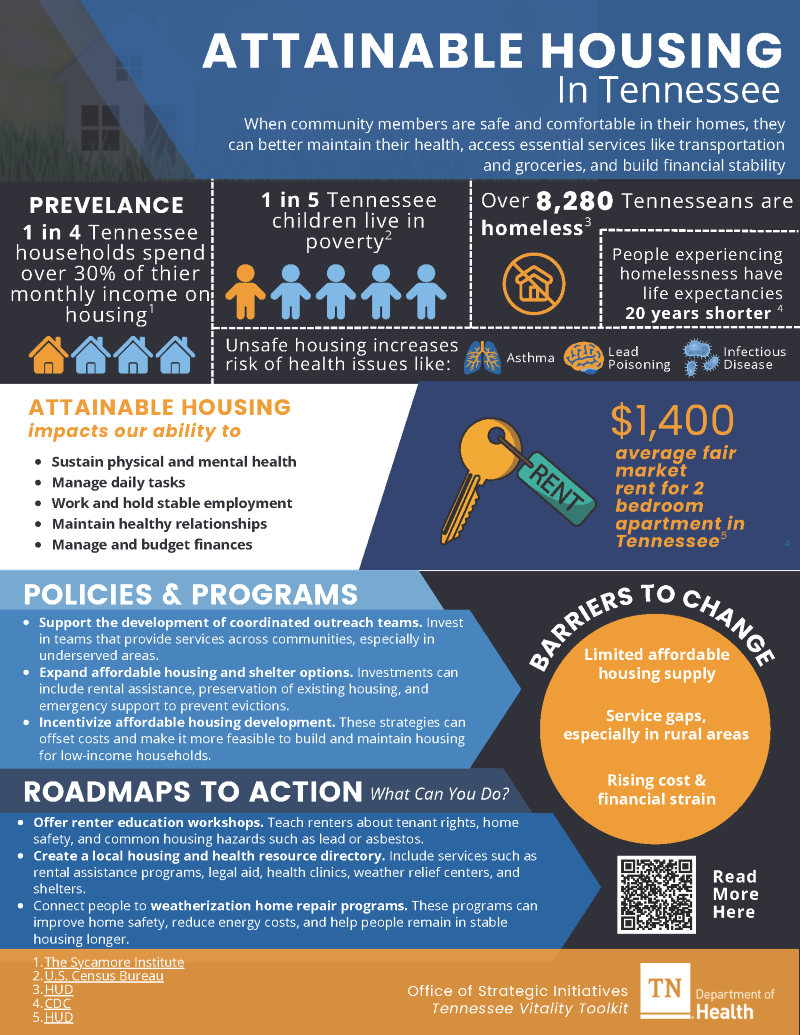
In Tennessee, these challenges affect many people. The annual Point-In-Time (PIT) Count found that more than 8,280 people in Tennessee were experiencing homelessness in 2024, but the true number is likely higher.5 In addition, about 353,900 households (13%) face severe housing problems, including overcrowding, lack of basic facilities, or high housing costs.6 These numbers highlight how housing challenges affect health, stability, and quality of life for many people across the state.
-
Why is Attainable Housing Important for Community Well-Being?
Safe, affordable housing helps people stay healthy, build stability, and support strong communities. It shapes financial security, health, education, and how communities function.7 When people have stable housing, they are better able to keep a job, get health care, and provide a safe place for their families.8,9
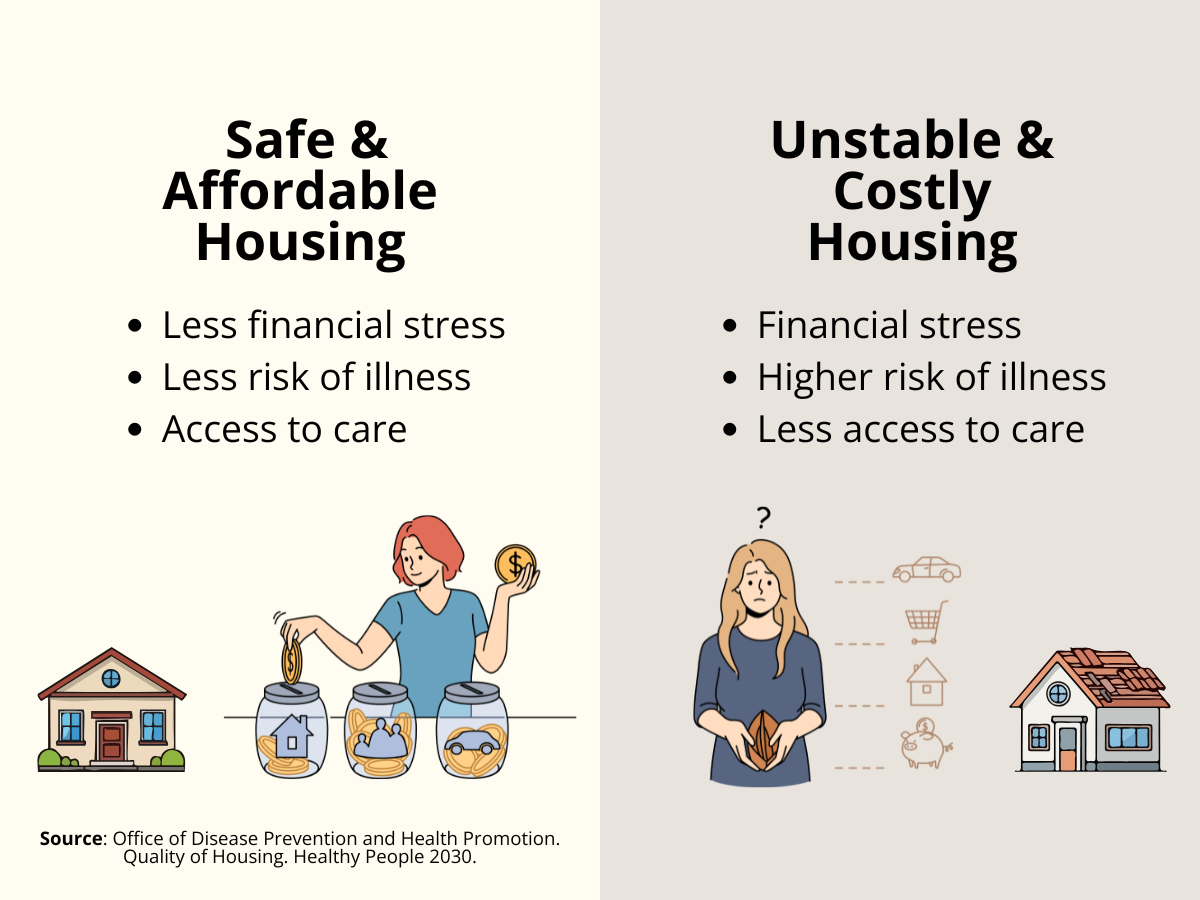
When housing is unstable or too expensive, it can create serious challenges. Living in overcrowded or poorly maintained housing, or in homes without necessities such as heat, clean water, or proper sanitation, increases the risk of illness and disease.7 High housing costs can also strain household budgets, leaving less money for food, medications, and routine health care.7,10
Health Impact of Housing Cost
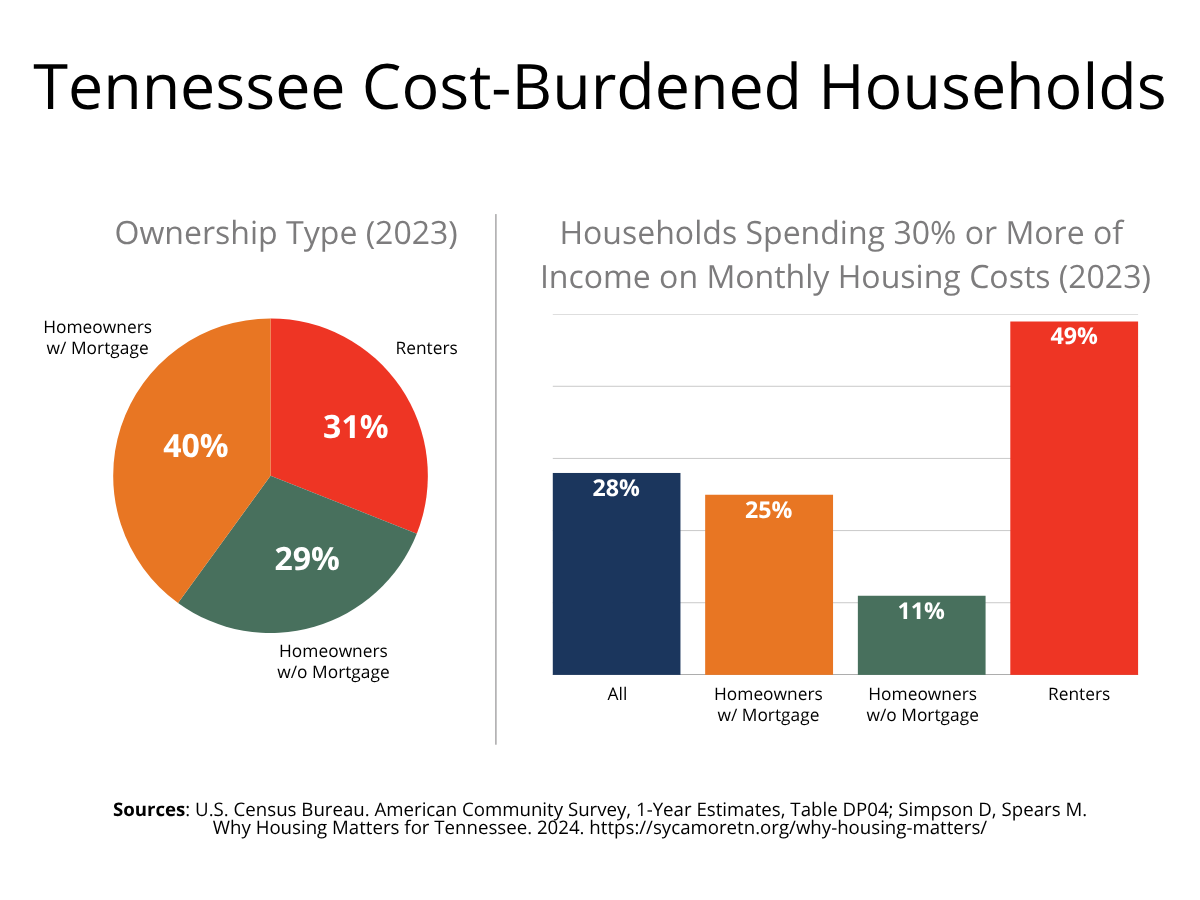
In Tennessee, many households face these pressures. In 2023, about 28% of households were cost-burdened, including 49% of renters, 25% of homeowners with a mortgage, and 11% of homeowners without a mortgage.7 When families spend a large share of their income on housing, they often have to make trade-offs that can harm their health, such as delaying care or cutting back on basic needs.7,10,11
Housing instability can also make it harder to get consistent care. People experiencing unstable housing are more likely to lack a usual source of care and may have trouble accessing preventive and primary care services.12 Over time, the stress of housing instability can affect mental health, leading to anxiety and depression.7,11,13 These challenges can make it harder to manage chronic conditions and maintain stable housing.
Health Risks Associated with Substandard Housing Conditions
Poor or unsafe housing can increase the risk of illness and long-term health problems. Older or poorly maintained housing can expose people to hazards that lead to serious health problems over time. Common housing hazards include:
- Air quality and poor ventilation: Exposure to mold, dust mites, pesticides, and other allergens can worsen asthma, trigger allergic reactions, and contribute to chronic lung conditions such as chronic obstructive pulmonary disease (COPD).14
- Lead exposure: In homes built before 1978, lead-based paint or old pipes can expose people to lead. This can cause learning and developmental delays in children. For pregnant women, lead exposure increases the risk of complications, including premature birth and developmental problems for the baby.15
- Asbestos: People who live in older buildings are at higher risk of exposure to this material, which was once widely used in insulation and construction. When disturbed, it can release tiny fibers into the air that are harmful when inhaled. Exposure can lead to lung cancer, mesothelioma, and other lung diseases.16
- Radon exposure: Radon is a naturally occurring gas that can enter homes through cracks and gaps in the foundation. It is the second leading cause of lung cancer. Homes with poor ventilation or those in areas with high radon levels are at greater risk.17
- Falls: 19 million older Americans live in homes that are damaged or not set up to meet their needs safely. Poor housing conditions can increase the risk of falls.18 About 1 in 10 falls leads to an injury that makes older adults limit their activities for at least a day or need medical care.19
- Mental Health Struggles: Housing quality, or the condition of a person’s home, can have a big impact on mental health and overall well-being.20 Exposure to hazards in the home can harm the brain. Poor housing is linked to higher stress, anxiety, and depression. It can also lead to emotional and behavioral problems, as well as lower academic performance in children.21
Health Risks Associated with Homelessness
The most extreme form of housing instability is homelessness. People experiencing homelessness often live in unsafe conditions and have a life expectancy about 20 years shorter than the general population.22 Living in shelters, on the streets, or in unsanitary encampments increases the risk of illness and injury. Accessing clean water, maintaining hygiene, managing wounds, and avoiding the spread of disease can be difficult in these settings.23
Homelessness increases the risk of several serious health conditions, including:
- Infectious diseases: Higher risk of infections such as tuberculosis, hepatitis C, pneumonia, and HIV.24
- Exposure to extreme weather: Living outdoors or without proper shelter increases the risk of frostbite in winter and heat-related illness in summer.25
- Chronic conditions and poor nutrition: Managing conditions such as diabetes, hypertension, and heart disease becomes more difficult without regular care or medications.23 Limited access to healthy food can weaken the immune system and worsen these conditions.26
- Oral health problems: Tooth decay, gum disease, and infections are more common and can affect eating, speaking, and overall health.27
People experiencing homelessness often have limited access to preventive care, such as vaccinations and routine screenings, and may not receive consistent treatment for chronic conditions.12,28 As a result, they are more likely to rely on emergency rooms for care, using them four to five times more often than the general population.13
Housing conditions are only one part of the challenge. Factors such as poor sleep, financial strain, and difficulty getting health care can also affect health for people living in substandard housing or experiencing homelessness. Addressing these connected challenges is important for improving health, stability, and overall community well-being.
-
What are the Disparities?
The ability to find and afford housing is not the same for everyone. Differences in income, housing supply, and systemic barriers place some groups at greater risk of housing instability. Recognizing these differences is an important step toward expanding access to safe, affordable homes.
Children
Experiencing housing instability at a young age can have long-term effects on health and well-being.29 Children without stable housing are less likely to receive regular checkups, eat nutritious meals, or get enough sleep.30 These challenges can lead to health problems in childhood and later in life. Unstable or unsafe housing can also contribute to developmental delays, poorer overall health, and increased hospital use.31
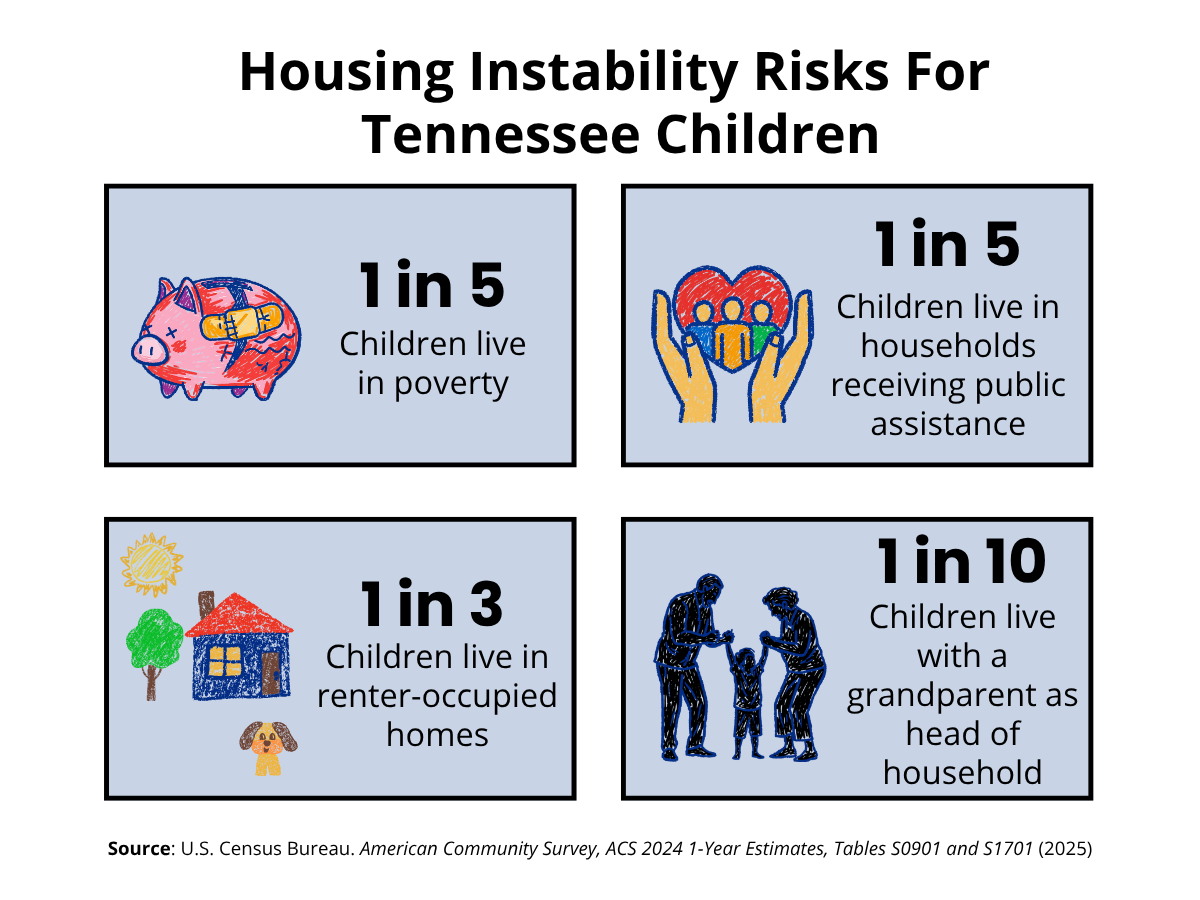
Many children in Tennessee face conditions that can increase the risk of housing instability. Nearly one in five children lives in poverty, and about one in five lives in households that receive some form of public assistance.32,33 In addition, more than one in three children live in renter-occupied homes, and one in 10 live with a grandparent as the head of the household.32
Tennessee ranks 19th nationally in the number of children experiencing housing instability.34 During the 2021-2022 school year, about two out of every 100 public school students experienced housing instability.34 Among youth under age 18, about one out of every 1,700 children experienced homelessness.35
Families with low incomes are more likely to share housing with extended family or friends to reduce costs, which can increase crowding. Unstable or crowded housing makes it harder to succeed in school. Living in crowded homes can limit privacy, create noisy study spaces, and disrupt sleep. These challenges can lead to behavior problems and make it harder for children to focus and learn.36
Research shows that adolescents living in crowded housing are less likely to graduate from high school by age 19 and are more likely to complete fewer years of education by age 25 compared to their peers in stable housing.36–38
Housing instability can also affect mental health. Children who experience frequent moves, poor living conditions, or separation from their home are more likely to develop anxiety and depression, with some effects lasting into adulthood.39
Youth Transitioning out of Foster Care
Youth aging out of foster care often face housing challenges as they move into adulthood. Many lack the family support or financial resources needed to secure stable housing.40 Without support, many may experience homelessness, couch surfing, or unsafe living situations.40
Young people with foster care experience are at much higher risk of homelessness than their peers. Nearly one in three youth experiencing homelessness has a history of foster care involvement.41 About one in four young people formerly in foster care experiences homelessness within two years of leaving care.42 Research suggests that 31% to 46% of people who have been in foster care may experience homelessness by age 26.43
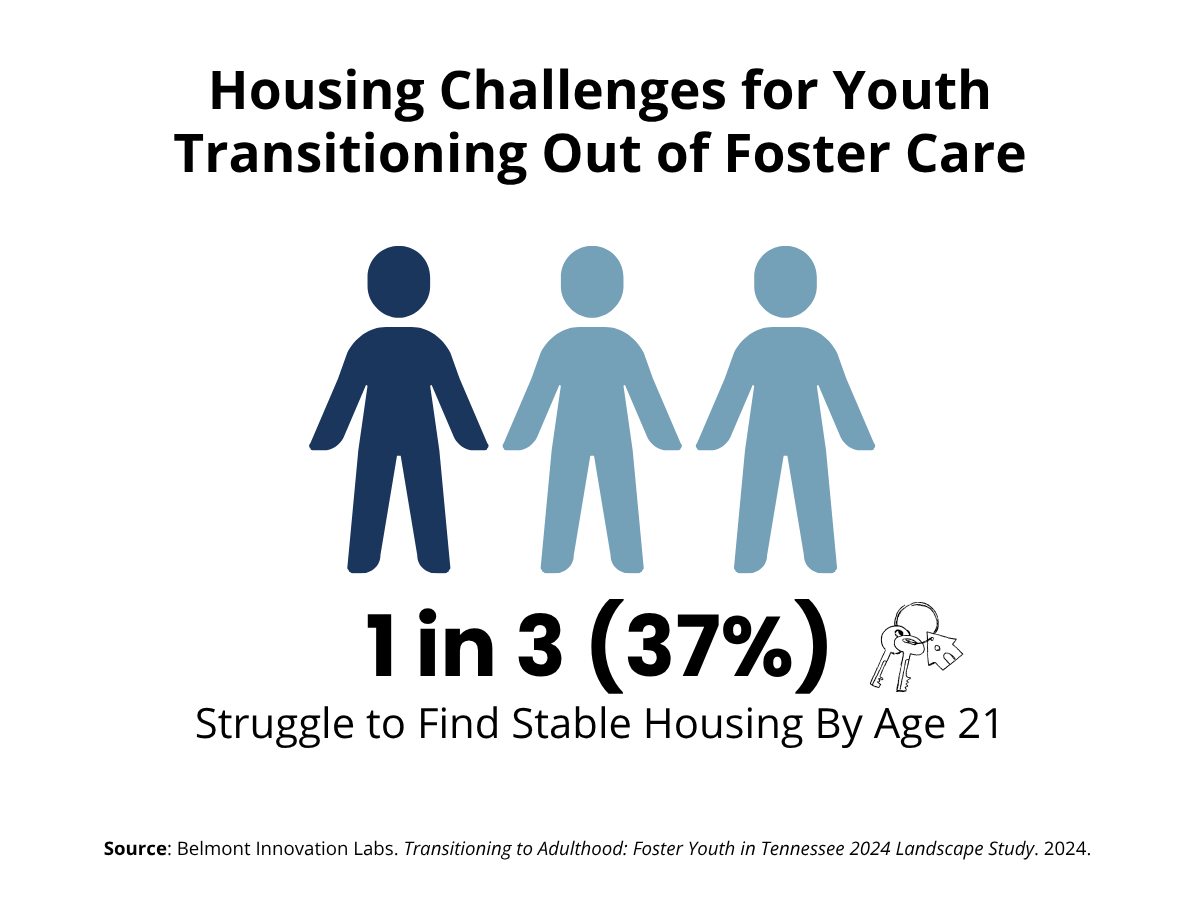
In Tennessee, many youths aging out of foster care struggle to find stable housing. A 2024 study by Belmont Innovation Labs found that about 37% of foster youth did not have stable housing by age 21.44 Youth with foster care experience are also more likely to face challenges such as lower school enrollment, limited employment opportunities, and greater reliance on public assistance.43
Individuals Transitioning out of Incarceration
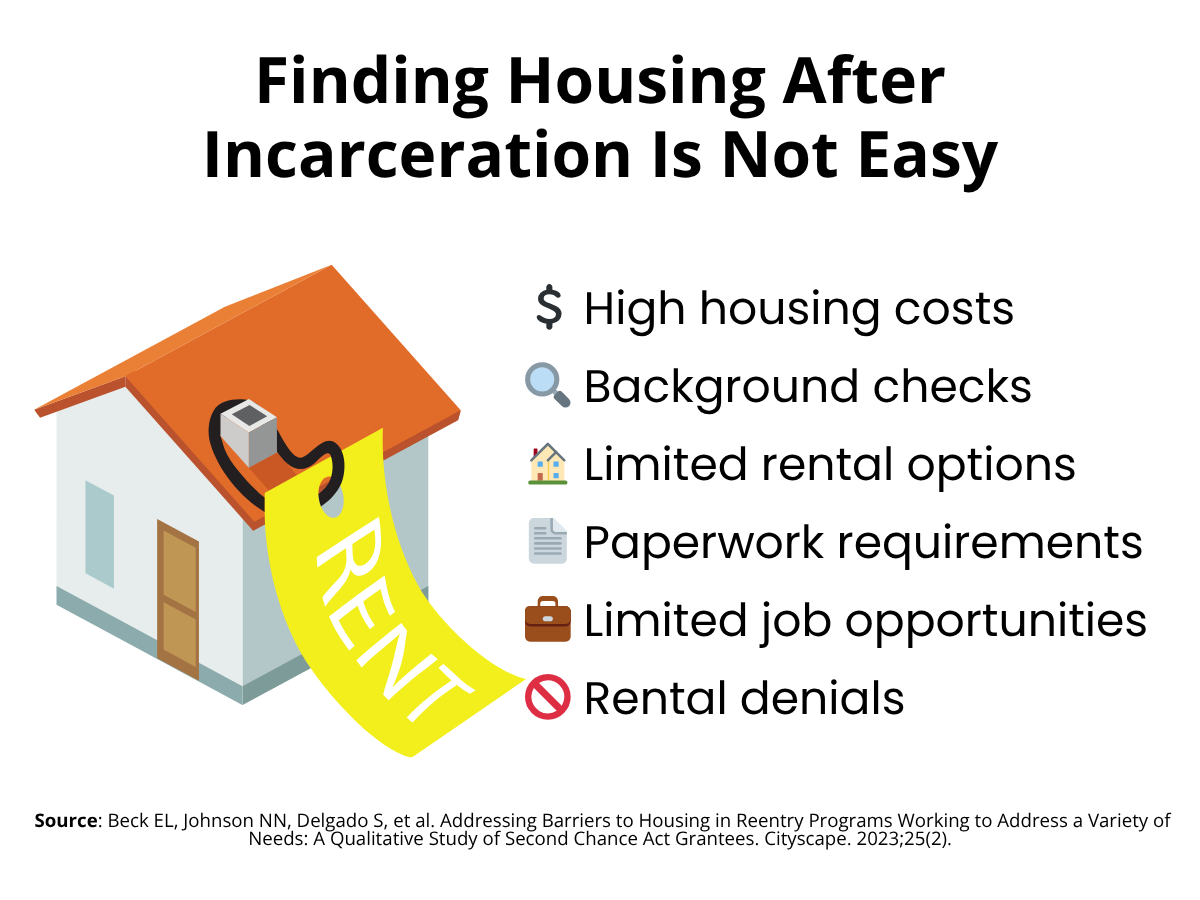
People leaving incarceration often face major barriers to finding stable housing. Barriers such as high housing costs, background checks, limited rental options, and paperwork requirements can make it difficult to secure a place to live.45 Limited employment opportunities after incarceration can also make it harder to afford housing and maintain stability.45,46
Housing instability and incarceration are closely connected. Many of the same factors—such as mental health conditions, substance use, low education, and unemployment—can increase the risk of both.47
People with a history of incarceration are also much more likely to experience homelessness. One national study found they had more than six times higher odds of experiencing homelessness compared to those without a history of incarceration.48
People leaving incarceration may also face serious health challenges that make it harder to find and keep stable housing. Conditions in correctional settings, such as overcrowding and limited resources, can increase the risk of infectious diseases.49 After release, many people have difficulty getting medications, health insurance, and ongoing care, which can lead to worse health outcomes.50
Over time, these challenges can have lasting effects. Experiences of housing instability or incarceration earlier in life are linked to faster cognitive decline in older age, which can affect long-term health and independence.51 These challenges highlight the critical role of reentry services in helping individuals navigate these barriers, and the Tennessee Department of Corrections is committed to supporting individuals by offering reentry services to promote long-term success after incarceration.
Individuals with Disabilitiles
People with disabilities often face barriers to finding safe, affordable housing. In Tennessee, there are limited housing programs designed to meet their specific needs.52 As a result, many must compete for general affordable housing that may not include needed accessibility features or support services. Individuals with disabilities may also face higher costs and discrimination when trying to secure housing.52
Many people with disabilities rely on Supplemental Security Income (SSI), a federal assistance program that provides monthly payments to qualifying individuals.53 Research analysis by the Technical Assistance Collaborative shows that SSI alone is not enough to afford a safe, decent apartment anywhere in the United States without rental assistance.54
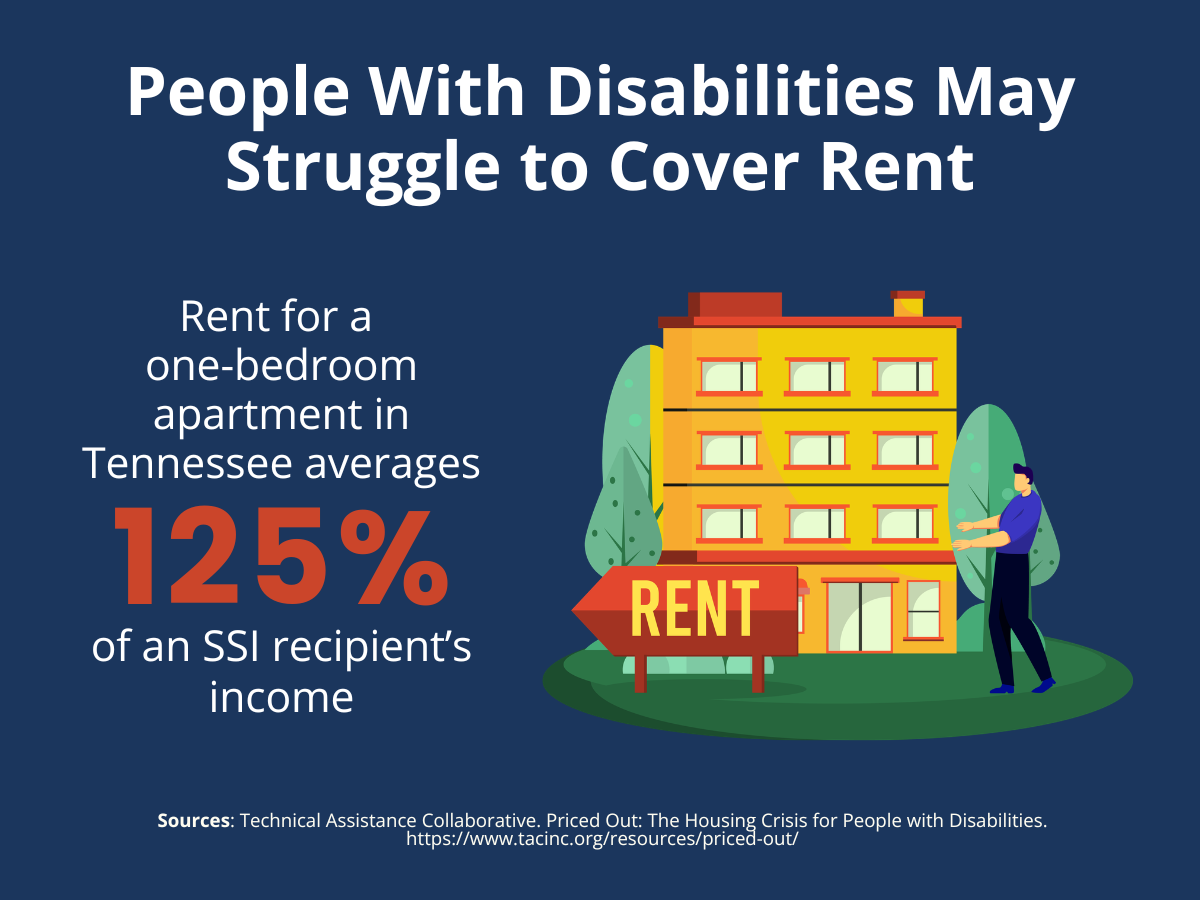
Housing costs vary across Tennessee, but they are out of reach for many people with disabilities. In the Nashville–Murfreesboro–Franklin area, a one-bedroom apartment can cost 171% of an SSI recipient’s monthly income; the statewide average is 125%.54 No county in Tennessee is affordable for someone relying on SSI alone.55
People with disabilities are also more likely to experience housing instability and homelessness. About half of the people experiencing homelessness have a disability, including conditions that affect daily functioning or independent living.56
These challenges can begin early in life. About one in 20 (4.7%) of public school students with disabilities experience homelessness, which is about 58% higher than the rate among students without disabilities.57 Students experiencing homelessness are also less likely to be identified for learning disabilities or receive special education services.57
Gaps between housing and health care systems can make it harder for people with disabilities to get the support they need. This can lead to worse health outcomes. For example, a study in Middle Tennessee found that people living with HIV who were experiencing homelessness were about half as likely to achieve viral suppression compared to those with stable housing.58
Low-Income Households
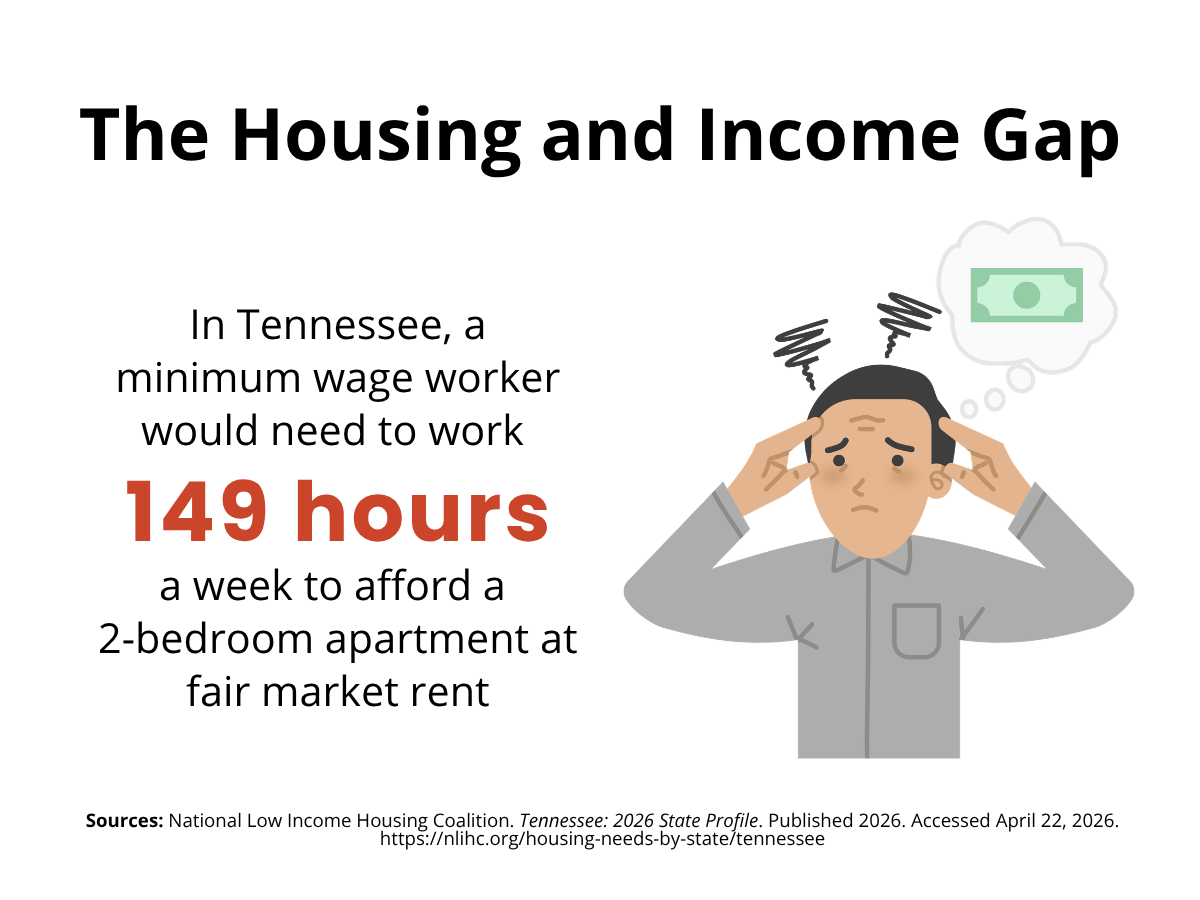
Housing costs often exceed what many low-income families or individuals can afford. Data from the U.S. Department of Housing and Urban Development (HUD) shows that the average fair market rent for a two-bedroom apartment in Tennessee is about $1,400 per month, though costs vary widely by location.59 To afford this rent and utilities without paying more than 30% of income on housing, a household would have to earn about $56,172 per year.60 For a minimum wage worker, that would mean working about 149 hours a week.60
Lower income is strongly linked to a higher risk of homelessness. A national study found that people earning less than $30,000 per year were more than twice as likely to report experiencing homelessness in the past year compared to those with higher incomes.48
For many families, housing instability is not a one-time event. These challenges can persist over time, making it harder to recover. People who experience instability are more likely to remain in lower-quality or unaffordable housing, with fewer opportunities to move into stable homes.61 This cycle can be reinforced by factors such as damaged credit, eviction records, depleted savings, and barriers to securing affordable housing after a period of instability. In many cases, these challenges are shaped not only by personal circumstances but also by broader systemic factors, including limited tenant protections, rising rents, and long-standing economic disparities that make it more difficult for households to regain stable housing.62
Where housing is located can also shape opportunities. Low-income individuals are more likely to live farther from job opportunities or in areas with lower-paying industries.63 Affordable housing is often located in areas with limited transportation options, making it harder to reach jobs, health care, and other essential services.64 Some subsidized housing may also be located far from health care facilities, creating additional barriers to care.65
These challenges can affect health over time. People in low-income communities often experience more severe and longer-lasting health problems after housing instability compared to those in higher-income areas.66 Housing-related events, such as foreclosures, are also more strongly linked to worsening health outcomes in lower-income neighborhoods.66
Older Adults
As people age, it can become harder to afford and maintain stable housing. Many older adults live on fixed or lower incomes, which can make it difficult to keep up with rising housing costs.67 Health challenges, such as mobility limitations or chronic conditions, can also limit the ability to live independently.67 Housing instability can further limit access to medications, medical appointments, and reliable transportation.68
In Tennessee, many older adults face these challenges. About one in four adults age 65 and older experiences a housing cost burden.69 Barriers such as limited affordable housing options, accessibility needs, and discrimination can make it even harder to find suitable housing.52
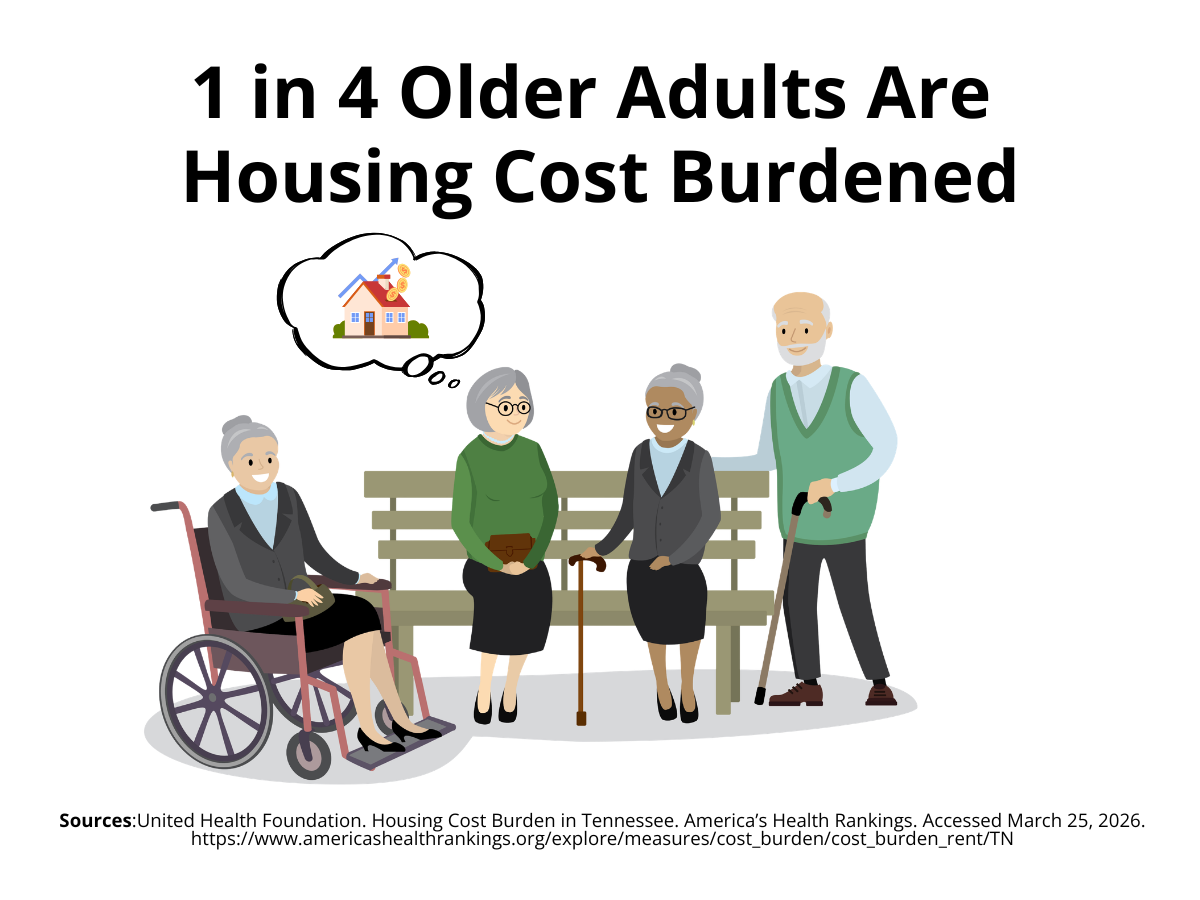
Lack of accessible housing and social isolation can increase the risk of housing instability. Some older adults may have limited family support, reduced mobility, or difficulty using technology, which can make it harder to find and maintain housing.70
Housing instability can have serious health effects for older adults. People experiencing homelessness often develop health conditions at rates similar to those seen in housed individuals who are much older.71 These challenges can worsen existing conditions and reduce quality of life.
At the same time, housing can also support stability and well-being. For many older adults, housing is a key source of financial security. Home equity can help cover health care costs and support independence, especially when services are not fully covered by insurance.72
Racial and Ethnic Minorities
Racial and ethnic minority groups are more likely to experience housing instability and homelessness. Long-standing structural factors shape these challenges. Practices such as segregation and redlining have contributed to unequal access to safe, quality housing.31 As a result, many racial and ethnic minority communities are more likely to live in areas with fewer resources, poorer housing conditions, and greater environmental risks.73
Differences in income and homeownership also play a role. National data shows that non-Hispanic White households have the highest homeownership rate (73.8%), followed by Asian households (63%), Hispanic households (49.8%), and Black households (45.9%).74
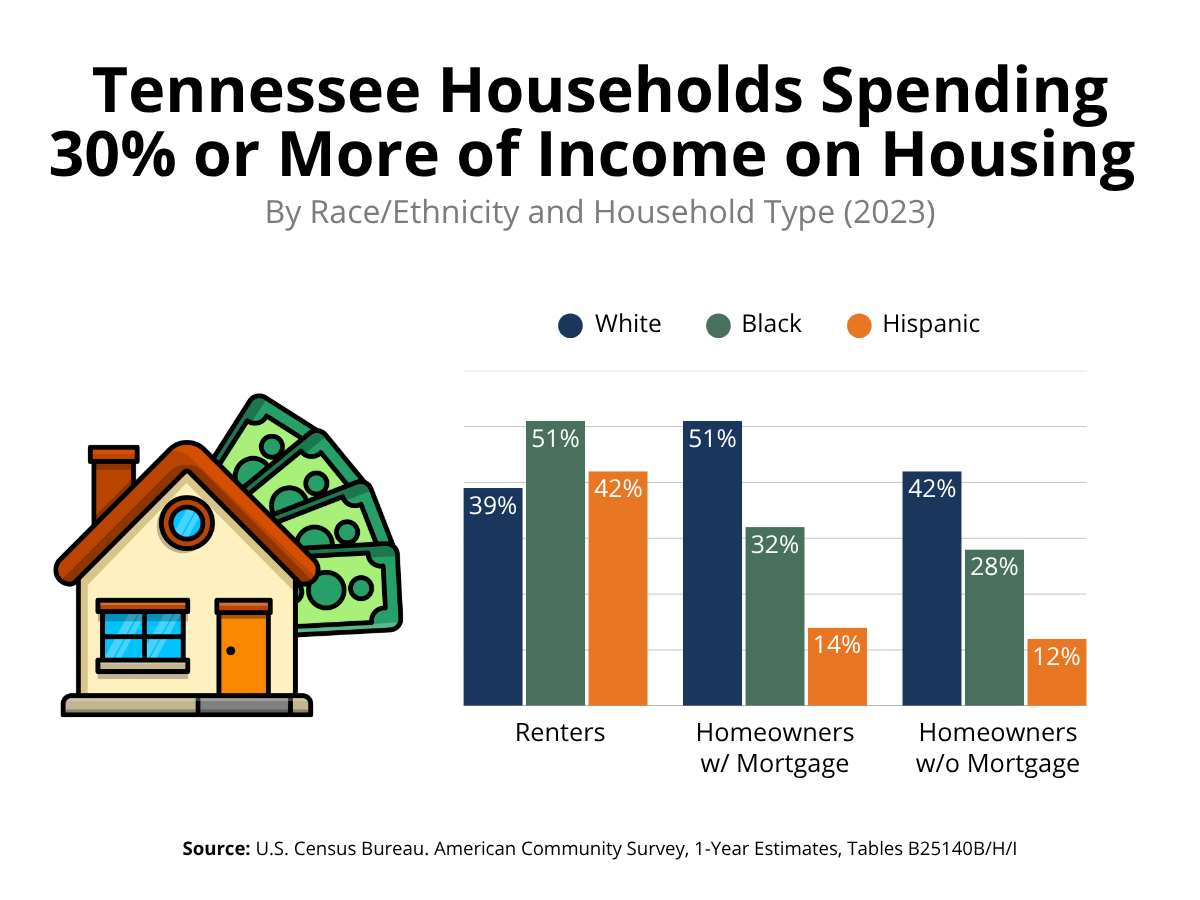
Lower average incomes among Black and Hispanic households can make it harder to afford housing and build financial stability.75 In Tennessee, Black and Hispanic households have higher cost-burdened rates than White households.76
 People in Hispanic and non-English-speaking communities may be less likely to seek
housing services due to language barriers or discomfort with group shelters.77 Individuals from immigrant or minority communities may also have fewer family or community
connections to rely on during times of need, making it more difficult to find stable
housing and access resources.78
People in Hispanic and non-English-speaking communities may be less likely to seek
housing services due to language barriers or discomfort with group shelters.77 Individuals from immigrant or minority communities may also have fewer family or community
connections to rely on during times of need, making it more difficult to find stable
housing and access resources.78Renters
Renters are at higher risk of housing instability than homeowners. They are more vulnerable to rising rents, eviction, and sudden changes in housing availability.79 Unlike homeowners, renters do not build equity and may have less financial security, making it harder to recover from job loss or unexpected expenses such as medical emergencies.80
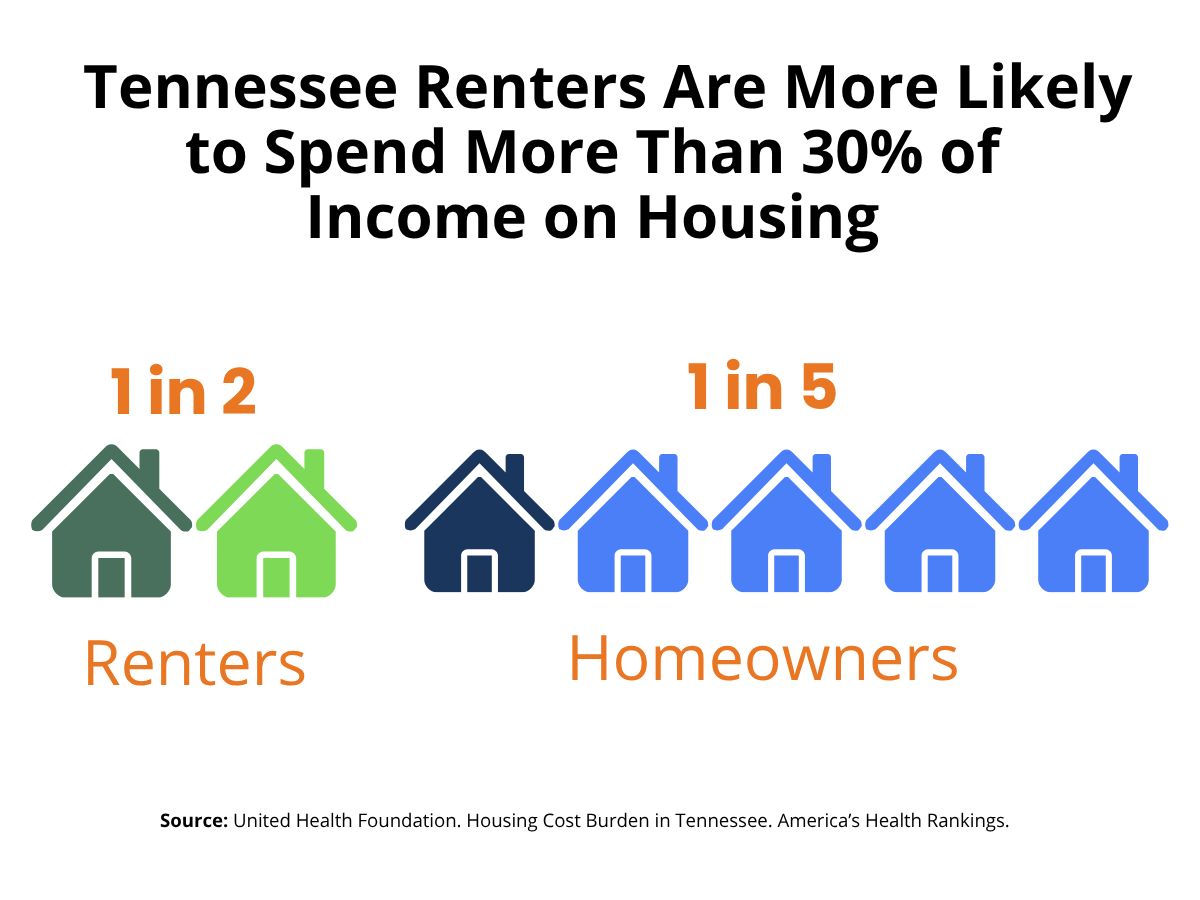
In Tennessee, many renters face high housing costs. Nearly half of renters (46%) spend more than 30% of their income on housing, compared to about one in five homeowners.69 Renters are also about three times as likely as homeowners to experience serious housing problems or to spend more than half of their income on housing.
These challenges can have serious health effects. Higher eviction rates have been linked to increased risk of death, especially in communities with larger Black populations.79 Renters are also more likely to have lower incomes and face barriers to health care compared to homeowners.81
Renters often experience poorer health outcomes. Studies show they are more likely to have limited access to care, lower use of preventive services, and higher rates of conditions such as hypertension, physical inactivity, and poor sleep.81,82
Over time, these risks can add up. Long-term studies show that spending a large share of income on housing is linked to a higher risk of death among renters.83 This shows how housing affordability can shape long-term health and survival.
Rural Communities
People in rural areas face unique challenges when it comes to housing stability.84 Long distances and limited public transportation can make it harder to reach jobs, health care, and support services. Rural communities also tend to have fewer shelters and affordable housing options, making it more difficult for people experiencing housing instability or homelessness to find help. Because these areas are spread out, it can be harder to provide consistent support across large regions.84
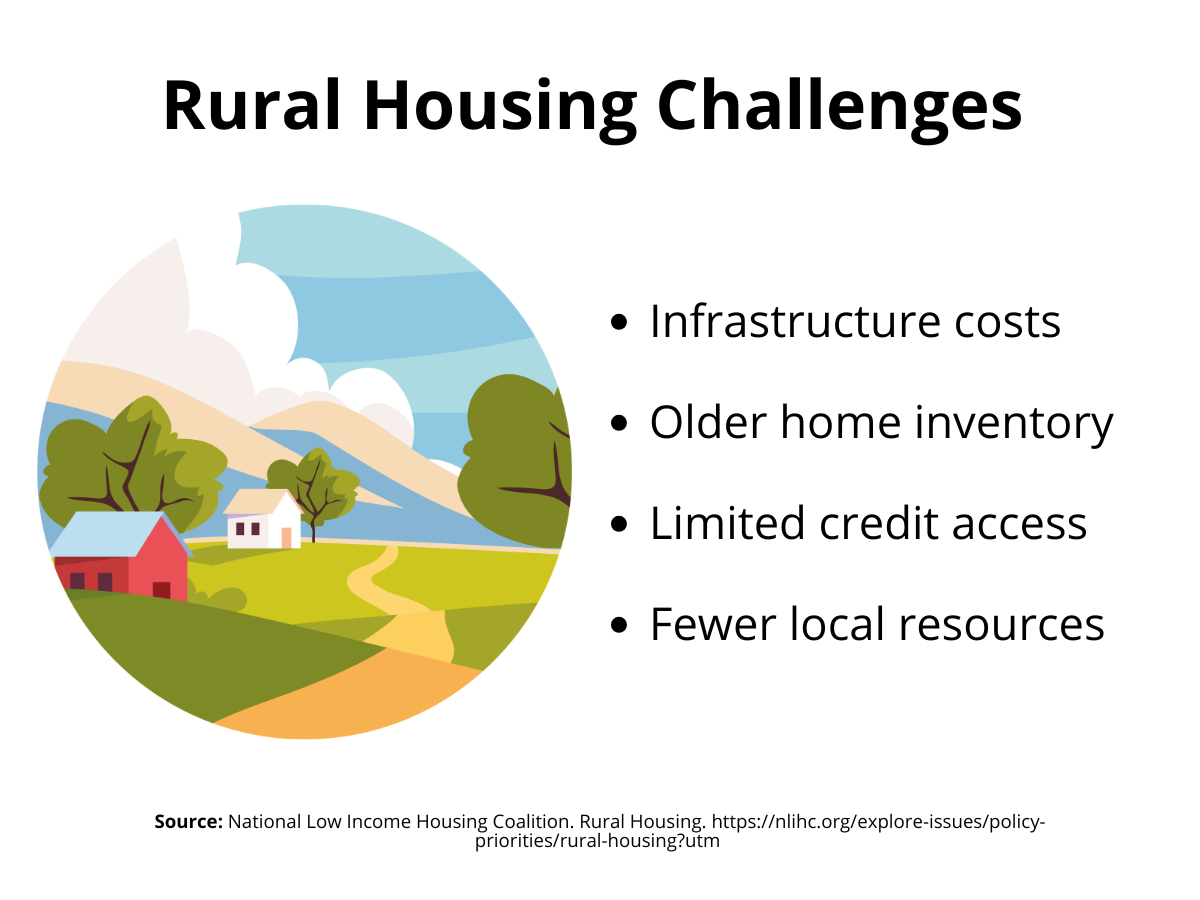
Rural communities also face challenges in developing new housing and maintaining existing homes. Higher infrastructure costs, aging housing in need of repairs, limited access to credit, and fewer local resources can make housing development more difficult.85 These challenges limit the number of safe, affordable homes available in rural communities.
Housing costs are also a concern. About 44% of rural renters—nearly one in two—and about one in five rural homeowners spend over 30% of their income on housing.86
People experiencing homelessness in rural communities may struggle to find needed resources. Tennessee has 10 Continuums of Care (CoCs), which coordinate housing and homelessness services.87 Each CoC covers a specific geographic region, and in rural areas these regions can span multiple counties—sometimes more than 20—making it difficult to provide consistent support across long distances.87
These housing challenges can affect health and well-being. Poor housing quality, limited access to services, and financial strain can impact safety, mental health, and access to care. In many rural areas, homes may need repairs or upgrades, making it harder for residents—especially older adults—to live safely and independently.88
Veterans
Veterans may face a range of challenges that affect housing stability. These can include early life experiences, lower income or education, and factors related to military service, such as discharge status.89 Mental health conditions, substance misuse, and a history of incarceration can also increase the risk of housing instability.
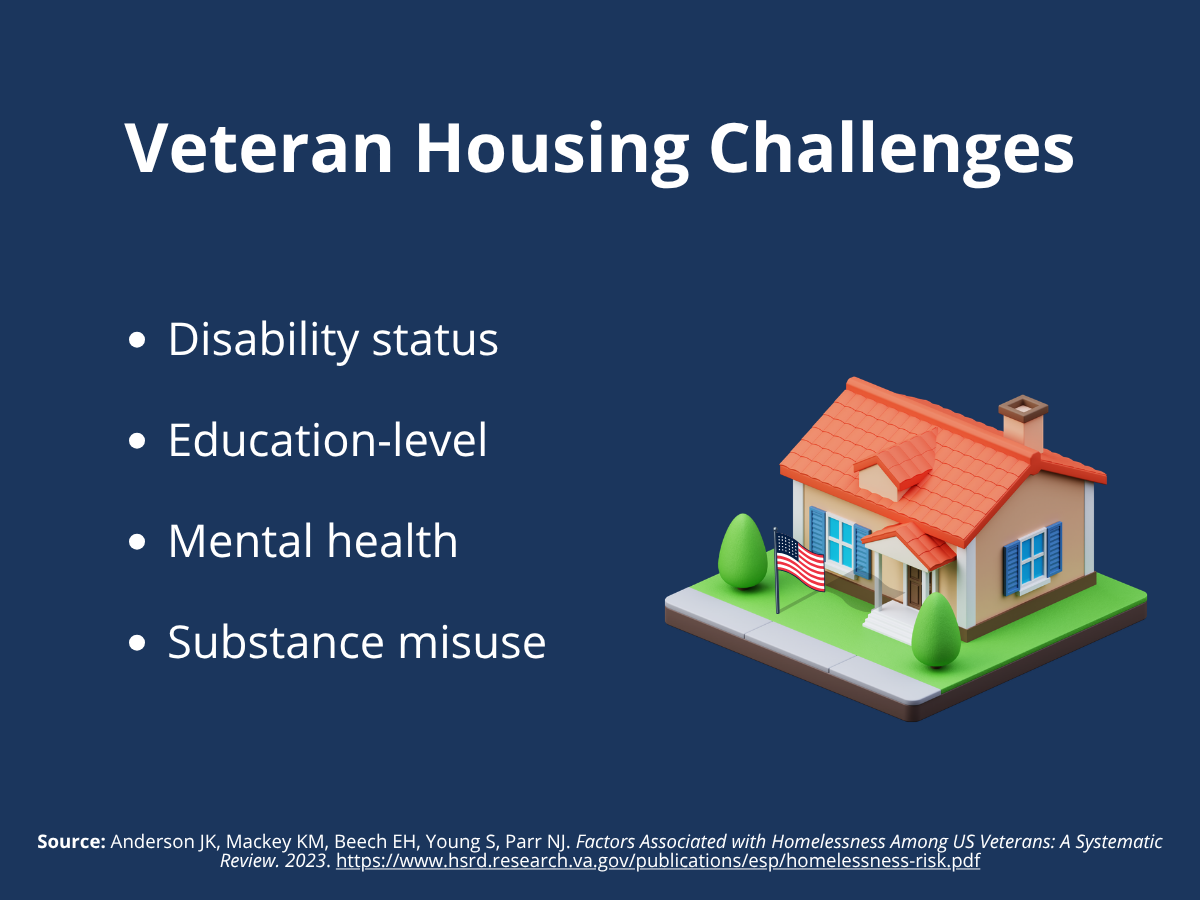
Some Veterans face higher risks than others. For example, those discharged due to disability are more likely to experience housing instability than those with routine discharges.90 Veterans with opioid use disorder are about twice as likely to report recent housing instability compared to those without opioid use disorder.91 Frequent moves during military service may also make it harder for some Veterans to build wealth through homeownership. 92
Housing instability can lead to serious outcomes, including homelessness. In Tennessee, about 570 Veterans were experiencing homelessness in January 2024, representing a 24.9% decrease from the previous year and reflecting continued declines in Veteran homelessness statewide.93
Housing instability can also affect health. Veterans experiencing homelessness have about three times the risk of dying from a drug overdose compared to those who are housed.94 It is also linked to higher mortality among Veterans with serious medical conditions, including those receiving dialysis or undergoing major heart surgery.95
-
Community-Driven Solutions
Community-driven solutions focus on practical steps that local partners can take to improve access to safe, stable, and attainable housing. Communities understand their own needs best, and local leaders, organizations, and residents often develop solutions that fit their specific context. The strategies below outline evidence-informed, actionable steps to expand housing opportunities and support long-term well-being.
- Screen for housing needs during health care visits. Work with local hospitals and clinics to include housing questions during routine visits. Identifying people living in unsafe conditions or at risk of homelessness allows providers to connect them to support services early.
- Create a local housing and health resource directory. Include services such as rental assistance programs, legal aid, health clinics, weather relief centers, and shelters. Consider developing a map to help people and service providers quickly find available resources.
- Bring community partners together to develop housing solutions. Host meetings or events that connect landlords, housing authorities, service providers, health care professionals, and school staff. These conversations can help identify shared challenges and create practical, local solutions.
- Partner with pharmacies and nonprofits to distribute basic health supplies. Work together to provide hygiene kits and first-aid supplies, and help with prescription assistance program applications. These supports can improve health and help people stay stable in their housing.
- Organize community food drives to support households in need. Partner with food banks and local organizations to provide nutritious food in areas with limited access to groceries. This can help reduce financial strain for families experiencing housing instability.
- Offer renter education workshops. Teach renters about tenant rights, home safety, and common housing hazards such as lead or asbestos. This knowledge can help prevent evictions and improve living conditions.
- Train school staff to recognize housing challenges. Guide teachers, counselors, and administrators in identifying signs of housing instability. This can help connect students and families to support services earlier.
- Bring preventive health care directly to the community. Organize immunization drives or mobile clinics in multiple locations across the community. Partner with organizations such as Remote Area Medical or local universities and consider transportation barriers.
- Provide weatherization education and connect people to home repair programs. These programs can improve home safety, reduce energy costs, and help people remain in stable housing longer.
- Coordinate referrals across local organizations. Encourage housing, health, and social service providers to share information and referral pathways. This can make it easier for people to access the services they need.
-
Making Change Through Policies and Systems
Policies and systems play an important role in shaping housing opportunities. Decisions about zoning, development, and community investment affect whether people can find safe, affordable places to live. The strategies below highlight ways communities can strengthen policies and work together across systems to expand attainable housing and support long-term stability.
- Promote property tax relief programs for older adults and people with disabilities. Help connect eligible individuals to property tax relief and tax freeze programs offered through the Tennessee Comptroller of the Treasury. These programs can help people remain in their homes as housing costs rise.
- Engage in local zoning and land-use decisions. Zoning policies determine the types of housing that can be built and where they can be located. Community involvement can help ensure these policies support attainable housing options.
- Include housing in local planning efforts. Comprehensive plans, health improvement plans, and economic development strategies all shape housing supply and stability. Including housing goals helps communities address challenges in a coordinated way.
- Partner with hospitals and clinics to improve discharge policies. Work with health care systems to ensure patients are not released without a safe place to stay. Align discharge planning with housing and community services.
- Support embedded clinics and medical respite programs. Encourage health care organizations and federally qualified health centers (FQHCs) to develop services that reach people where they are. These programs provide short-term care while connecting people to housing and support services.
- Strengthen data sharing across housing, health, and social services. Encourage agencies to share data and coordinate services. This can help identify housing needs earlier and connect people to resources more quickly.
- Collaborate with your local Continuum of Care (CoC). Work with CoCs to identify gaps in the local homelessness response system and where additional support is needed. Use funding programs and local data to better understand and address community needs.
- Support the development of coordinated outreach teams. Invest in teams that provide services across communities, especially in underserved areas. These teams can connect people to care, housing, and long-term support.
- Establish cross-sector housing coalitions. Formal partnerships between housing authorities, health care systems, schools, nonprofits, and local governments can help coordinate strategies and support long-term solutions.
- Expand affordable housing and shelter options. Increase the supply of supportive and affordable housing to improve stability and access to services. Investments can include rental assistance, preservation of existing housing, and emergency support to prevent evictions.
- Incentivize affordable housing development. Provide incentives to landlords and developers to increase affordable housing supply. These strategies can offset costs and make it more feasible to build and maintain housing for low-income households.
-
Community Spotlight
The Health Council Community of Practice (CoP) connects Tennessee Health Councils through shared learning and discussion around health priorities. The links below provide access to recent CoP conversations related to this topic. To learn more about the Community of Practice, click here.
There are no Community Spotlight features available for this topic yet. If you have a relevant story, resource, or presentation you'd like to share, please email Health.Councils@tn.gov.
-
Partners and Resources
Tennessee Resources:
Tennessee Continuum of Care (CoC) Programs
- Continuum of Care (CoC) Program
Federally funded programs that coordinate housing and services for individuals and families experiencing homelessness. Tennessee has 10 CoC regions that work with local agencies, service providers, and community partners to prevent and reduce homelessness. CoCs often address health care needs and help connect housing and health systems. Working with local CoC partners can strengthen coordination and improve access to services.
Tennessee Department of Economic and Community Development (TNECD)
- Community Development Block Grant (CDBG) Program
A federal program funded by the U.S. Department of Housing and Urban Development (HUD) that provides grants to local governments for community development projects. These funds can support housing improvements, infrastructure, and economic development activities. The program helps expand access to safe housing and improve living conditions, especially for low- and moderate-income communities.
Tennessee Department of Education (TDOE)
- Tennessee Homeless Education Program
Helps ensure that children and youth experiencing homelessness can stay in school and receive a stable education. The program supports school districts (local education agencies, or LEAs) in connecting students and families to the services they need. Grants are awarded to districts that partner with community organizations to better support students experiencing homelessness.
Tennessee Department of Health (TDH)
- Healthy Homes Initiative
Provides information and resources to help make homes safer and healthier. This includes guidance on reducing hazards such as mold, lead, and poor air quality. These resources support communities in improving housing conditions and protecting health. - Women, Infants, and Children (WIC)
A federally funded program that provides supplemental food, nutrition education, and breastfeeding support to low-income pregnant and postpartum women, infants, and children up to age five. WIC also connects families to health care and community services. It plays an important role in improving nutrition and supporting families facing financial or housing challenges.
Tennessee Department of Mental Health and Substance Abuse Services (TDMHSAS)
- Creating Homes Initiative (CHI)
A statewide program that increases access to safe, affordable, permanent housing for people with mental illness or substance use disorders. CHI partners with local communities and providers and has created more than 36,000 housing opportunities across Tennessee. Regional staff help communities secure funding and develop housing solutions. - Intensive Long-Term Support (ILS)
Provides long-term, wraparound support services to help people transition from state mental health facilities into community-based housing. These services support stability and help people live more independently. - Projects for Assistance in Transition from Homelessness (PATH)
A federal program that supports people experiencing homelessness who have a mental illness or co-occurring substance use disorder. PATH funds outreach services that connect people to treatment, case management, and housing support. - Targeted Transitional Support Program
Provides one-time financial assistance to help people live independently in their community. Funds can be used for expenses such as rental deposits, rent, utilities, and basic health care needs, such as dental or vision care. This program supports individuals receiving treatment for mental illness or substance use disorders who have low incomes.
Tennessee Division of TennCare
- TennCare (Tennessee Medicaid Program)
Provides health insurance to about 1.7 million Tennesseans, including children, pregnant women, older adults, and people with disabilities. TennCare supports people with low incomes, including those experiencing housing instability, by ensuring access to needed health care services. - TennCare Shelter Enrollment Project
A partnership with the National Health Care for the Homeless Council that helps people experiencing homelessness enroll in TennCare. Shelter and outreach staff are trained to help individuals apply for coverage and complete renewals using the TennCare Connect online portal. This helps people access care and maintain coverage.
Tennessee Housing Development Agency (THDA)
- Emergency Repair Program (ERP)
Offers grants to low-income homeowners who are older adults or have disabilities to fix urgent home issues. Repairs may include roofing, plumbing, electrical systems, and heating or cooling. This program helps people remain safely in their homes. - Housing Choice Voucher (HCV) Program (Section 8)
Helps low-income individuals and families afford safe, decent housing in the private market. Participants typically pay about 30% of their income toward rent, and the voucher covers the rest. Housing must meet health and safety standards. - Low-Income Home Energy Assistance Program (LIHEAP)
Provides one-time financial assistance to help households pay heating and cooling costs. Payments are made directly to utility companies to help keep services active. This program helps prevent utility shutoffs and reduce financial strain. - Tennessee Housing Trust Fund (THTF)
A state-funded program that supports the development, preservation, and repair of affordable housing. It focuses on helping low- and very low-income individuals, including older adults and people with disabilities. The fund helps expand access to safe, stable housing across Tennessee. - Weatherization Assistance Program (WAP)
Helps low-income households reduce energy costs by improving home efficiency. Services may include insulation, air sealing, and duct repairs. These improvements make homes safer, more comfortable, and more affordable to maintain.
National Health Care for the Homeless Council (NHCHC)
- A national organization that supports health care providers, shelters, housing programs, and communities working to improve care for people experiencing homelessness. The Nashville-based organization offers training and technical assistance to strengthen services and coordination.
- Continuum of Care (CoC) Program
-
To Learn More
- A global nonprofit organization that helps families build and improve affordable homes. Through volunteer work, donations, and partnerships with homeowners, Habitat builds and repairs housing for people with low incomes. Local Habitat organizations offer opportunities to volunteer and support housing efforts in your community.
National Low Income Housing Coalition
- National Housing Trust Fund (NHTF)
Supports the development and preservation of affordable housing for extremely low-income households. Funds can be used for new construction, rehabilitation, and operating support for rental housing. This program helps expand housing options for those with the greatest financial need.
- Provides tools, data, and guidance to help local governments and organizations address affordable housing challenges. The site includes strategies, case studies, and policy options to support housing planning and development. It is a useful resource for communities working to improve housing access and conditions.
National Center for Healthy Housing (NCHH)
- A national organization focused on improving housing conditions to protect public health. NCHH provides research, tools, and policy guidance to reduce housing-related health risks. Their work supports efforts to create safer, healthier homes across communities.
Public Health Matters: Zoning, Equity, and Public Health (American Journal of Public Health)
- This article explores how zoning and land-use decisions affect health. It highlights how planning policies can shape access to housing, resources, and opportunities. This resource helps communities understand the connection between policy decisions and health outcomes.
U.S. Department of Housing and Urban Development (HUD)
- A federal agency that supports affordable housing, community development, and efforts to reduce homelessness across the country. HUD provides funding and guidance for programs such as public housing, housing vouchers, and homelessness services. These resources help communities expand access to safe, affordable housing and improve living conditions.
- HOME Investment Partnerships Program (HOME)
A federal program that helps increase the supply of affordable housing for low-income households. Funds support housing development, rehabilitation, and rental assistance. HUD distributes these funds across Tennessee to address local housing needs.
U.S. Surgeon General’s Call to Action to Promote Healthy Homes
- A national report that outlines steps to make homes safer and reduce health risks. It highlights common hazards such as lead, mold, and poor air quality, and provides practical actions individuals and communities can take. This resource helps connect housing conditions to overall health and well-being.
Give us your feed back on the TVT.