Positive Childhood Experiences
Healthy child development plays a crucial role in building strong communities and a healthy economy. When communities invest in the early years, children are more likely to develop good mental and physical health. They are also more likely to excel in school and become responsible adults. All of these things contribute to a healthy and thriving community.
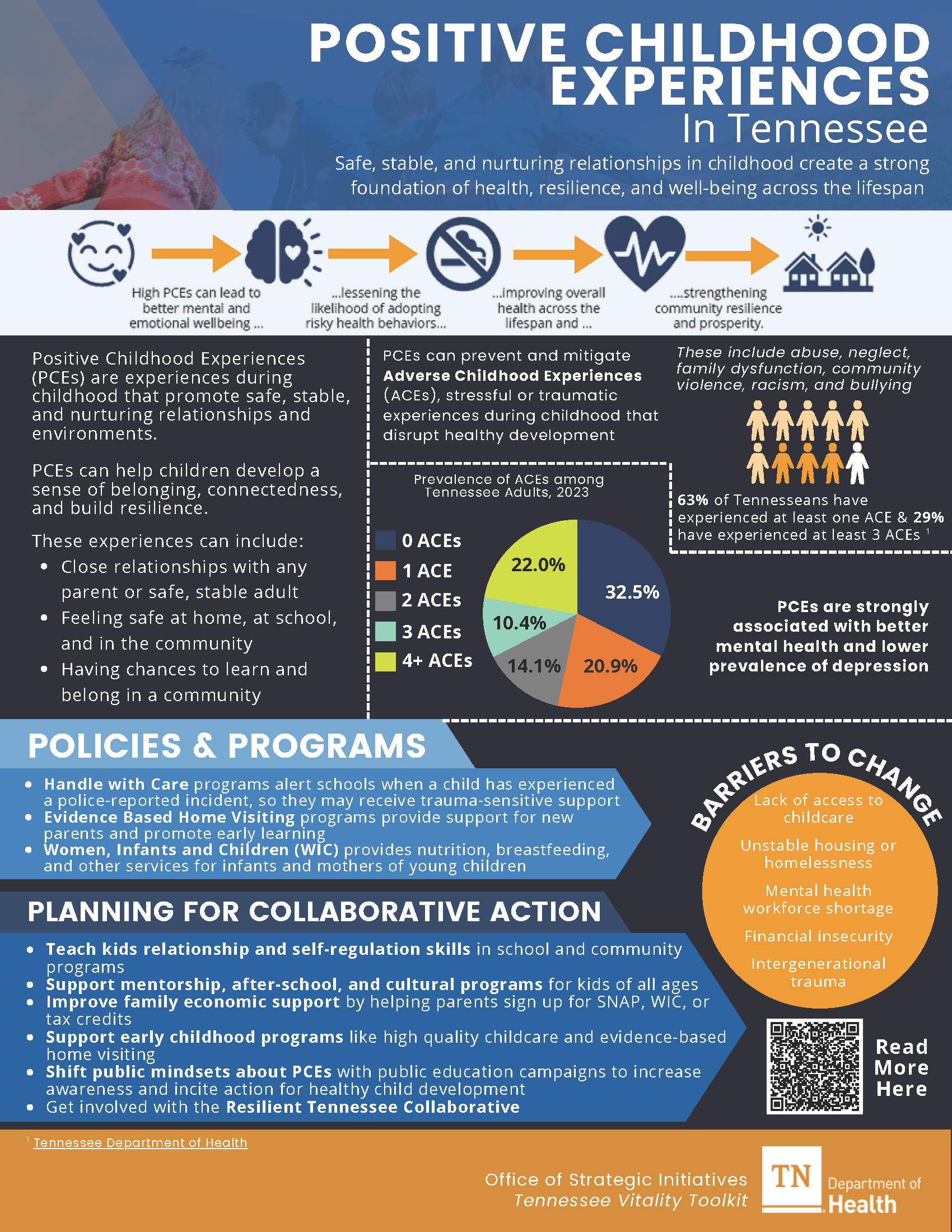
Positive Childhood Experiences (PCEs) are experiences that give children safe, stable, nurturing, and fair relationships and environments. These experiences can include close relationships with a parent or a trusted adult, feeling safe at home, in school, and in the community, and having opportunities to learn and feel included. PCEs can help children develop a sense of belonging, stay connected to others, and develop resilience.
Promoting safe, stable, nurturing, and fair relationships and environments for children has lifelong benefits for Tennesseans. Children who have PCEs are less likely to engage in risky behaviors, less likely to have long-term health problems, and more likely to have good mental and overall health throughout their lives.

-
Why are Positive Childhood Experiences Important for Community Well-Being?
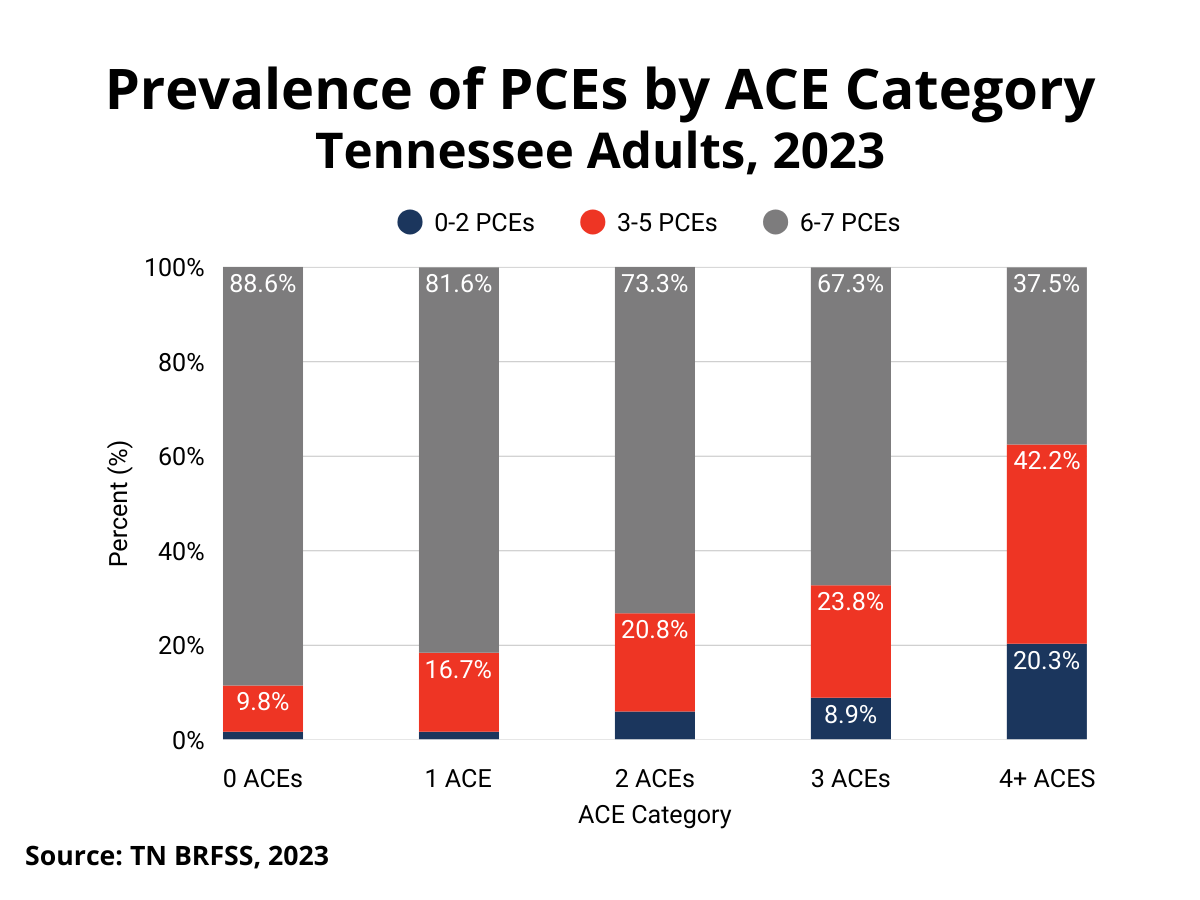
Recent surveys in Tennessee show that Positive Childhood Experiences (PCEs) can support better mental and emotional health.1 Adults in Tennessee who report having more PCEs as children also report better mental health today, and higher levels of PCEs are linked to lower rates of depression.2
PCEs support long-term health in several ways. They can help prevent Adverse Childhood Experiences (ACEs), reduce the harm they cause, and directly improve well-being.3 ACEs are stressful or traumatic events that happen during childhood—such as abuse, neglect, or being separated from parents. Community conditions that make life unstable or unsafe, like poverty, community violence, or a lack of affordable housing, are also considered ACEs. ACEs can disrupt healthy child development; People who experience more ACEs have a higher risk of health problems as adults.
In Tennessee, more than half of adults have experienced at least one ACE, and 20% have experienced three or more.3 This high number underscores the importance of supporting children and families across the state.
Adults who report more PCEs are more likely to show positive health outcomes later in life, and PCEs can help buffer the adverse effects of ACEs.³ Research shows that while ACEs increase health risks, PCEs help reduce them.3 In Tennessee, adults who reported more PCEs were also more likely to report having “good” or better overall health.3
Even children who have not experienced trauma need to feel like they belong and are connected to others to thrive. Families and communities share the responsibility of creating environments where children feel safe, supported, and cared for.
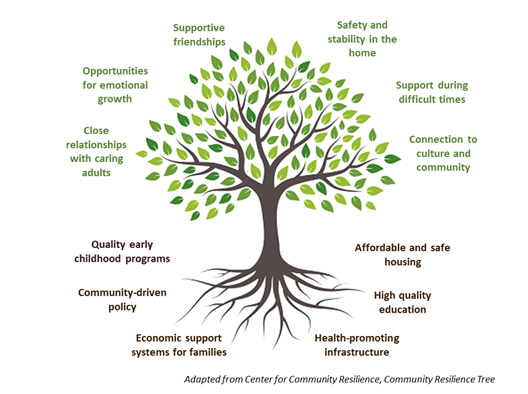
The picture above illustrates how strong communities contribute to children's growth into healthy adults. The roots of the tree represent the things that make life stable, such as good schools, safe housing, and support for families. The leaves represent what grows from those strong roots, such as feeling safe, having friends, and getting support during difficult times. When communities build strong foundations and provide families with the resources they need, all children can thrive.
-
What are the Disparities?
Many communities face barriers to accessing the social supports that promote Positive Childhood Experiences (PCEs) and protect against Adverse Childhood Experiences (ACEs). These communities also often have fewer options for treatment when health problems arise from ACEs. Strategies to increase PCEs can help reduce these disparities, especially when they focus on supporting the following groups:
Children in Foster Care
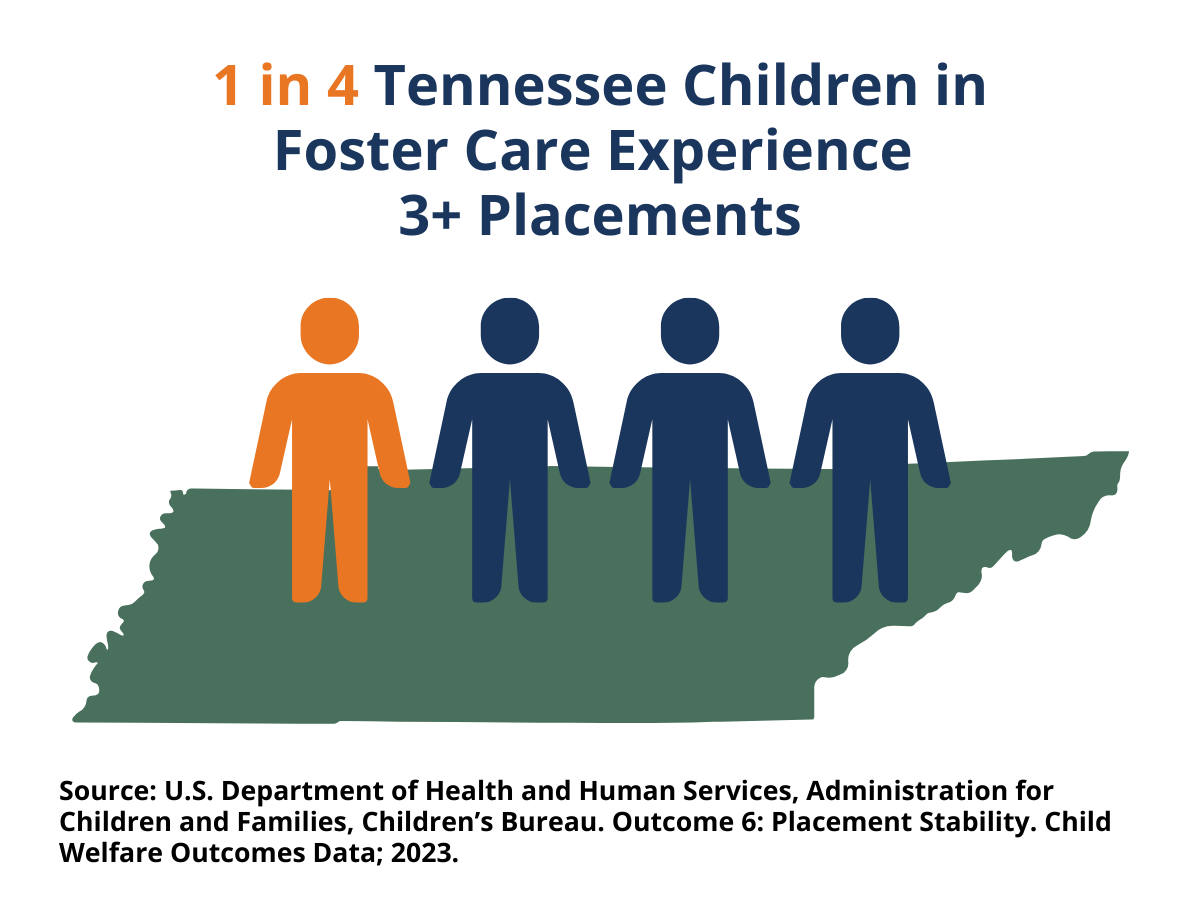
Being placed in state custody can be traumatic for a child, especially when they experience multiple placement changes. According to the 2023 Children’s Bureau Child Welfare Outcomes Report, one in four Tennessee children in foster care had three or more placements while they were in the system, adding to the trauma of being placed in state care.4 Each move can interrupt a child’s connection with caring adults, school, and community activities. These are all essential parts of Positive Childhood Experiences (PCEs), which help children feel safe, supported, and hopeful.
National research shows similar concerns. One study found that children in foster care face an 18% to 23% higher risk of experiencing four or more ACEs.5 Another study showed that children who were placed in foster care or adopted from foster care had significantly higher odds of experiencing parental divorce or separation, death, incarceration, or abuse. They were also more likely to live with a household member who had a mental illness or substance use disorder.6
Rural Communities
Children’s experiences are shaped by where they live. Research has shown that Adverse Childhood Experiences (ACEs) are more likely to occur together in rural areas. Data from the National Survey of Children’s Health found that 46.4% of children in smaller communities or rural areas had at least one ACE, compared to 38.9% of children in urban areas.7 A statewide study using TennCare data from 2018 also revealed higher rates of ACEs in rural communities, with 23.9% of rural children reporting experiencing an ACE compared to 17.7% of urban children.8
Rural communities may have fewer treatment and support options for children affected by ACEs.9 Higher poverty rates in rural areas can also make it harder for families to access needed care.10,11 ACEs more common among rural children include having a parent or guardian who is divorced or incarcerated, living with someone who has a substance use or mental health disorder, and witnessing parental violence.12
However, research shows that location alone does not determine a child’s risk of experiencing ACEs. One national study found no significant difference in ACEs between urban and rural children after adjusting for factors such as poverty and parental education level.13 This highlights the importance of addressing the social determinants of health, like economic stability and access to quality education, that contribute to ACEs.14 Another national study using data from 2016 to 2018 found that rural children reported higher levels of Positive Childhood Experiences (PCEs) than urban children.13 This suggests that rural communities have strengths and resources that can help reduce the impact of ACEs.
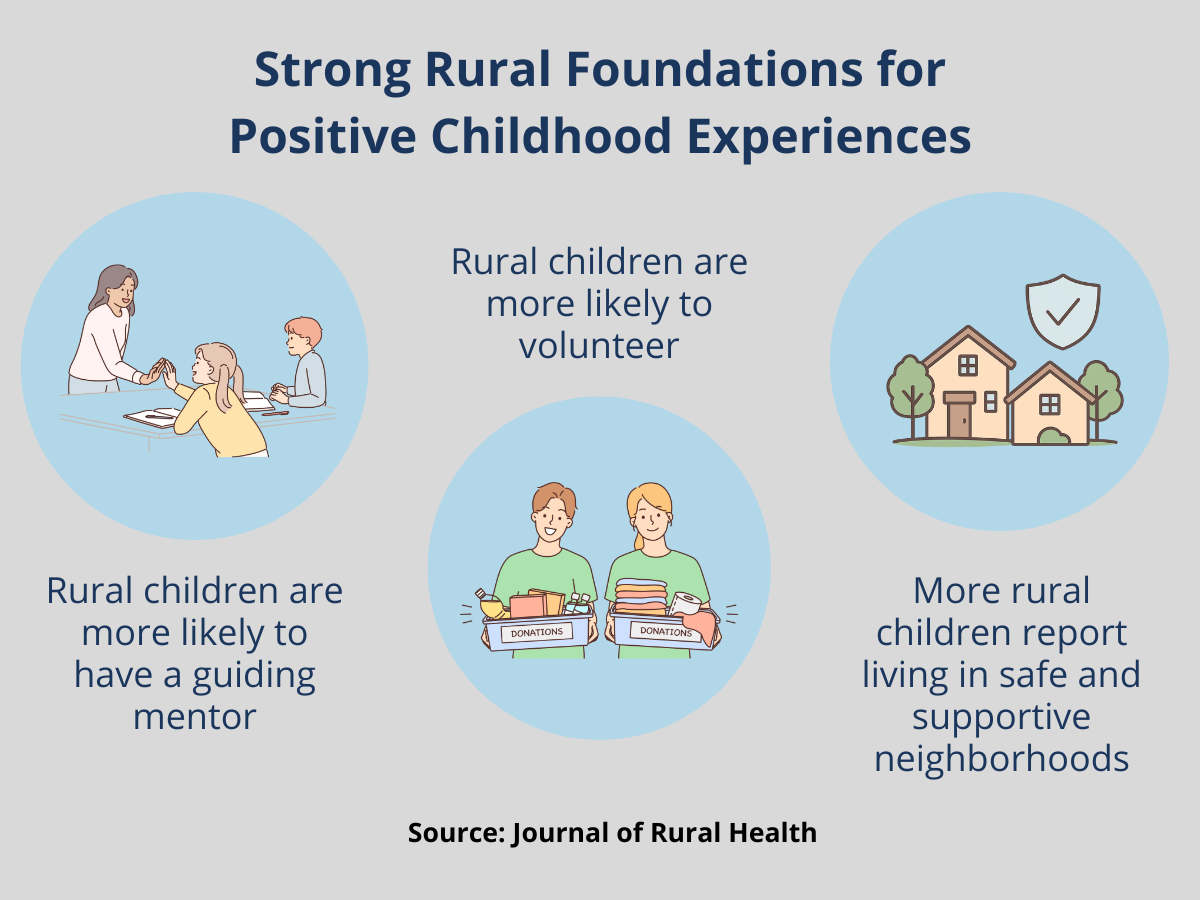
Rural communities have strong foundations for Positive Childhood Experiences (PCEs).
Research shows that many rural children report higher levels of key PCEs than children in urban areas.- Caring adults matter: Nearly 95% of rural children reported having a guiding mentor, compared to 89% of urban children.13
- Community involvement: Rural children were more likely to volunteer (48.0% vs. 43.4%), helping them build purpose and connection.13
- Safe and supportive neighborhoods:
- 97.2% of rural children reported living in a safe neighborhood, compared to 94.5% of urban children.13
- 59.8% of rural children reported living in a supportive neighborhood, compared to 56.3% of urban children.13
Children Experiencing Homelessness
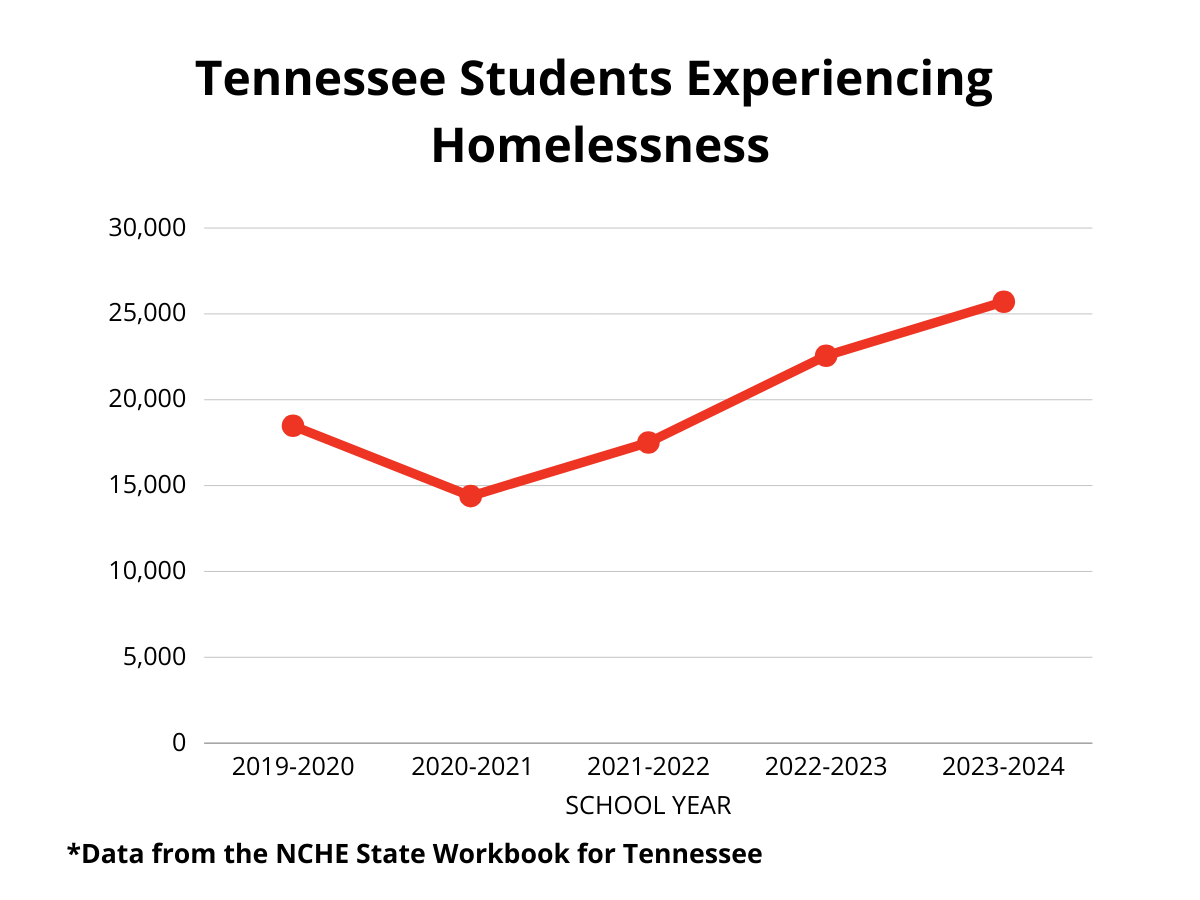
There were 25,711 homeless students enrolled in Tennessee Schools during the 2023-24 school year, a 39.1% increase since the 2019-20 school year.15,16 Positive Childhood Experiences (PCEs) are built through safe, stable environments and caring relationships. Housing instability can disrupt positive childhood experiences and place children at greater risk.
Children experiencing homelessness are three times more likely to have emotional and behavioral challenges than children with stable housing.17 Children who experience homelessness often face multiple Adverse Childhood Experiences (ACEs), sometimes even before they reach school age. Housing instability can make these experiences worse through frequent moves, time spent in shelters, separation from caregivers, and difficulties meeting basic needs, such as rest and staying in the same school.18 One study found that as housing instability increased, children experienced more ACEs overall.19 This helps explain why children without stable housing may struggle with learning, behavior, and emotional health. The same study also found that frequent moves were associated with poorer outcomes in brain development.19
Because housing instability has such strong effects on children’s health and development, some experts recommend considering it an ACE, especially for younger children. At the same time, ACEs can also increase the risk of homelessness later. A national study using data from the 2022 National Survey of Children’s Health found that 41% of children who experienced homelessness had four or more ACEs.20 This cycle illustrates why stable housing and supportive relationships are essential for fostering PCEs and safeguarding children’s long-term well-being.
Racial and Ethnic Minorities
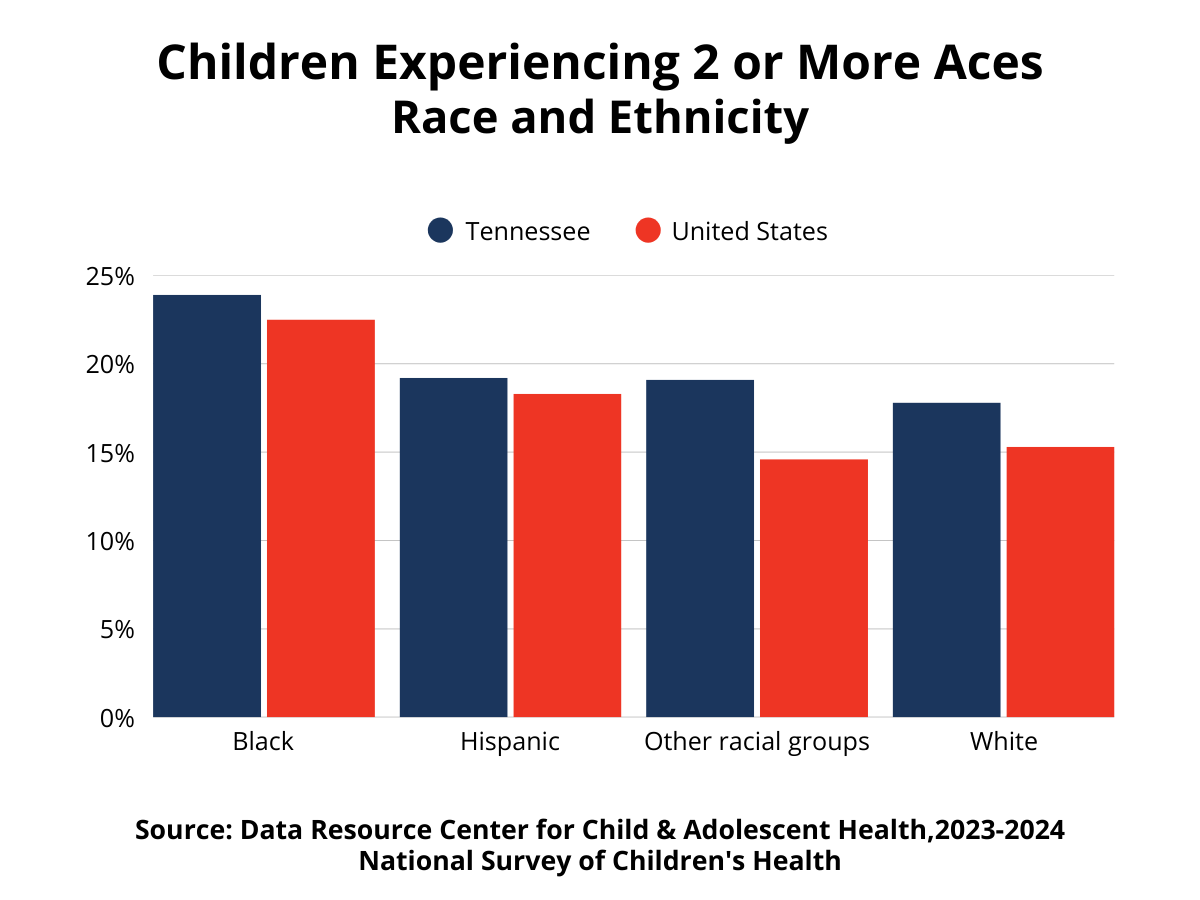
Data shows that racial and ethnic inequities place some children at greater risk for Adverse Childhood Experiences (ACEs) and limit access to Positive Childhood Experiences (PCEs). In Tennessee, children from racial and ethnic minority groups are more likely than White children to experience two or more ACEs.21 These differences are closely tied to economic and social conditions that shape families’ daily lives.
Economic hardship can also contribute to ACEs. In 2024, more than one in three Black children and nearly one in three Hispanic children in Tennessee lived in poverty, compared to roughly one in eight White children.22 Higher poverty rates can increase stress on families and reduce access to supports that help prevent ACEs and promote PCEs.
Research also shows differences in PCEs. A 2023 Tennessee survey found that adults from racial and ethnic minority groups were less likely to report high levels of PCEs than White adults.3 National studies reveal similar patterns among children, underscoring the importance of addressing the conditions that influence safety, stability, and access to supportive relationships.23,24
LGBTQ+ Individuals
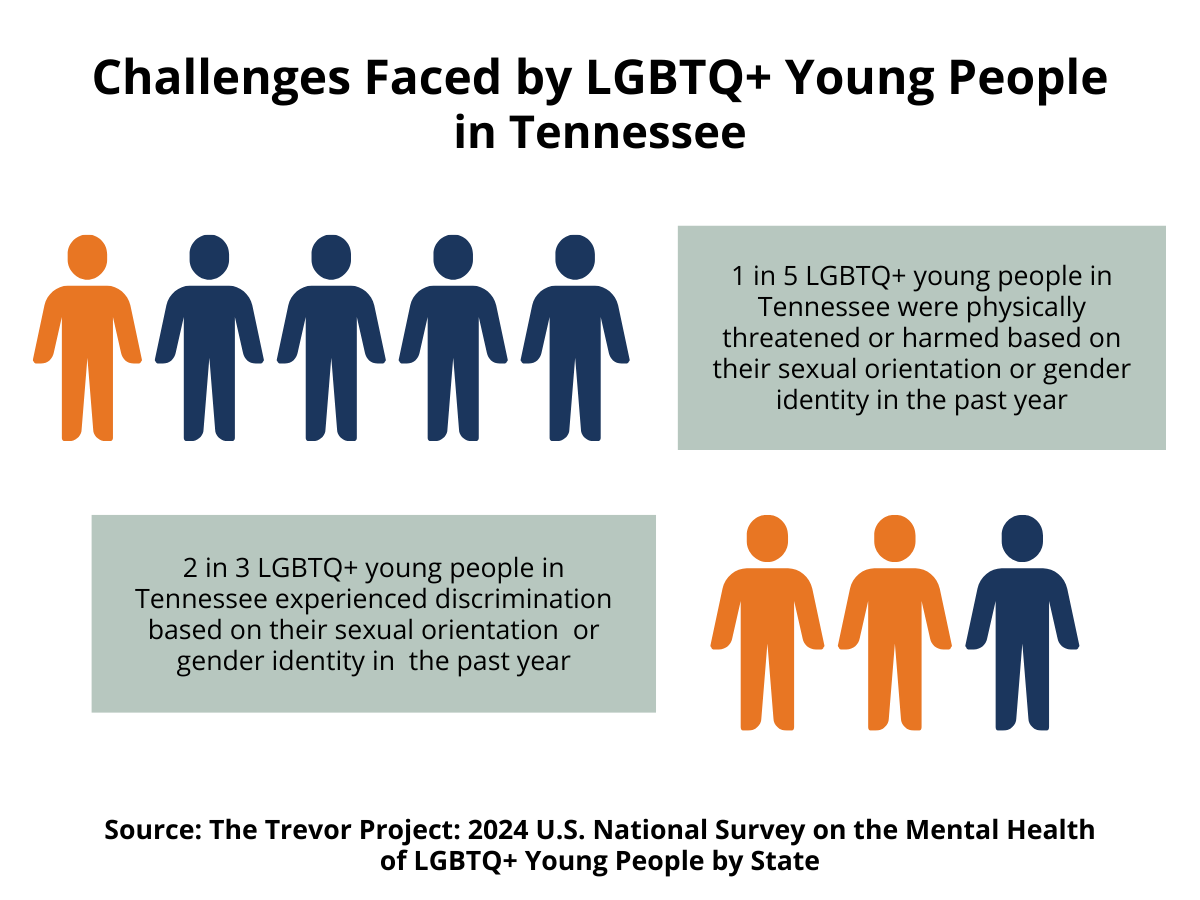
Supportive relationships and safe environments are essential for LGBTQ+ individuals, who often face higher levels of adversity early in life. Research shows that LGBTQ+ individuals are more likely to experience Adverse Childhood Experiences (ACEs) and to experience multiple ACEs compared to heterosexual individuals.25 Experiences of discrimination or harm can create additional stress, making mental health challenges more likely.26
Mental health challenges are common among LGBTQ+ youth and young adults, and many face barriers to accessing care. A 2024 statewide survey found high levels of anxiety, depression, and suicidal thoughts, along with unmet needs for mental health services.26 Building PCEs, such as feeling accepted, having supportive adults, and accessing affirming care, can help protect mental health and support long-term well-being.
Children with Disabilities
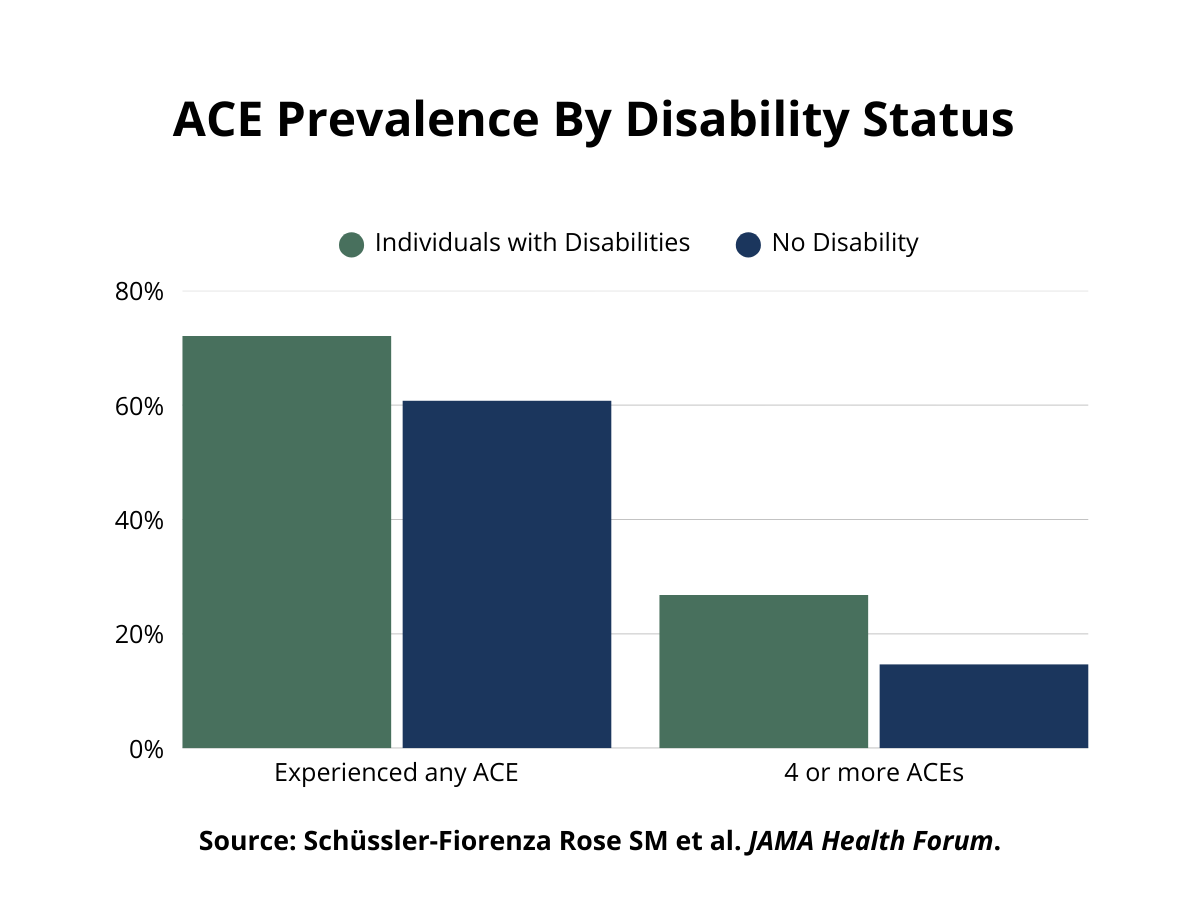
Children with disabilities face an increased risk of high Adverse Childhood Experiences (ACEs) exposure compared to children without disabilities.27 Between 2019 and 2022, about seven in ten people with a disability reported experiencing at least one adverse childhood experience (ACE), compared to about six in ten people without a disability.28 About one in four people with a disability reported experiencing four or more ACEs, compared to about one in seven people without a disability.28
ACEs can also affect children’s development early in life. A national study of children ages 3 to 5 found that those who experienced two or more ACEs were about twice as likely to have a developmental delay compared to children who had not experienced ACEs.29 This finding underscores the importance of identifying ACEs early and providing support to reduce their impact on child development.
-
Community-Driven Solutions
Community-driven solutions are practical steps that local partners can take together to build Positive Childhood Experiences (PCEs). These actions are evidence-based, can be put in place quickly, and focus on what children and families need most in each community.
- Host Trainings and Awareness Activities. Communities can build understanding of Adverse Childhood Experiences (ACEs) by providing engaging learning opportunities.
- Host a public screening of Resilience. Resilience is a documentary that explains how ACEs can affect health and well-being later in life. Community screenings can help introduce ACEs in an accessible way and spark conversations that support public education and awareness.
- Teach Skills that Help Parents and Children Thrive. Supporting PCEs while reducing ACEs means helping both parents and children build
skills that they can use every day. Community partners can work together to:
- Support emotional skill-building in schools to help children develop communication skills, confidence, and healthy relationships.
- Offer dating and relationship education programs that help youth understand what healthy relationships look like.
- Partner with parenting classes and workshops to provide parents with tools for positive parenting, stress management, and healthy communication.
- Connect Youth to Caring Adults and Supportive Communities. Strong relationships can protect children from the effects of adversity and help
them build lifelong PCEs. Communities can support this work through:
- Mentoring programs, such as Big Brothers Big Sisters, that connect children of all ages with caring adults outside their families.
- After-school programs that provide safe, structured, and enriching environments after school and during the summer. These programs can reduce risky behaviors and support social and academic growth.
- Arts and cultural programs that bring people together through shared creative experiences. Activities such as painting, drawing, or music can help reduce stress, improve mood, and foster social connections.
- Strengthen School and Community Connections. Schools can serve as essential community hubs when supported by local partners.
- Partner with schools to host family resource events, such as back-to-school nights, health fairs, or information sessions.
- Support trauma-informed practices in classrooms and school activities by sharing tools and training that help staff respond to student behavior with understanding.
- Engage families through school-based activities that build relationships and trust between schools and communities.
- Support Caregivers and Family Stability. Reducing caregivers' stress helps children feel safe and supported.
- Create peer support groups for parents and caregivers to reduce isolation and build connections.
- Offer family-friendly events that give caregivers time to rest and recharge.
- Connect families to basic needs supports, such as food programs, housing resources, transportation help, or childcare options.
- Promote Youth Voice and Leadership. Feeling heard and valued can boost confidence and a sense of belonging.
- Create youth advisory groups or councils that allow young people to share ideas and help shape community activities.
- Offer service-learning and volunteer opportunities that help youth build purpose, leadership, and community connection.
- Support youth-led projects or events that reflect young people’s interests and strengths.
- Increase Access to Emotional and Mental Health Supports. Early community-based support can prevent challenges from escalating into crises.
- Partner with local providers to host mental health workshops or drop-in supports in trusted community spaces.
- Share information about local counseling and crisis resources in simple, easy-to-understand ways.
- Reduce barriers to participation by offering free or low-cost activities, transportation help, or childcare during events.
-
Making Change Through Policies and Systems
Policy and system changes support long-term improvements in Positive Childhood Experiences (PCEs). These evidence-informed actions create stronger, more supportive environments for children and families.
- Strengthen Economic Support for Families: Policies that improve the financial support for families make it easier for families
to satisfy children’s basic needs, while simultaneously reducing parental stress and
the likelihood of Adverse Childhood Experiences (ACEs). Some ways that communities
might address policy reform include:
- Helping families access existing financial supports, such as SNAP, WIC, and child care subsidies. Applying for these programs can be confusing and time-consuming. Communities can reduce barriers by offering workshops, sharing clear information, and partnering with organizations that can help with the application process.
- Advocating for local funding for children’s programs, such as after-school programs, family workshops, and expanded services through public libraries.
- Championing federal and state economic policies, such as the Earned Income Tax Credit, Child Tax Credit, and minimum wage increases. Communities can share information about how these policies help reduce financial stress and protect children’s well-being.
- Encouraging paid leave policies, including parental leave, sick leave, and vacation time. Paid leave helps families maintain income during major life events and is linked to lower parental stress and depression, which are risk factors for ACEs.
- Shift Social Norms to Support Children’s Thriving: Supporting children’s well-being requires shared responsibility across families,
communities, and systems. Policy and systems change can help shift the focus from
individual responsibility to collective action. Examples of policy and systems actions
include:
- Supporting long-term public education campaigns that raise awareness about ACEs and PCEs and encourage action. In Tennessee, increasing public understanding of PCEs is an important step toward improving child and family well-being.
- Promoting trauma-informed care practices across settings such as health care, schools, social services, and behavioral health. Trauma-informed care recognizes that many people have experienced trauma and focuses on responding in ways that support healing and avoid further harm.
- Partnering with the Tennessee Resilient Collaborative, a statewide initiative focused on increasing awareness, supporting community efforts, and advancing policies that help prevent and reduce ACEs. The Collaborative provides funding for local projects and offers training opportunities to build public understanding.
- Supporting early childhood programs that provide safe, stable, and nurturing environments. These programs are linked to lower rates of abuse and neglect, stronger parenting skills, and improved child behavior.
- Promoting evidence-based home visiting programs that support new parents through in-home education, caregiver support, and parenting resources. When these programs use proven approaches, they can reduce child maltreatment and related risk factors.
- Encourage high-quality child care through licensing, accreditation, and quality improvement efforts. Funding and technical support can help smaller child care providers meet quality standards while expanding access to safe and supportive care.
- Promote family engagement in preschool, which is linked to positive behavior, stronger learning outcomes, and long-term benefits for education and health.
- Strengthen Economic Support for Families: Policies that improve the financial support for families make it easier for families
to satisfy children’s basic needs, while simultaneously reducing parental stress and
the likelihood of Adverse Childhood Experiences (ACEs). Some ways that communities
might address policy reform include:
-
Community Spotlight
The Health Council Community of Practice (CoP) connects Tennessee Health Councils through shared learning and discussion around health priorities. The links below provide access to recent CoP conversations related to this topic. To learn more about the Community of Practice, click here.
Hickman County (November 2024)
Submit your own Community Spotlight! Please email Health.Councils@tn.gov with any relevant stories, resources, or presentations related to this topic.
-
Partners and Resources
Tennessee Department of Health
- Positive Childhood Experiences (PCEs) Fact Sheet
This fact sheet explains what PCEs are and why they are important for children, families, and communities in Tennessee. It uses Tennessee Behavioral Risk Factor Surveillance System data to show how supportive relationships, safety, and a sense of belonging during childhood are linked to better health and well-being across the lifespan. - Evidence-Based Home Visiting
These programs are an early-intervention approach that support children’s health, development, and school readiness while strengthening parenting skills and family functioning. In Tennessee, the Department of Health oversees EBHV programs in all 95 counties through partnerships with local community-based agencies and county and regional health departments. - Women, Infants, and Children (WIC)
The WIC program provides nutrition support, education, breastfeeding support, and health care referrals for pregnant women and families with young children. Learn more about eligibility or schedule a WIC appointment. - Community Health Access and Navigation in Tennessee (CHANT)
CHANT connects eligible families and individuals to medical care and support services through local health departments. They can help with things like finding doctors, coordinating care, and even helping with costs like co-pays.
Tennessee Commission on Children and Youth
- Resilient TN Collaborative
This statewide initiative focuses on promoting culture change to emphasize Positive Childhood Experiences and prevent and mitigate ACEs. Its goal is to help all children in Tennessee thrive through stronger community understanding, sustainable funding, and informed policy change. - Home Visiting Leadership Alliance (HVLA)
This alliance brings together state agencies, home visiting programs, and partners to strengthen evidence-based home visiting across Tennessee. Through collaboration, shared learning, and workforce support, HVLA helps improve services that support parents, promote healthy child development, and improve outcomes for children and families statewide. - Young Child Wellness Council (TNYCWC)
TNYCWC brings together state agencies, early childhood experts, and families to strengthen systems that support young children. Through collaboration, policy recommendations, and cross-sector coordination, the council works to improve early development, promote safe and nurturing environments, and guide programs such as Tennessee’s Maternal, Infant, and Early Childhood Home Visiting (MIECHV) initiative. - State of the Child in Tennessee
This annual report tracks how children are doing across the state. It uses social, educational, economic, and health data to show key trends in child well-being. - KidCentral TN
This website is a free, one-stop resource that helps Tennessee families raise healthy and happy kids. Created by the Governor's Children's Cabinet, the site offers easy-to-read articles on health, education, and child development, as well as a searchable directory of state services for children and families.
Tennessee Department of Education
- Coordinated School Health (CSH)
Coordinated School Health connects health and learning through eight key components, including health education, the school environment, and student, family, and community engagement. Every district in Tennessee has at least one CSH coordinator. This resource helps communities understand the many factors in education that impact student health. - Trauma-Informed Schools
This statewide initiative provides families, teachers, and administrators with tools to create trauma-informed school environments. These resources help schools recognize the impact of trauma and build safe, supportive spaces for students. - Family Resource Centers (FRCs)
Family Resource Centers serve as community hubs that empower students and families. They provide direct support for basic needs, offer coordinated care, and connect families with additional community resources. - Social and Personal Competencies Resource Guide
This guide explains the social and personal skills that help students succeed, such as decision-making, self-management, and building healthy relationships. It is designed to support educators and partners across Tennessee. - Comprehensive School-Based Mental Health Resource Guide
This guide offers a comprehensive overview of school-based mental health supports, making it especially helpful for individuals working closely with a local school district to expand services.
Tennessee Department of Human Services
- Supplemental Nutrition Assistance Program (SNAP)
SNAP is a U.S. Department of Agriculture (USDA) nutritional assistance initiative administered at the state level. It provides qualifying households with a grocery stipend to improve access to nutrition. - 2Gen
The Two-Generation (2Gen) approach focuses on helping children and their parents together rather than treating them separately. DHS has fully implemented a 2Gen model across programming and engages in cross-agency collaborations to promote systems change.
Tennessee Office of Criminal Justice Programs
- Handle with Care
This program allows first responders to quickly notify schools when a child has witnessed or is a victim of a police-reported incident. When this occurs, the police will send a message to the child’s school that advises to “handle the child with care”, providing an opportunity for the school to provide trauma-sensitive support to the student. - Family Justice Centers
Family Justice Centers bring public and private agencies together in one location to support victims of family violence, sexual assault, and elder abuse. These centers offer a “one-stop shop” where families can access wraparound services that promote safety, healing, and overall well-being. Currently, there are 13 Family Justice Centers across the state.
Tennessee Department of Children’s Services
- Building Strong Brains: Tennessee ACEs Initiative
This initiative brings together leaders from state government, communities, health providers, schools, and nonprofit groups to help prevent ACEs and lessen their effects when they happen. The goal is to raise awareness, support families, and encourage healthy childhood development so that all children have a better chance to learn, stay healthy, and succeed. - Safe Baby Courts
This specialized court program for infants and toddlers (birth to age 3) and their families uses a collaborative, team-based approach to support child safety and family well-being. The program brings together judges, child welfare workers, therapists, and other professionals to help families access services and work toward safe, stable, and permanent homes while strengthening parent–child relationships.
- Appalachian Promise Alliance (formerly known as Bristol’s Promise) serves communities in the Appalachian Highlands region of Tennessee, Virginia, and North Carolina. The non-profit works with local partners to help create positive experiences for children and families. Their work includes teaching people about ACEs, offering support networks for youth and parents, and providing programs that help families stay strong and connected.
Ballad Health
- Strong Starts Program
This program from Ballad Health in Northeast Tennessee connects caregivers of children from birth to age 5 with a range of free supports and resources to help families thrive in early childhood. Caregivers are paired with community health navigators who help link families to essential services, including parenting and prenatal classes, childcare support, food and housing assistance, government benefit enrollment, and early intervention services.
East Tennessee State University (ETSU)
- Strong BRAIN Institute
This research and training center helps educate communities about how stressful and traumatic childhood experiences affect lives and how to build strength and resilience. The team of experts from ETSU works with schools, health groups, and other organizations to spread science-based practices that prevent or lessen the effects of trauma. The Institute offers training and education for people and workplaces, supports research about ACEs and resilience, and gives guidance to help groups change their policies and programs to be more trauma-informed. They also share resources and work closely with partners across the region to help more people understand and use these skills.
Middle Tennessee State University (MTSU)
- All Children Excelling ACEs Toolkit
MTSU’s Center for Health and Human Services offers an ACEs education toolkit with lesson plans and classroom activities. It helps students and professionals learn about how childhood trauma affects health and ways to support resilience.
- Resilient West Tennessee is a program of Jackson-Madison County General Hospital that teaches adults how to support children who have experienced stress or trauma. The program explains ACEs and shows how PCEs can help children grow up healthier and more resilient. Their goal is to share this information across West Tennessee so children can have stronger, safer futures.
Vanderbilt University
- Pediatric ACEs Screening Algorithm
Vanderbilt University Medical Center developed a screening tool that helps pediatric providers identify ACEs and family stressors early. This tool supports early intervention and promotes safer, healthier environments for children.
To Learn More
Centers for Disease Control and Prevention
- Adverse Childhood Experiences
This CDC webpage explains what ACEs are and why they matter. It gives examples of common childhood hardships, shares facts about how ACEs affect health and well-being, and highlights ways families and communities can help prevent them. It also outlines what the CDC is doing to support prevention efforts nationwide. - Essentials for Childhood Framework
This CDC resource explains how communities can help children grow up with safe, stable, and nurturing relationships. It offers practical tools and guidance to build positive childhood experiences, strengthen families, support healthy development, and prevent abuse and neglect.
- Positive Childhood Experiences (PCEs) Fact Sheet