Economic Stability and Opportunity
When people have a steady income and financial security, they are more likely to live longer, healthier lives. Economic stability means addressing issues such as poverty, food security, and housing stability, which can affect how people prepare for and respond to emergencies.1 In contrast, economic opportunity refers to a system that gives people fair access to resources, education, and jobs, especially in communities that have not received enough investment.2 Strong local economies also allow communities to invest in schools, housing, and health care. When communities feature both economic stability and opportunity, it helps create the conditions for individuals and families to thrive.
Tennessee’s economy has experienced substantial growth over the past decade. Between 2014 and 2023, the state outpaced the nation in population growth, job creation, and overall economic output. Tennessee ranked 13th in population growth and 10th in Gross Domestic Product (GDP) growth during this time.3–5 Today, the state ranks 15th in the country for population and employment, and 17th overall in terms of economy.3–5 However, even with rising wages, many families are still struggling. The cost of basic needs such as housing, child care, and transportation has increased faster than incomes, putting pressure on household budgets.3
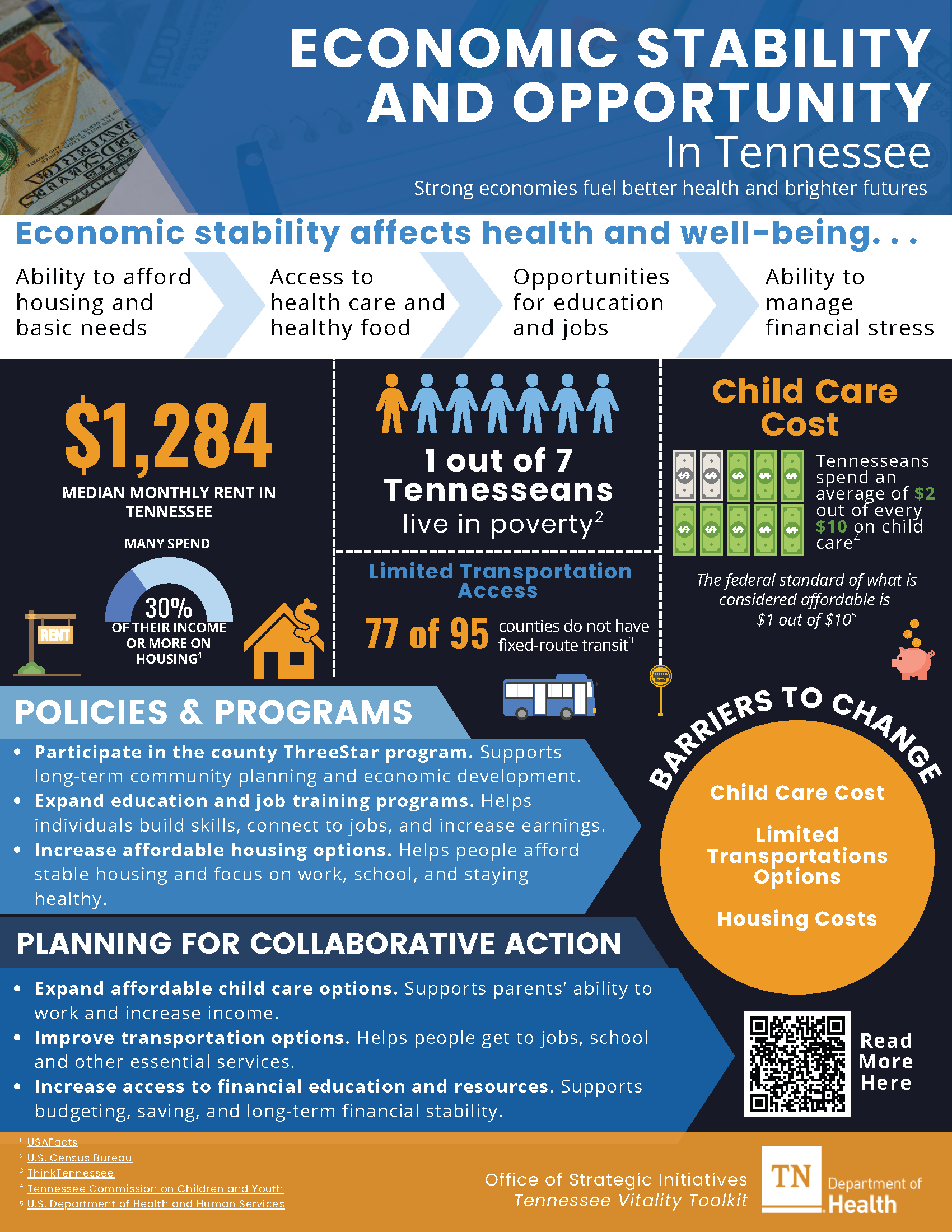
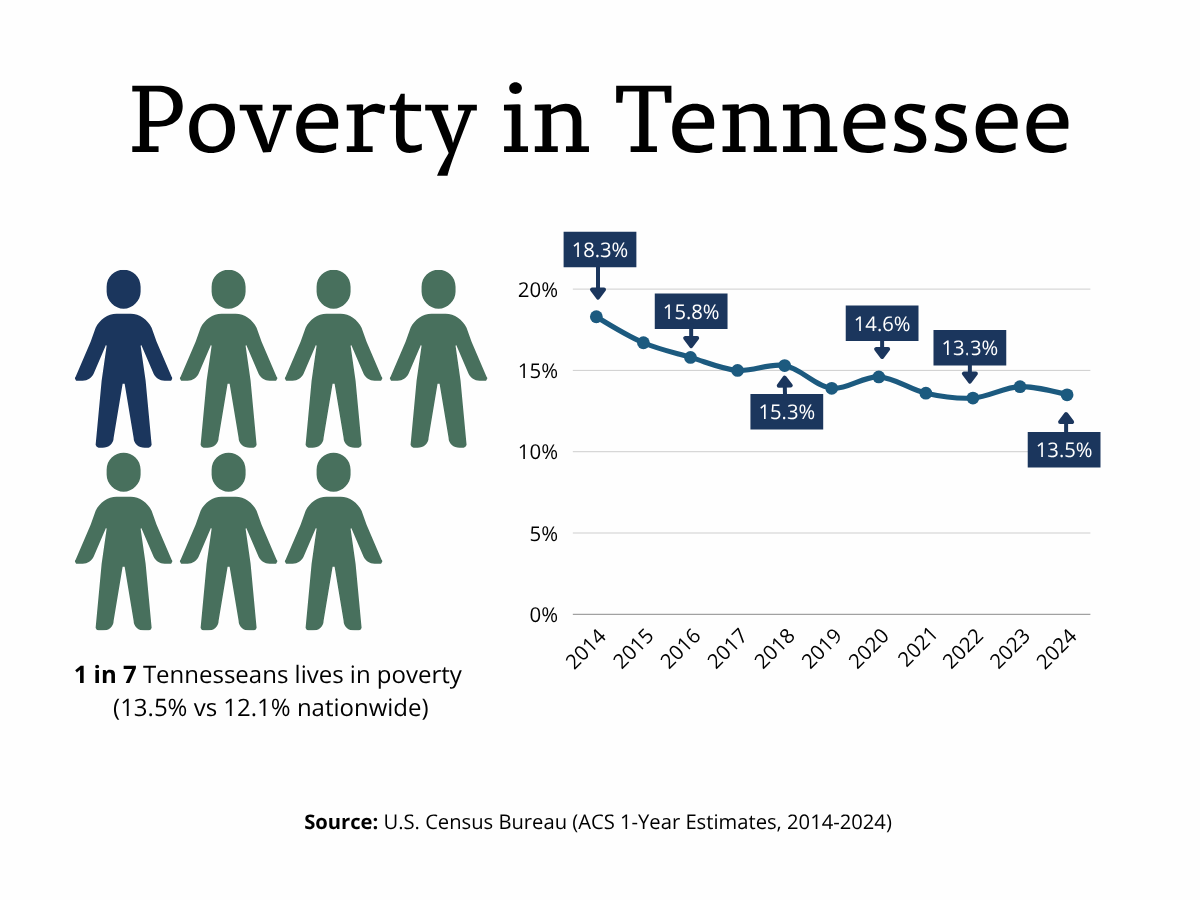
Poverty remains a challenge in Tennessee. About 13.5% of people in the state live in poverty, compared to 12.1% nationwide.6 While poverty rates improved between 2014 and 2022, they have fluctuated in recent years, showing that many families remain economically vulnerable.7
Many Tennesseans living in or near poverty may have difficulty accessing health care, healthy food, and safe, stable housing.8 This can lead to preventable health problems and make it harder to stay financially stable. Communities can improve economic stability and opportunity by supporting education and job training, increasing the number of well-paying jobs, and expanding access to financial services.9 These efforts can help build healthier, more stable communities for everyone.
-
Why is Economic Stability and Opportunity Important for Community Well-Being?
When local economies are strong, communities have more resources to invest in things people need every day. This includes job programs, parks, quality education and child care. These resources help communities respond to challenges and build a stronger sense of belonging. Feeling connected and supported is important for both physical and mental health.
However, many families face barriers that make it difficult to get ahead. Limited access to stable jobs, education, and health care can make it difficult to meet basic needs and plan for the future. These challenges are often connected and can build on each other over time.
The cycle of poverty helps explain how these challenges are linked. Living with limited income can increase the risk of poor health and reduce access to health care. At the same time, poor health and fewer job opportunities can make it difficult to earn a steady income. This creates a cycle that can be difficult to break.9
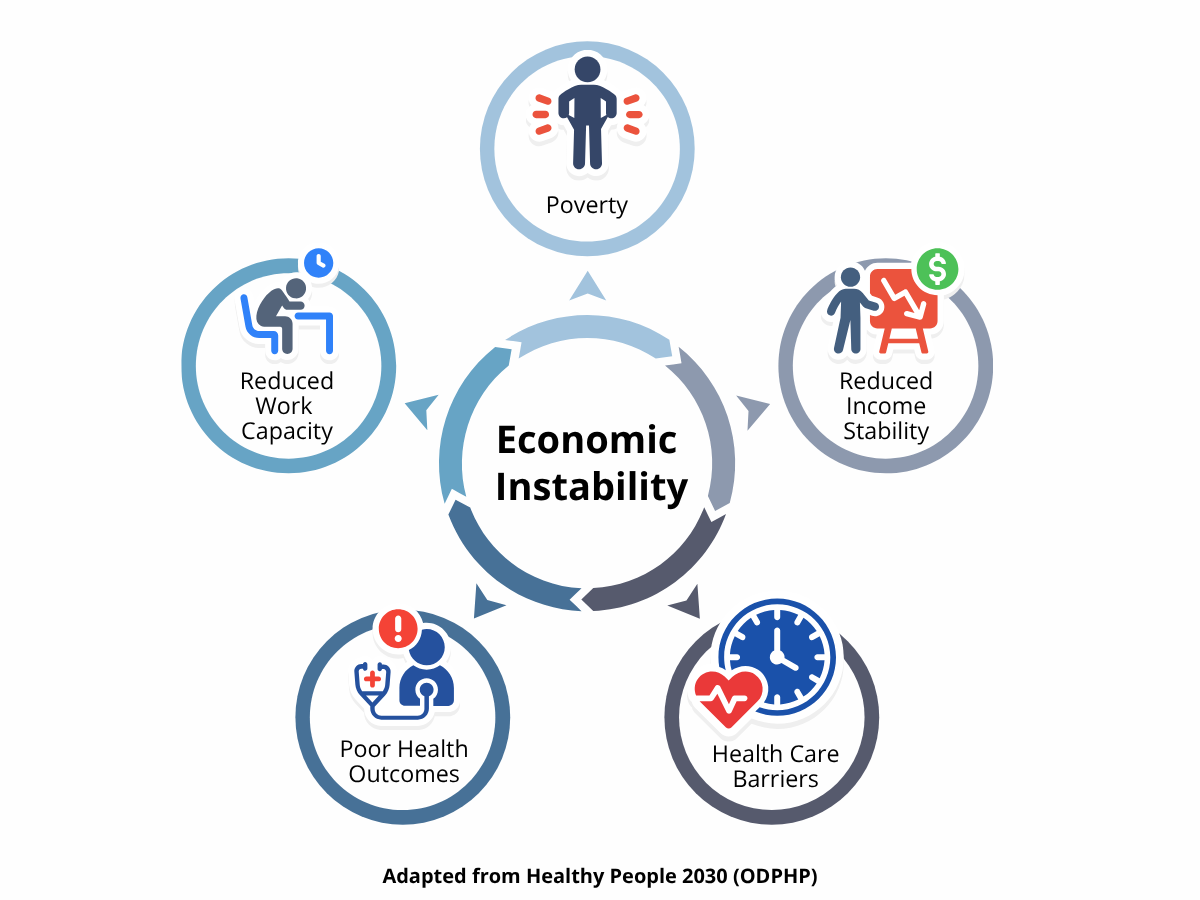
How Economic Challenges Affect Health
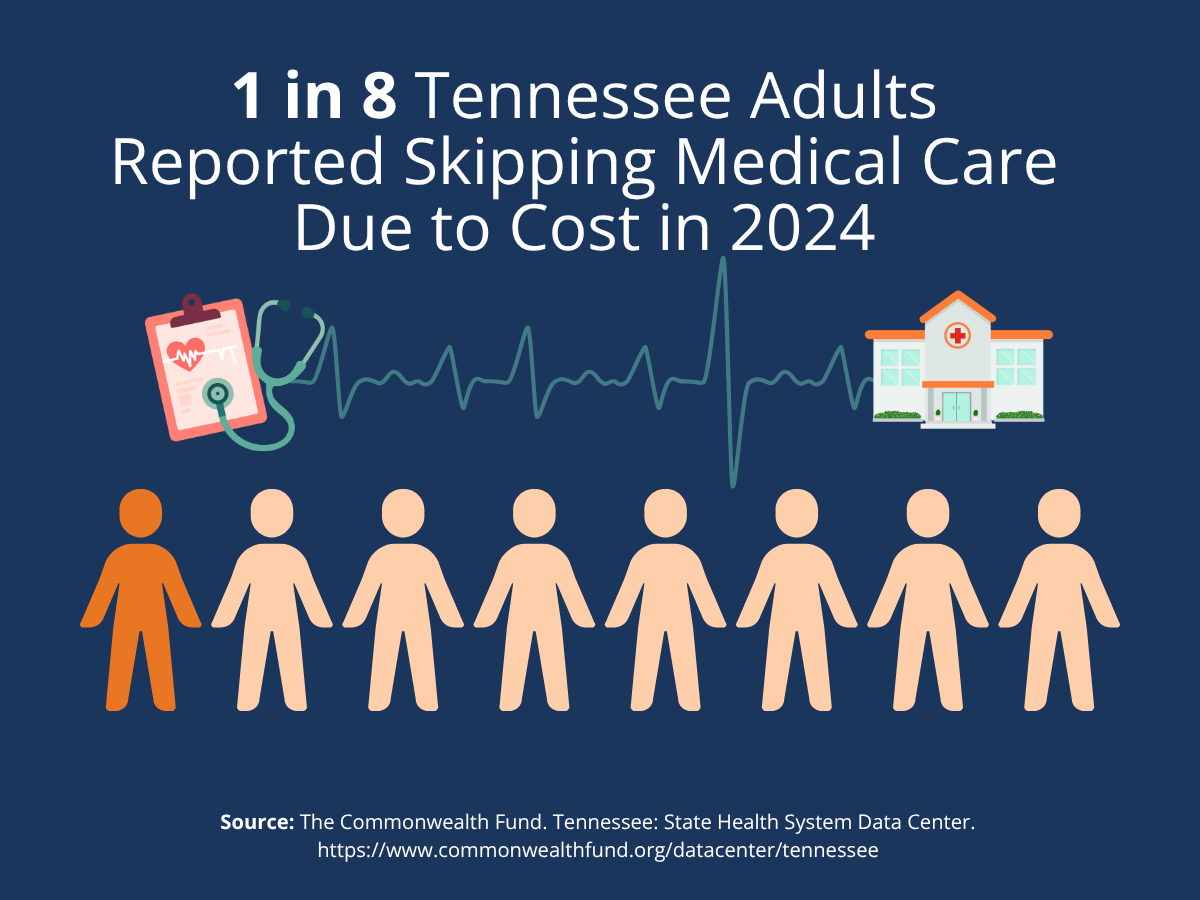
People experiencing poverty are less likely to have health insurance or use primary and specialty care services, which can make treatment more expensive. Cost is one of the biggest barriers to health care, leading many people to delay or skip needed services. In 2024, about one in eight (12.4%) Tennessee adults ages 18 and older reported skipping needed medical care because of cost.10 In addition, many face challenges such as food insecurity, unsafe living conditions, and limited access to safe drinking water.8,11
Poverty is also linked to a higher risk of depression, unhealthy coping behaviors, low physical activity, and chronic diseases such as diabetes, heart disease, and stroke.12 Over time, this can lead to lower overall health and shorter life expectancy.8
How Health Affects Work and Income
Health challenges affect the ability to work and earn a steady income. Chronic illness or disability may limit employment opportunities or create challenges in meeting job requirements. Many available positions are physically demanding or lack the flexibility needed to manage long-term health conditions, making it challenging to balance work with ongoing health and financial pressures. 13
How Economic Challenges Affect Families and Child Care
Economic instability also affects child care options. Tennessee is facing a child care shortage, where the high cost of care adds financial pressure on families.14,15 In Tennessee, the average annual cost of infant in center-based child care is $13,126, and $12,063 for a toddler in center-based child care, which equals about 12% of the median family income for married couples.16 Without reliable and affordable child care, parents may have trouble working or continuing their education. This can reduce household income and limit economic stability. At the same time, the cost of care can push some families deeper into financial distress as they try to afford safe, quality options for their children.
Why This Matters for the Whole Community
Economic instability affects entire communities. When households spend a large share of their income on basic needs, they have little ability to save or prepare for emergencies. Many also face higher costs due to rising interest rates, limited access to credit, and reliance on short-term loans.
At a broader level, economic instability leads to lost productivity, higher health care costs, and increased public spending.9 Child poverty alone is estimated to cost the United States more than $1 trillion each year.17
Investing in education, job opportunities, affordable child care, and health care services can help break this cycle. When communities take these steps, more people can achieve better health, financial stability, and overall well-being.
-
What are the Disparities?
Economic differences affect people across Tennessee in different ways. Some individuals and families are more likely to face barriers to stable income and financial security, which can reduce their chances of getting important services and opportunities. These differences are influenced by factors such as education, job opportunities, and location. Over time, they can affect a person’s ability to meet basic needs, build financial stability, and maintain good health.
Children and Parents
Children are more likely to live in poverty than adults.18 Children living in poverty are less likely to get the health care they need and are at higher risk for mental and physical health problems.19,20 Poverty can also affect emotional development and learning during childhood and across the life course.21
About 19.1% of children in Tennessee live in households with incomes below the federal poverty level.6 In 2023, about 1 in 5 (19.8%) children in Tennessee experienced food insecurity, slightly higher than the national rate of 19.2%.22
In Tennessee, economic conditions are closely tied to child and family well-being. A county-level study found that areas with higher teen birth rates, more births to unmarried mothers, and higher SNAP participation also had higher rates of child abuse and neglect.23 A long-term study in Memphis found that nurse home visiting during pregnancy and early childhood can improve health outcomes.24 This research also found that low socioeconomic status is linked to higher risks of obesity in children and high blood pressure in mothers.24 Additional research in Tennessee shows that early life economic hardship is linked to maternal depression, parental incarceration, low birthweight, and increased risk of child maltreatment.25
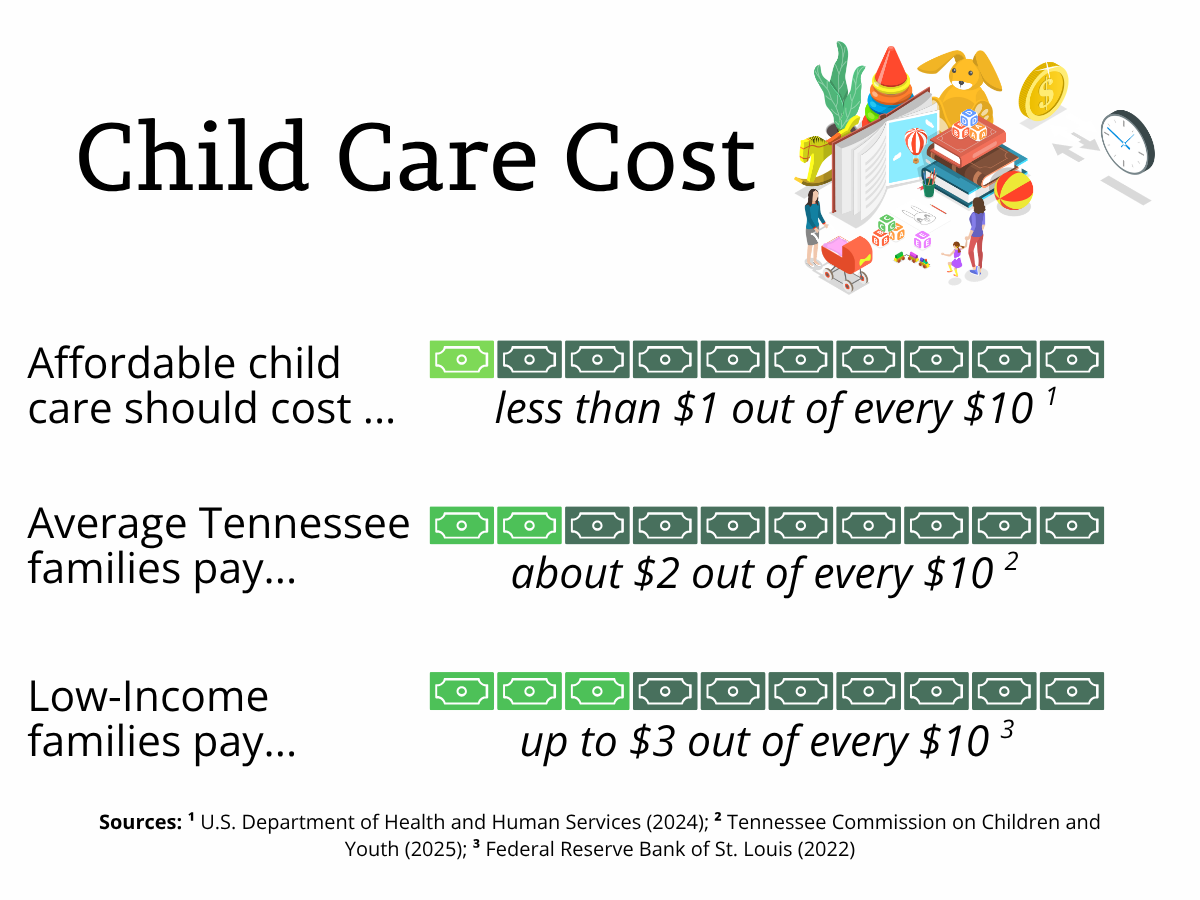
The ongoing child care shortage adds to these challenges. Families with low incomes may spend around 25% to 30% of their income on child care, far above the 7% the federal government considers affordable.26–28 In Tennessee, families spend an average of 17% of their income on child care, which is more than double the recommended level.14,15 Without safe, affordable, high-quality child care, parents may have to choose between working and staying home or rely on lower-quality care. This can make it harder for families to maintain financial stability and support their children’s health and development.
Educational Level
Education is closely linked to income, job opportunities, and overall well-being. In Tennessee, adults without a high school diploma are much more likely to live in poverty than those with more education. Among Tennesseans ages 25 and older, 28.2% of those without a high school diploma live in poverty. This compares to 14.5% of high school graduates, 9.3% of people with some college or an associate degree, and 4.1% of those with a bachelor’s degree or higher.6
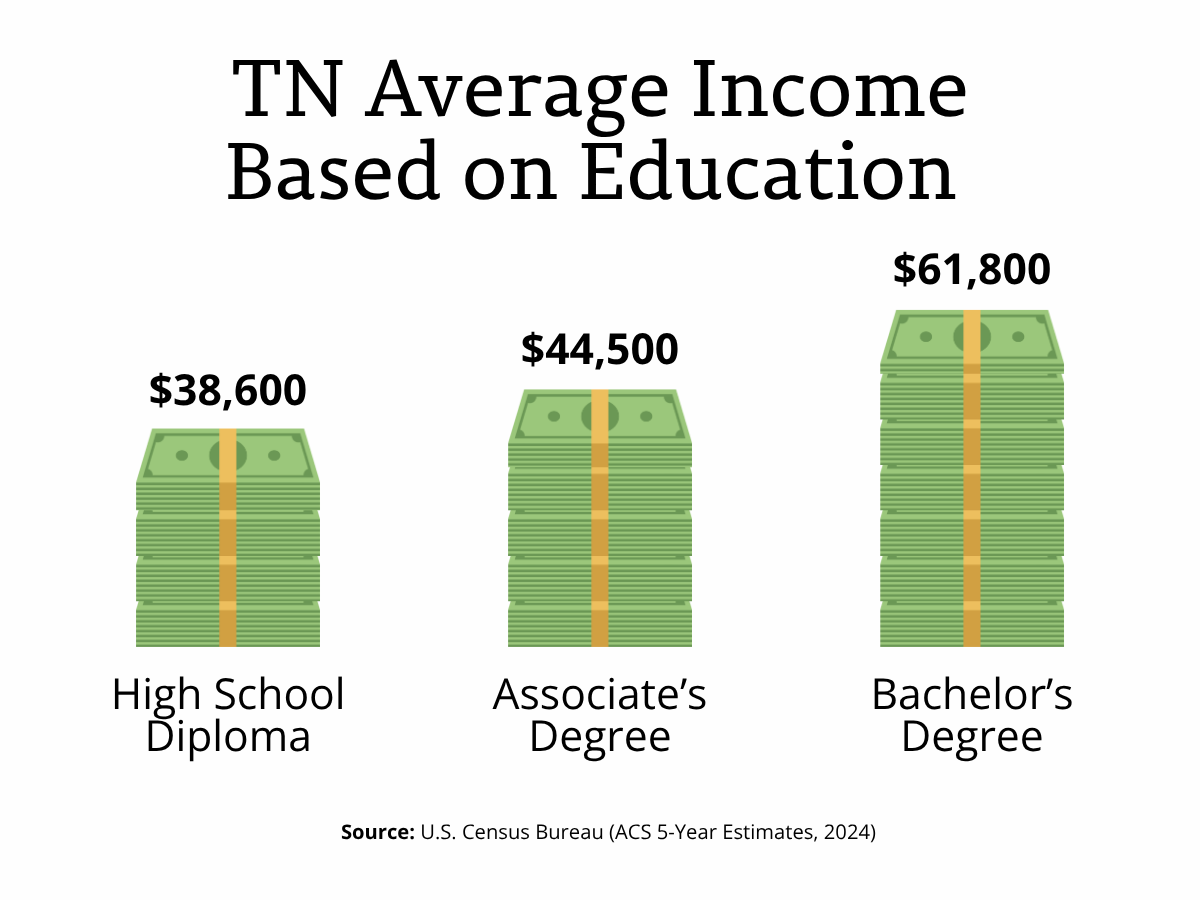
Income generally increases with education. According to 2024 five-year estimates from the U.S Census Bureau, Tennesseans with a bachelor’s degree earned about $61,800 on average, compared to about $44,500 for those with some college or an associate’s degree and about $38,600 for those with only a high school diploma.29
Barriers to education can begin early. Economically disadvantaged students are less likely to continue their education after high school. For the class of 2024, 38.7% of economically disadvantaged students in Tennessee went on to college, compared to 64.9% of students who were not economically disadvantaged.30 Gaps in preparation also play a role. While 43.3% of all students were considered ready for postsecondary education or careers, only 24.4% of economically disadvantaged students met that mark.31
Education also affects health across generations. Adults with lower levels of education are more likely to have chronic health conditions and poorer overall health. A parent’s level of education can also shape their child’s health. It affects family resources, health knowledge, and living conditions.32
Minorities
Some minority populations in Tennessee are more likely to experience poverty and face limited economic opportunities. These challenges are shaped by factors such as the quality of education, job opportunities, and where people live. Over time, they can affect financial stability, health, and overall well-being.
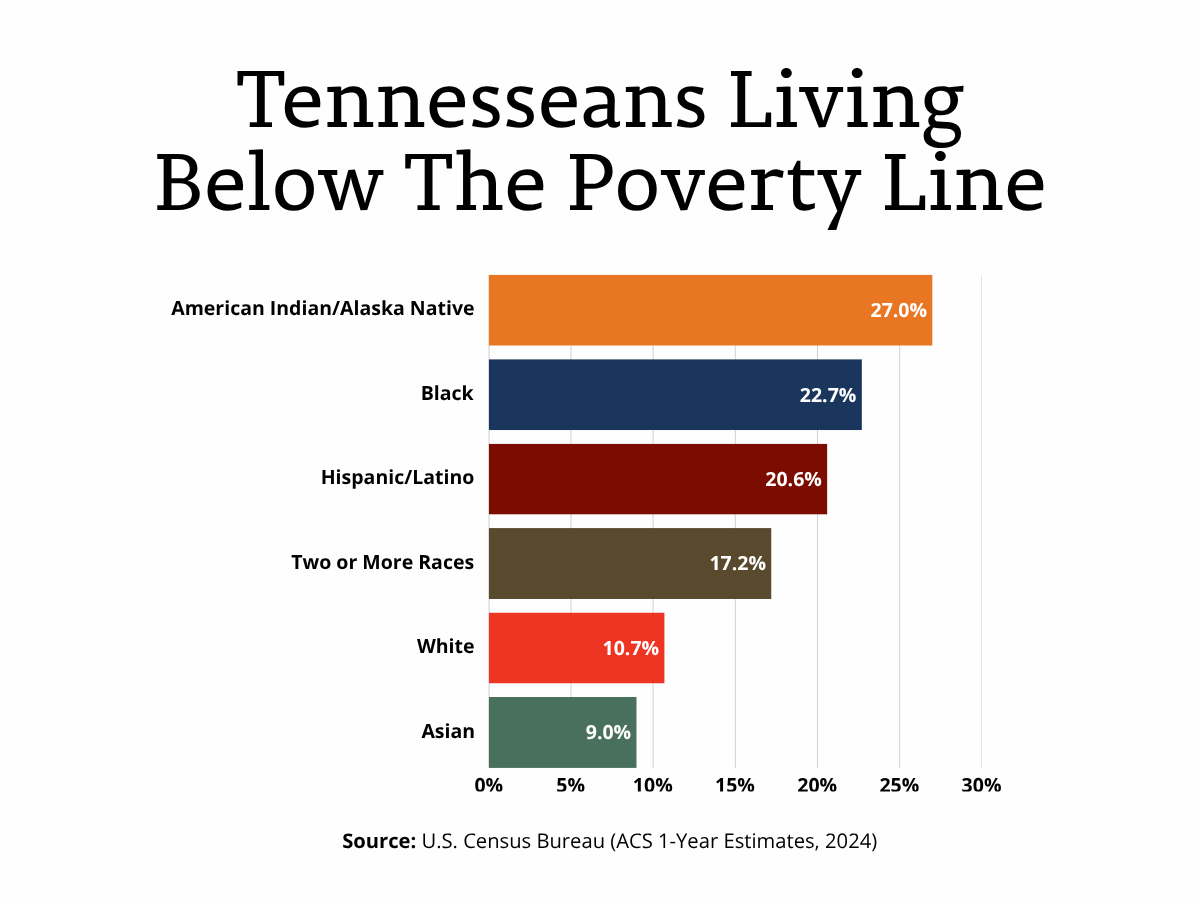
Across Tennessee, economic conditions can vary based on a person’s background. According to 2024 American Community Survey data, poverty rates in Tennessee vary by race and ethnicity. About 27% of American Indian and Alaska Native residents live below the poverty level, compared to 22.7% of Black residents, 20.6% of Hispanic or Latino residents, and 10.7% of White residents.6
Income levels also differ across groups. In 2024, the median household income for White Tennesseans was $77,818, compared to $63,286 for Hispanic or Latino residents, $49,959 for Black residents, and $44,205 for Native Hawaiian and Other Pacific Islander residents. Asian residents had the highest median household income at $105,611.33
These differences are shaped by long-standing barriers in systems such as employment, education, housing, health care, and the criminal justice system. Over time, these conditions can limit opportunities and contribute to poorer health.34
Local data in Tennessee reflects these patterns. In a study of four subsidized housing facilities in Nashville, 63.6% of residents were Black, and many faced significant economic challenges. About 80% had annual incomes below $20,000. About 70% had experienced homelessness. More than half had a history of incarceration.35 These findings highlight the complex barriers many people face and the importance of health and social services.
Addressing these differences through coordinated efforts across education, housing, employment, and health care can help expand opportunities and improve health across communities.
Rural Communities
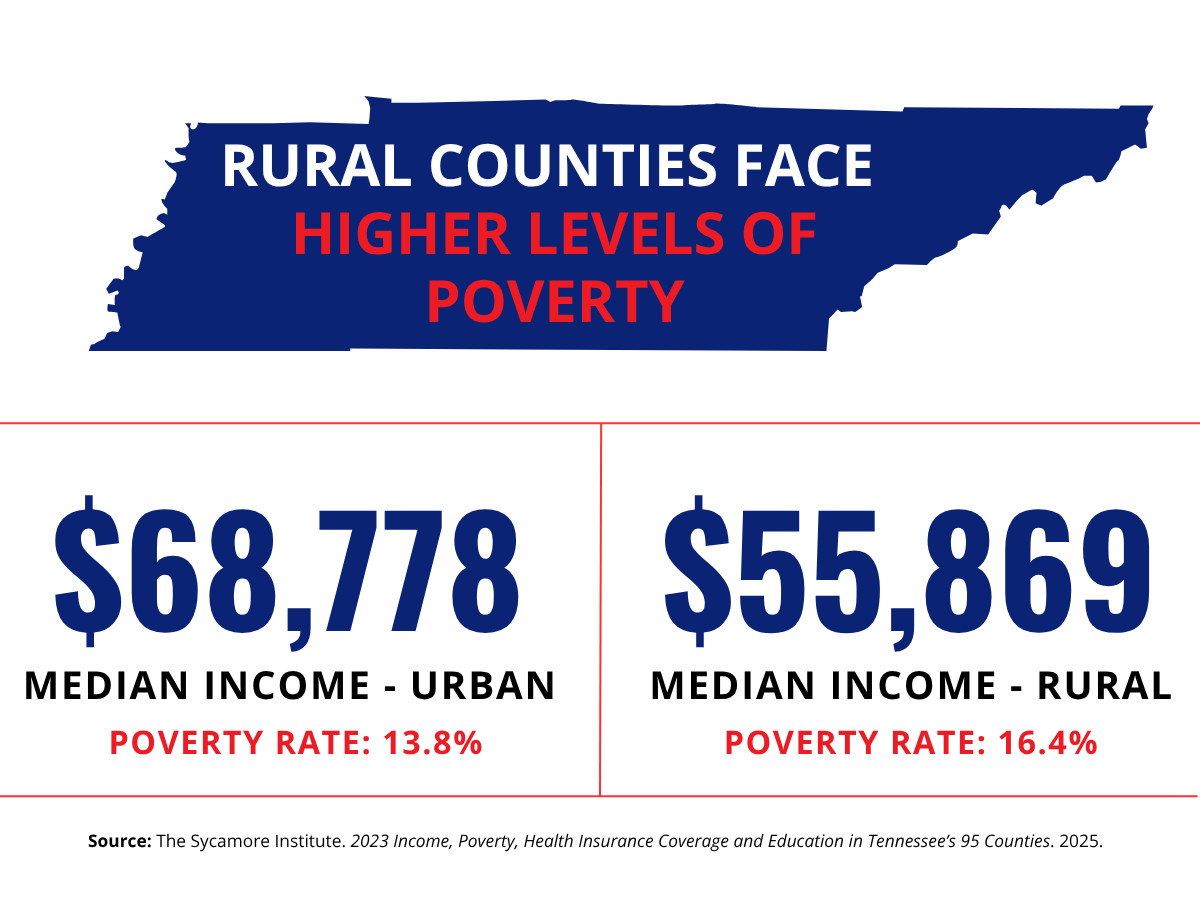
Rural counties tend to have lower incomes and higher poverty rates than urban counties. According to 2024 Census Bureau data, Tennessee’s overall poverty rate in rural counties is about 16.4%, compared to 13.8% in urban counties.6,36 Median household income also differs, averaging $55,869 in rural counties compared to $68,778 in urban counties.37,38
Education levels vary as well. Only one in six (17.1%) of adults ages 25 and older in rural areas have a bachelor’s degree, compared to one in three (30.7%) of adults in urban areas.37,39
These differences are shaped by limited access to jobs, education, and services. Rural communities often face challenges such as fewer transportation options and limited broadband access, which limit people’s ability to find work, continue their education, and access health care. These barriers contribute to lower economic mobility and higher poverty rates across rural areas.40
Transportation and Infrastructure
Reliable transportation helps people meet their basic needs, such as obtaining food, health care, education, and employment.41,42 When transportation is limited, people are more likely to miss or delay medical appointments and have trouble getting medications. These barriers are strongly linked to unmet health care needs, especially among people with low incomes.41
Transportation barriers are widespread. A national study using the National Health Interview Survey found that in 2017, more than 5 million people were unable to access health care due to transportation issues.43 This problem is more common among low-income adults, people with Medicaid coverage, Hispanic individuals, and people with disabilities.43
Transportation also affects economic opportunity. Without reliable transportation, it can be harder to find and keep a job or access education and training programs.44
In Tennessee, transportation and infrastructure challenges limit access across communities. The state has among the lowest per-person spending on transportation and infrastructure in the nation and limited alternative transportation options.44,45 Major cities like Nashville and Memphis rank among the lowest among large metros in the country for public transit access to jobs.44,45
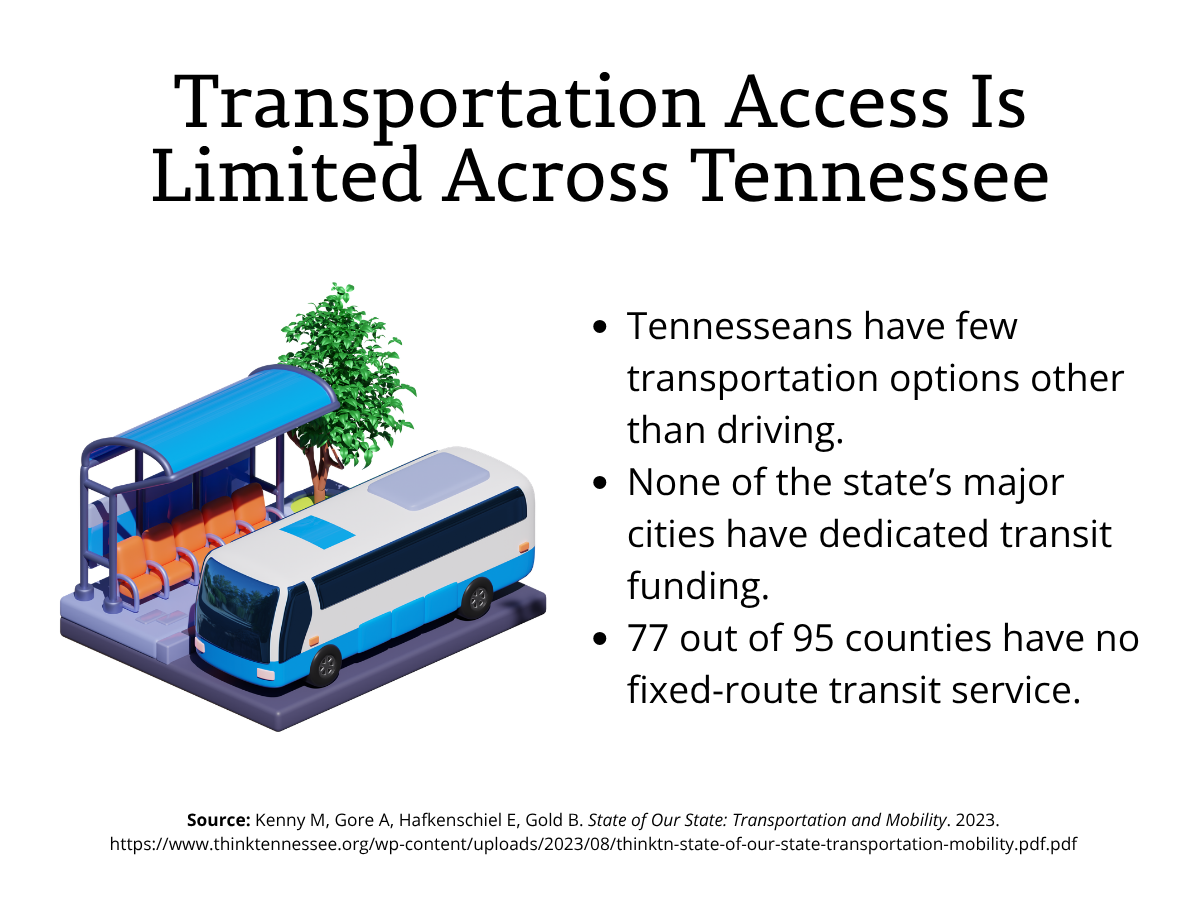
Access is even more limited in rural areas. Tennessee has limited overall transit service, and many counties have little to no public transportation. According to the Center for Neighborhood Technology’s AllTransit Performance Score, 77 of Tennessee’s 95 counties received a score of zero, meaning they have no fixed-route transit service.44,46
Housing
Housing stability is closely tied to health and economic security. People experiencing housing difficulties often struggle to find health care, health insurance, nutritious food, and support services, which can worsen health over time. Untreated physical and mental health conditions can also make it harder to find and keep housing, reinforcing the cycle of poverty and homelessness.47–49
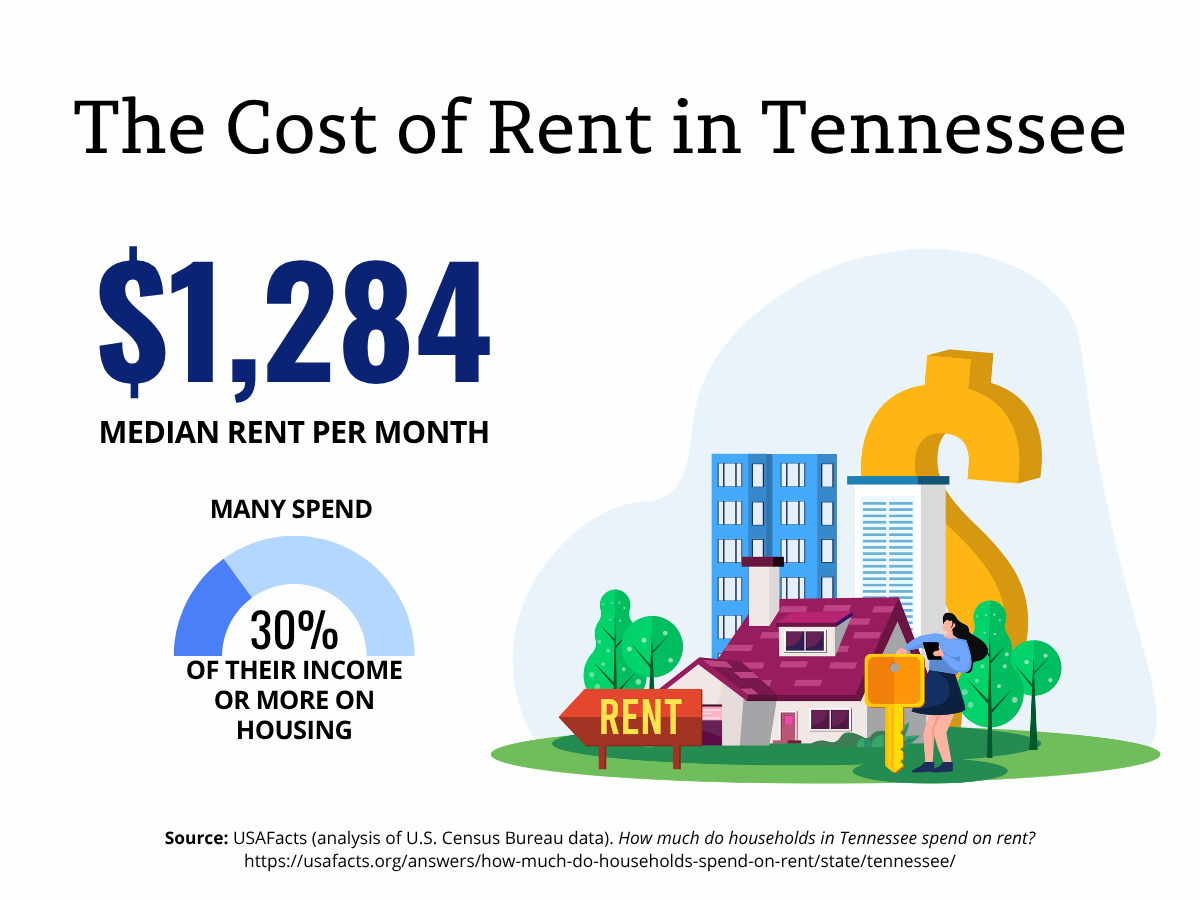
In Tennessee, renters are much more likely to live in poverty than homeowners, highlighting how housing instability and financial strain are closely connected.50 Median rent in the state is about $1,284 per month, and many households spend more than 30% of their income on housing, increasing the risk of eviction and homelessness.51
In 2024, the U.S. Department of Housing and Urban Development (HUD) Point-in-Time (PIT) Count recorded about 8,280 people experiencing homelessness in Tennessee on a single night.52 The number of people experiencing homelessness in the state increased by 10.9% between 2017 and 2023.53
According to 2023 HUD data, many Tennesseans experiencing homelessness face additional challenges. About 22% were experiencing chronic homelessness, 24% were adults ages 55 and older, and 8% were veterans.53
Homelessness also has broader impacts on communities. Local and state systems often spend thousands of dollars per person on emergency shelters, health care, and involvement with the justice system.52
Incarcerated Individuals
Involvement with the criminal justice system can create long-term barriers to economic stability. People with a history of incarceration often face challenges finding and keeping stable employment, securing housing, and accessing education or training opportunities. These barriers can limit income, reduce financial security, and make it harder to build long-term stability.
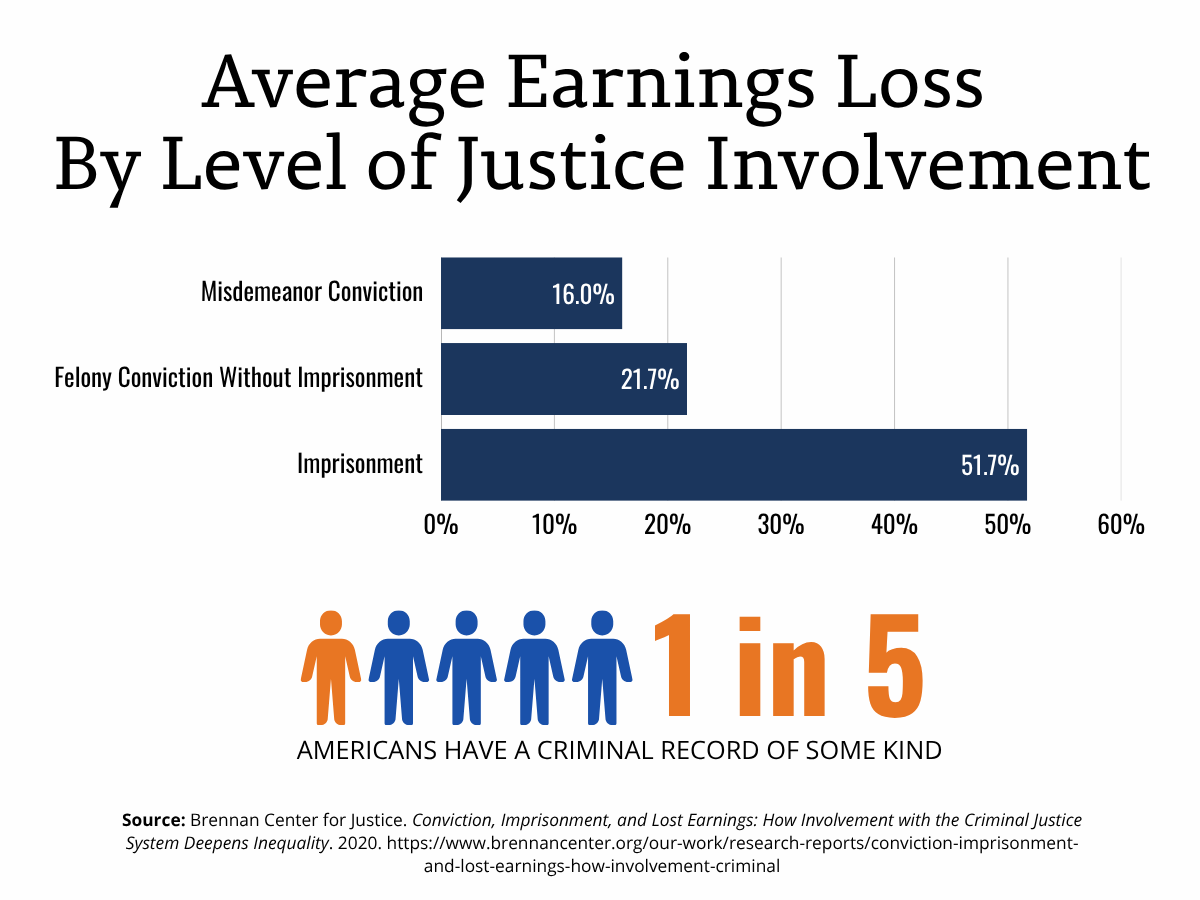
Early involvement with the criminal justice system can reduce income over time. People who have been incarcerated earn about 50% less each year, on average, than similar individuals without a history of incarceration.54 Even people with felony or misdemeanor convictions without incarceration tend to earn 16-22% less annually. These losses can build over time, making it harder to achieve financial stability, especially for those already living in poverty.54
People facing social and economic challenges, as well as those with physical, behavioral, and mental health needs, are more likely to become involved with the criminal justice system.55 This can reinforce existing challenges by disrupting employment, reducing earnings, and limiting future job opportunities.56
Individuals with past convictions often face barriers to getting health care, including gaps in insurance coverage and limited access to services.57 As a result, they are less likely to have a regular source of care or receive preventive services such as checkups and screenings.57 These gaps can lead to untreated health conditions that make it harder to work and maintain a stable income. They also experience higher rates of physical illness, mental health conditions, and social challenges than the general population.58
Early involvement in the juvenile justice system can shape future opportunities for young people. Time spent in detention can disrupt schooling, limit skill development, and make it harder to stay on track academically. These challenges can reduce future job opportunities and earning potential.
Juvenile detention centers are intended for short-term stays, but many do not have the capacity to fully support young people’s educational, health, and rehabilitative needs.59,60 In 2024, more than 1,000 youth in Tennessee were held in juvenile detention centers for over 30 days.15 This was 23% increase from the year before.15
Supporting access to education, health care, and job opportunities can help justice-involved individuals build a more stable future.
Individuals with Disabilities
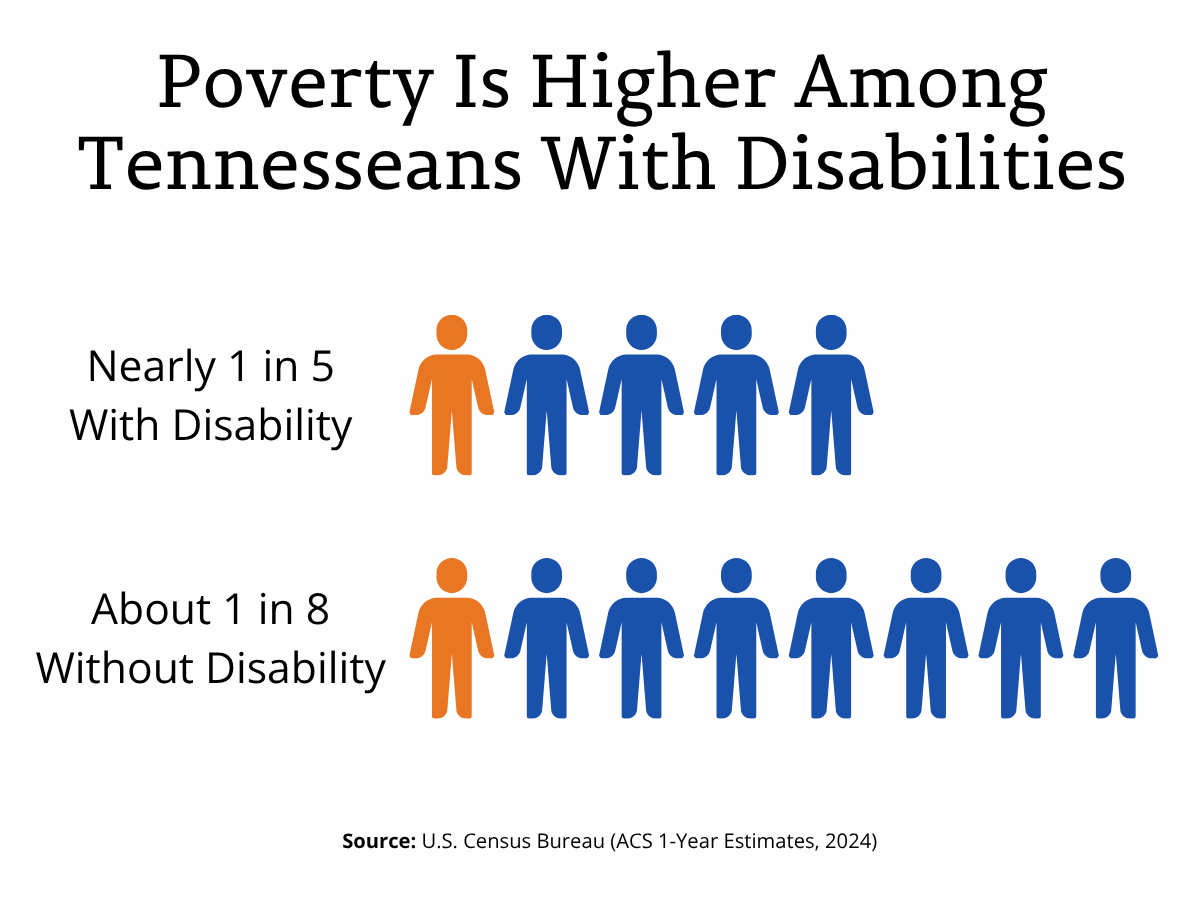
Individuals with disabilities are more likely to experience financial challenges than those without disabilities. According to 2024 American Community Survey data, 20.8% of Tennesseans with a disability live below the poverty level, compared to 12.2% of those without a disability.61 In addition, about 61% of Tennesseans with two or more disabilities and 53% of those with one disability live below the ALICE threshold, meaning their income is not enough to afford basic needs such as housing, food, transportation, and health care.62
Many Tennesseans with disabilities face barriers to employment. Among working-age individuals who are in the labor force, 62.6% of Tennesseans with a disability are employed, compared to 96.3% of those without a disability.63 Even when employed, people with disabilities tend to earn less. On average, workers with disabilities earn about 31% less than workers without disabilities.64 Overall, there is a 32% employment gap between people with disabilities and those without disabilities, and Tennessee ranks 41st in the nation for employment among people with disabilities.65,66
LGBTQ+ Individuals
LGBTQ+ individuals are more likely to experience poverty than straight and cisgender populations. Recent national data show that about 17% of LGBTQ+ individuals were living in poverty, compared to 12% of straight and cisgender individuals.67
Economic challenges among LGBTQ+ individuals can also be seen in income and financial stability. In one survey, more than half of LGBTQ+ Tennesseans were classified as low-income, earning less than $20,000 per year, and fewer than 1% were considered upper-income. Only about 25% reported being completely financially independent.68 In addition, a Williams Institute report found a 15% income gap between straight and gay male workers in Tennessee.69
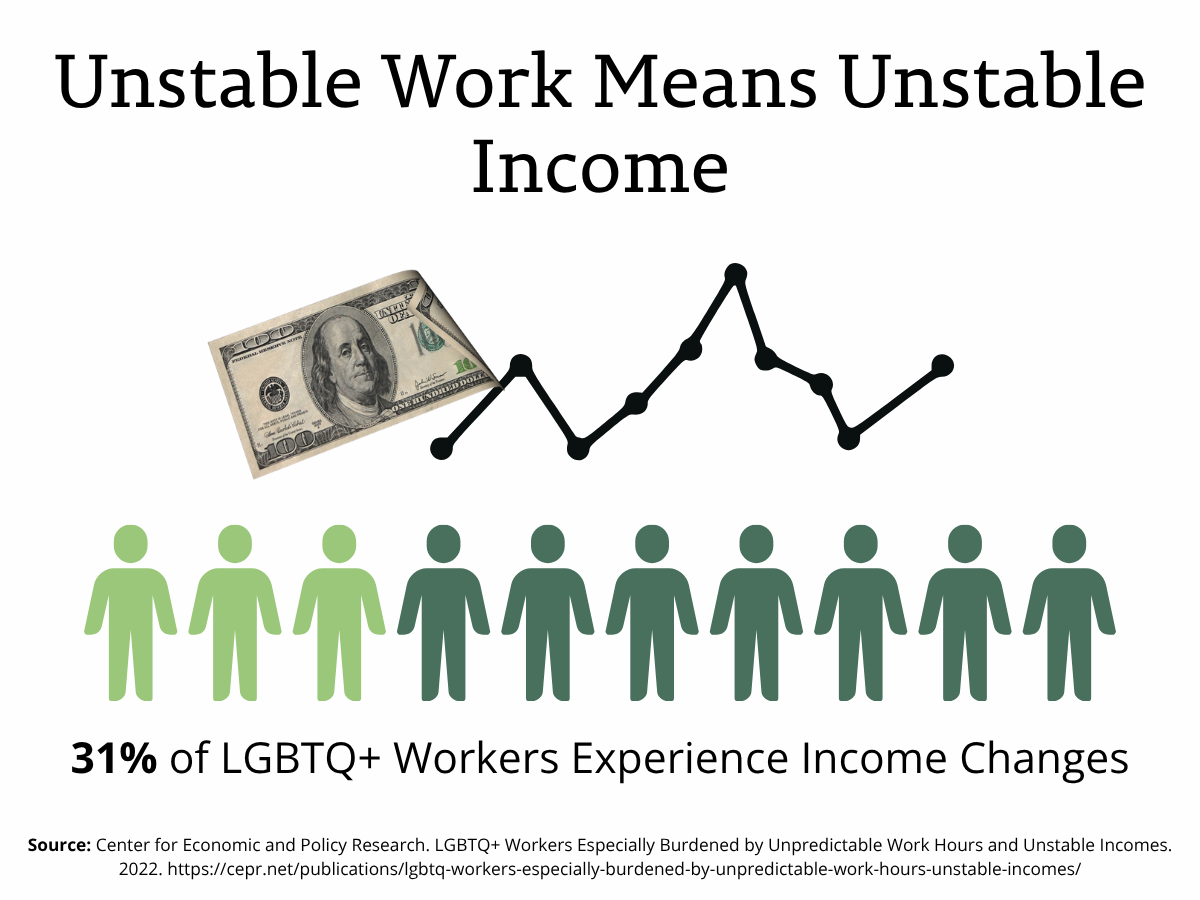
LGBTQ+ individuals are also more likely to work in jobs with unstable schedules and income. About 31% experience income that changes from month to month, compared to 26% of non-LGBTQ+ workers.70 These unstable work patterns can make it harder to plan for expenses, maintain steady housing, and achieve financial stability.
Homeownership rates also differ. LGBTQ+ individuals are less likely to own their homes and more likely to experience housing instability compared to non-LGBTQ individuals.71
Workplace and financial discrimination can further limit economic opportunity. LGBTQ+ individuals may face barriers to hiring, promotion, and fair wages, which can affect long-term financial stability. Some also reported being denied financial credit, such as a loan, based on their sexual orientation or gender identity.72
These economic challenges are closely connected to health. LGBTQ+ Tennesseans are more likely to be uninsured and to report unmet health care needs due to cost or fear of discrimination from providers.68 One study found that LGBTQ+ Tennesseans were four times more likely to be uninsured, about twice as likely to delay or miss medical care because of cost, and more than four times more likely to experience frequent mental distress.73
Older Adults
Tennessee’s older adult population is growing quickly. The number of residents ages 60 and older is projected to increase by about 30%, from 1.6 million in 2020 to approximately 2.1 million by 2040. During the same period, the number of adults aged 80 and older is expected to double.74 This growth is expected to increase demand for long-term services and supports, especially for low-income older adults.
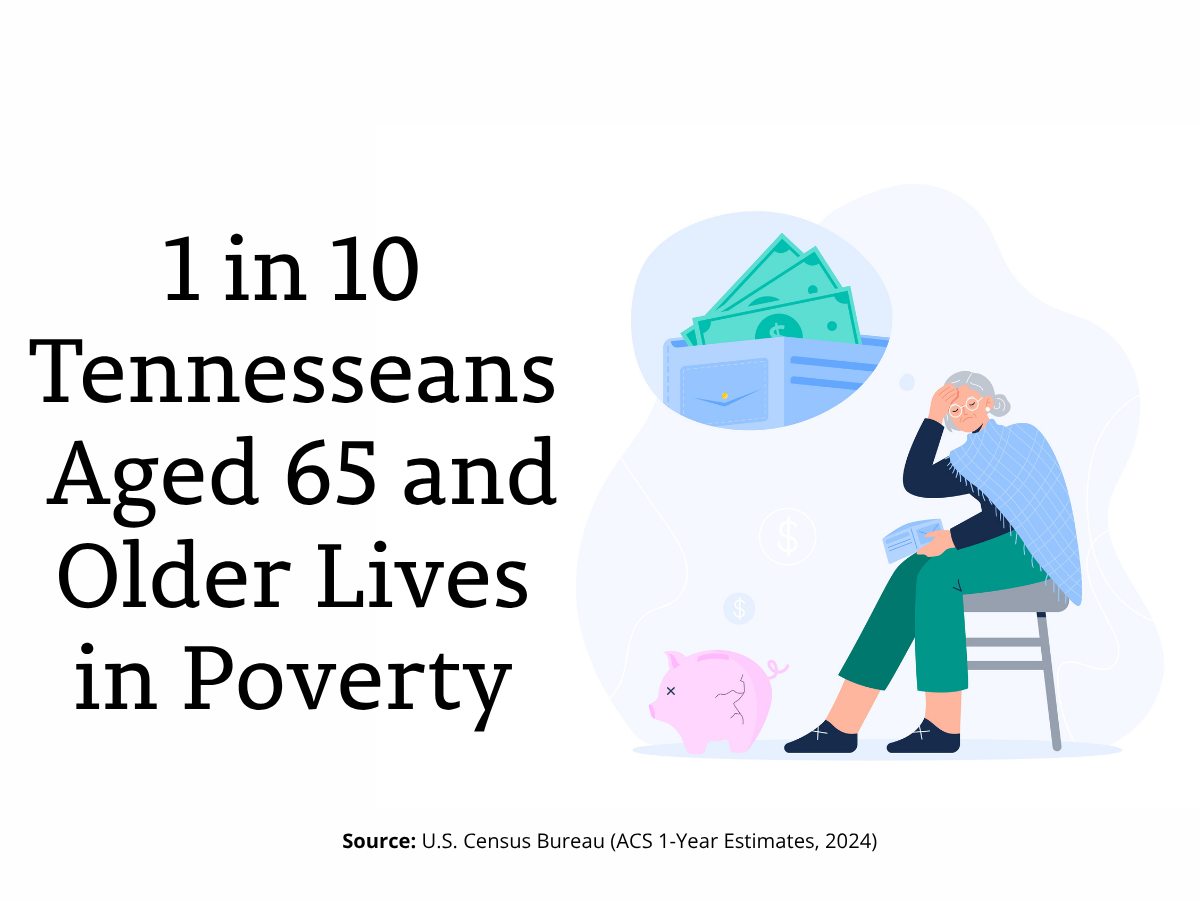
In 2024, about 10.7% of Tennesseans ages 65 and older lived below the poverty level.6 Many older adults also live on fixed incomes, making it harder to keep up with rising costs for housing, food, transportation, and health care.
Where people live can affect what resources are available. According to the Tennessee State Plan on Aging, 42% of older Tennesseans live in rural areas, where affordable housing, transportation, and services may be limited.6 Older adults in rural communities may also face barriers, including limited internet access, fewer social services, and reduced awareness of available resources.75
These challenges can make it harder for older adults to find health care, healthy foods, and safe housing. Over time, this can contribute to higher rates of chronic disease and lower life expectancy, especially among those with limited financial resources.76
-
Community-Driven Solutions
Communities across Tennessee are finding practical ways to support economic stability and opportunity. Community-driven solutions focus on local needs and build on existing strengths. These efforts often bring together local organizations, employers, schools, and residents to create opportunities that support both individuals and families.
- Support workforce development and job training programs. Communities can partner with local employers, schools, and training programs to help people build skills that match available jobs.
- Expand affordable child care options. Reliable and affordable child care allows parents and caregivers to work, pursue education, and increase household income.
- Promote small business development and entrepreneurship. Supporting local businesses can create jobs, strengthen local economies, and keep resources within the community.
- Increase access to financial education and resources. Programs that support budgeting, saving, and credit-building can help individuals build long-term financial stability.
- Connect residents to existing support programs. Outreach and navigation support can help people access benefits such as food assistance, housing support, and workforce services.
- Encourage local hiring and fair wages. Employers can play a key role by offering stable jobs with wages that support basic living needs.
- Create community partnerships to address local needs. Collaboration across sectors can help identify gaps and develop solutions that reflect the community’s priorities.
-
Making Change Through Policies and Systems
Policies and systems change help organizations and communities work together over time to improve economic stability and opportunity. These efforts focus on long-term solutions that address the root causes of financial instability and support lasting improvements in community well-being.
- Participate in the county ThreeStar program. ThreeStar is a statewide community development program that helps counties plan for long-term growth and improve quality of life. Participating communities may also qualify for grants and other support through Tennessee Department of Economic and Community Development programs.
- Encourage employers to adopt supportive workplace policies. Policies such as flexible scheduling, paid leave, and wraparound services can help workers remain employed during times of personal or family challenges.
- Explore eligibility for opportunity zones. Opportunity zones provide tax incentives to attract investment in low-income areas. These investments can support new businesses, create jobs, and expand economic opportunity.
- Promote affordable and reliable child care. Child care supports workforce participation and helps families maintain stable employment. Communities and employers can work together to expand access and support family-friendly workplaces.
- Engage community stakeholders in local planning efforts. Using an asset-based approach—such as identifying local strengths, aligning resources, and sustaining long-term investments—can help build on existing assets and support lasting change.
- Expand education and job training programs. Workforce development initiatives can help individuals build skills, connect to available jobs, and increase earning potential.
- Support policies that improve transportation access. Reliable transportation helps individuals reach jobs, education, and essential services, especially in rural areas.
- Increase affordable housing options. Stable housing supports economic stability and allows individuals and families to focus on work, education, and health.
- Strengthen cross-sector partnerships. Collaboration among employers, health care providers, schools, and community organizations can help address complex economic challenges and improve long-term outcomes.
-
Community Spotlight
The Health Council Community of Practice (CoP) connects Tennessee Health Councils through shared learning and discussion around health priorities. The links below provide access to recent CoP conversations related to this topic. To learn more about the Community of Practice, click here.
There are no Community Spotlight features available for this topic yet. If you have a relevant story, resource, or presentation you’d like to share, please email Health.Councils@tn.gov.
-
Partners and Resources
Tennessee Colleges of Applied Technology (TCATs)
- TCATs provide short-term, hands-on training programs that prepare individuals for high-demand careers. Programs are offered across the state and help individuals gain skills needed for stable employment and career advancement.
Tennessee Department of Economic and Community Development
- Incentives and Grants
This program provides grants, tax credits, and other incentives to support business growth, job creation, and community development in Tennessee. Funding may support workforce training, infrastructure improvements, and economic development projects that strengthen local economies. - OpenECD (Transparent Tennessee)
OpenECD is a public data portal from the Tennessee Department of Economic and Community Development that provides information on state grants, incentives, and economic development projects. Users can explore how public funds support business growth, job creation, and community investment across Tennessee. - Tennessee ThreeStar Program
The ThreeStar program is a statewide initiative that helps counties plan for economic growth and improve quality of life. Participating communities can access funding opportunities and support for workforce development, infrastructure, and community planning. - Workforce and Education
This initiative highlights Tennessee’s efforts to strengthen its workforce through education and training programs. It includes partnerships between schools, colleges, and employers to build job-ready skills and expand access to postsecondary education.
Tennessee Department of Human Services
- Community Tennessee Rehabilitation Centers (CTRCs)
CTRCs are a network of 17 facilities across the state that provide vocational evaluation, job training, mental health services, and job placement support. These services help individuals, including those with disabilities, prepare for and enter the workforce. - Families First (Temporary Assistance for Needy Families)
Families First is a workforce development program that provides temporary cash assistance, child care, transportation, education, and job training. The program helps families build skills and return to the workforce. - Smart Steps Child Care Assistance Program
Smart Steps provides financial assistance for child care to income-eligible parents who are working or pursuing education. The program helps families access affordable, quality child care while supporting employment and educational goals. - Supplemental Nutrition Assistance Program (SNAP)
SNAP provides temporary financial assistance to help eligible households purchase food. This support helps families meet basic nutrition needs and focus on work, education, and overall well-being.
Tennessee Higher Education Commission
- Tennessee Promise
Tennessee Promise is a scholarship and mentoring program that helps high school graduates attend college tuition-free at community or technical colleges. As a “last-dollar” scholarship, it covers tuition and mandatory fees not paid by other financial aid and provides support to help students succeed in college. - Tennessee Reconnect
Tennessee Reconnect is a statewide initiative that helps adults return to college to earn a degree or certificate. It includes a last-dollar scholarship that covers tuition and fees at community or technical colleges, along with support services to help adult learners succeed.
Tennessee Department of Health
- Community Health Access and Navigation in Tennessee (CHANT)
CHANT provides care coordination through local health departments to help individuals access medical services and support. The program connects eligible individuals to resources, such as financial assistance and care coordination. - Women, Infants, and Children (WIC) Program
The WIC program provides nutrition assistance, education, breastfeeding support, and health care referrals for pregnant women and families with young children. These services help households meet basic needs and support healthy development during early childhood.
Tennessee Housing Development Agency
- Family Self-Sufficiency (FSS) Program
The FSS program helps families receiving housing assistance create a plan to achieve economic independence. It connects participants to supportive services such as job training, education, and financial counseling to help reduce reliance on public assistance over time. - Home Repair and Accessibility Programs
These programs provide funding to help low-income homeowners complete essential repairs and improve home accessibility. Services may include fixing critical systems such as roofs and heating, as well as building ramps and making modifications to support individuals with disabilities and help them remain safely in their homes. - Homebuyer Education
This program provides education and counseling to help individuals prepare for the homebuying process and long-term homeownership. Courses cover topics such as budgeting, credit, and mortgage options, and are often required for participation in THDA loan programs. - Low-Income Home Energy Assistance Program (LIHEAP)
LIHEAP provides financial assistance to help eligible households pay for heating and cooling costs. The program supports low-income households, especially those with high energy burdens, through a statewide network of community service agencies. - Weatherization Assistance Program
This program helps low-income households improve the energy efficiency of their homes to reduce heating and cooling costs. It also supports health and safety, particularly for older adults, individuals with disabilities, and families with children.
Tennessee Department of Labor and Workforce Development
- Adult Education
Tennessee Adult Education provides free classes to help adults build skills in reading, math, and English, and earn a high school equivalency diploma. Programs also offer workforce preparation, digital literacy, and career guidance to support employment and further education. - American Job Centers
American Job Centers provide free employment and training services to help individuals find jobs and build skills. All 95 Tennessee counties are served by an American Job Center, with qualified staff available from 8:00 a.m. to 4:30 p.m., Monday through Friday. - Jobs4TN
Jobs4TN is a free online job portal that helps individuals search for job openings, build resumes, and connect with employers across Tennessee. The site also provides information on training programs, labor market information, and unemployment services to support job seekers and workforce development. - Workforce Development & Job Seeker Services
This resource provides targeted employment and training programs for Tennesseans based on specific needs, including youth, older adults, veterans, and individuals reentering the workforce. Services include job training, education support, and career services designed to improve employment outcomes and economic stability. - Tennessee Youth Employment Program (YEP)
YEP is a statewide program that connects young people ages 14 to 24 with paid work experiences across a variety of industries. Participants gain hands-on job experience, build skills, explore career paths, and earn income while preparing for long-term employment.
Tennessee Department of the Treasury
- ABLE TN (Achieving a Better Life Experience Program)
ABLE TN is a savings and investment program that helps individuals with disabilities set aside money for disability-related expenses. Accounts offer tax-free earnings and allow individuals to save for needs such as housing, education, transportation, and health care while maintaining independence and financial stability. - TNStars College Savings Program
TNStars is a 529 college savings program that helps families save and invest for future education expenses. Earnings grow tax-free, and funds can be used for costs such as tuition, housing, books, and other qualified education expenses. - TNStars TIPS Program (Tennessee Investments Preparing Scholars)
The TIPS program provides matching funds to help eligible families save for college through a TNStars account. Families can receive a 4-to-1 match on contributions, helping build savings for future education expenses and improve long-term financial stability. - Tennessee Financial Literacy Commission
The Tennessee Financial Literacy Commission provides financial education resources for Tennesseans of all ages. The program supports financial literacy in schools and communities to help individuals build knowledge and make informed financial decisions.
University of Tennessee
- Boyd Center for Business and Economic Research
The Boyd Center is a nonpartisan research center that studies economic trends and public programs in Tennessee and across the nation. It provides data, reports, and analysis to inform policy decisions and support planning related to workforce, education, health, and economic development.
-
To Learn More
Bureau of Labor Statistics (BLS)
- BLS provides data on employment, wages, and labor force trends across the United States. These data help inform workforce planning and economic policy decisions at the national, state, and local levels.
Centers for Disease Control and Prevention (CDC) – Social Determinants of Health
- The CDC provides data and resources on how social and economic conditions affect health outcomes. These tools help communities understand and address the connections between economic stability and health.
- Healthy People 2030 offers national goals, data, and evidence-based strategies to improve health and well-being. The initiative includes resources on economic stability, education, and health care.
National League of Cities (NLC)
- NLC provides guidance, tools, and best practices to help local governments address economic and community challenges. Resources support policy development, cross-sector collaboration, and local economic growth.
National Low Income Housing Coalition (NLIHC)
- NLIHC provides research and policy analysis on housing affordability and access. Resources help inform efforts to expand affordable housing and reduce housing-related financial strain.
- The National Skills Coalition works to advance policies that support workforce development and job training. Resources focus on building skills, strengthening the workforce, and expanding economic opportunity.
- United For ALICE provides data on households that earn above the poverty level but still struggle to afford basic needs. These data help communities better understand financial hardship and guide local planning and policy decisions.
- The U.S. Census Bureau provides data on population, income, poverty, and housing across the country. These data are widely used to inform policy, funding decisions, and community planning.