Nutrition Security
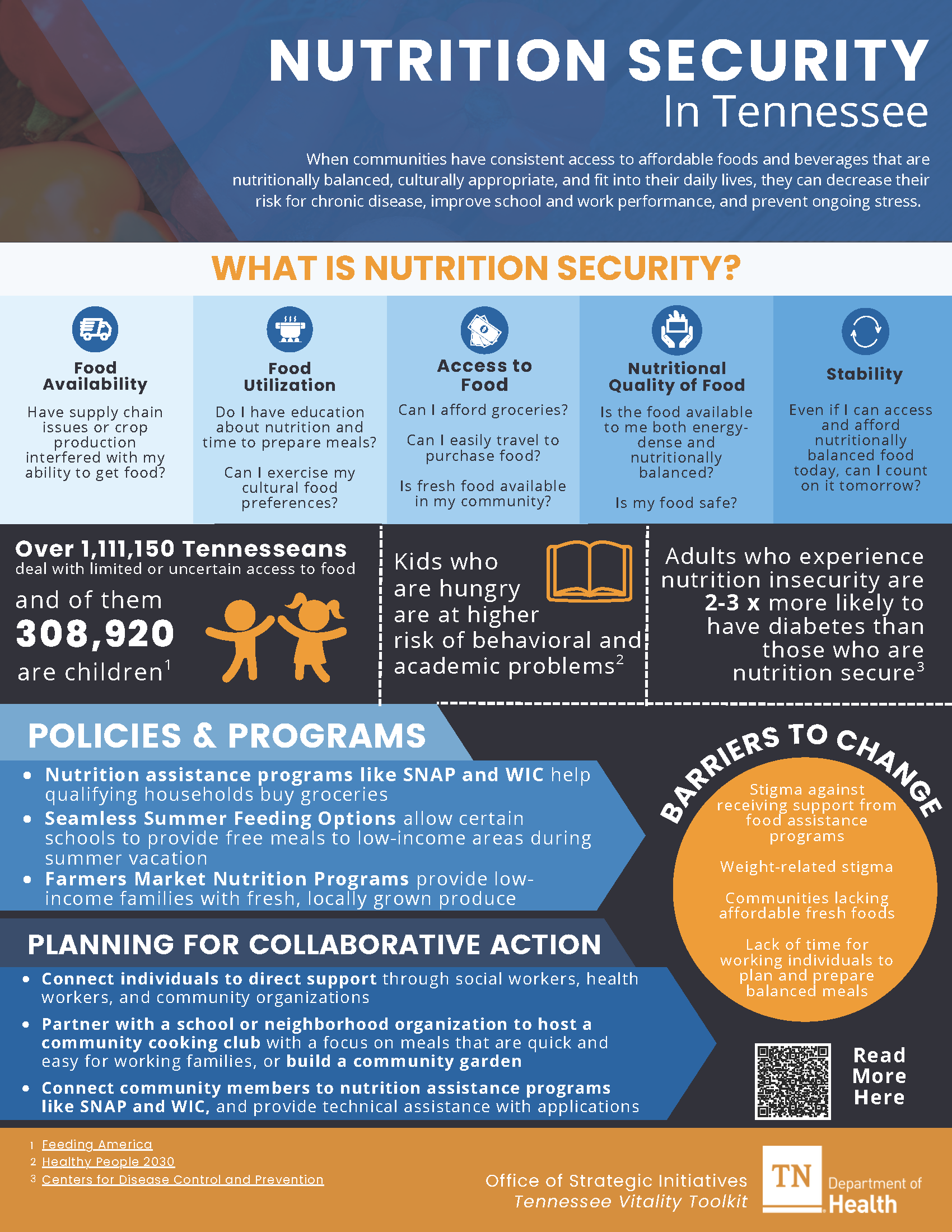
Nutrition Security means having regular access to safe, nutritious, and affordable foods that promote health and well-being.1 Communities benefit when people can access affordable, healthy foods that fit their culture and are easy to get and use. High nutrition security helps people avoid diseases, perform better at school and work, and feel less stressed.2 Nutrition security ensures everyone can access the food they need to live an active and healthy lifestyle.3
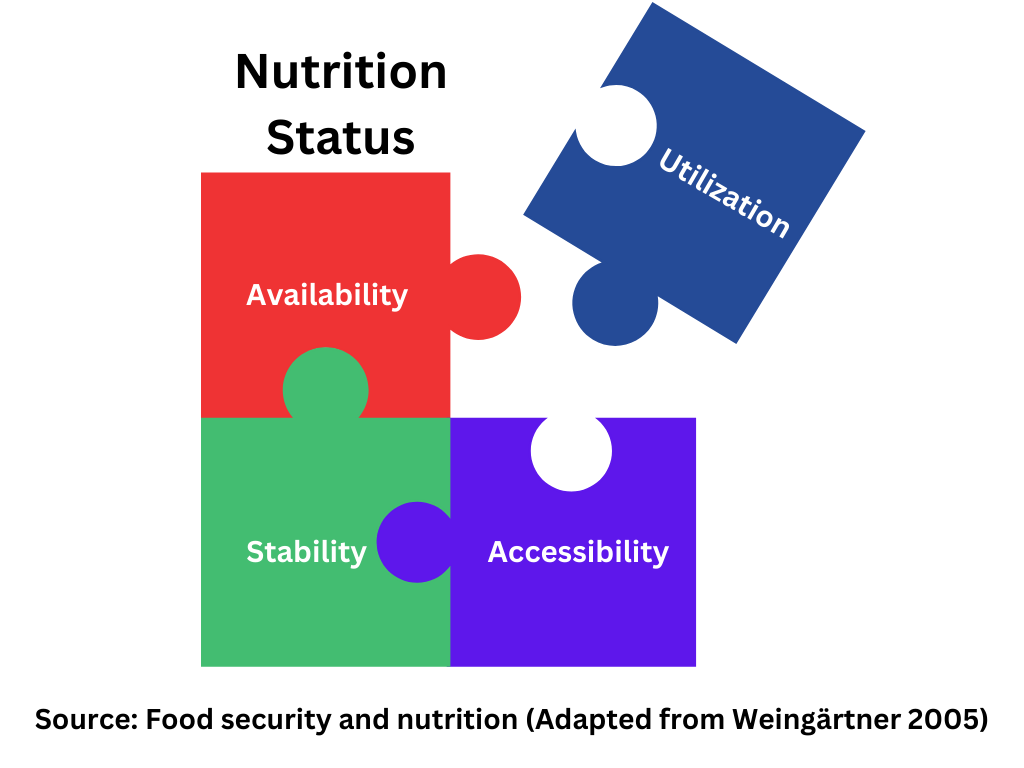
Nutrition security has many aspects: 4
- Food Availability: Is food physically available?
- Food Utilization: Do people know how to eat healthy and have time to cook? Can they eat foods they like and are used to?
- Access to Food: Can people afford healthy food and get to the store easily?
- Stability: Are these aspects always available, not just sometimes?
When one piece of the puzzle is missing, it threatens an individual or community’s overall nutrition security.5
Nutrition security goes beyond simply eating a balanced diet of fresh fruits and vegetables. It means having access to healthy, safe, and nutritious food—regardless of where you live, how much time you have, or what your budget looks like. People might live in a town that does not have a grocery store that stocks fresh produce, be a working parent with limited time, or be working with a tight food budget.6 Ensuring nutrition security means recognizing and addressing these challenges so everyone can make healthy food choices that work for their lives.
-
Why is Nutrition Security Important for Community Well-Being?
Good nutrition is the foundation for healthy bodies and minds and sets us up to work, play, and learn to the best of our abilities.3 Consuming nutritionally balanced food and beverages gives people of all ages energy to be active, whether for a job, a sports team, a fitness hobby, or keeping up with children or grandchildren.4 It can decrease feelings of stress, boost your mood, and improve sleep quality. Poor nutrition is associated with increased risk for multiple chronic health conditions such as diabetes, obesity, heart disease, and even some cancers. Knowing that you can afford and access healthy food reduces stress and improves overall physical and mental health.6
Over the past 30 years, nutrition-related diseases like obesity and type 2 diabetes have become much more common in the U.S.7 Poor nutrition is linked to around 600,000 deaths each year. On average, Americans score 59 out of 100 for diet quality—falling short of federal nutrition guidelines.8
According to the 2025 Diabetes Action Report from the Tennessee Department of Health, more than 37% of adults in Tennessee are dealing with obesity, and more than 14% are diabetic or prediabetic.9 Type 2 diabetes and obesity are also on the rise among children, and current estimates show that many American children will be obese by the time they are 35 years old.10
ADULTS AND NUTRITION When adults lack regular access to enough safe, nutritious, and culturally appropriate food, they face serious negative impacts on their health.11
- Higher rates of chronic disease like obesity, hypertension, heart disease, and type 2 diabetes
- Increased risks of depression, anxiety, and stress
- Decreased work productivity and more missed workdays
- Higher health care costs
Addressing nutrition security is essential for an individual's quality of life and reducing healthcare costs and strengthening communities.
KIDS AND NUTRITION Children without enough healthy food may:1,12
- Do poorly in school
- Have slower brain development
- Show more anxiety or aggressive behavior
- Be more likely to have anemia or asthma
Helping kids get the right food helps them grow, learn, and succeed.12
-
What are the Disparities?
Poor nutrition can affect anyone, but some groups face bigger challenges.
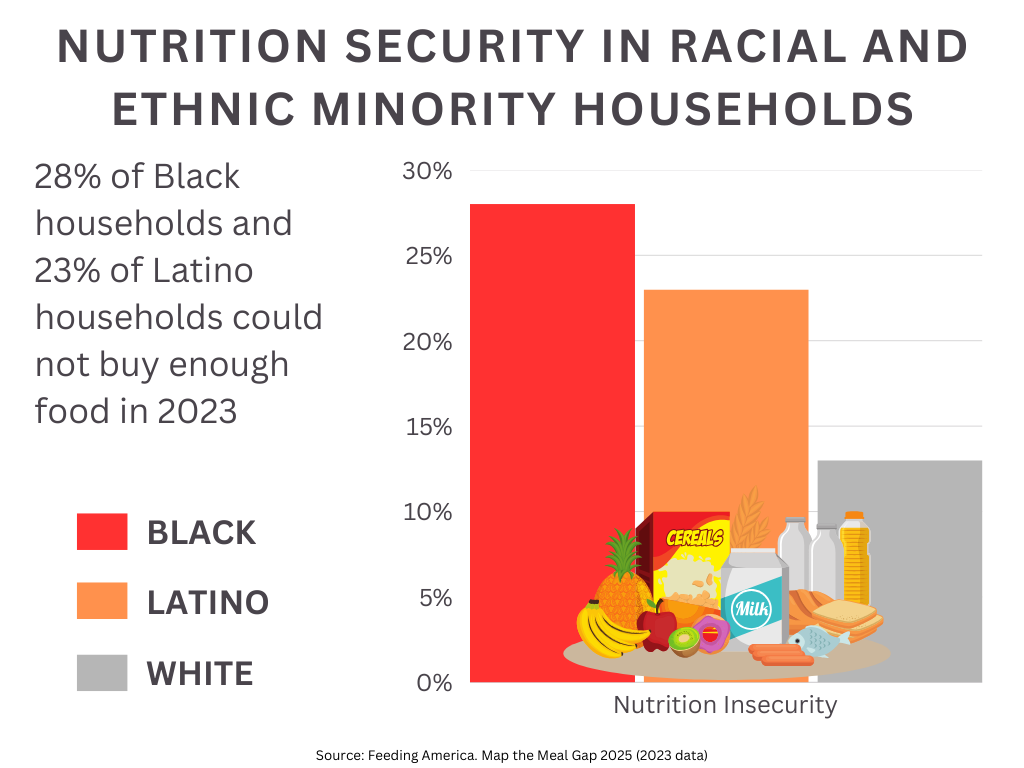
Racial and Ethnic Minorities
Food insecurity remains more common among Black and Hispanic families than white families, though the gap has narrowed over the past five years.13 In Tennessee, minorities make up around 23% of the population, but more than 40% face food insecurity.14
Rural Communities
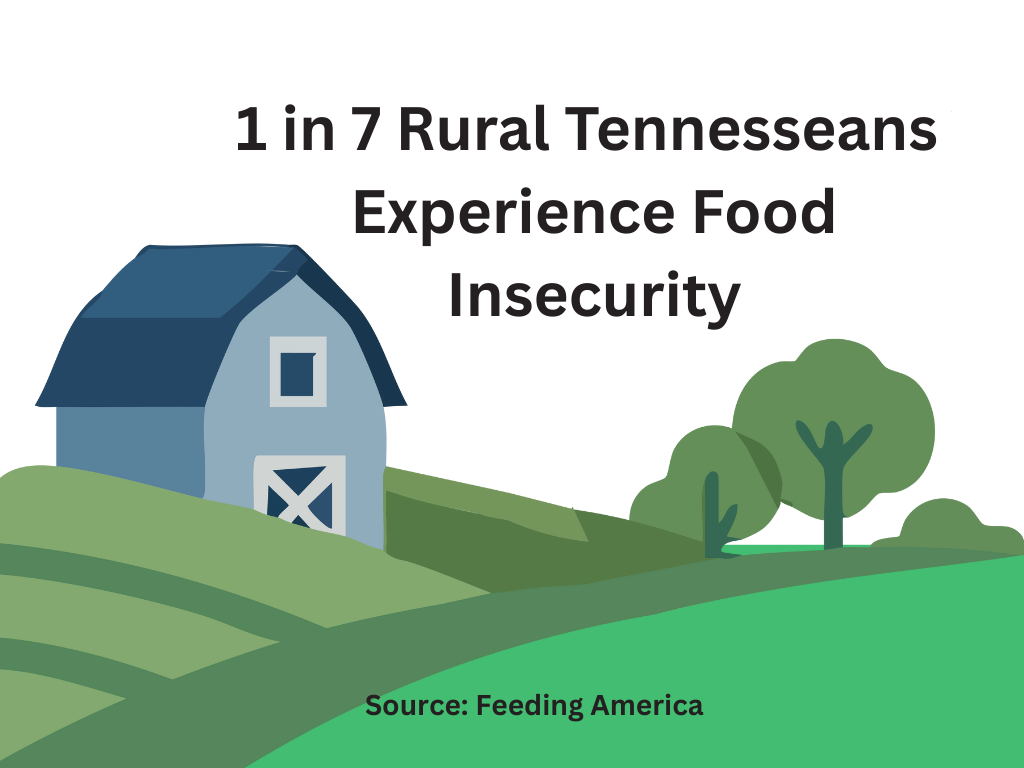
Nearly 35% of Tennesseans live in rural areas, and 85% of the counties with the highest rates of food insecurity are rural.12,15 According to the Map the Meal Gap study analysis, 13.3% of the people in those rural areas experience some level of nutrition insecurity.16
Lack of public transportation in rural communities can make traveling to grocery stores, food banks, and farmers' markets difficult or expensive.
Limited grocery store options, especially those offering fresh produce and protein, make it hard to find nutritionally balanced meal options.17
LGBTQ+ Individuals
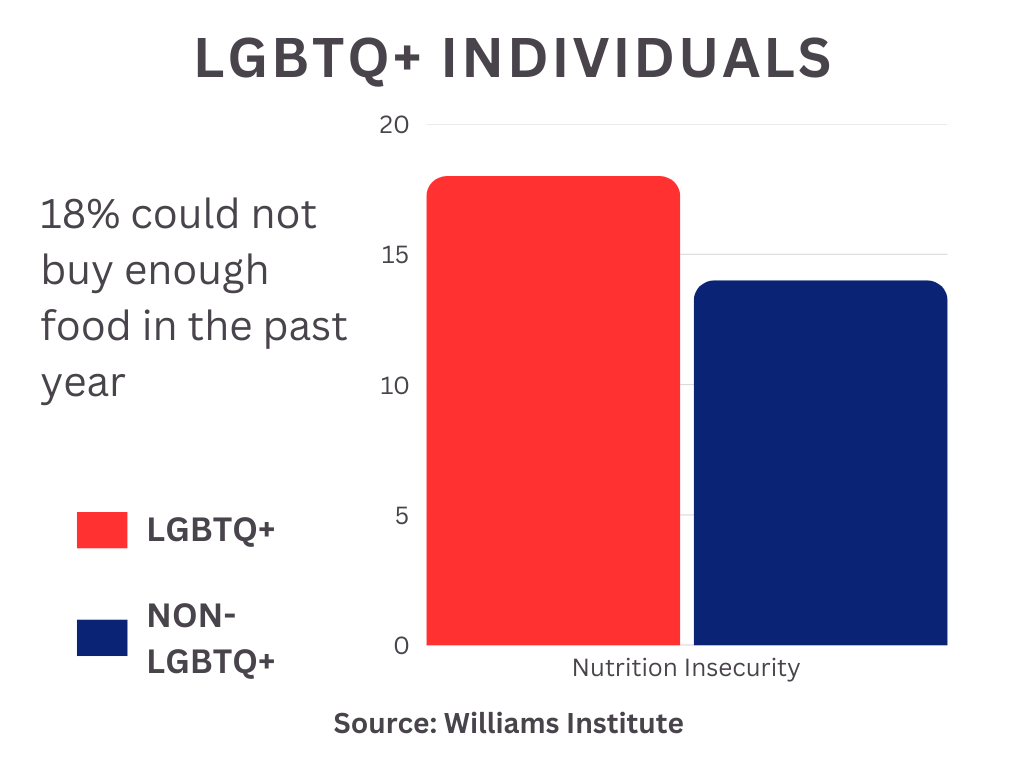
A 2025 report from the Williams Institute at UCLA School of Law found that 18% of LGBTQ+ adults experienced food insecurity in the past year.18 The study also found that almost seven in 10 LGBTQ+ adults who received SNAP benefits had household incomes under $35,000, two-thirds were living with a disability, and nearly half had a child under 18 living in the household.18
Individuals with Disabilities
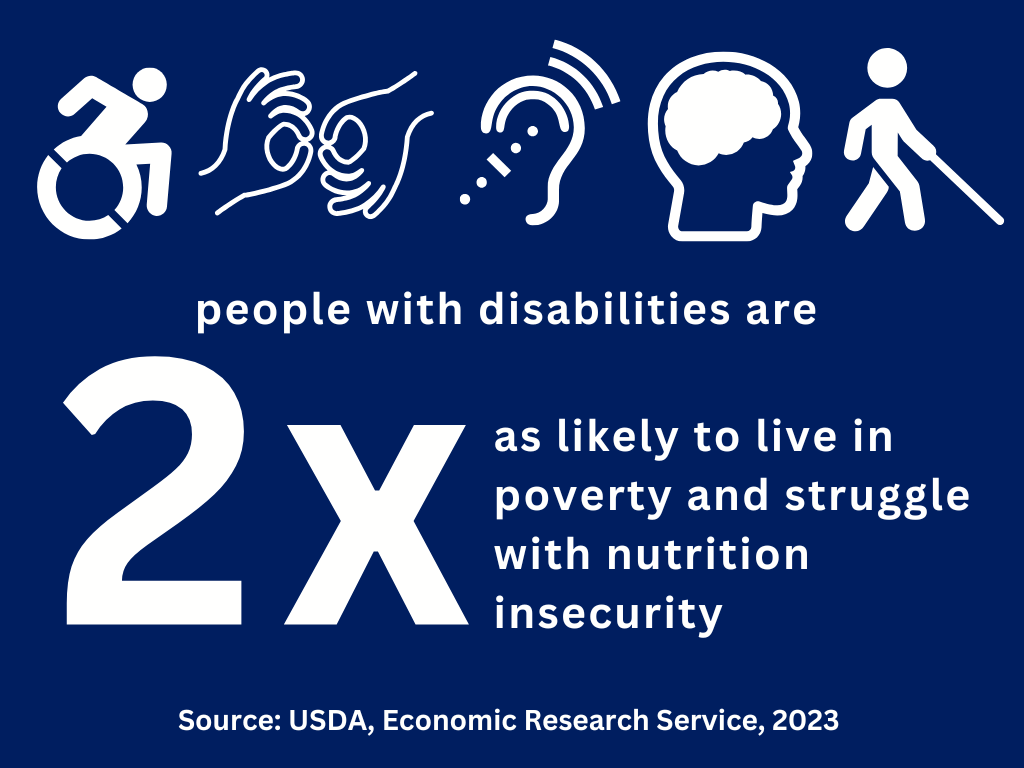
About 13.5% of Tennesseans are living with a disability, according to U.S. Census data.19 According to the National Bureau of Economic Research, average earnings fall by 77% after the onset of a severe or chronic disability.20 People with disabilities are also twice as likely to live in poverty as those without a disability, making affording groceries harder.20 Local grocery stores and transportation options may make it difficult for some people with disabilities to access food. Poor nutrition can also make chronic health conditions worse.21
Children
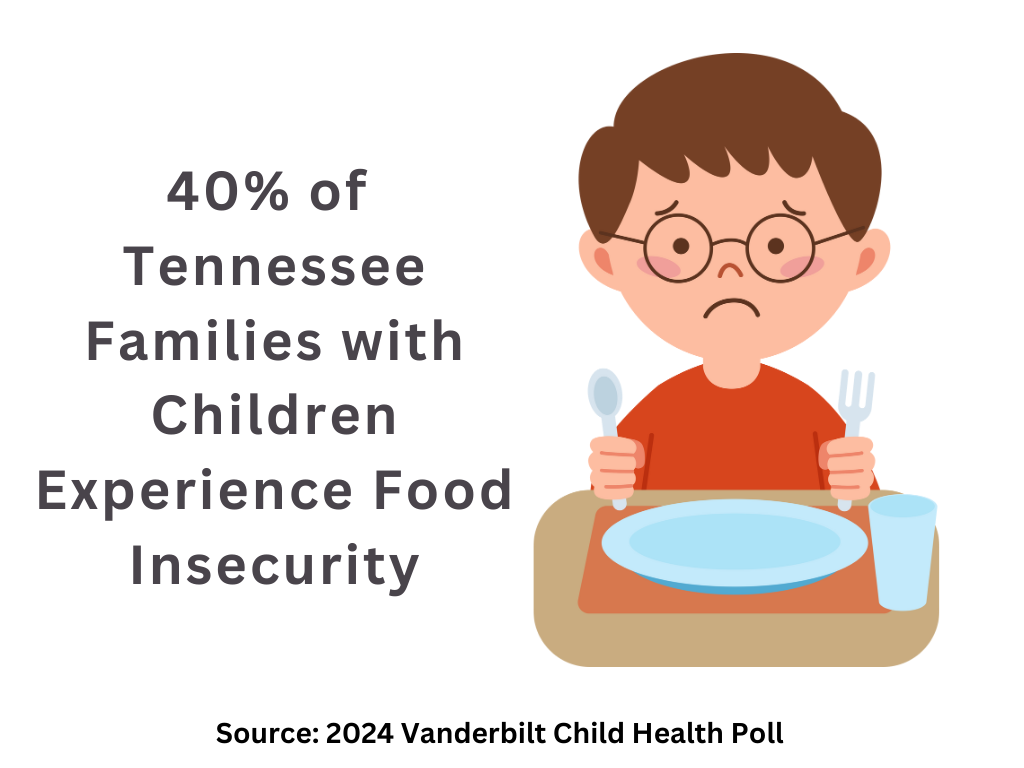
According to the 2024 Vanderbilt Child Health Poll, about 40% of Tennessee families with children experience food insecurity, and about half of those families suffer from very low food security.13 Increasing prices make it challenging to meet the nutritional needs of growing kids. Nearly half of parents reported receiving some food assistance.13 Single-parent families, especially single moms, are more likely to struggle with nutrition security.22
Older Adults
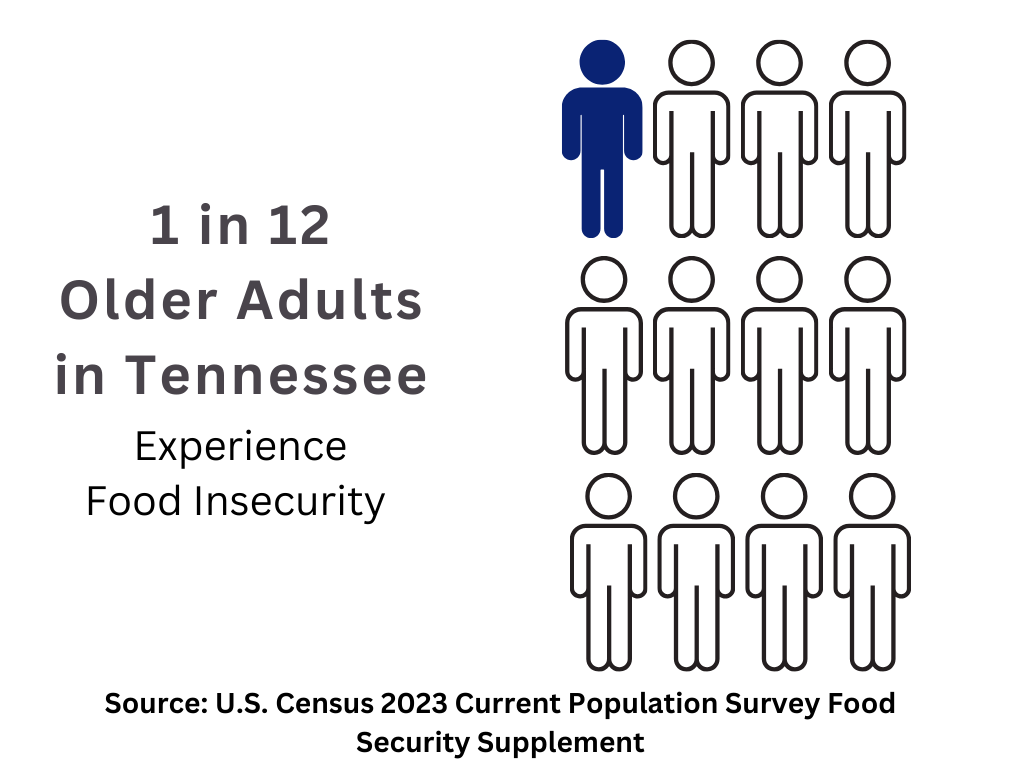
One in 12 adults over age 60 in Tennessee experiences some nutrition insecurity.14
Those most at risk include: 23- Older adults with disabilities
- Older renters (non-homeowners)
- Older adults who are divorced, widowed, or never married
-
Community-Driven Solutions
Community-driven solutions are practical steps that local partners and community groups can take now to improve access to safe, nutritious, and affordable foods.
Activities and Programs
- Reduce stigma. Some people are eligible for programs like Supplemental Nutrition Assistance Program (SNAP) and Special Supplemental Nutrition Program for Women, Infants, and Children (WIC), but may be reluctant to seek help-- or not even know they’re eligible-- because of stigma or misinformation about the programs. Anyone who meets eligibility requirements can participate in SNAP or WIC, and getting benefits doesn’t affect anyone else’s ability to participate in the program. Participation in TennCare, SNAP, or TANF (Families First) automatically qualifies enrollees for WIC under income eligibility rules.
- Promote nutrition education. Expanded Food & Nutrition Education Program (EFNEP): This free federal program provides hands-on lessons for families on budget-friendly meal planning, food prep, and nutrition. In 2024, EFNEP graduates collectively reported saving more than $764,000 over a year on groceries using innovative shopping strategies.
- Volunteer. Local food pantries, mobile meals services, and nonprofits rely heavily on volunteers. Most of these services operate with limited budgets and staff, so volunteers are crucial in ensuring people get the help they need.
- Donate to a local food bank. When many people give a little, it adds up to a lot of help for neighbors in need. Food banks often work with grocery stores, farmers, and suppliers, so every dollar you give can go further than buying food at retail prices. Donating extra or unneeded food keeps good food out of landfills and gets it to people who need it. Even small donations can make a big difference.
- Little Free Pantries. These small, publicly accessible boxes are stocked with free food and hygiene items for anyone in need. Inspired by the "Little Free Library" model, they operate on a take what you need, give what you can basis and are often located in neighborhoods, near churches, community centers, or schools. These boxes are especially useful in rural areas or neighborhoods without easy access to larger food pantries.24
- Get involved in a community cooking or gardening club. Partner with local schools or groups to run cooking clubs or gardens. Focus on simple meals using food from SNAP or WIC.
-
Making Change through Policy and Systems
Policy and system changes support long-term improvements in nutrition security. These evidence-informed actions help create stronger, more supportive environments that improve access to healthy, reliable food for individuals and families.
- Advocate for policy change. Ask state lawmakers to support Summer EBT, SNAP/WIC enrollment reforms, and adequate nutrition funding.
- Address structural barriers like food deserts and access. Identify food deserts in rural and urban areas, especially in West and East Tennessee, via state mapping tools like the Tennessee Story Map.25
- Connect community members to nutrition assistance programs. Make accessing benefits easier by providing technical assistance with applications to programs like SNAP and WIC.
- Connect individuals to social workers, community health workers, and community organizations to provide direct support to meet their social needs. Encourage the practice of patient screenings that include social drivers of health, such as nutrition security, with providers in your community.
- Support school-based nutrition programs: SUN Meals and SUN Meals-To-Go provide free summer meals to school-aged children in qualified low-income areas. Promote the community’s knowledge of existing services so that kids who qualify can access available services throughout the year.
- Support workforce training. Train healthcare providers, case managers, and school staff to recognize and address food insecurities.
- Work with local UT Extension offices to engage with the local agriculture community. Build stronger relationships between local farmers and the greater community. Encourage local farmers to participate in Tennessee’s Farmers Market Nutrition Program.
-
Community Spotlight
The Health Council Community of Practice (CoP) connects Tennessee Health Councils through shared learning and discussion around health priorities. The links below provide access to recent CoP conversations related to this topic. To learn more about the Community of Practice, click here.
Cocke County (December 2023)
Wayne County (December 2024)Submit your own Community Spotlight! Please email Health.Councils@tn.gov with any relevant stories, resources, or presentations related to this topic.
-
Partners and Resources
Multiple programs at the community, state, and national levels provide resources to help address nutrition security.
Tennessee Resources
TN Department of Disability and Aging
The Aging Nutrition Program provides over 3.5 million meals annually via congregate sites and home delivery, helping older adults overcome mobility and transportation barriers.
TN Department of Health- Tennessee Women, Infants, and Children (WIC) Program is a nutrition assistance program designed to support low-income pregnant, postpartum, and breastfeeding women, infants, and children until age five. In addition to supplemental food, WIC provides nutrition education, breastfeeding support, and referrals to other health and community services.
- WICShopper is an app that can help verify WIC eligibility as you shop, save recipes and grocery lists, and view your remaining balance.
- The ebtEDGE mobile app allows users to view deposit schedules, track balances and transactions, and quickly locate stores that accept SNAP and EBT benefits. The app can also prevent fraud by allowing users to change PINs, block out-of-state purchases, and report suspicious activity. The app is available for free download on Google Play and the Apple App Store.
- Commodity Supplemental Food Program (CSFP) is a federal program administered by the TN Department of Health that provides monthly food boxes to people 60 years and older. CSFP benefits are available in Davidson, Dyer, and Shelby Counties.
- The Farmer’s Market Nutrition Program (FMNP) provides locally grown produce to Tennesseans participating in WIC and eligible older adults. All fruits, vegetables, and herbs are grown by local Tennessee farmers, connecting FMNP participants to their community in healthy, beneficial ways.
- Tennessee Story Map is a tool that looks deeply at Child and Adult Care Food Program (CACFP) participation across the state, food deserts in Tennessee, areas of potential CACFP eligibility, the intersection between food security and poverty, and strategies for change. Spotlights include Chattanooga, Tri-Cities, Jackson, and the West Tennessee Region.
- The Data Dashboard is an interactive map featuring all the data included in the Tennessee Story Map. Users can toggle layers on and off and filter childcare providers by participation in CACFP and county.
TN Department of Human Services
- Supplemental Nutrition Assistance Program (SNAP) provides qualifying households with a grocery stipend, the amount of which depends on the household’s resources and situation.
- The Tennessee Summer Nutrition Initiative (TSNI) provides additional nutrition assistance to families in 15 counties with limited access to the Summer Food Service Program (SFSP) or other supplemental summer meal program options. Children ages 5 to 18, who live in one of the 15 counties listed below, and receive SNAP (food stamps) or Families First (TANF) benefits on May 31, 2025, can get this help. Families who qualify will automatically get a one-time $120 payment for food. The money will be added to their regular EBT card starting June 13, 2025.
Benton
Carroll
Carter
Cocke
FayetteGrainger
Houston
Humphreys
Johnson
LauderdaleMarshall
Moore
Rhea
Sequatchie
SumnerArea Agencies on Aging and Disability (AAADs):
Provide information, referrals, and assistance to older adults, including nutrition-related information. Call 1-866-836-6678 from anywhere in Tennessee to be automatically directed to your nearest AAAD.Tennessee Human Resource Agencies
This social services network provides resources from nine regional offices across the state.
Services include:- Commodities Distribution involves quarterly distributing government surplus foods to low-income, elderly, or disabled households to help supplement their food budget and provide nutritious meals.
- The Child & Adult Care Food Program (CACFP) supplements the cost of meals and snacks at licensed and approved day care providers.
- Meals Delivery Services, or Meals on Wheels, provides home delivery services to homebound seniors and disabled adults.
- Congregate Meals are provided at senior centers, community centers, and other public or private facilities where other social services are provided.
Tennessee Human Resource Agencies:
- First Tennessee Human Resource Agency
- East Tennessee Human Resource Agency
- Upper Cumberland Human Resource Agency
- Southeast Tennessee Human Resource Agency
- South Central Human Resource Agency
- Mid-Cumberland Human Resource Agency
- Northwest Tennessee Human Resource Agency
- Southwest Human Resource Agency
- Delta Human Resource Agency
Tennessee Nutrition and Consumer Education Program (TNCEP)
Provides nutrition education classes and other resources to help individuals make healthy food choices.The Store
The Store is a nonprofit, free grocery store in Nashville founded by Brad Paisley and Kimberly Williams-Paisley in partnership with Belmont University. Operating on a referral-based, client-choice model, it allows Middle Tennessee families in need to shop like they would in a grocery store, selecting fresh produce, meats, dairy, pantry staples, and household essentials for no cost for up to a year.
UT Extension
The University of Tennessee Extension’s wide-ranging library of publications on nutrition is available online and includes everything from guides to buying fresh produce to food safety tips. Individual UT Extension offices offer food programs across the state on subjects ranging from cooking for diabetes management to food preservation. Contact your local office for more information.
-
To Learn More
FDA
How to Understand and Use the Nutrition Facts Label walks you through each section of the Nutrition Facts label on packaged food to help you make the best nutrition decisions.Feeding America
The Find Your Local Food Bank tool allows users to input their zip code to find out about hours, locations, and services at partner food pantries and meal programs.
Hunger Free America
The Find Food tool identifies local food services, from food pantries to soup kitchens. Users can filter results to find services for seniors, Spanish-speakers, or Kosher, Halal, and vegetarian diets. Enter your address and locate nearby options that best suit your needs.
Meals on Wheels
The program delivers nutritious meals to eligible seniors who have difficulty shopping and cooking. Many Meals on Wheels providers also cater to special dietary needs for seniors with diabetes, heart disease, or difficulty swallowing.
National Council on Aging (NCOA)
BenefitsCheckUp is a free online tool for seniors, people with disabilities, and veterans. Users receive a personalized report listing local programs they may qualify for and details on how to apply. This includes information about food programs and financial assistance with medications, health care, utilities, housing, and more.
USDA- Dietary Guidelines for Americans offers a framework to help everyone enjoy nutrient-dense food that meets their personal, cultural, budgetary, and health needs.
- MyPlate is a tool that breaks down the food groups and provides additional details on each type, from recommended daily portions to healthy recipes. The MyPlate site also includes communication toolkits on nutrition for children and families, and many materials are available in Spanish.