Transportation
Tennessee is one of the fastest-growing states in the country. The state's population grew by 5.8% between 2020 and 2025.1 In 2022 alone, nearly 83,000 people moved to Tennessee, pushing the population above 7 million for the first time.2 As the state’s population and economy grow, so does the need for transportation infrastructure.3
People get around in many ways, including driving, walking, biking, using public transportation or rideshare services, and getting rides from family and friends. Where people live can shape the transportation options available to them.4
Although public transportation is available across Tennessee, the type and level of service vary widely by community.5 Many Tennesseans continue to rely on personal vehicles to get to where they need to go. In 2024, nearly 76% of Tennessee workers drove alone to work.6 Transportation challenges could grow as the state’s population increases. By 2045, the Tennessee Department of Transportation projects that commute time could increase by about 60%, while trips between major Tennessee cities could take up to an hour longer.3
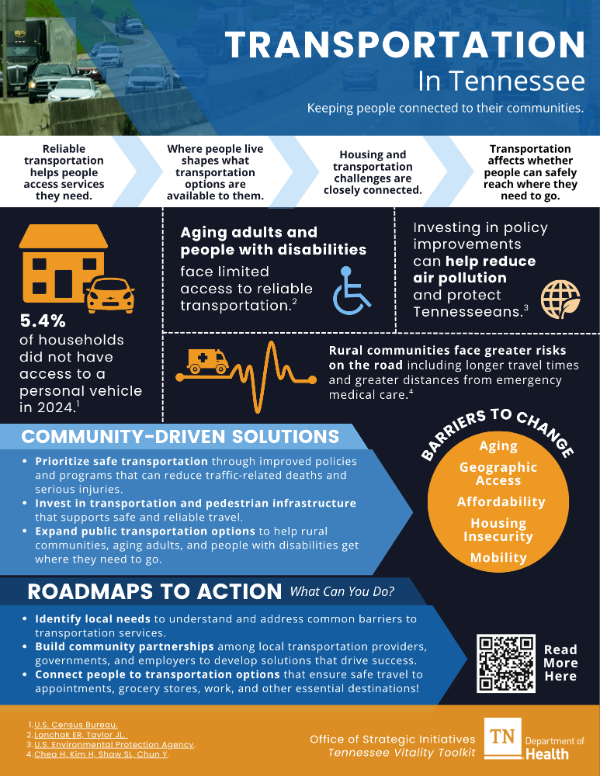
Transportation is also a priority of the Tennessee State Health Plan. Visit this link to learn more about the State Health Plan strategies to improve access to transportation across the state.
Transportation plays an important role in community well-being. Reliable and affordable transportation helps people reach health care, food, jobs, education, and opportunities to connect with others.4 This can be especially important in rural communities, where people may travel longer distances to reach essential services and opportunities.7 When we invest in improving transportation infrastructure across Tennessee, we help Tennesseans reach the people, services and opportunities they need to live healthy, thriving lives.
-
WHY IS TRANSPORTATION IMPORTANT FOR COMMUNITY WELL-BEING?
Transportation can shape health and well-being in many ways. How roads and transportation systems are designed can affect whether people can safely and reliably reach the places they need to go. Transportation can also influence the risk of traffic injuries, opportunities for physical activity, and exposure to air pollution.8
Access
Reliable transportation helps people reach health care, healthy food, jobs, education, and other services and opportunities. When transportation is limited or unreliable, it can be harder to meet these daily needs.
Public transportation can provide an important option for people who do not drive or have access to a vehicle, but availability varies across Tennessee. The state ranks 42nd on the Center for Neighborhood Technology's AllTransitTM Performance Source, which measures factors such as transportation access, frequency, and connections to jobs.9 The state's low score reflects limited public transportation availability and options, which can make it harder for people to reach the places and services that support their health and well-being.
Traffic Safety
Transportation systems can affect the risk of crashes, injuries, and deaths for drivers, passengers, pedestrians, and bicyclists. Road design, speed, safe crossings, sidewalks, bike infrastructure, and other transportation features can all play a role in keeping people safe.8
Physical Activity
Transportation systems can make physical activity part of everyday life. Safe and convenient sidewalks, bike routes, trails, and connections to public transportation can give people more opportunities to walk, bike, or use other active ways to get where they need to go.10
Air Quality and the Environment
Cars and trucks contribute to air pollution, which is linked to health problems such as asthma, heart disease, reduced lung function, and premature death. Vehicles also emit greenhouse gases that contribute to climate change.11 Using public transportation or carpooling can help reduce the number of vehicles on the road, lower emissions and improve air quality.12
-
WHAT ARE THE DISPARITIES?
A transportation system that works well for one person may not meet the needs of another. Distance, cost, safety, accessibility, and available transportation options can create different challenges depending on a person's circumstances and where they live. Understanding these differences can help communities identify where transportation needs are greatest.
Rural Communities
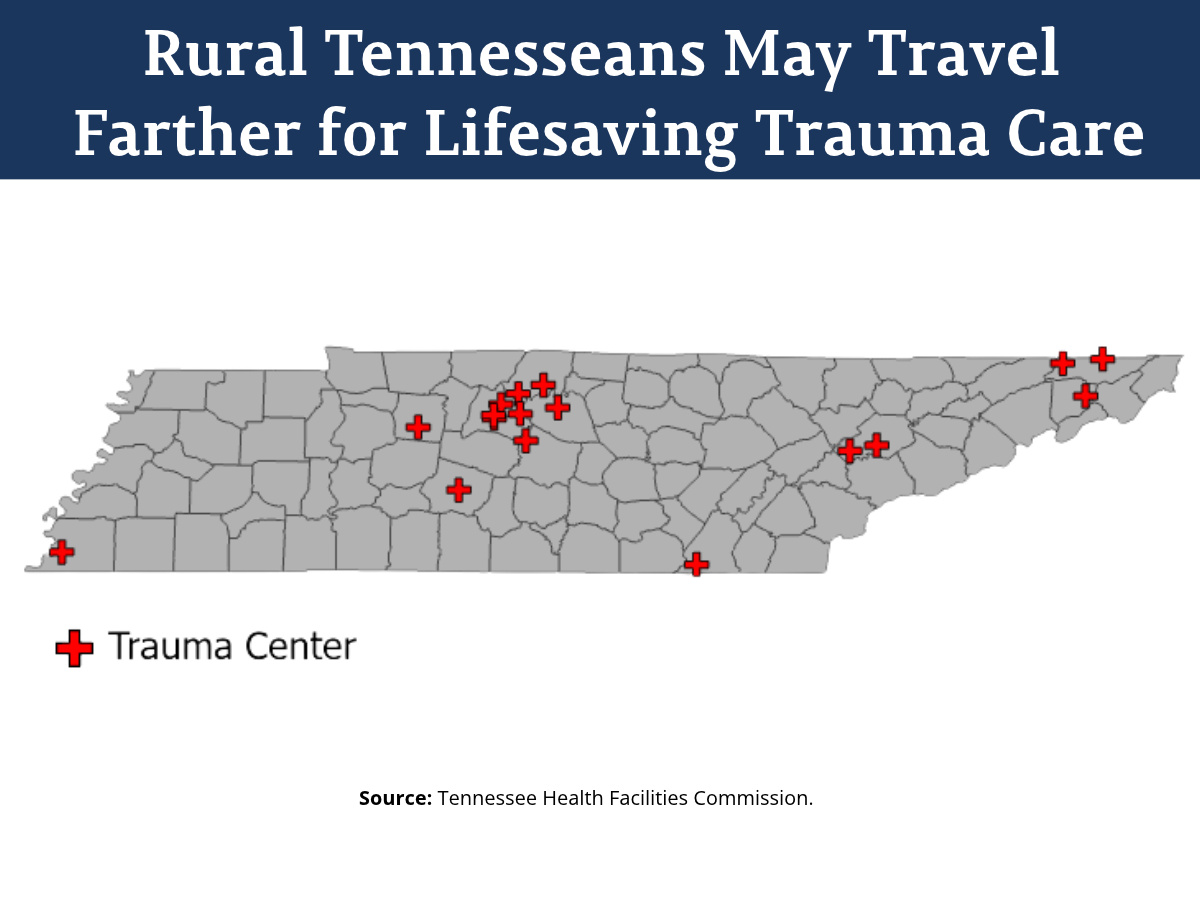
People in rural communities face greater risks on the road. Rural communities have higher rates of traffic-related deaths than urban communities, with factors such as longer travel times and greater distances from emergency medical care contributing to the difference.13 In Tennessee, rural areas also have less access to trauma care for people injured in motor vehicle crashes than urban and suburban areas.14 Trauma centers are concentrated in certain parts of the state, which may mean longer travel distances for rural Tennesseans who need emergency care.15
Longer distances can also make it harder to reach health care, especially during emergencies.10 A 2025 study identified areas of Tennessee where driving to advanced stroke care takes more than an hour, highlighting the importance of timely access to emergency treatment.16 Transportation barriers can continue during recovery. A study from the University of Tennessee found that the median trip to outpatient stroke rehabilitation services was 22 miles and nearly 32 minutes in rural Tennessee counties, compared with about 11 miles and 18 minutes in urban counties.17
Rural communities often have fewer public transportation options, making it harder for people without reliable vehicles to reach jobs, schools, grocery stores and other destinations. Even when services are available, they may not provide the flexibility people need. In a study of advanced practice registered nurses in Tennessee, rural patients sometimes faced long waits to schedule transportation for health care visits and could wait several hours for a ride home after an appointment.18
Older Adults
As people age, changes in mobility and driving ability can affect how they get around in their communities. Older adults may limit driving at night, during bad weather, or in other challenging conditions due to vision challenges, which can reduce access to health care, social activities, and other essential services.19,20 Limited transportation and mobility can also increase the risk of food insecurity and create barriers to community participation in timely health care.21,22
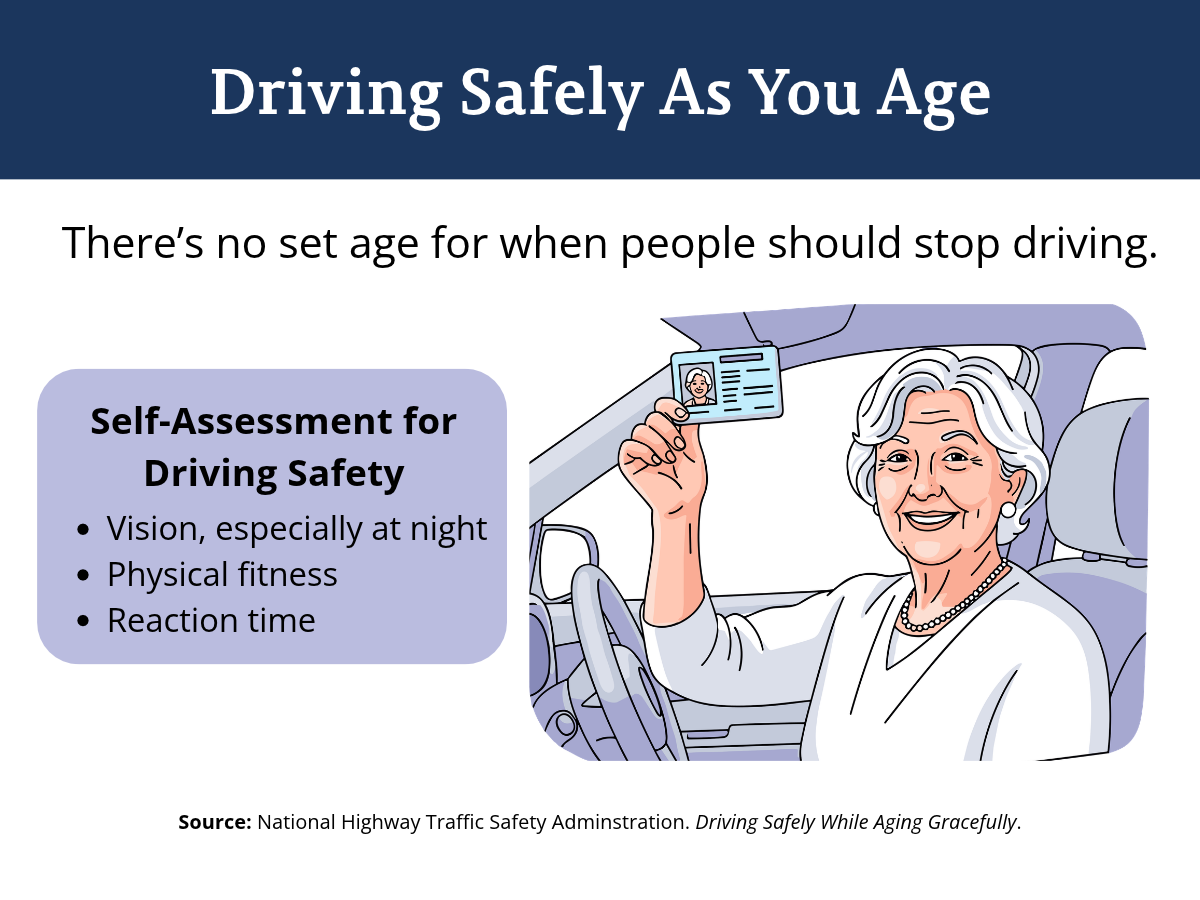
Deciding when to limit or stop driving can be difficult for older adults and their families. The National Highway Traffic Safety Administration recommends that these decisions be based on a person’s ability to drive safely rather than age alone. Changes in vision, physical ability, attention, reaction time, health, or medications can be signs that an older adult should adjust driving habits or consider other transportation options.23
People with Disabilities
People with disabilities may face transportation barriers that make it harder to get where they need to go and participate in their communities. For people who use wheelchairs, walkers, scooters, or other mobility devices, barriers can include difficulty entering and exiting vehicles, limited accessible parking, and a lack of accessible transportation options.24
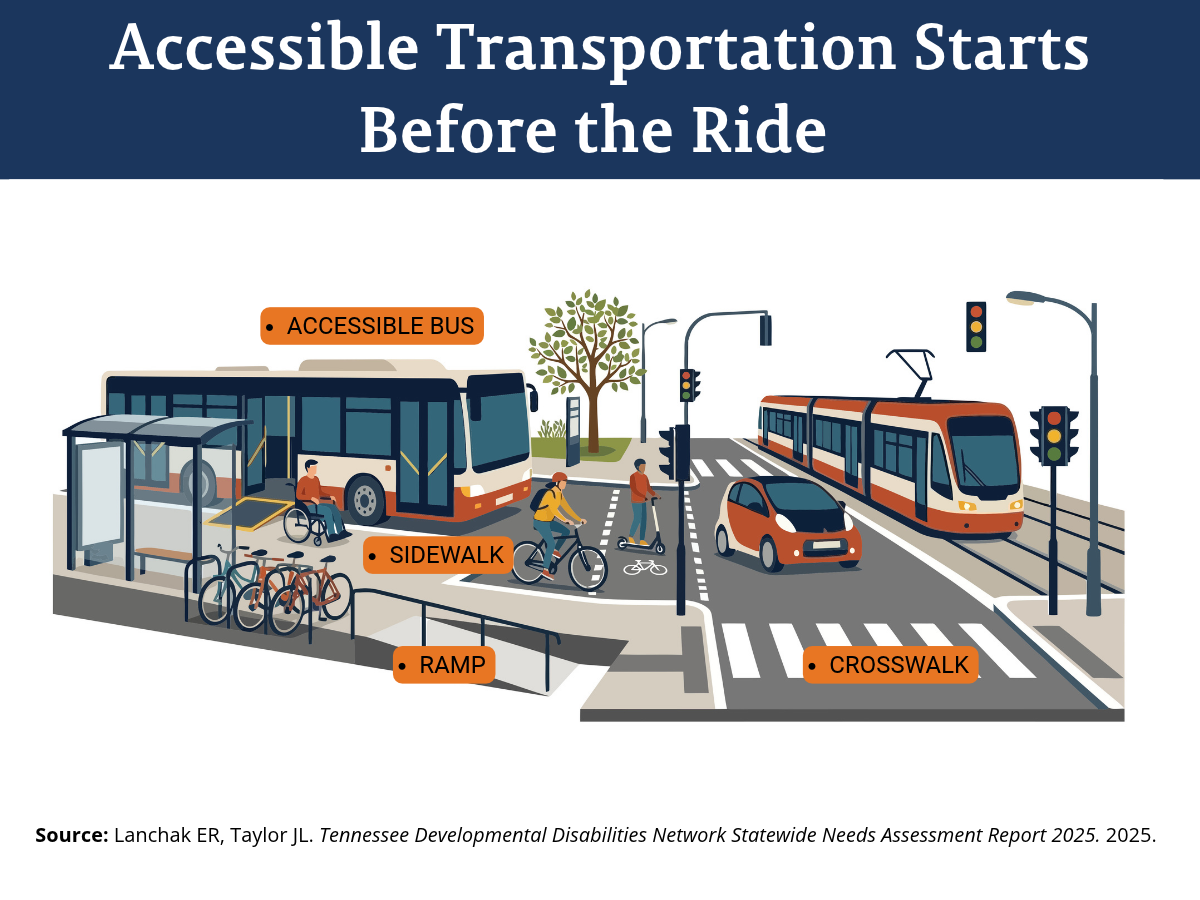
These challenges extend beyond vehicles to the communities around them. Tennessee’s Mobility and Accessible Transportation Strategic Plan identified missing or poorly maintained sidewalks, curb ramps, and other infrastructure as barriers that can prevent people with disabilities from traveling safely or reaching public transportation stops. The plan also identified limited transportation services, high costs, and a lack of specialized assistance as barriers to independence and community participation.26
Socioeconomic Status
Transportation costs can take up a larger share of the household budget for people with lower incomes, leaving less money for other needs. In 2024, U.S. households in the lowest income group spent about 31% of their before-tax income on transportation, compared with about 10% for households in the highest income group.27
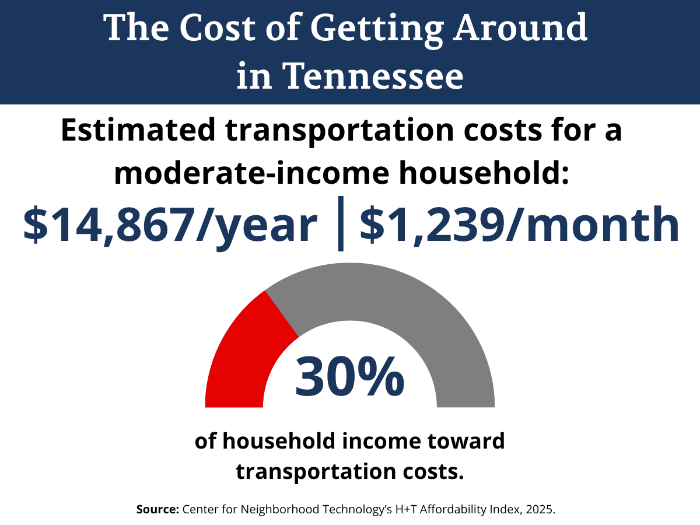
Transportation costs are a challenge in Tennessee. The H + T Affordability Index estimates that transportation costs account for about 30% of a moderate-income household's income in Tennessee, twice the 15% benchmark used to assess transportation affordability. Transportation costs vary across the state and can account for a larger or smaller share of household income depending on the county.28
Racial & Ethnic Minorities
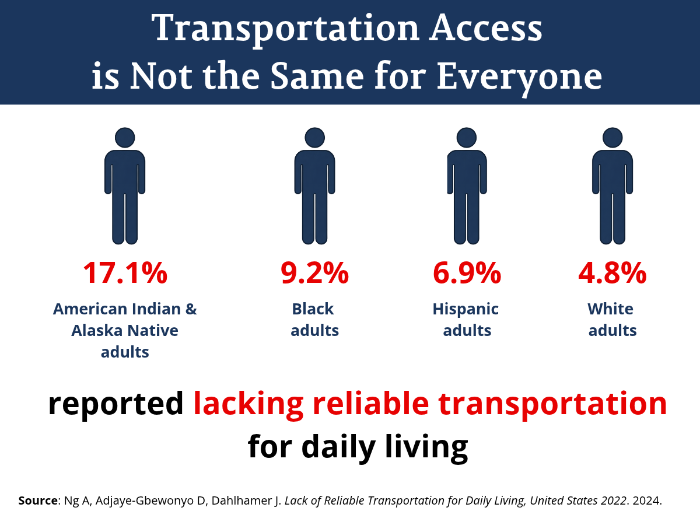
Access to reliable transportation varies across racial and ethnic groups. In 2022, 9.2% of Black adults and 6.9% of Hispanic adults nationwide reported lacking reliable transportation for daily living, compared with 4.8% of White adults.29 American Indian and Alaska Native adults reported the highest rate, at 17.1%.29 These differences remained for most racial and ethnic minority groups even after researchers accounted for factors such as income, education, and age.30
Racial and ethnic differences are also seen in traffic safety. Black, American Indian and Alaska Native people have higher pedestrian death rates than White people. Research suggests that roadway design, the built environment, transportation access, and other community conditions may contribute to these differences.31
Transportation barriers can also affect access to health care. In Memphis, a study of an organization serving underserved and Black women with breast cancer identified transportation as one of several barriers to accessing care.32
Youth & Adolescents
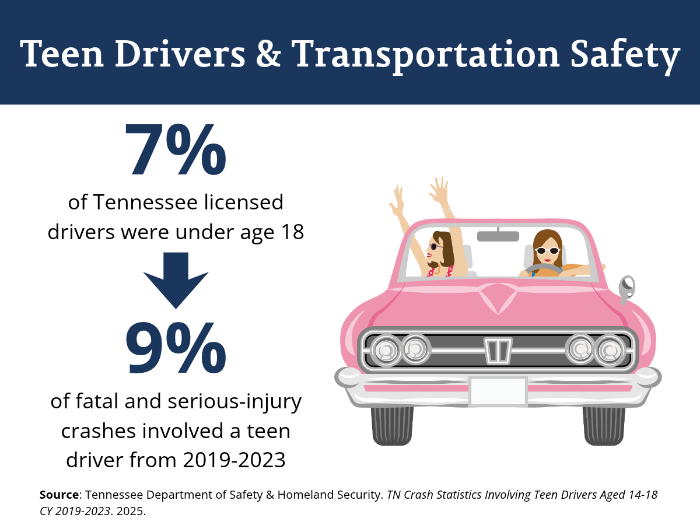
Young and inexperienced drivers face greater risks on the road. From 2019 to 2023, teen drivers ages 14 to 18 were involved in approximately 9% of the state’s fatal and serious-injury crashes, and made up roughly 7% of the state’s licensed drivers.33
Several factors can contribute to crashes involving young drivers. In Tennessee, commonly reported factors included failure to yield, following too closely, distracted driving, speeding, and driver inexperience.33 Cell phone use is another safety concern. In 2023, about half of Tennessee high school students who drove reported using the internet or apps on their phone while driving.34
Crashes involving teen drivers also put other young people at risk. Among passengers riding with teen drivers in crashes, 65% were also teenagers.33 Half of the teen vehicle occupants who died from 2019 to 2023 were not wearing a seat belt.33
Young people may also face risks when using other forms of transportation. In a Nashville study, 13% of e-scooter riders involved in crashes with motor vehicles were younger than 18, even though the city’s minimum legal riding age was 18.35
People without Access to Personal Vehicles
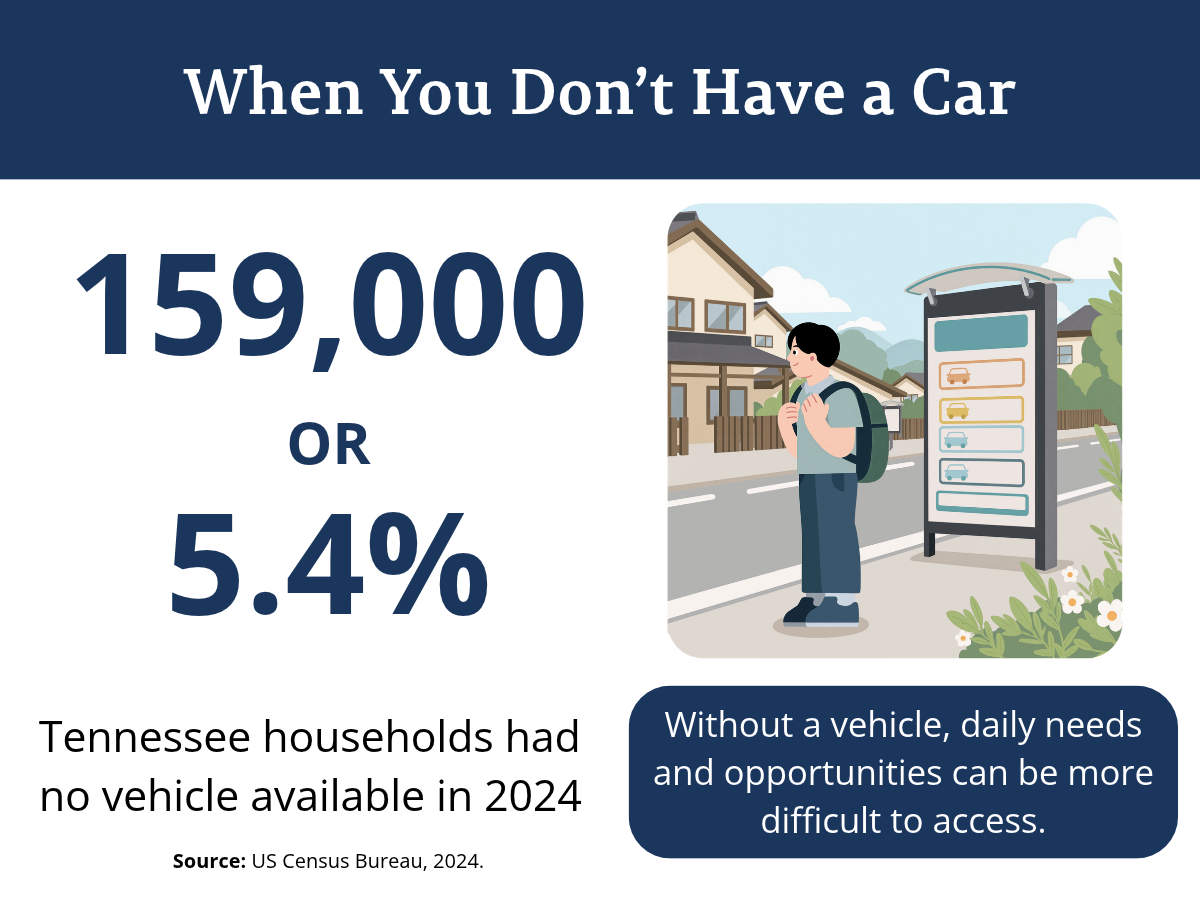
In 2024, about 159,000 Tennessee households, or 5.4% of households statewide, had no vehicle available.36 For people without access to a personal vehicle, getting to work, health care, grocery stores, and other destinations can be difficult, especially when other transportation options are limited. These challenges occur in both rural and urban communities but can look different depending on where people live.
In rural Hancock County, Tennessee, people who relied on transportation services rather than personal vehicles reported challenges, including higher transportation costs, long pickup wait times, and canceled appointments.37 These barriers could make it harder to get health care when it is needed.
People without reliable access to a vehicle can also face transportation challenges in Tennessee’s cities. In Nashville, areas with more people who had limited access to personal vehicles tended to have more restricted public transportation access to food, health care, schools, and childcare.38 A Chattanooga study of low-income people without reliable personal transportation found that transportation limitations could restrict travel and access to opportunities, with some participants reporting that they sometimes stayed home rather than make a trip.39
Walking infrastructure can create another barrier for people without access to a vehicle. Tennessee’s largest metro areas have an average Walk Score of 31 out of 100.40 Sidewalk gaps and maintenance needs are also widespread. Nashville has about 4,600 miles of missing sidewalks, only 21% of Chattanooga’s streets have sidewalks, and an estimated 80%-95% of Memphis sidewalks need repairs or upgrades.40
People Experiencing Housing Insecurity
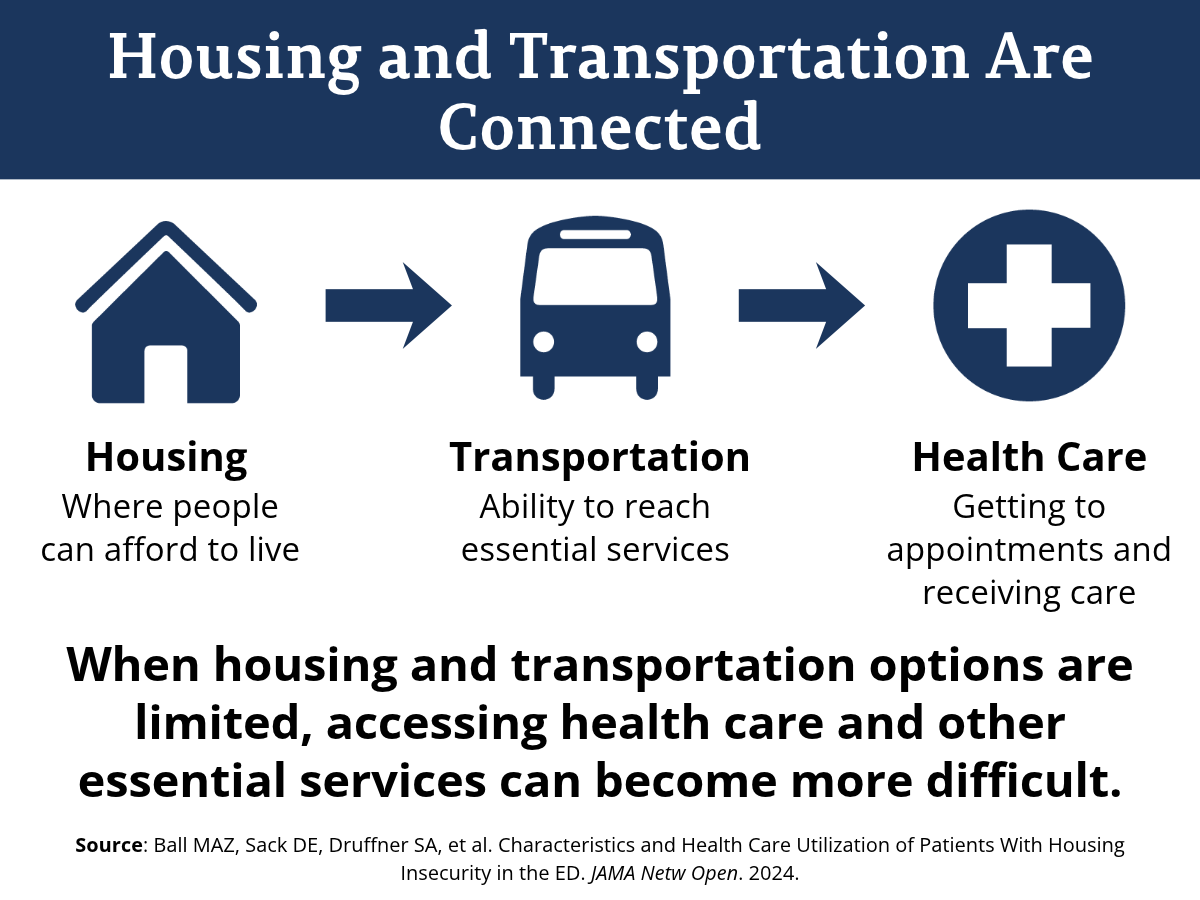
Housing and transportation challenges are closely connected. A study of Davidson, Shelby, Knox, and Hamilton counties found that housing affordability was consistently linked to the displacement of lower-income households. The study also identified areas where displacement overlapped with limited access to public transportation, showing how housing and transportation challenges can occur together.41
Transportation barriers can also affect people already experiencing housing insecurity. In a study of emergency department visits at Vanderbilt University Medical Center in Nashville, patients who screened positive for housing insecurity were more likely to arrive by ambulance, hospital transportation, or public transportation, and less likely to arrive by car, than patients without housing insecurity. The researchers noted that transportation barriers may contribute to delays in getting health care.42
-
COMMUNITY-DRIVEN SOLUTIONS
Transportation needs and resources vary across Tennessee. Communities can identify local transportation challenges and bring together people, organizations, and agencies to develop solutions that reflect how people get around and where they need to go. These efforts can help improve transportation access, safety, and community well-being.
- Identify local transportation needs. Use local data and community input to understand how people get around and where transportation barriers exist. Surveys, listening sessions, transportation assessments, and crash data can help identify concerns such as unsafe roads, missing sidewalks, long travel distances, or difficulty accessing health care, food, jobs, and other destinations.
- Build community partnerships. Bring together transportation providers, health care organizations, schools, employers, local governments, nonprofits, and community members to address transportation needs. Partnerships can help communities coordinate existing resources, identify service gaps, and develop solutions that work across organizations.4
- Connect people to transportation options. Help people find and use transportation resources already available in their communities. Health care providers, social service organizations, employers, and other partners can connect people with public transportation, rural transportation services, volunteer driver programs, transportation benefits, and other options.
- Coordinate community transportation. Communities can develop or strengthen local transportation programs for people who cannot drive or do not have reliable access to a vehicles. Volunteer driver programs, shared rides, community vans, and partnerships with health care and social service organizations can help people reach health care, grocery stores, jobs, and other essential destinations.
- Promote transportation safety. Use local crash and injury data to identify safety concerns and focus education and outreach where it is most needed. Community efforts can address speeding, distracted driving, seat belt use, teen driver and passenger safety, and walking and biking safety.
- Include community members in transportation decisions. Involve the people who use transportation systems and experience transportation barriers when identifying problems and developing solutions. Older adults, people with disabilities, people without access to vehicles, rural communities, and others who face transportation barriers can provide important insight into what is working and what needs to change.4
-
MAKING CHANGE THROUGH POLICIES AND SYSTEMS
Transportation policies shape how people move through their communities and how safely and easily they can reach the places they need to go. Decisions about transportation planning, funding, infrastructure, and land use can improve safety, expand transportation options, and support healthier, more connected communities.
- Prioritize transportation safety. Policies, programs, and infrastructure improvements can help reduce traffic deaths and serious injuries among drivers, passengers, pedestrians, and bicyclists. Strategies can include safer roadway and intersection design, speed management, seat belt initiatives, graduated driver licensing, and programs that address risks among young and inexperienced drivers.
- Adopt complete streets and multimodal policies. Complete Streets policies require that roads be planned, designed, built, and maintained with the safety and mobility of all users in mind. This includes drivers, pedestrians, bicyclists, people using public transportation, and people of all ages and abilities.43
- Expand and improve pedestrian infrastructure. Sidewalks, safe crossings, curb ramps, lighting, and other pedestrian infrastructure can help people reach schools, businesses, health care, public transportation, and other destinations safely. Communities can identify gaps in pedestrian networks and prioritize improvements in areas with the greatest safety and access needs.
- Invest in transportation infrastructure. Transportation funding can support safer roads and bridges, sidewalks and crossings, bicycle infrastructure, public transportation, and other improvements that help people travel safely and reliably. Investments can be guided by local and regional transportation needs, including the needs of rural communities and areas with limited transportation options.44
- Expand transportation options. Policies and funding can strengthen transportation options for people who cannot drive or do not have reliable access to a vehicle. Investments can support public transportation, rural transportation services, and other programs that help people reach health care, jobs, food, education, and other essential destinations.
- Coordinate transportation and land use planning. Decisions about where homes, jobs, schools, health care, businesses, and other services are located affect how far people must travel and which transportation options are practical. Coordinating transportation and land use planning can help communities improve access to everyday destinations while considering housing affordability and the transportation needs of current and future populations.45,46
- Reduce transportation-related air pollution. Transportation policies and investments can help reduce air pollution and protect community health. Strategies can include reducing vehicle idling and traffic congestion, supporting cleaner vehicles and fuels, expanding charging infrastructure, and providing safe options for walking, biking, and public transportation where practical.47
-
COMMUNITY SPOTLIGHT
The Health Council Community of Practice (CoP) connects Tennessee Health Councils through shared learning and discussion around health priorities. The links below provide access to recent CoP conversations related to this topic. To learn more about the Community of Practice, click here.
Grundy County, Tennessee (Sept. 2025)
Submit your own Community Spotlight! Please email Health.Councils@tn.gov with any relevant stories, resources, or presentations related to this topic.
-
PARTNERS AND RESOURCES
Tennessee Resources
Tennessee Department of Disability & Aging: Provides programs and resources that support independence, mobility, and community participation for older adults and people with disabilities.
Tennessee Department of Health
- Healthy Places: Provides information and resources that connect transportation, community design, the built environment, physical activity, and health.
- Active Transportation: Provides resources to support walking, bicycling, rolling, and other forms of active transportation.
Tennessee Department of Transportation (TDOT) Plans, builds, and maintains Tennessee’s transportation system and provides resources related to transportation planning, safety, accessibility, public transportation, and community mobility.
- Office of Active Transportation: Provides information, planning resources, and guidance to support walking, bicycling, and other forms of active transportation in Tennessee.
- Public Transportation Services: Provides information on public transportation services statewide, including fixed-route, demand-response, express bus, shuttle, and ADA paratransit services. Providers are organized by West, Middle, and East Tennessee to help people find services in their area.
- TDOT HELP Program: Provides motorist assistance and incident response on Tennessee interstates to improve roadway safety and help clear crashes, disabled vehicles, debris, and other incidents.
- TDOT SmartWay and Road Conditions: Provides current information about traffic, crashes and other incidents, construction, road conditions, and closures to help travelers plan their trips.
- Tennessee Highway Safety Office: Provides traffic safety programs, education, data, and resources to help reduce traffic-related injuries and deaths in Tennessee. Resources address issues such as seat belt use, impaired and distracted driving, speeding, teen driver safety, and pedestrian and bicycle safety.
Other Tennessee Resources
Disability Rights Tennessee: Provides information, advocacy, and resources related to disability rights and accessibility, including transportation access for people with disabilities.
Think Tennessee: Provides nonpartisan research and policy analysis on transportation and infrastructure in Tennessee, including transportation affordability, public transportation, walkability, infrastructure investment, and transportation access.
-
TO LEARN MORE
Center for Neighborhood Technology (CNT): Provides research, data, and tools related to transportation, housing, community development, affordability, and sustainability.
- Housing + Transportation (H+T®) Affordability Index: Provides maps, data, and community fact sheets showing the combined costs of housing and transportation. The tool can help communities explore transportation costs, vehicle use, access to jobs and public transportation, and other factors that affect affordability.
Centers for Disease Control and Prevention (CDC) – Transportation and Health: Provides information and resources on the connections between transportation and health, including traffic safety, physical activity, air quality, and access to essential services.
Federal Highway Administration – Pedestrian and Bicyclist Safety: Provides research, guidance, tools, and technical resources to help communities improve safety for people walking and bicycling.
National Aging and Disability Transportation Center: Provides training, technical assistance, resources, and information to help communities improve transportation options for older adults and people with disabilities.
National Center for Mobility Management: Provides resources and technical assistance to help communities coordinate transportation services and improve access to jobs, health care, education, and other destinations.
National Complete Streets Coalition: Provides tools, examples, and resources to help communities develop and implement Complete Streets policies that support safe and accessible travel for people using different forms of transportation.