Tobacco
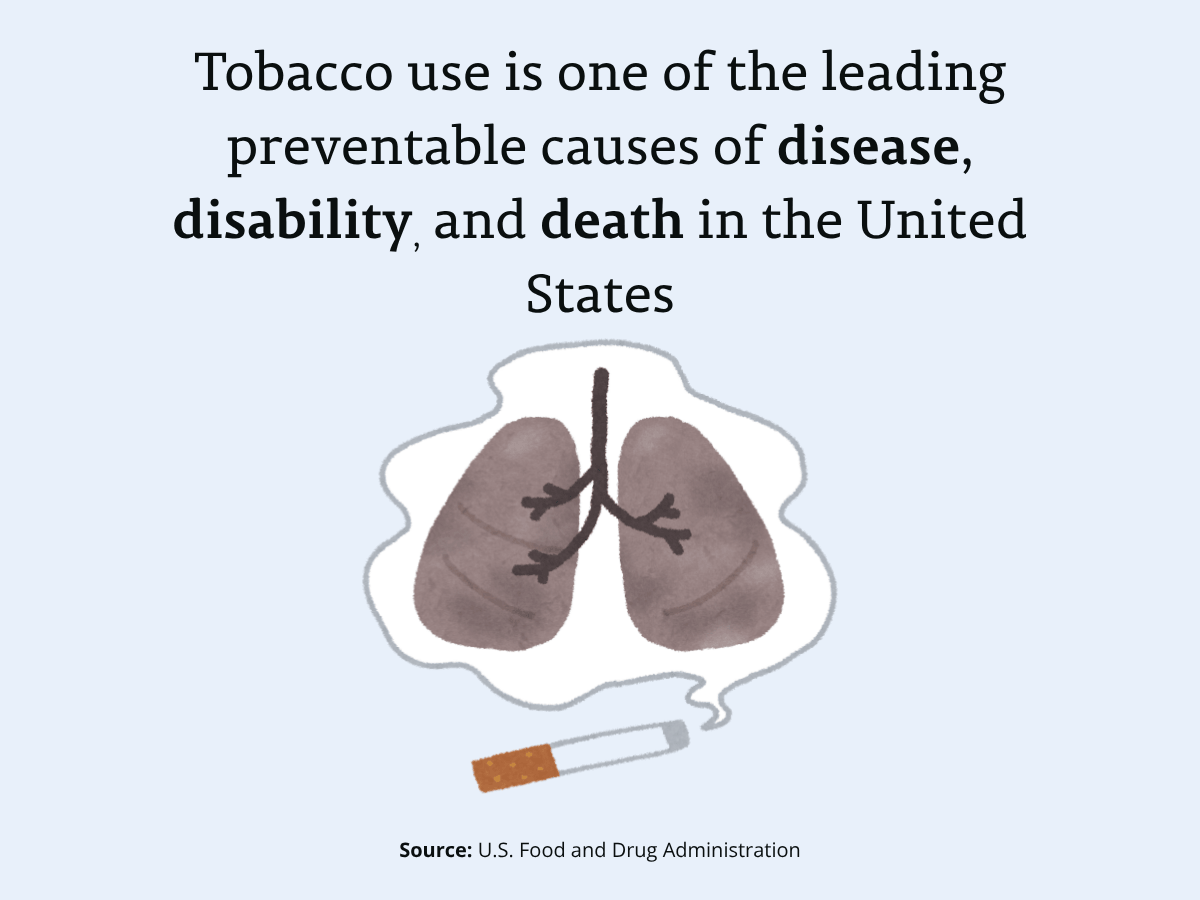
Tobacco use is one of the leading preventable causes of disease, disability, and death in the United States.1 It continues to be a major public health problem in Tennessee.2 Every form of tobacco use is harmful to health, and there is no safe level of exposure to tobacco products.1
Tobacco can be used in several ways, including smoking, vaping, chewing, or sniffing. Tobacco products include cigarettes, cigars, vaping devices (including electronic cigarettes), hookahs, snuff, smokeless tobacco, and nicotine gels. All tobacco products contain nicotine, a highly addictive substance that changes how the brain works and can lead to dependence over time.1,3
Tobacco use can have serious health effects. It is linked to higher rates of lung cancer and other smoking-related cancers, as well as higher cancer death rates.2 Some groups, including people who live in rural and Appalachian communities, racial and ethnic minorities, people with low incomes, and people with mental health or substance use conditions, are more affected by tobacco-related harms.2 Understanding these differences is important when addressing tobacco use.
Nicotine and tobacco use are major public health concerns because of their effects on health and well-being. Nicotine is highly addictive, which can make it difficult to quit and may lead to long-term tobacco use.4 The effects of tobacco and nicotine use also vary across populations, with some groups facing greater risks and barriers to prevention and quitting. Understanding these differences is important for developing effective strategies to reduce tobacco use and improve health across Tennessee.
-
WHY IS TOBACCO CESSATION IMPORTANT FOR COMMUNITY WELL-BEING?
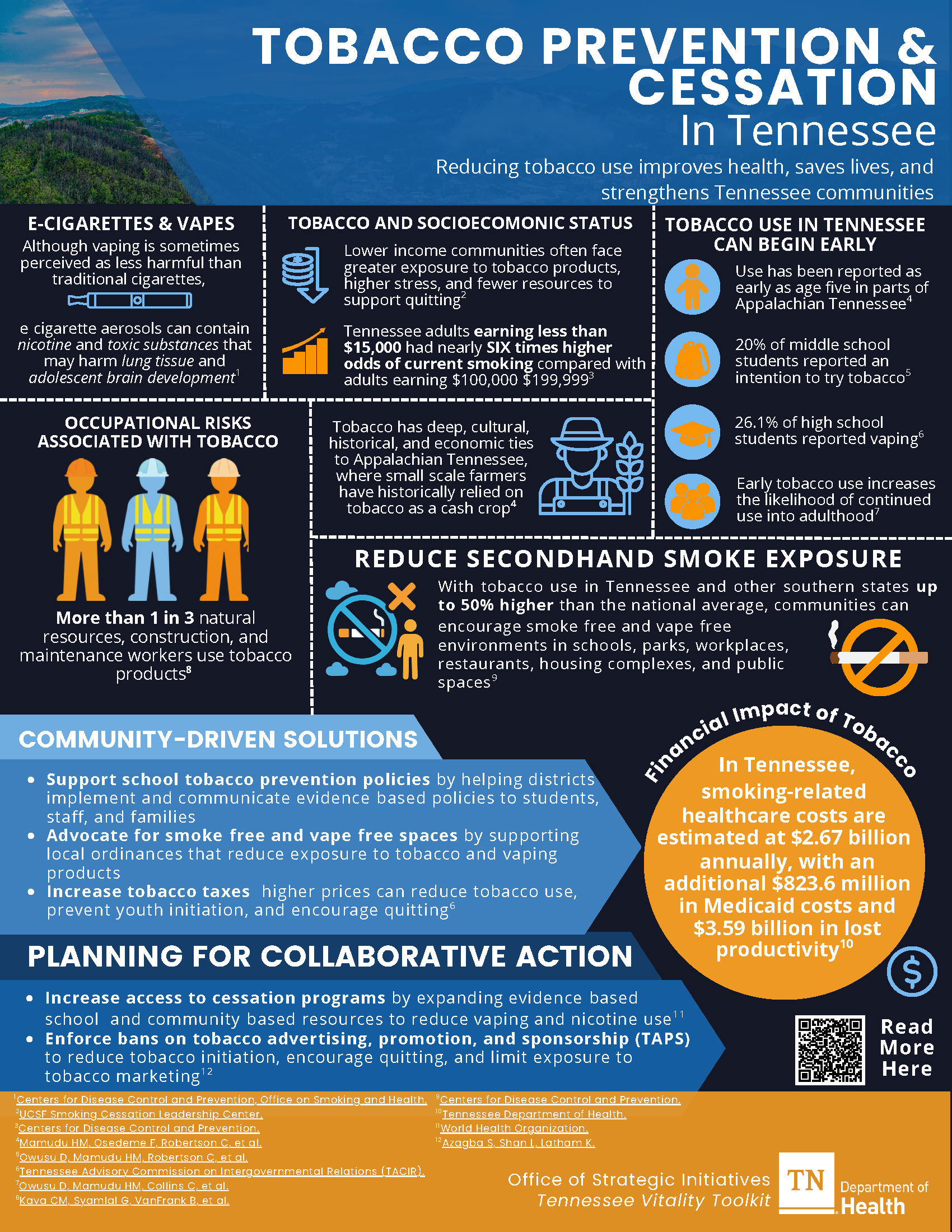
Tobacco use and its related health problems affect some groups more than others in the United States and Tennessee. Research shows that rates of tobacco use in several Southern and Midwestern states, including Tennessee, are up to 50% higher than the national average.2
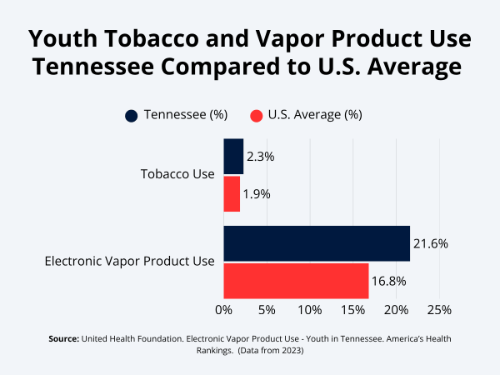
In addition, youth tobacco and vape use in Tennessee exceeds the national average. Recent data show that approximately 2.3% of Tennessee youth reported tobacco use, compared with 1.9% nationally.5 Similarly, electronic vapor product use among Tennessee youth was 21.6%, substantially higher than the U.S. average of 16.8%.6 These findings show that Tennessee youth have higher rates of nicotine and tobacco exposure, especially vaping products.
Continued tobacco use can change how the brain works, making people crave nicotine and experience withdrawal symptoms such as irritability, anxiety, restlessness, and difficulty concentrating when nicotine levels decrease.1 These addictive effects make quitting difficult, even for people who are aware of the health risks.1 This problem is further fueled by flavored products, targeted marketing, peer influence, and the growing social acceptance of vaping.7
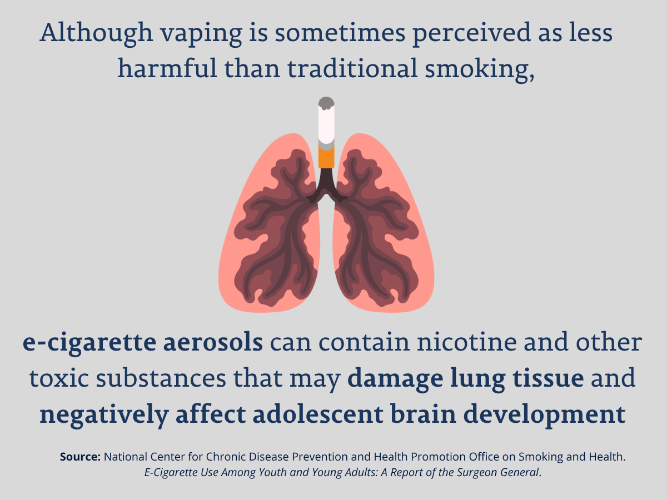
Research also raises concerns about e-cigarettes and vaping products. Although vaping is sometimes perceived as less harmful than traditional smoking, e-cigarette aerosols can contain nicotine and other toxic substances that may damage lung tissue and negatively affect health.7 These products may pose particular risks for young people, as nicotine exposure can interfere with brain development. These findings highlight the need for greater community awareness, prevention education, and local efforts to prevent tobacco and nicotine use and improve community health and well-being.
Tobacco use comes with significant economic costs for people, communities, and health care systems. Nationally, cigarette smoking cost the United States more than $600 billion in 2018, including over $240 billion in health care spending and hundreds of billions of dollars in lost productivity due to smoking-related illness, premature death, and secondhand smoke exposure.8 In Tennessee, annual health care costs directly caused by smoking are estimated at approximately $2.67 billion, with an additional $823.6 million in Medicaid expenditures and $3.59 billion in smoking-related productivity losses.9
Many tobacco prevention and cessation resources are available across Tennessee.9 However, Tennessee continues to rank among the states with the highest rates of tobacco use in the United States, highlighting the ongoing need for strong tobacco control efforts and improved access to resources to help people quit.2 Expanding access to cessation resources in rural and underserved communities, while strengthening school- and community-based prevention programs for both youth and adults, remains particularly important for improving health outcomes and reducing tobacco-related disparities.
These findings highlight why tobacco prevention and cessation are important for community well-being and economic stability. In addition to harming health, tobacco-related illness and premature death increase health care costs, affect the workforce, and use resources that could support other community needs.
-
WHAT ARE THE DISPARITIES?
Tobacco use has decreased among many groups over the past two decades, but disparities remain.9,10 Rates of tobacco use, tobacco-related disease, and death vary by age, race, ethnicity, income, education level, occupation, geographic location, and sexual orientation.10
Youth
Nicotine poses unique risks to young people because the brain continues to develop until around age 25. Nicotine exposure during brain development can negatively affect brain growth and the areas of the brain responsible for attention, learning, mood, and impulse control.4,11 Additionally, nicotine use during adolescence has been linked to an increased risk of future substance dependence and may increase the likelihood of cigarette smoking later in life.7,11,12
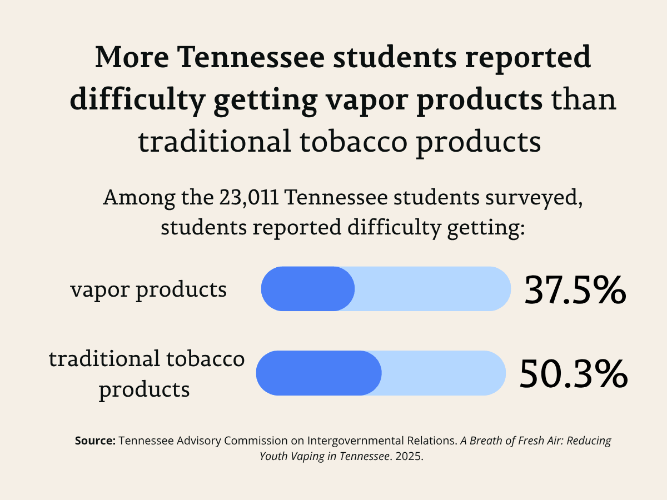
Several factors contribute to youth tobacco and vape use, including marketing that appeals to young people through colorful packaging, flavored products, and advertisements on social media.12 Easy access to vaping products may also contribute to nicotine use among young people in Tennessee.13 Among the more than 23,000 Tennessee public middle and high school students surveyed, half (50.3%) reported that it was difficult to obtain traditional tobacco products such as cigarettes.14 However, only 37.5% reported that it was difficult to obtain vapor devices, suggesting that students may find vaping products easier to get than traditional tobacco products.14,15
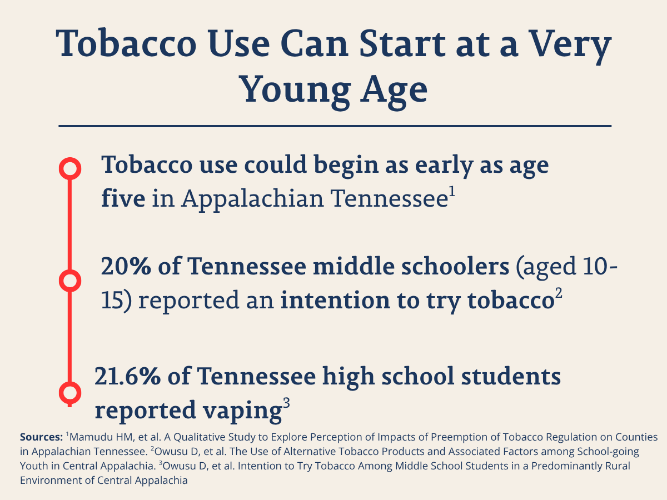
In 2023, vaping was reported by 21.6% of high school students in Tennessee, compared with 10.0% nationally.16 In Appalachian areas of the state, tobacco use may begin as early as age five.16 Another study of Tennessee middle school students between the ages of 10 and 15 years found that 20% reported that they intended to try tobacco.17 Factors such as previous tobacco use, smoking rules at home, living with someone who uses tobacco, and using tobacco-branded items were related to interest in trying tobacco.18 These same factors have also been reported to influence the use of alternative tobacco products (ATPs) among school-aged youth.17 The availability of different tobacco products further increases the risk of use among young people.19 Youth who begin using tobacco during adolescence are more likely to continue using it into young adulthood.20
Children are also at risk for secondhand smoke exposure when parents or caregivers smoke, further increasing their risk of tobacco-related health problems.19 Lower prices may also increase the likelihood of tobacco use among young people. One study found that e-cigarettes became more affordable for people aged 16 to 34 between 2015 and 2021, even as taxes on these products increased.21 Young adults may also use e-cigarettes in higher-risk ways, such as using high doses of nicotine, particularly in settings where tobacco use is prohibited.22 Additionally, a report by the Appalachian Regional Commission and partners identified preventing young people from starting to smoke as one of four regional strategies to reduce tobacco use in Appalachia.23
Racial and Ethnic Minorities
Several factors contribute to higher rates of tobacco use among racial and ethnic minorities, including targeted marketing by the tobacco industry and stress caused by racial discrimination.10,23,24
In 2024, Black Americans were 9% more likely than U.S. adults overall to be current cigarette smokers, and were 20% more likely than adult smokers nationwide to have tried to quit smoking in the past year.25 While smoking rates among U.S. adults have decreased over the past several decades, racial and ethnic disparities persist.10,26 Another national study from 2011 to 2020 found that current smoking decreased among non-Hispanic White, non-Hispanic Black, and Hispanic adults. However, smoking rates among non-Hispanic American Indian and Alaska Native adults remained high and, in some cases, increased.10
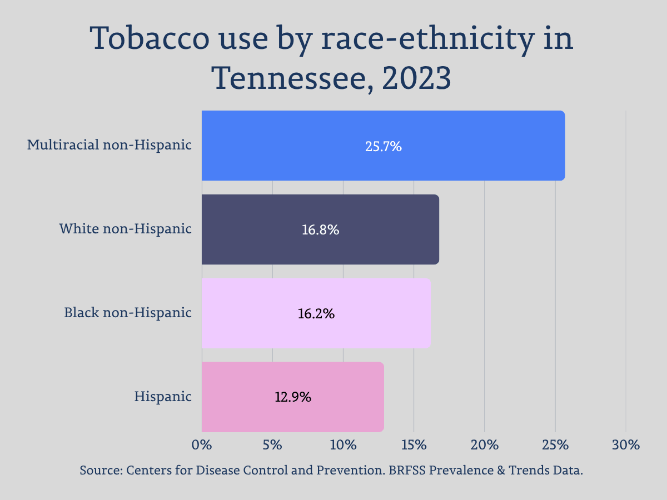
Racial and ethnic minorities have less access to medications, counseling, and other resources to help them quit smoking.24 They also face additional barriers to quitting, including financial strain, limited access to health care and health information, and distrust of the health care system because of historical mistreatment.27 One study found differences in the use of web-based and mobile health tools for quitting smoking. Some Black Americans were less likely to have home internet service, which may limit their access to online tobacco quitlines.27
Research also shows that some racial and ethnic groups are more affected by cancers linked to tobacco use. One national study found that Black men and women had higher rates of developing and dying from tobacco-related cancers.28 Another study found that Black Americans had the highest rates of several tobacco-related cancers, including colorectal, pancreatic, lung, cervical, and kidney cancers. Asian Americans and Pacific Islanders had the highest rates of stomach and liver cancers. While tobacco use is more strongly linked to some cancers than others, it can cause all of these types of cancer.29
LGBTQ+
Sexual and gender minorities often have higher rates of mental health and substance use disorders than cisgender and heterosexual people. These disparities are often linked to experiences of discrimination and harassment, which can lead to chronic stress.30 In addition, the tobacco industry has historically targeted sexual and gender minority communities through ads in LGBTQ-focused publications and by funding LGBTQ organizations. In 1992, a tobacco industry memo called the gay community an “area of opportunity,” showing the industry’s goal of gaining and keeping LGBTQ customers.21 These tactics continue today through psychographic advertising, which targets people based on their interests and behaviors, allowing tobacco companies to reach LGBTQ individuals through interest groups where they may be more represented.31
Despite their increased risk, sexual and gender minority people may face several barriers when trying to quit smoking. These include discrimination from health care providers, problems getting health insurance, limited access to smoking cessation programs designed to meet their needs, and competing health needs.30
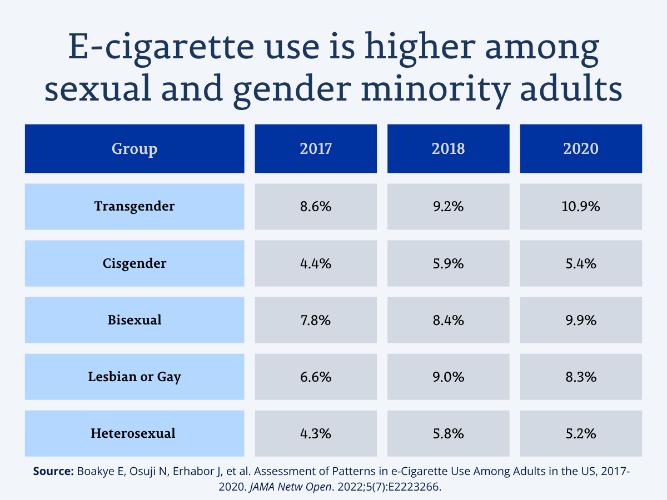
In 2020, cigarette smoking was reported by 16.1% of lesbian, gay, or bisexual adults, compared with 12.3% of heterosexual or straight adults.32 Additionally, a national study conducted over several years found that sexual and gender minority adults in the United States were more likely to report e-cigarette use than heterosexual adults.33
Rural Communities
Tobacco has long been connected to the culture, history, and economy of Appalachian Tennessee, with small-scale farmers in the region relying on it as a source of income.14,23 However, barriers to tobacco prevention and treatment services persist. One study found that tobacco prevention interventions for young people in Appalachia may be difficult to access or may not meet the needs and culture of local communities.19 Rural areas may also face shortages of health care providers and services, transportation challenges, and cost barriers.19
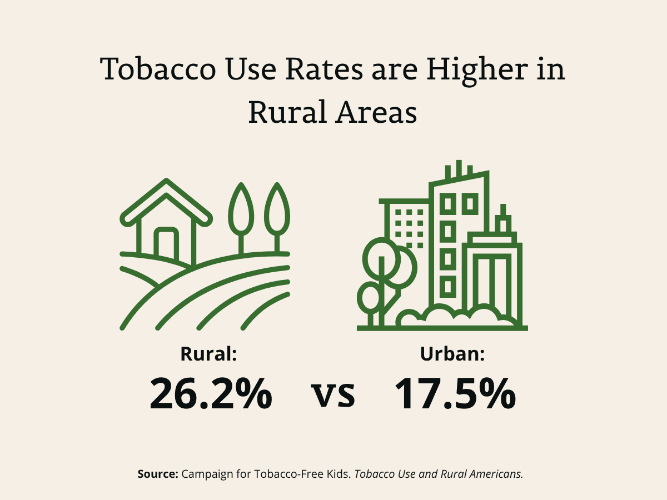
People living in rural areas are also more likely to begin smoking at an earlier age and to smoke heavily than people living in urban areas.34 In addition, rural communities often have higher poverty rates and lower levels of education, which further increase the risk of tobacco use.34
Socioeconomic Status
Tobacco use may appear to be a personal choice, but many factors can affect whether someone starts or continues using tobacco.21 Income and other economic factors heavily influence tobacco use. Tobacco retailers are often concentrated in low-income neighborhoods.21 Limited access to smoking cessation treatment, challenges in finding smoke-free housing, and high levels of stress among people with low incomes may contribute to higher rates of tobacco use.35
A national study found that states with higher tobacco use tended to have more smokers with less than a high school education, which significantly contributed to the gap between states.36
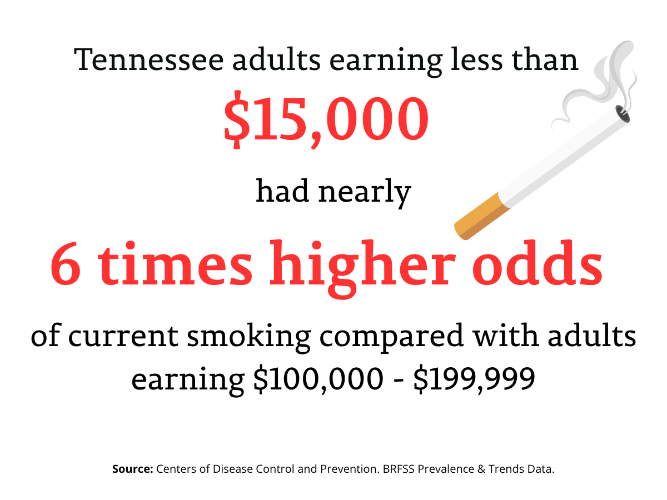
Consistent with these findings, 2023 data show that Tennessee adults with a household income below $15,000 were almost six times as likely to report current smoking as those whose household income was between $100,000 and $199,999.37
National data from 2022 show that 18.3% of adults with low incomes smoked, compared with 12.3% of adults with middle incomes and 6.7% of adults with high incomes. Adults with low incomes were nearly three times as likely to smoke as those with high incomes.38
People with other Substance Use Disorders
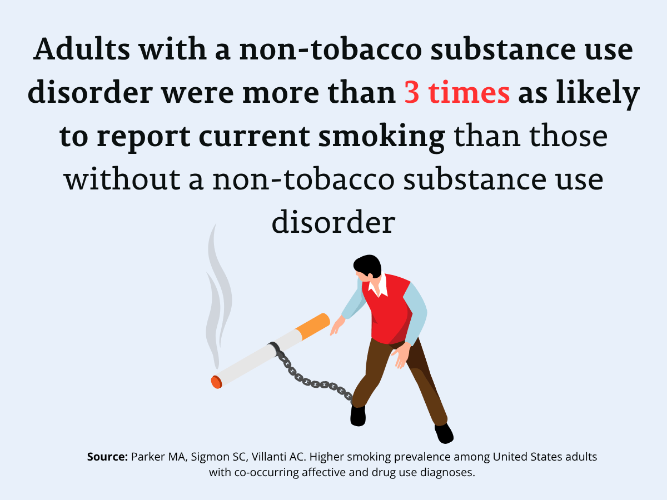
Substance use disorders often occur together. In one national study, researchers found that people who reported using cannabis or binge drinking were more likely to report using e-cigarettes.33 Even after controlling for other factors, people with a history of non-tobacco substance use disorders were more than three times as likely to report current smoking as those without these disorders.39
The risk of cigarette smoking among people with a substance use disorder may be even higher among those who also have mental health conditions or involvement in the justice system.39–41 Among people with both a non-tobacco substance use disorder and a mood disorder, the odds of current cigarette smoking were nearly five times higher than among people with only one or neither of these conditions.39
Occupational Risk
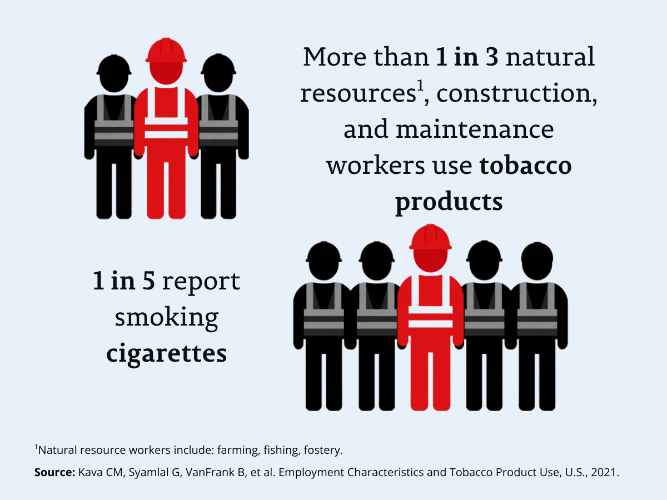
Some occupations have a higher likelihood of smoking, including people who work in agriculture, manufacturing and construction.42,43 Among construction workers, tobacco use tends to be higher among people who have worked in the industry for five years or less, have temporary jobs, experience job insecurity, or report unsafe working conditions.43
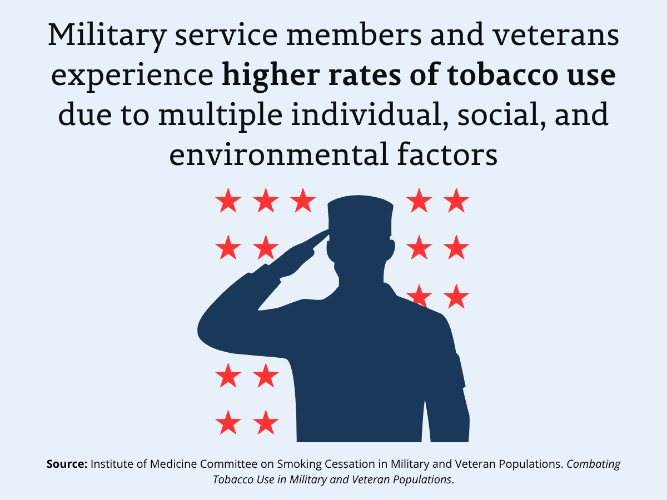
Military service members and veterans also have higher rates of tobacco use. Factors related to military service, personal, and community life can influence tobacco use.44 Recent national estimates show that about 21.4% of U.S. veterans report current use of any tobacco product.45 Another national study using data from 2021–2023 showed that veterans were more likely than non-veterans to report current and former tobacco use.46 Veterans had nearly twice the odds of current cigar use, about 70% higher odds of pipe use, about 55% higher odds of using multiple types of tobacco products, and about 40% higher odds of cigarette smoking.46
Pregnant Individuals & Maternal Health
Exposure to cigarette smoke during pregnancy is linked to pregnancy and birth outcomes and may contribute to long-term health and developmental challenges for the child.47 Effective programs that help pregnant women quit smoking may reduce low birth weight and lower health care costs linked to low-birth-weight infants.48
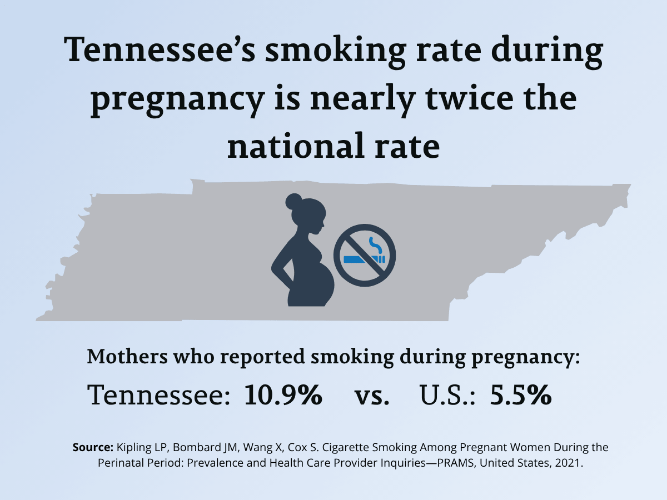
Smoking during pregnancy is more common in Tennessee. In 2020, 10.9% of Tennessee mothers reported smoking during pregnancy, nearly twice the national rate of 5.5%.49
One national study found that 2.2 % of pregnant women reported current e-cigarette use, and 0.6% reported daily use.50 Additionally, a national study using data from the Pregnancy Risk Assessment Monitoring System (PRAMS) collected between 2016 and 2021 found large differences in smoking rates among rural and urban pregnant women. Smoking during pregnancy was reported by 13.8% of rural women compared with 5.9% of urban women. Rural women were also more likely to continue smoking during pregnancy and less likely to quit.51
Pregnant women aged 18–24 years are more likely to report current e-cigarette use.50 Pregnant women who report e-cigarette use are also more likely to use other substances, including tobacco products, marijuana, and alcohol, and to report other high-risk behaviors. These behaviors may increase health risks for both the mother and infant.50
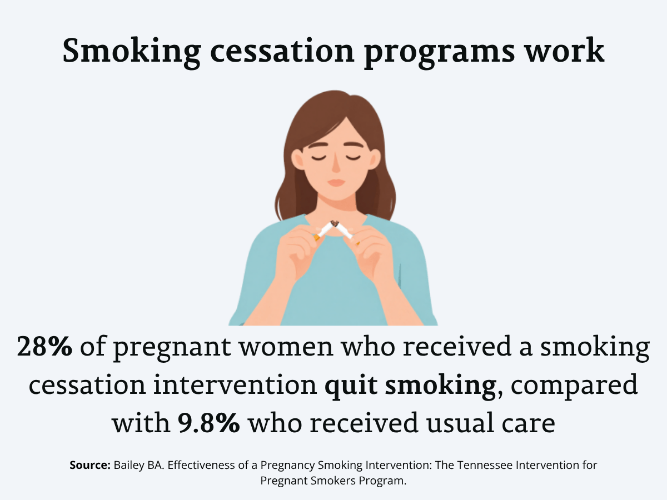
Programs that help pregnant women quit smoking in Tennessee have shown promising results.47 In one experimental study, 28% of pregnant women who received support to quit smoking were successful, compared with 9.8% of those receiving usual care or were assigned to the control group.47 Pregnant mothers who received smoking cessation interventions also had better birth outcomes, including higher newborn birth weight and fewer neonatal intensive care admissions.47
-
COMMUNITY-DRIVEN SOLUTIONS
Community-driven solutions are important for preventing tobacco use, reducing nicotine addiction, and improving community health. Schools, health care providers, families, public health agencies, and community organizations can work together to increase awareness, expand access to resources that prevent tobacco use and help people quit, and meet the needs of communities facing greater barriers.2,8
- Increase public education and community awareness. Share information about the harmful effects of smoking, the benefits of quitting, and resources available to help people quit. This can encourage more people to use these resources and support better health.11
- Promote school and youth-based prevention programs. Communities can support evidence-based prevention programs in schools and youth organizations that teach young people about the risks of tobacco, nicotine, and vaping product use.11,52
- Improve access to tobacco cessation treatment. Ensure that high-quality tobacco cessation support is accessible and affordable for all.53 Expanding mobile health services, telehealth programs, and community outreach can help connect people with tobacco prevention and cessation, especially in rural and underserved communities where health care access may be limited.2,54
- Encourage non-stigmatizing approaches. Tobacco prevention and cessation programs that reflect the culture, experiences, and needs of underserved communities may help more people use these services and successfully quit.53
- Reduce secondhand smoke exposure. Communities can encourage smoke-free and vape-free environments in schools, parks, workplaces, restaurants, housing complexes, and public spaces to reduce secondhand smoke exposure and support tobacco-free communities.55
- Strengthen community partnerships. Community coalitions and partnerships bring together local organizations, leaders, and community members to identify local needs and solutions. Working together can strengthen efforts to prevent tobacco use and help people quit.56
- Support youth engagement and leadership. Engaging youth in tobacco prevention advocacy can strengthen local efforts through peer-led initiatives, mentorship programs, and youth advocacy groups that help prevent tobacco use and raise awareness among young people.11,53
- Expand community tobacco cessation support. Communities need strong, sustainable programs and services to help people quit using tobacco. Strengthening and expanding these resources can support long-term health and help reduce tobacco-related disparities.53
-
MAKING CHANGE THROUGH POLICIES AND SYSTEMS
Policies and systems can shape where tobacco products are sold and used, who is exposed to secondhand smoke, and what resources are available to help people quit. Community and statewide approaches can work alongside education and cessation programs to prevent tobacco use, reduce secondhand smoke exposure, and create healthier environments for everyone.
- Support school tobacco prevention policies. County Health Councils can work with local school districts by helping introduce, communicate, and maintain appropriate tobacco prevention policies based on model examples. They can also help explain the purpose of these policies so students, staff, and parents understand their content and purpose.
- Advocate for smoke-free and vape-free spaces. Work with local governments to pass ordinances regulating the use of smoking and vapor products in age-restricted venues. County Health Councils can engage mayors and other local leaders about the importance of community-level decision-making around tobacco control policies.
- Increase tobacco taxes. Tobacco taxes are considered one of the most cost-effective strategies for reducing tobacco use, particularly among youth and people with low incomes. Higher prices may discourage or reduce tobacco use, or encourage some people to quit.3 Applying additional taxes to vapor products in Tennessee may help discourage youth vaping and reduce both youth and adult use of e-cigarettes and other nicotine products.15
- Enforce bans on tobacco advertising, promotion, and sponsorship (TAPS). These policies can help reduce tobacco use and prevent nicotine addiction. Tobacco marketing can encourage people, especially young people, to start using tobacco and make it harder for current users to quit. Restricting tobacco advertising and promotions can help reduce tobacco use and support broader tobacco prevention efforts.57
- Require retail licenses for the sale of vapor products. Research suggests that retail licensing policies may help reduce youth vaping both nationally and in Tennessee.15,58 Expanding retailer licensing in Tennessee may also help Synar inspectors, who conduct annual inspections of tobacco retailers to assess compliance with laws prohibiting the sale of tobacco products to individuals under 21.15
- Increase access to cessation programs. Prevention and cessation programs in schools and communities can help reduce youth vaping and nicotine.15,52
-
COMMUNITY SPOTLIGHT
The Health Council Community of Practice (CoP) connects Tennessee Health Councils through shared learning and discussion around health priorities. The links below provide access to recent CoP conversations related to this topic. To learn more about the Community of Practice, click here.
Smoke Free Tennessee (August 2025)
Submit your own Community Spotlight! Please email Health.Councils@tn.gov with any relevant stories, resources, or presentations related to this topic.
-
PARTNERS AND RESOURCES
Tennessee Resources
- Tennessee Department of Health (TDH)
- Tennessee Non-Smokers Prevention Act gives Tennesseans the right to breathe smoke-free air in restaurants, hotels, and many other public places.
- Tennessee Tobacco Use Prevention & Control (TUPCP) works to reduce tobacco use and its harmful effects across the state. The program focuses on changing social norms around tobacco use, preventing initiation among youth, supporting pregnant women, reducing exposure to secondhand smoke, promoting cessation, and addressing disparities in tobacco use.
- Tennessee Quit Week is an annual event that celebrates Tennesseans who have quit using tobacco products and encourages others to also kick the habit.
- TDH Tobacco Use Prevention and Control Program uses CDC evidence-based strategies to reduce tobacco use and tobacco-related disease.
- Growing Inside Free of Tobacco and Smoking (GIFTS) is part of Tennessee’s Pregnancy Cessation Program, which works to improve the health and wellness of women and families across Tennessee by providing resources to help people quit smoking.
- TN Tobacco Quit Line (1-800-QUIT-NOW) provides a free phone and online program to help people quit tobacco. It includes coaching, personalized support, and free nicotine replacement therapy (NRT) for people who qualify.
- Nicotine Free Schools K-12 Policy Toolkit for Educators and Administrators supports schools, parents, and communities in protecting youth from tobacco and nicotine.
- TNSTRONG Youth Ambassadors Program empowers youth to lead, inspire, and share tobacco prevention resources across Tennessee.
- TNSTRONG Nicotine-Free Pledge is an opportunity for middle and high school teams and clubs to commit to being nicotine-free.
- Tobacco Cessation Directory provides a list of tobacco cessation resources available in Tennessee.
- Ballad Health Strong Cessation Program is a free phone counseling program that helps people become tobacco, nicotine, or vape-free.
- Blue Cross Blue Shield of Tennessee Tobacco Use provides information on tobacco use and its risks to overall health.
- KidCentral Tennessee Tobacco and Smoking provides information on tobacco use and pregnancy for expecting mothers and provides information and resources on how to stop smoking.
- Smokefree Tennessee is the state's official nicotine prevention coalition, bringing together experts in policy, community engagement, and evidence-based education to create a healthier place for all Tennesseans to live, work, and play.
- Tennessee Partners for Health Wellness Program offers phone-based coaching to help people quit tobacco. The program is available for active state and higher education employees and their spouses who are enrolled in medical insurance with Partners for Health.
- TN Tobacco Cessation Success Stories: Read stories from people who have quit tobacco or share your own story to inspire others.
- TN Tobacco Retailer Education Guides: The Tennessee Department of Mental Health and Substance Abuse Services offers free guides to help tobacco retailers understand and comply with state tobacco sales laws, including information on checking IDs and on retailer policies.
- UT Medical Center Smoking Cessation Program is a free program that helps people stop smoking. The program includes a one-on-one counseling session with a respiratory therapist, help creating a personalized quit plan, information about nicotine replacement options, and a free lung function test.
- Vanderbilt Smoking Cessation Program is hosted by the Vanderbilt Lung Institute and offers personalized support to help you stop smoking, vaping, or using cigars or smokeless tobacco.
- Tennessee Department of Health (TDH)
-
TO LEARN MORE
- American Lung Association
- Freedom From Smoking is an evidence-based program that provides tools, resources, and support to help people quit tobacco and nicotine products.
- Helping Teens Quit Smoking helps get tobacco cessation and education resources to talk to teens about the dangers of smoking and vaping, and to help them quit if they have already become addicted.
- Tobacco-Free Kids
- Campaign for Tobacco-Free Kids advocates for policies and programs that prevent tobacco use, reduce nicotine addiction, and protect people from the harmful effects of tobacco. Through public education, communication, and policy advocacy, the organization works to improve public health.
- Tobacco-Free Kids Action Fund supports education, advocacy, and electoral campaigns that advance policies to prevent youth tobacco use, help people quit, and protect communities from secondhand smoke.
- The Global Health Advocacy Incubator (GHAI) is the international advocacy arm of the Campaign for Tobacco-Free Kids. GHAI works to prevent avoidable deaths and improve health by advancing policies and strengthening public health systems.
- American Lung Association