Urban Planning & Regional Development
Address Challenges & Opportunities
Urban and regional development influences where people live, work, and thrive. Thoughful planning drives strong communities and lasting growth by balancing development and sustainability, preserving cultural and natural resources, and creating equitable access to housing, jobs, and services. It improves quality of life, and ensures communities can handle population changes, infrastructure needs, and environmental challenges.
What Students Learn
The Urban Planning and Regional Development certificate can help drive strong communities and lasting growth. It prepares students to address real-world challenges and create impactful solutions in local economies and regional areas:
- Learn key concepts across 13 areas of urban and regional planning.
- Understand local economic development and how to create effective growth strategies.
- Gain skills to support community development and planning initiatives.
- Explore how urban government works, including city, regional, and intergovernmental relationships.
- Examine the impact of metropolitan policies and multi-jurisdictional planning on communities.

Course Delivery Format
Asynchronous

Field Work Requirement
No


Total Credits
12
Explore the Courses
Enrolled students select two courses (6 credits) from each list below to complete the Urban Planning and Regional Development graduate certificate.
-
Foundations of Urban Planning (choose 2)
PMGT 5020 - Urban Planning Theory (3 credits)
PMGT 5340 - Economic Development Planning (3 credits)
PMGT 5500 - City Management Profession (3 credits)
-
Applied Urban Planning (choose 2)
PMGT 5310 - GIS for Planning and Development (3 credits)
PMGT 5320 - Transportation Planning and Development (3 credits)
PMGT 5630 - Local and Regional Planning (3 credits)
Program information including course descriptions and graduation requirements can be found in the ETSU Graduate Catalog.
Students who complete the Urban Planning and Regional Development graduate certificate may transfer the certificate credits into the Masters in Public Administration (MPA) degree. All transfer credit must meet GPA requirements and must be within the six-year matriculation limits.
Steps to Apply
-
Step 1: Create Your ETSU Application Account By Choosing the "Sign Up" Option
-
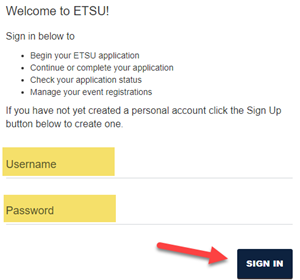
Step 2: Sign In to the ETSU Application Portal and Start a New Application
-
Step 3: Complete the Application
Choose "Graduate," select your student type (domestic, international, global), then select "Certificate," and then select your start term. Next, choose a major and complete the application. *Your application is not complete without requesting/submitting supporting documents (transcripts, test scores, etc.).


Cost
| TN Residents | *eRate | Out of State |
|---|---|---|
| $672 per credit hour | $835.50 per credit hour | $1,513 per credit hour |
| - The *eRate applies to students living out of state and taking all web-based courses. - Additional fees may be required. - Visit the Paying for College page to read more about costs and financial aid options. - The costs associated with attending ETSU can include both direct and indirect costs. Please review ETSU's Cost of Attendance for more details. |
||