You are presented a case of a 39-year-old previously healthy female astronaut
and member of the Artemis XV, a 21-day lunar south pole research expedition. She became
ill on day 10 of her lunar mission. Her symptoms include the gradual onset of a non-productive
cough, chest tightness, and mild shortness of breath on exertion. She has a sore throat,
a metallic taste in her mouth, and increased light sensitivity. She denies fever,
chills, or rhinorrhea and has no known allergies and no history of asthma.
She has had multiple extravehicular activities (EVAs) involving sample collection
in permanently shadowed craters. She notes that her EVA suit has had minor dust intrusions
around the helmet seals and that her habitat air filters briefly malfunctioned on
Day 9 of the expedition.
Physical examination reveals a well developed well nourished woman who appears
her stated age. Her temperature is 98.6°F, heart rate 88 beats per minute, and respiratory
rate 20 breaths per minute. Her blood pressure is 118/76 mm Hg. Her SpO2 is 96% on
room air. Pertinent findings include bilateral conjunctival injection, pharyngeal
erythema, mildly decreased breath sounds at both bases and an occassional expiratory
wheeze.
Pertinent laboratory findings include a leukocytosis of 11,800/mm3 with 6% eosinophils and a mildly elevated CRP. A chest x-ray is read as being within
normal limits.
DIAGNOSIS: Lunar regolith reactive airway disease (LR-RAD). The lunar regolith
in her area of exposure was highly volitile and existed primarily as micron- to nanosized
particles, including silicates. oxides, and metallic grains, many of which are highly
reactive due to solar wind ionization and microfracturing due to meteoritic bombardment.
Exposure occurred because her EVA suit had dust intrusion around her helmet seals
and habitat air filters briefly malfunctioned on Day 9 of her moon landing. Her treatment
included: 1. removal to a high-efficiency filtered environment; 2. administration
of nebulized normal saline to reduce mucosal irritation; 3. trial of an inhaled beta-agonist;
4. fluid restriction with monitoring for hypoxia or worsening dyspnea; and 5. ocular
saline irrigation and protective eye coverings. Her symptoms improved within 48 hours
of treatment and removal from dust exposure. The presented case illustrates the potential
dangers of lunar regolith exposure - an underappreciated risk factor of lunar exploration.
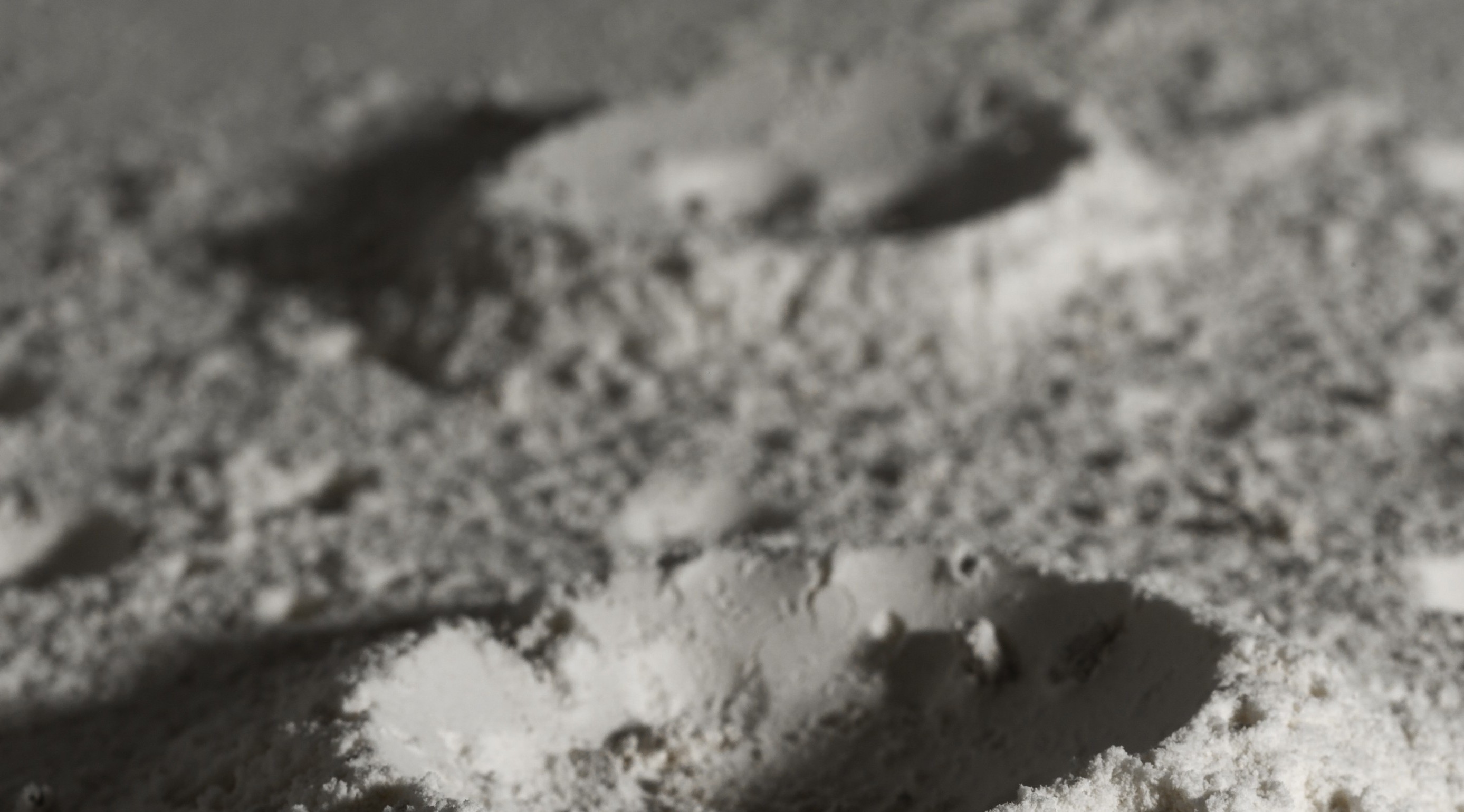
Picture of several lunar craters and regolith
T