Community Resilience
What is Community Resilience?
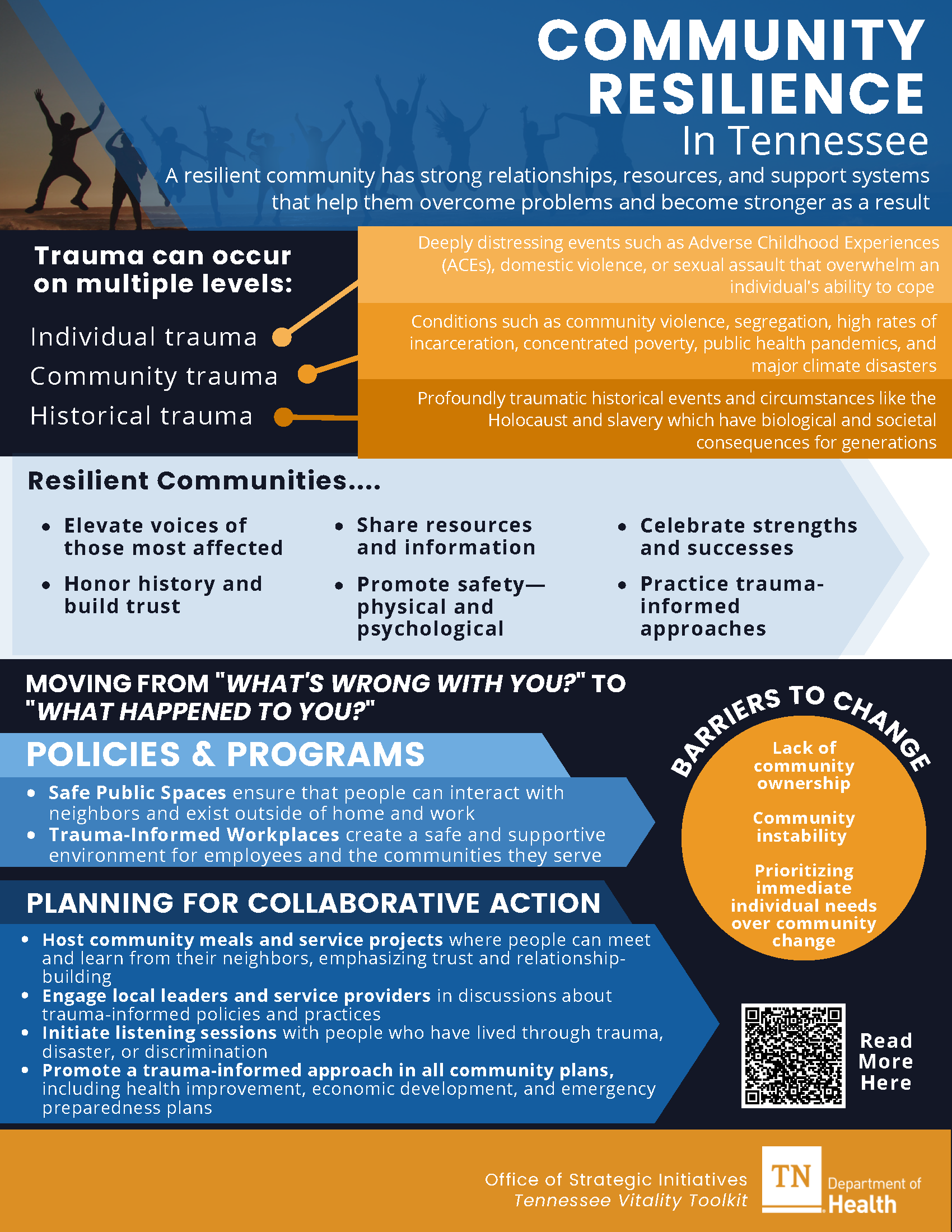
Community resilience means that a community can face hard times, adapt, and keep moving forward to help community members recover and thrive. These hard times might include job losses, natural disasters, substance misuse, public health emergencies, or other challenges that affect families and community members.1
A resilient community does not ignore problems. Instead, people come together to plan, share resources, and support one another. Because people, communities, and systems are constantly changing, building resilience requires approaches that involve the whole community.1
What Makes a Resilient Community?
A resilient community has the relationships, infrastructure, and resources needed to handle challenges that affect it, such as widespread job losses, natural disasters, public health emergencies, community violence, or substance misuse.2 A resilient community not only survives hard times—it can cope, rebuild, and grow stronger afterward.
Resilient communities recover from adverse events when:
- People are connected. Neighbors know and support each other, which helps with healing and healthy behaviors.3
- Systems are strong. Communities have structures in place—such as schools, job opportunities, and health services—that keep daily life steady and support long-term stability.3
- Shared spaces are safe. Parks, community centers, and other gathering places help build positive interactions, pride, and a sense of belonging.3
Together, these social connections, supportive systems, and shared safe spaces help communities take collective action, protect physical, mental, and social health, and recover from both everyday stress and major disruptions.2
How Do Communities Build Resilience?
Communities build resilience in many ways. One effective strategy for building resilience is becoming trauma-informed. A trauma-informed community acknowledges the impact trauma has on communities and works to reduce those effects.4 Many communities experience trauma, which can make it harder for people to trust their neighbors or take part in community life.3 Using trauma-informed tools and practices— such as training community members to recognize trauma, creating safe spaces, offering peer support, and using respectful communication— helps remove some of these barriers.3 These approaches build trust, promote safety, and help people feel heard and supported. 3 When people feel safe, supported, and included, they are better able to recover from challenges, and the community becomes stronger.
Ensuring that Tennesseans have equal opportunities to achieve healthy lives is another key part of building resilience. It means everyone has a fair chance to be as healthy as possible, no matter their background or life experiences.5 Communities can promote equal opportunities to achieve healthy lives by listening to people who have lived experience with trauma and by making sure resources reach groups that have been historically underserved, including many rural, minority, and low-income populations. When communities focus on fairness and equal opportunity, they help create conditions where everyone can thrive.
Communities also strengthen resilience through collective action and strong partnerships. This includes community members coming together to prepare for and respond to emergencies, as well as building long-term programs that support social, economic, and physical well-being. Collaboration across local organizations, schools, health systems, government agencies, and nonprofits helps coordinate support and creates a shared sense of responsibility for community health. Neighbor-to-neighbor connections are another vital piece—checking on one another, sharing resources, and working together to solve problems helps communities stay strong and self-sufficient. 6
Communities build long-lasting resilience when they support trauma-informed approaches, promote fair opportunities for health, strengthen partnerships, and encourage everyday connection.
-
Why is Community Resilience Important for Community Well-Being?
By creating a supportive environment, a resilient community helps people feel like they belong. A strong sense of belonging is essential for overall well-being. When people feel valued, supported, and connected to others, they are more likely to have hope and a sense of purpose — even during hard times.
Community resilience strengthens more than individual health — it supports the well-being of the entire community. When neighbors trust one another, local organizations work together, and resources are shared fairly, communities are more stable and better able to adapt to change.1 This leads to stronger schools, safer neighborhoods, healthier families, and a stronger local economy.
The COVID-19 pandemic showed the importance of community connection. Many people experienced illness or lost loved ones. Workplaces, schools, places of worship, and entertainment spaces closed. Stay-at-home orders and personal safety choices left many feeling isolated from friends, family, coworkers, and neighbors. This had a significant impact on community connection and quality of life. Even during this difficult time, many groups found creative ways to stay connected, such as meeting virtually or gathering safely outdoors. Communities used art, music, comedy, and service projects to restore hope and strengthen well-being. These efforts helped people support one another and rebuild a sense of togetherness.
Developing resilience requires everyday efforts that strengthen connection, health, and opportunity. Resilient communities are built over time through strong social networks, accessible health systems, and supportive environments. When residents are supported and included in decision-making, communities are less vulnerable, better able to adapt, and more likely to experience long-term well-being.2
-
What are the Disparities?
Not all communities have the same opportunities to build resilience. Long-standing differences in income, housing, education, health care, and transportation can make it harder for some neighborhoods to prepare for and recover from challenges. Communities that experience higher levels of poverty, violence, or limited access to services often face greater stress and fewer resources to respond when crises happen.2 Recognizing these disparities is an essential step toward building resilience in ways that are responsive to local needs.5
Uninsured/Underinsured
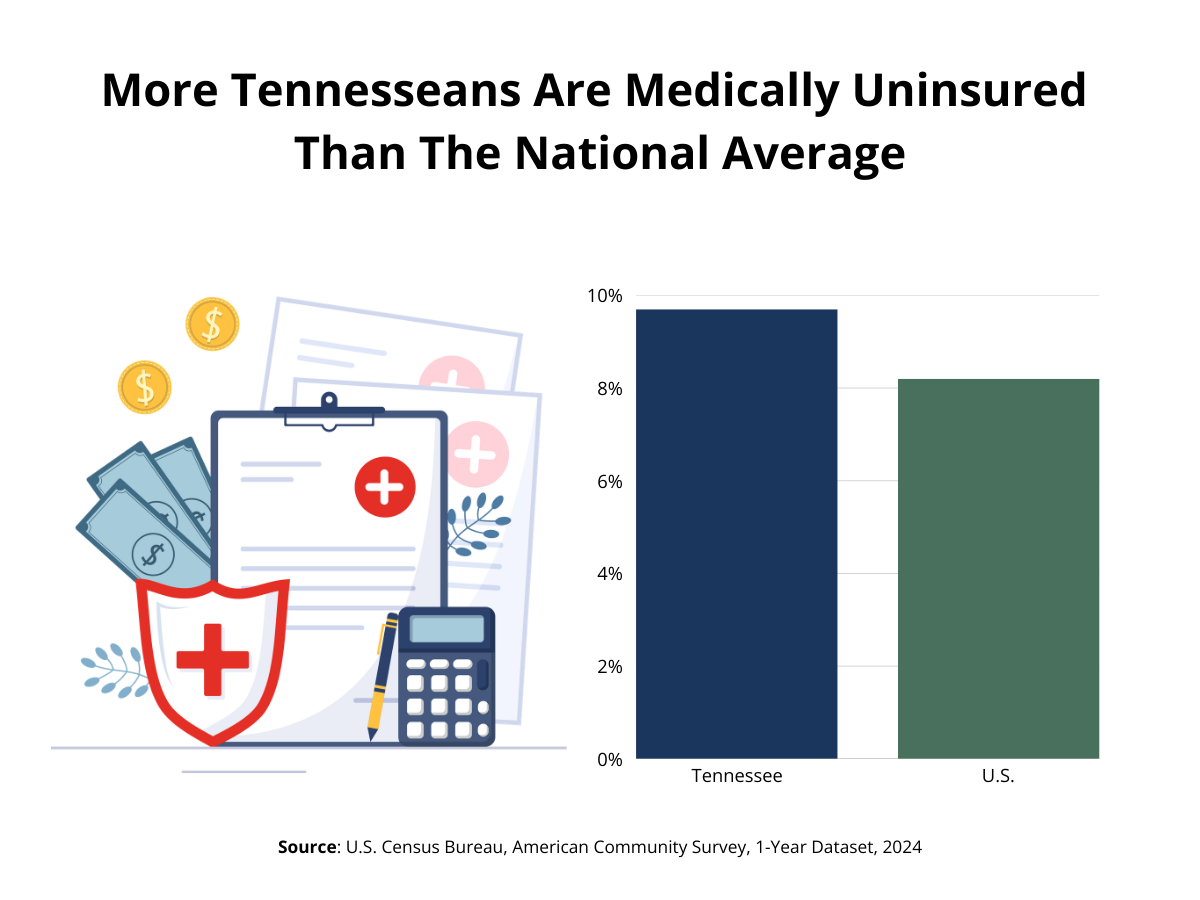
Health insurance coverage is key to community resilience.7 When people have health insurance, they are more likely to get preventive care, mental health services, and other support they may need. In 2024, 9.7% of Tennesseans lacked public or private health insurance coverage — higher than the national average of 8.2%.8 Not having insurance also worsens differences in health outcomes. People in rural areas, many minority communities, and low-income households are more likely to be uninsured and face barriers to getting care.9
When many people in a community do not have health insurance, the effects go beyond individual health. Hospitals and clinics may become more strained because more people delay care until they are very sick and need emergency treatment.10 This can increase costs for the health care system and lead to longer wait times for everyone. Communities with higher uninsured rates often have worse overall health outcomes and larger health gaps between groups, especially in rural and low-income areas. 11
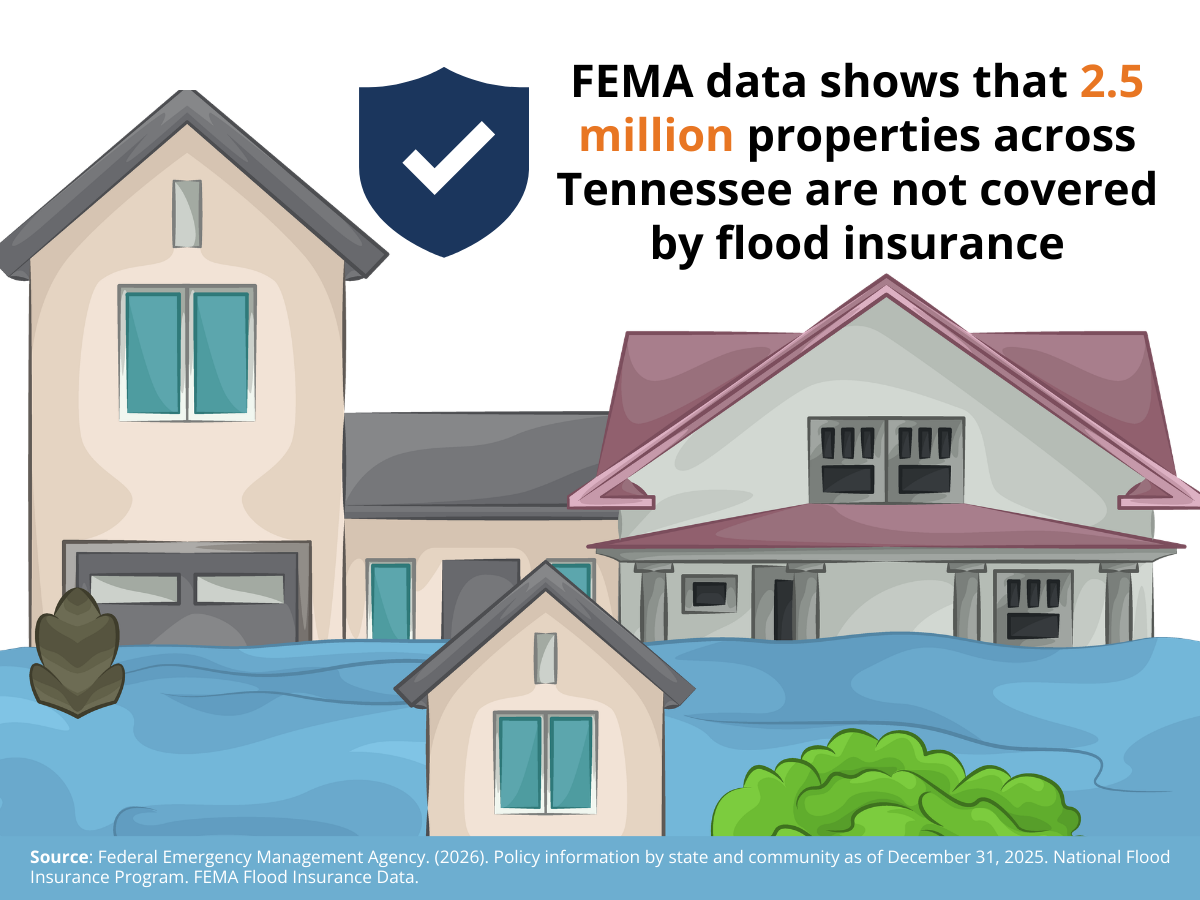
Even households that are insured may still be underinsured in the event of a disaster — especially when it comes to property insurance. Although private property insurance and federal disaster assistance can help with recovery, households often face significant coverage gaps, and local governments usually carry substantial financial burdens after disasters.12 Standard homeowners’ insurance policies do not cover damage from certain natural disasters, especially floods and earthquakes.13 Private insurers have historically excluded these hazards because they are difficult to predict and can cause large, concentrated losses when they occur.13
The effects of Hurricane Helene in Tennessee show how insurance gaps can affect entire communities. FEMA reported that less than 1% of homes in the eight hardest-hit counties had flood insurance, leaving many families to pay for repairs out of pocket.14 These gaps can delay recovery and weaken community resilience after disasters.
Individuals with Disabilities
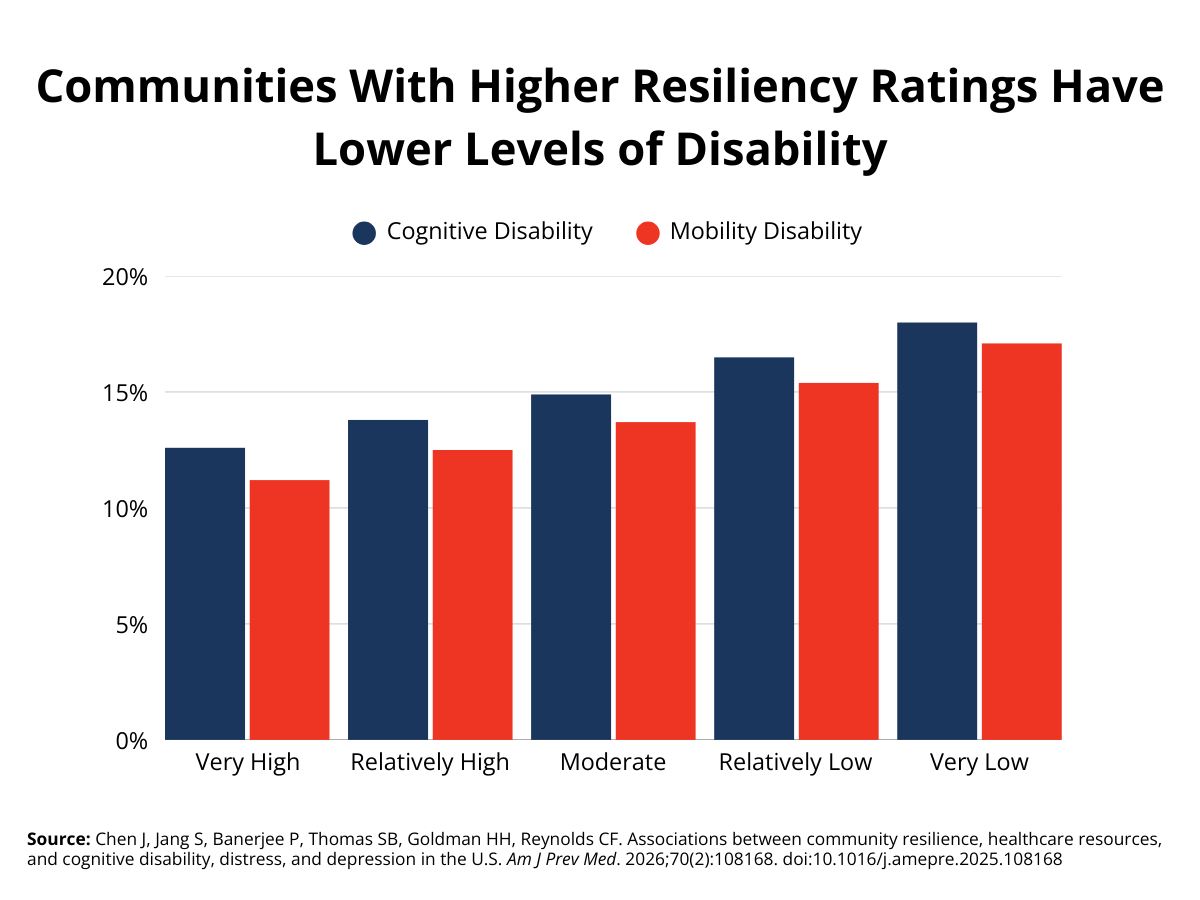
Globally, approximately 1.3 billion people (16%) of the population live with a disability, yet they are often excluded from resilience planning efforts. 15,16 Individuals with disabilities often face greater barriers that make resilience more difficult. Challenges with mobility, communication, and access to support services can make it harder to prepare for, respond to, and recover from an emergency or crisis.7,17These pre-existing disparities place individuals with disabilities at heightened risk during disasters.15 A national study of 3,135 U.S. counties found that counties with lower levels of community resilience also had higher rates of disability.18 In these counties, more residents reported cognitive disabilities or mobility disabilities compared to counties with higher resilience.18
Research also shows that greater resilience is associated with a better quality of life for individuals with disabilities.19 Communities can help build resilience for individuals with disabilities by supporting both individual strengths — such as confidence and self-advocacy — and community resources, including family support, social connections, and accessible services.19 Communities can also maximize resilience for all populations by intentionally incorporating disability inclusion into preparedness planning. This includes engaging people with disabilities as active partners in identifying needs and evaluating emergency practices.20 Key considerations include accessible communication and notification systems, evacuation planning, transportation access, inclusive sheltering, continuity of care (e.g., access to medications, refrigeration, and power), and support for independent living, including mobility devices and service animals.21
Importantly, involving individuals with disabilities and others with access and functional needs as planning partners is widely recognized as one of the most effective strategies for improving emergency response and ensuring equitable outcomes.21 By incorporating these disability-inclusive approaches into resilience planning, communities can build stronger systems that better protect all residents during emergencies.
Older Adults
Social connection plays a critical role in shaping resilience among older adults, shaping how they cope with stress and adversity.22 Exposure to stressful or traumatic experiences throughout life can increase the risk of depression, anxiety, and cognitive decline in later life.23 Strong social connections can help reduce these effects and support resilience and healing.24
Older adults also face risks related to loneliness or isolation. Approximately one in four (24%) of U.S. adults 65 years and older are considered socially isolated.22 A substantial proportion also report experiencing loneliness, including 43% of those aged 60 and older.22 Strengthening social connections is an important strategy for building resilience, as supportive relationships can reduce the negative effects of isolation and help older adults cope with and recover from stress.24 Activities that promote connection—such as social engagement, creative programs, or peer support—can help reduce these effects and improve overall well-being.25
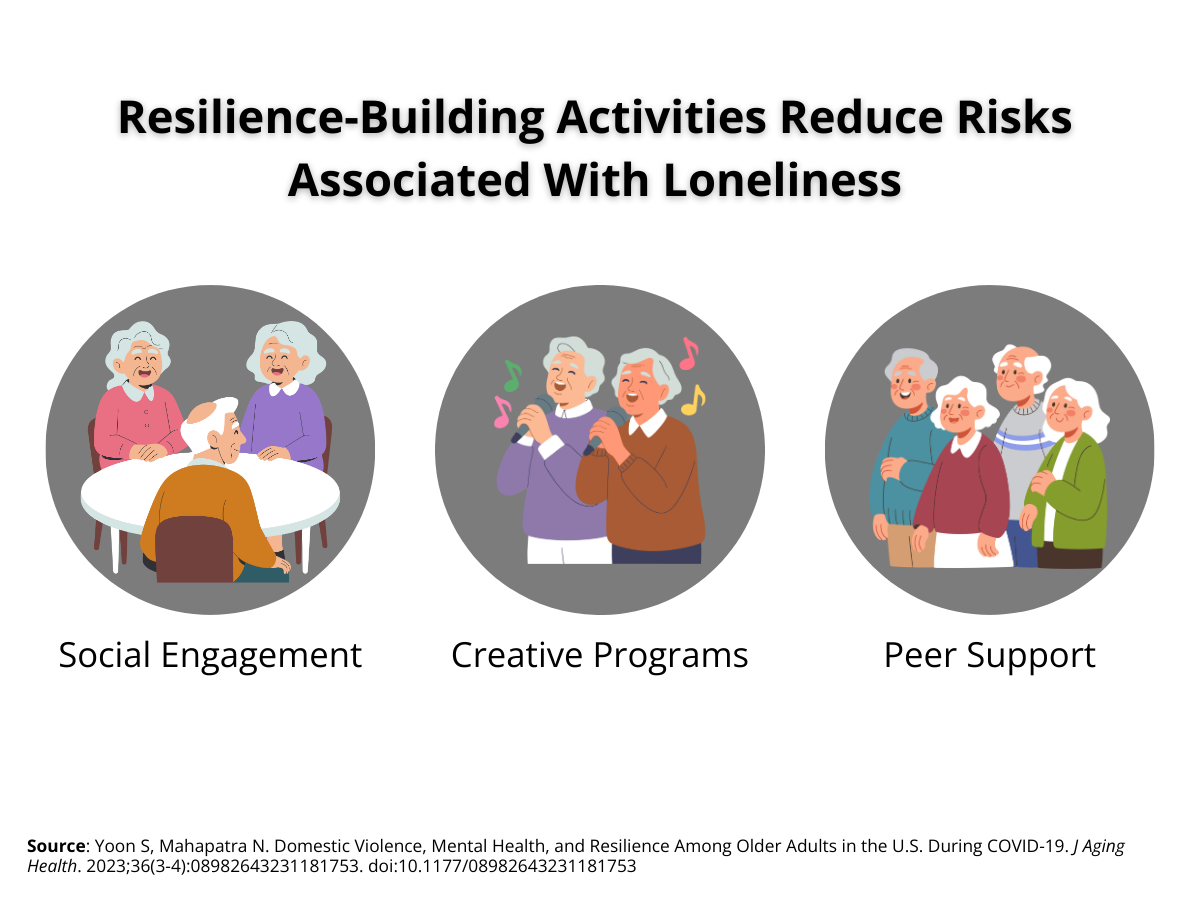
Older adults often draw strength from family, community, and faith. One study in Appalachia examined adults who reached 100 and found that strong family and community support played a major role in helping them remain resilient.26 Some Tennessee-based studies also show that faith can provide older adults with comfort, stability, and a sense of purpose, helping them cope with stress and everyday challenges.26,27 When communities design supports that allow for social connection and support, older adults have the opportunity to thrive despite the challenges of aging.
Racial and Ethnic Minorities
Racial and ethnic minority groups experience historical and intergenerational trauma connected to discrimination, segregation, and other injustices.28 These experiences continue to affect mental health and resilience today.28 Many groups also face higher rates of adverse childhood experiences and have less access to formal supports that help reduce long-term stress.29 Barriers in housing, transportation, and health care access can also increase risks during events such as pandemics.30
Access to community resources also varies widely. A national study of Federal Emergency Management Agency (FEMA) funding found that counties with larger Black or Hispanic populations completed fewer resilience projects between 2000 and 2019, showing uneven access to federal support.31
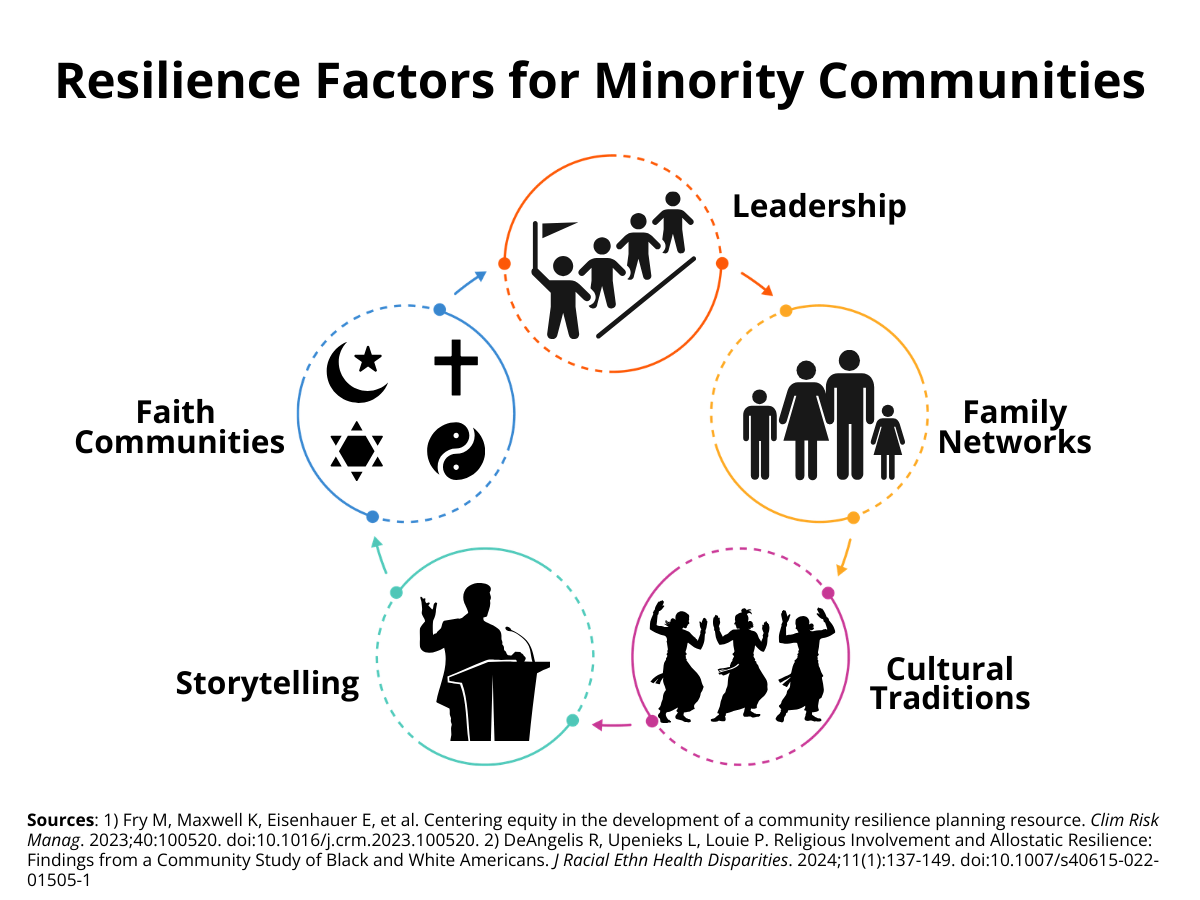
Traditional resilience planning often overlooks historical trauma, structural barriers, and lived experiences. Community-led approaches—such as storytelling—can help address these gaps by lifting local voices and building trust.32
Despite these challenges, racial and ethnic minority communities have strong resilience factors. Cultural and religious practices can support coping, connection, and healing.33 By addressing systemic barriers and investing in culturally responsive supports, communities can strengthen resilience and improve recovery for racial and ethnic minority residents.
Economic Status
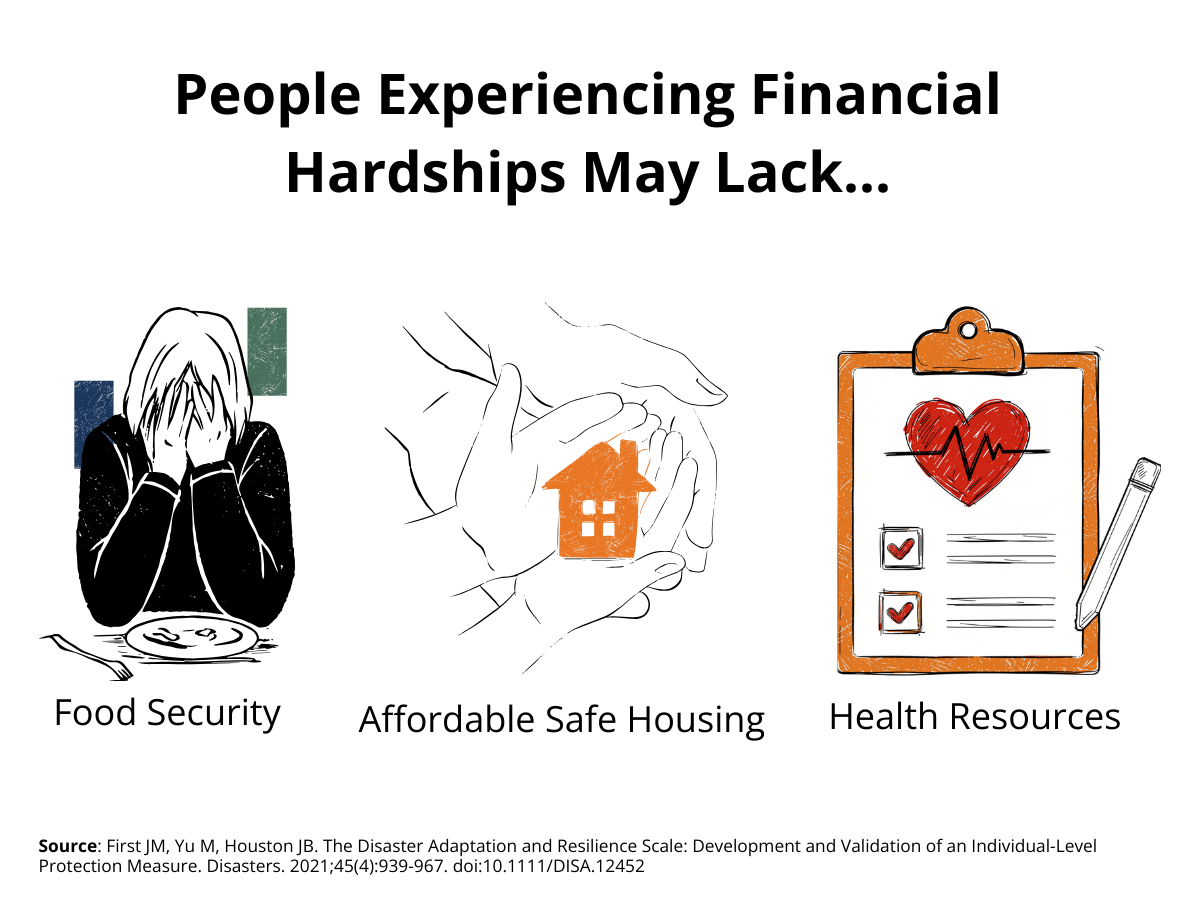
Economic stability plays a major role in community resilience, shaping both individual well-being and the places where those individuals live. Income levels can show which groups may be more at risk during times of stress.7 People with higher incomes often have better mental health after a crisis, while those with lower incomes may face more stress and worse mental health. 34 Financial hardship can limit access to basic needs like stable housing, food security, and health care, which are important for recovery after a crisis. 35
These economic challenges are also linked to the conditions in a community. Communities with fewer resources often have less access to safe and affordable housing, reliable infrastructure, food systems, and community spaces.36 These gaps make it harder for people to handle and recover from stress, and increase the risk of economic, environmental, and health problems.37 In contrast, communities with stronger resources are better able to support recovery and long-term well-being.
Economic instability can also affect children. Children in low-income communities are less likely to have safe places to live and play. For children who have experienced multiple hardships, community supports can help lower the risk of depression. 38 Without these supports, it can be harder for children to cope with stress and make it harder for people to recover.
Housing instability and homelessness are clear examples of how economic stability affects resilience. Limited access to safe shelter, services, and long-term housing can increase stress and make it harder for people to recover.37 Communities without strong housing and support systems often struggle to help those the most in need.
Building community resilience requires ongoing investment in economic stability and key resources. Investments in housing, transportation, food access, and community spaces can support recovery.36,39 Improving income stability and access to basic needs can help communities stay healthy and better respond to future challenges.
Rural Communities
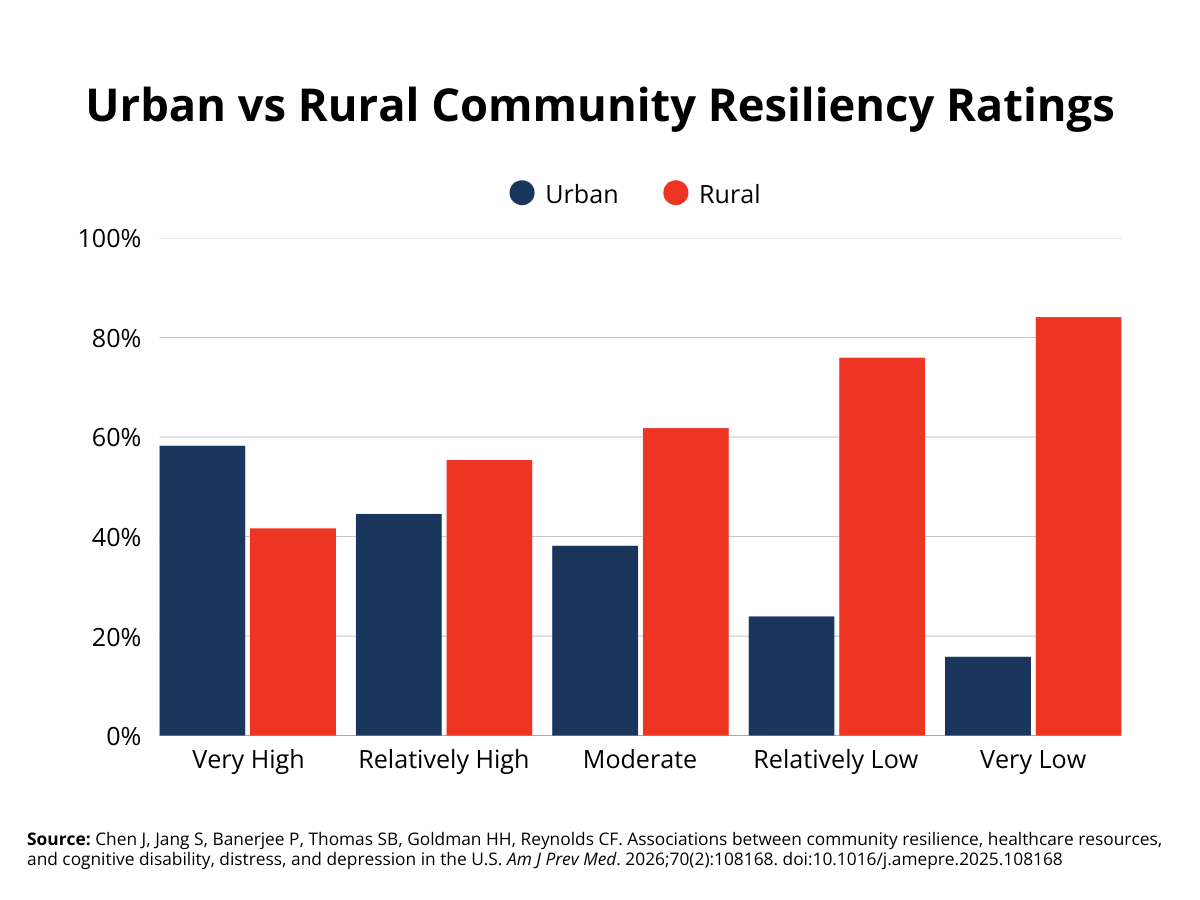
Rural communities often work hard to support one another, but they face many challenges that can make it harder to remain resilient during tough times. A national study using the 2023 FEMA National Risk Index, CDC PLACES, and the Area Health Resource File found clear rural disparities in community resilience: 84% of very low-resilience counties were rural, compared with only 41.7% of very high-resilience counties.18 These findings show that many rural communities face greater challenges in preparing for, responding to, and recovering from stressful events. Limited access to health care, fewer economic resources, and gaps in infrastructure—such as transportation and broadband—can make it harder for residents to get the support they need during and after a crisis.1 These barriers can slow recovery, increase health risks, and place added strain on local systems, making it more difficult for communities to bounce back over time.
Individual Experiences that Impact Resilience
In addition to community-level differences that can impact resilience, some individual circumstances – such as homelessness or being a veteran - can be associated with difficulty in building personal resilience, which impacts community well-being.40
A. People Experiencing Homelessness
Individuals experiencing homelessness are among the most vulnerable groups, yet they are often difficult to identify and reach. Limited reliable data makes it hard to understand needs and plan responses. In 2024, about 8,280 people in Tennessee (about 11 out of every 10,000) were experiencing homelessness. 41,42
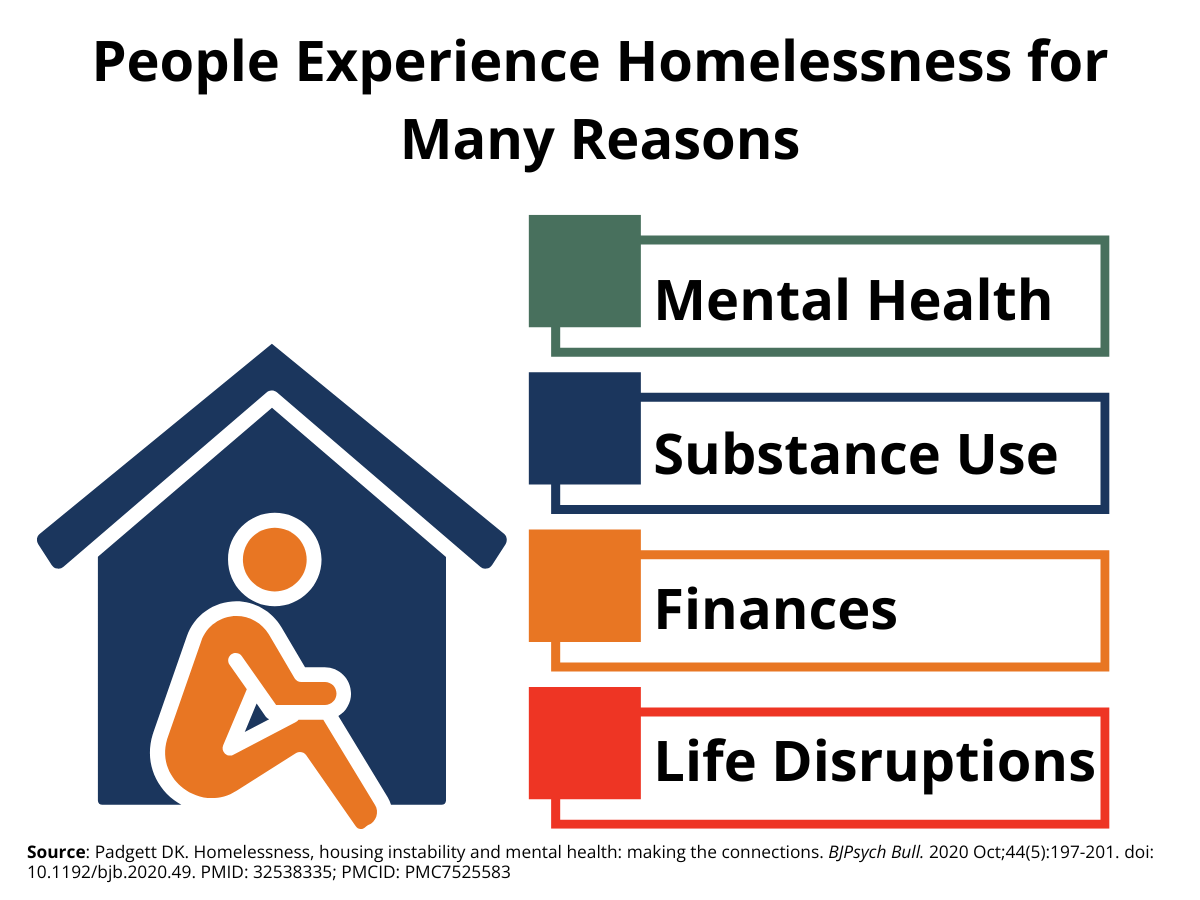
People experience homelessness for many reasons, and research shows that stable housing helps build and maintain resilience, with better housing linked to improved mental health during crises. 43,44 Supportive policies and community responses can strengthen resilience by connecting people to resources and reducing stigma, while negative views and limited support can slow recovery and weaken resilience over time.45,46
B. Veterans
Veterans bring strength to their communities, but many face challenges that can make it harder to stay resilient during major life changes or stressful times. Experiences during military service can also have lasting effects on mental health and well-being.47
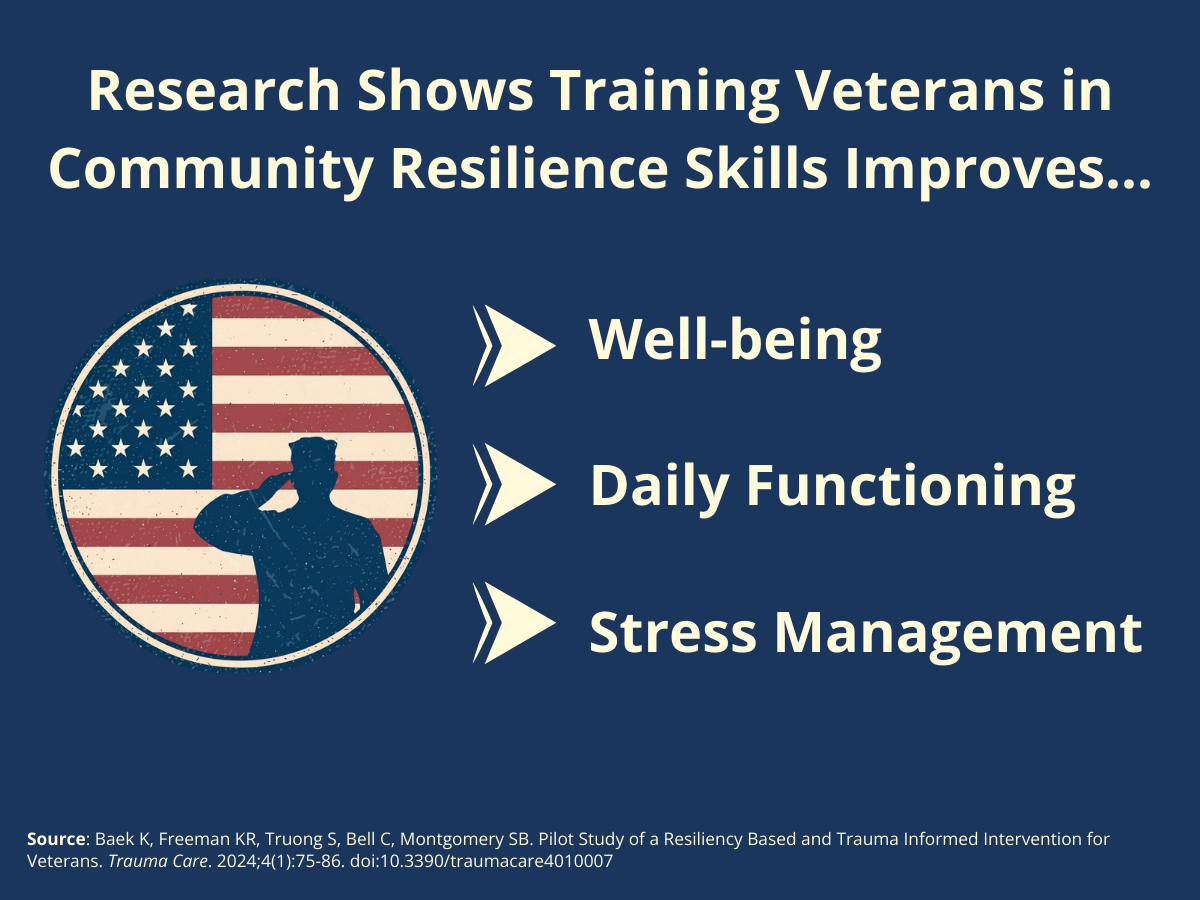
Veterans with weaker support networks and fewer protective psychological strengths are at higher risk for PTSD.48 Supportive mental health services, like counseling, are important during the move from active duty to civilian life.49 Research also shows that training in community resilience skills can improve well-being, daily functioning, and stress management.50,51
C. Individuals with History of Mental Health Conditions
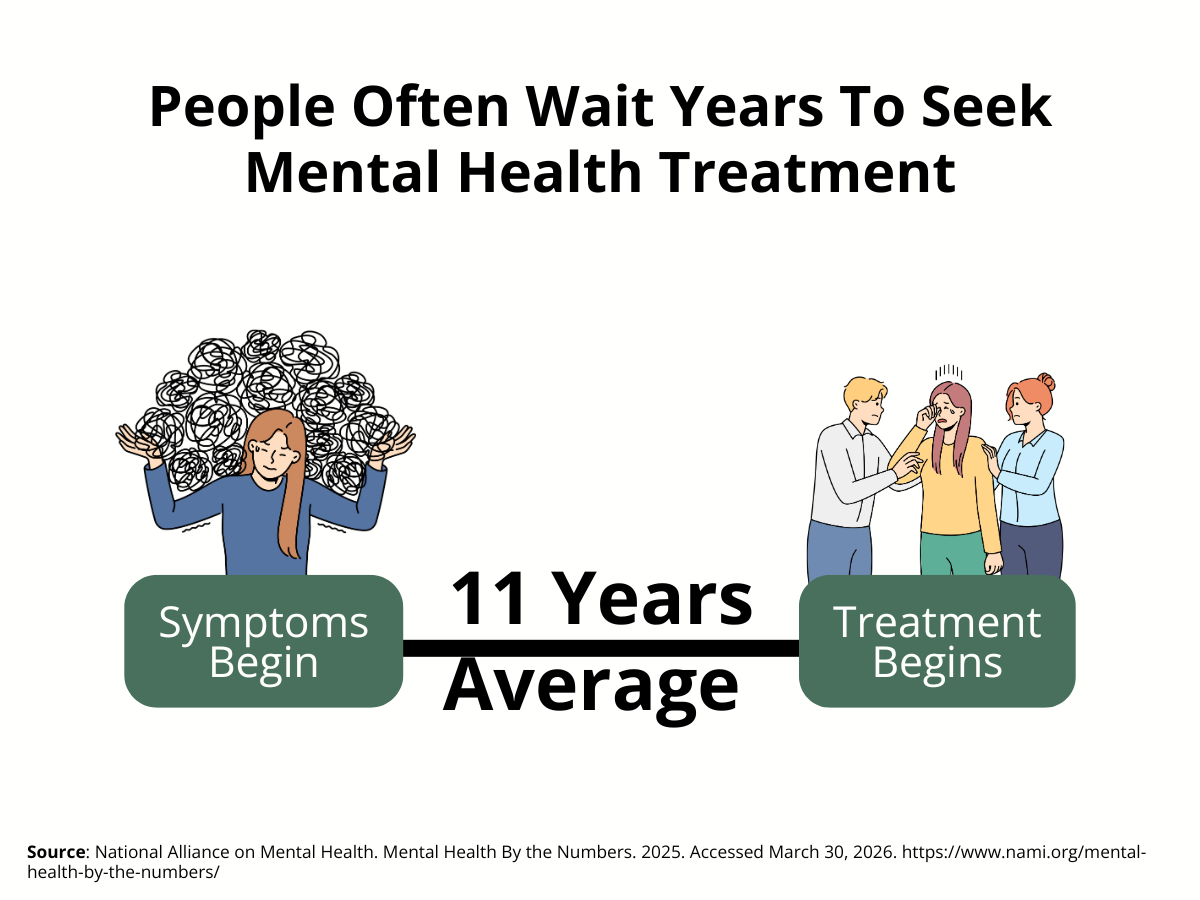
Mental well-being affects how people handle stress, connect with others, make healthy choices, and live their daily lives. According to the National Alliance on Mental Illness, on average, individuals wait about 11 years between the time mental health symptoms first begin and when they receive treatment.52 This delay can make it harder to cope with challenges and may limit their ability to work. Strengthening community resilience should include improving access to mental health services and fostering supportive environments that enable recovery and connection.53
D. Individuals with Chronic Illness
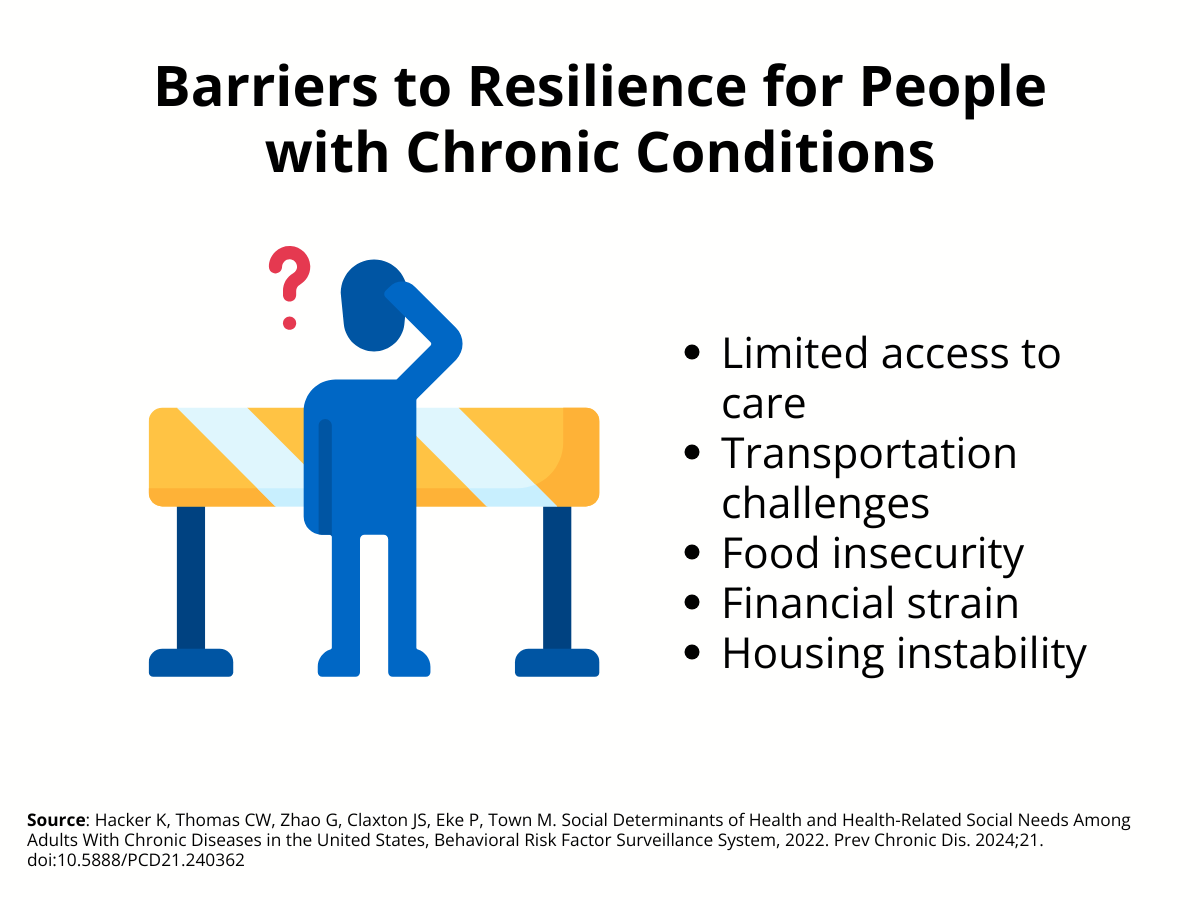
People living with chronic illnesses may face ongoing stress, fear, and uncertainty about their health, which can make it harder to stay resilient.54,55 They are also more likely to have unmet social needs, such as challenges with housing, food, or transportation.56 In addition to social support services, people with chronic illness also need access to health care to enhance their resilience.55 Communities with less access to primary care often have lower levels of resilience—for example, 94% of very low-resilience counties report inadequate primary care access compared to 69% in very high-resilience counties.18
E. Individuals with History of Adverse Childhood Experiences
Adverse childhood experiences (ACEs) can have lasting effects on mental health, health behaviors, and chronic disease, which may make it harder for people to cope with stress and build resilience.57,58 Positive childhood experiences (PCEs), including safe, stable, and supportive relationships and environments, help children grow and develop in healthy ways, support mental health and relationships into adulthood, and can reduce the effects of ACEs.59 Supportive relationships and environments play an important role in buffering the effects of adversity and strengthening resilience.60 National studies have shown that individual and community resilience factors are associated with lower odds of adverse mental health outcomes.38,61,62
F. Individuals with a History of Incarceration
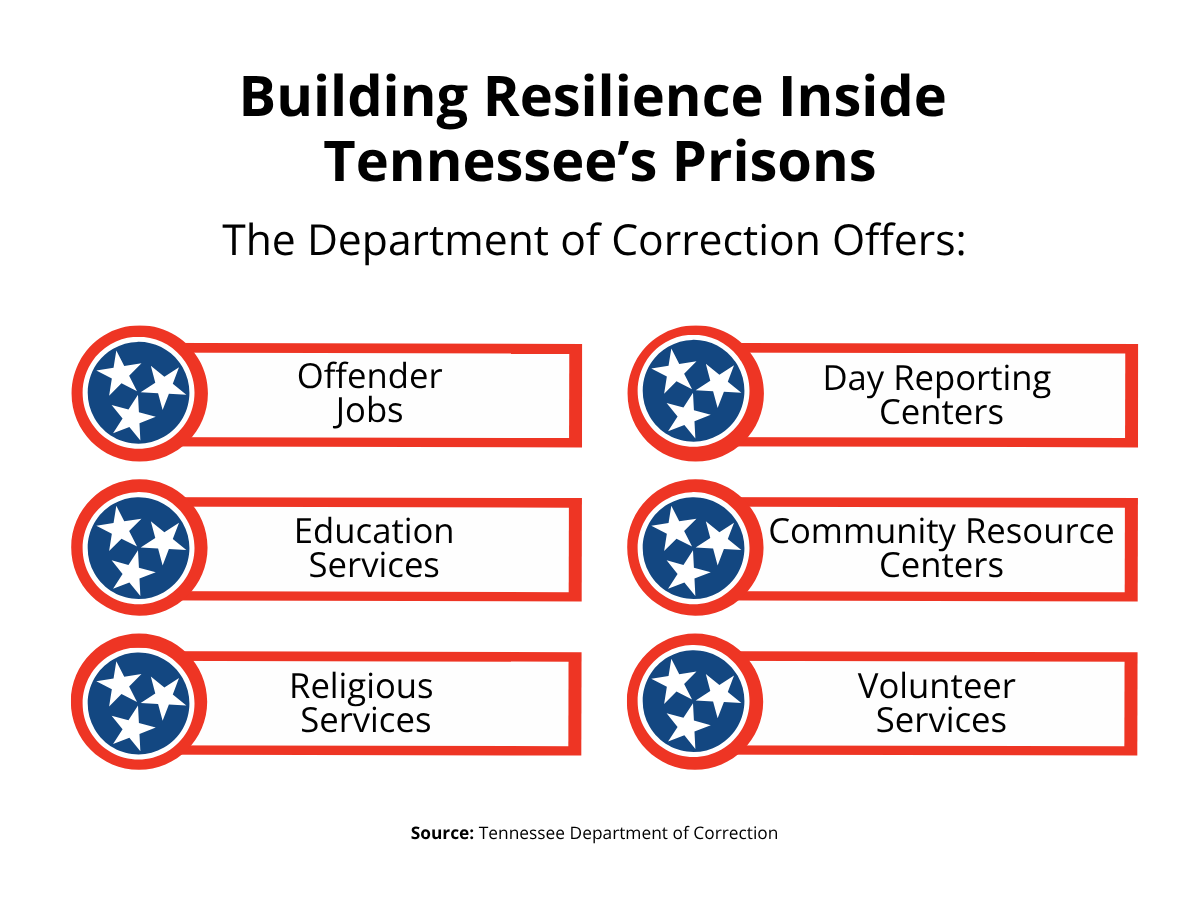
About 1.8 million people in the United States are in prisons and jails.63 After release, many face challenges, and about 2 out of 3 are arrested again within three years.64 In Tennessee, about 3 to 5 in 10 return to prison in that time.65 These patterns reflect barriers like limited access to health care, housing, jobs, and social support.66 The U.S. Department of Justice notes that effective reentry programs focus on education, treatment, and strong community connections.67 When these supports are in place, individuals are better able to manage stress, build stability, and avoid reoffending. Strengthening resilience through these efforts can help break the cycle of incarceration and support healthier, more stable communities.67
Communities Impacted by Long-Term Disinvestment
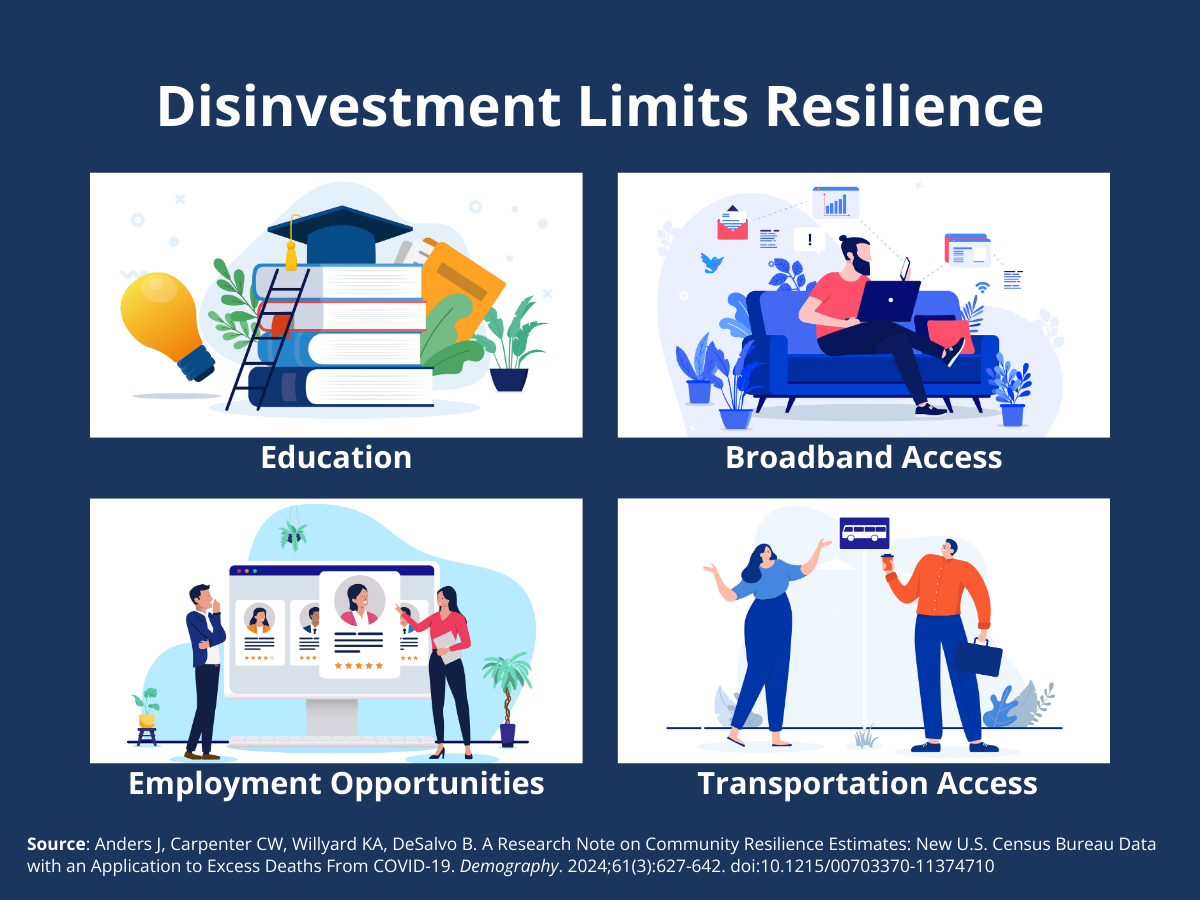
Some communities face long-term disinvestment in basic services and infrastructure, which makes it harder for residents to stay healthy and resilient. Limited access to broadband internet, transportation challenges, lower levels of education, and fewer employment opportunities all contribute to higher vulnerability.7
A case study from Shelby County shows how these challenges affect daily life. Communities with higher social vulnerability scores experienced more extended service outages and slower restoration of water, gas, and electricity after disasters, leading to greater hardship for socially vulnerable populations.68 This highlights the need to prioritize infrastructure restoration in communities already facing barriers to basic services.
Ongoing investment is also key. A study from the Tennessee Valley Authority found that communities need continuous upgrades to essential systems to strengthen resilience and reduce climate-related risks that can disrupt services.69
Disinvestment in health care further limits resilience. A national study found that communities with very low resilience were far more likely to be primary care and mental health professional shortage areas than high-resilience counties.18 More than three out of four very low-resilience counties (76.3%) had no hospital with health information technology, compared with about one in three high-resilience counties (31.9%).18
Built environment features also shape resilience. A recent scoping review found that access to active environments — such as parks, green spaces, safe transportation, and walkable neighborhoods — is associated with better physical and mental health.70 In contrast, neighborhood disadvantage is associated with worse outcomes. National research among trauma survivors also shows that community green spaces support a more resilient recovery pathway for people who already have strong individual resources.71
-
Community-Driven Solutions
Community-driven solutions are practical steps that local partners across Tennessee can take to strengthen resilience. These actions are evidence-informed, achievable in the short term, and shaped by each community’s priorities and needs.
Health Councils play an essential role in this work. They can prioritize resilience in their County Health Assessment (CHA) and select trauma-informed projects or programs for their Community Health Improvement Plan (CHIP). Health Councils can also review all the work in their CHIP through a trauma-informed “lens,” asking how each activity can be carried out to support healing, equal opportunities for everyone, and community well-being.
The resources below can help Health Councils select activities for their CHIPs that address trauma, reduce disparities, and build community resilience.
- Hold trainings, share materials, and host community events that build understanding of trauma and resilience. These activities help residents learn how trauma affects health and how communities can heal. They also create space for open conversation.
- Screen the film Resilience to spark community learning. Public showings of this one-hour documentary introduce residents to ACEs and how they shape later health. A screening can kick off a local education campaign on trauma and resilience.
- Bring together local leaders and service providers to discuss trauma-informed policies and practices. Each sector—schools, health care, workplaces, and government programs—can apply trauma-informed approaches in ways that fit their needs.
- Create listening sessions with people who have lived through trauma, disaster, or discrimination. These conversations help Health Councils understand how trauma affects daily life and community health. The stories gathered can inform CHIP priorities and highlight where support is most needed.
- Build relationships through community meals, service projects, and shared events. A connected community builds trust and supports collective action during hard times. Choose activities that also highlight a CHIP priority area to deepen engagement.
- Revitalize community gathering places—such as parks, trails, and community centers—to encourage social connection. Hosting movie nights, cookouts, or outdoor activities helps residents feel safe and welcome in shared spaces. These visible signs of activity strengthen a sense of belonging.
- Start a community resilience workgroup within the Health Council. This group can meet regularly to review data, identify priorities, and track progress on trauma-informed strategies.
- Partner with local schools, libraries, and faith groups to host resilience-focused workshops. These trusted spaces make it easier to reach families, older adults, and underserved groups with information and support.
- Strengthen and promote access to public health, health care, and social services. When people know where to go for help, they are better able to stay healthy and manage stress. Reducing barriers to everyday services also makes it easier for communities to respond and recover when challenges arise.
- Share health and wellness information alongside emergency preparedness tips. Teaching residents how to stay physically and emotionally healthy prepares them for daily stress as well as major disruptions. Strong overall health helps communities recover more quickly when something unexpected happens.
- Expand communication and collaboration across sectors. Build networks that include social services, behavioral health, community organizations, businesses, faith partners, and local colleges—not just public health and emergency services. A wide, well-connected network helps communities coordinate faster and share resources more effectively.
- Engage individuals at higher risk and the programs that serve them. Invite older adults, people with disabilities, families with low incomes, and others who may face vulnerabilities to help shape solutions. Support local programs by creating solid emergency and continuity plans so they can keep serving residents even during disruptions.
- Create opportunities for neighbors to stay connected. Regular involvement—through shared activities, local groups, or neighborhood events—builds trust long before a crisis occurs. When people know each other, they are more likely to check in, share resources, and support one another during hard times.
- Strengthen local information sharing systems. Simple tools like text alerts, community bulletin boards, or coordinated social media messaging can help residents stay informed and connected.
- Support trusted community messengers. Train community health workers, faith leaders, librarians, and other trusted figures to share accurate information about health, resilience, and available services.
- Promote cross-sector problem-solving. Host regular meetings where partners from different sectors identify shared goals, coordinate efforts, and track progress toward building resilience.
-
Making Change Through Policies and Systems
Policy and systems change focuses on how community partners work together to improve community resilience. This section outlines evidence-informed, long-term strategies that help communities build stronger systems and create lasting improvements in health and well-being.
- Connect with local decision-makers to explore how policies can promote trauma-informed, equitable practices. These conversations help align goals across sectors. A power-mapping exercise can identify who has influence and who can help advance ideas.
- Support policy efforts that address the root causes of community health issues. Conducting a root-cause analysis helps identify what is driving a problem—not just the symptoms. This approach leads to long-lasting solutions that strengthen resilience.
- Promote trauma-informed approaches in all community plans. This includes health improvement, economic development, and emergency preparedness plans. Embedding trauma-informed principles ensures resilience and equity stay central to every planning effort.
- Work with health care providers, schools, and community organizations to adopt trauma-informed services. Trauma-informed practices help professionals recognize the signs of trauma and respond in ways that avoid re-traumatization. This creates safer, more supportive environments across the community.
- Launch long-term public education campaigns to shift community mindsets about resilience. Effective campaigns highlight a problem but focus on solutions. Over time, these efforts build shared understanding and support culture change.
- Connect residents to financial assistance programs like SNAP, WIC, and childcare subsidies. Many people struggle with applications or understanding eligibility. Workshops or partnerships with assistance organizations can remove these barriers and strengthen family stability.
- Partner with the TN Resilient Collaborative to support statewide efforts that prevent and reduce ACEs. The initiative funds community projects, offers training, and promotes policies that help children and families thrive.
- Establish cross-sector partnerships to improve coordination and information sharing. Strong relationships among public health agencies, health care systems, schools, and community organizations help identify needs quickly. These partnerships can also support data systems that guide local decision-making.
- Advocate for investments in housing, broadband, transportation, and other essential infrastructure. These improvements strengthen the systems people rely on every day and support resilience across generations. Health Councils can elevate local needs by sharing data and community stories with elected officials.
-
Community Spotlight
The Health Council Community of Practice (CoP) connects Tennessee Health Councils through shared learning and discussion around health priorities. To learn more about the Community of Practice, click here.
Submit your own Community Spotlight! Please email Health.Councils@tn.gov with any relevant stories, resources, or presentations related to this topic.
-
Partners and Resources
Tennessee Resources:
Tennessee Commission on Children and Youth
- Building a Trauma-Informed System of Care Toolkit
Developed through Tennessee’s Building Strong Brains collaborative, this online toolkit offers clear guidance on how communities and organizations can begin creating a trauma-informed system of care. It provides practical steps, examples, and planning tools to help local partners strengthen resilience across settings. - Resilient Tennessee Collaborative
This statewide public education effort focuses on creating a culture that supports Positive Childhood Experiences and reduces the impact of ACEs. The initiative works to help all children in Tennessee thrive by raising public awareness, promoting sustainable funding, and advancing supportive policies. - Tennessee Department of Education
- Family Resource Centers
Family Resource Centers in Tennessee school districts offer welcoming places where families can find support, information, and connections to community resources. These centers help parents and caregivers access health and safety services, learning opportunities, and family engagement activities that support children’s success and resilience both in and out of the classroom.
- Family Resource Centers
Tennessee Department of Health
- Health Disparities Advisory Group
This group brings together community members, health professionals, faith leaders, and public health partners to improve health outcomes across the state. The group tackles a range of issues—including chronic disease, mental health, infectious disease, and environmental justice—by sharing data, solutions, and best practices. - Tennessee Community Resilience Program
This Emergency Preparedness Office program helps communities build stronger everyday health and well-being, so they can better handle disasters and recover afterward. The team works with local partners to increase emergency preparedness, strengthen community connections, and support recovery efforts when hardship occurs. Their focus is on making resilience part of daily community life, not just something that happens during a crisis. - Women, Infants, and Children (WIC) Program
The WIC program helps eligible pregnant women, new mothers, infants, and young children get nutritious foods, health education, and breastfeeding support. Communities can connect families to WIC services and local clinics to help reduce food insecurity and build healthier beginnings for children.
Tennessee Department of Human Services
- 2Gen Program
The 2 Generation (2Gen) program uses a “whole family” approach that supports parents and children together, making it easier for families to reach long-term stability. The Communities can learn more about using a 2Gen approach to guide policy decisions and strengthen family well-being. - Supplemental Nutrition Assistance Program (SNAP)
SNAP helps eligible individuals and families in Tennessee buy healthy food by providing monthly benefits that can be used at grocery stores and farmers' markets. SNAP supports food security, strengthening health and resilience by ensuring people can access nutritious meals every day. - Temporary Assistance for Needy Families (TANF)
The Families First TANF program offers short-term cash assistance and support services to eligible low-income families with children. By helping families meet basic needs, access work opportunities, and connect with supportive services, TANF strengthens family stability and resilience.
Tennessee Department of Mental Health & Substance Abuse Services
- Anti-Drug Coalitions
Tennessee’s Anti-Drug Coalitions bring together community members, schools, health professionals, law enforcement, and local partners to prevent substance misuse and promote healthy choices. By connecting residents with coalition efforts, communities can strengthen protective factors and reduce the harms that substance misuse can have on well-being. - Emotional Fitness Centers
Emotional Fitness Centers in Tennessee offer supportive spaces where people can learn skills to manage stress, build emotional strength, and connect with others. These centers focus on resilience-building tools that help individuals and families cope with life’s challenges in healthy ways. - Housing & Homeless Services
- Homeless Services for Children & Youth
This program helps young people and their families find stable, safe housing during times of stress or transition. These services connect children and teens with supports—including counseling, case management, and community resources—that promote well-being and help families stay resilient. - Projects for Assistance in Transition from Homelessness (PATH)
The PATH program provides support for people experiencing homelessness who have serious mental illness or co-occurring substance use disorders. PATH helps connect individuals with housing resources, outreach services, treatment options, and community supports to help them find stability and safety.
- Homeless Services for Children & Youth
Tennessee Office of Criminal Justice Programs
- Family Justice Centers
Family Justice Centers (FJC) are one-stop locations where public and private agencies work together to support victims of domestic violence, sexual assault, elder abuse, and other serious crimes. People can access safety planning, legal help, counseling, and social services all in one safe, comfortable place, rather than having to visit multiple offices. This coordinated approach helps families get the help they need more quickly and supports long-term healing and resilience.
- BLDG (Build Live Develop Grow) Memphis is a coalition that supports the equitable redevelopment of Memphis neighborhoods by bringing together residents, community groups, and local leaders. The organization provides practical toolkits, guides, and resources to help communities improve their built environment, strengthen neighborhood leadership, and advocate for policies that support long-term stability.
- Chattanooga 2.0 is a local coalition dedicated to giving every child in Hamilton County access to quality education and opportunities for lifelong success. Their strategic plan (2021–2030) lays out high-impact actions to improve early childhood, K–12 learning, and career pathways. The coalition’s website includes helpful reports and publications, such as the 2025 Early Childhood Action Plan, which provides data, recommendations, and tools for community partners.
East Tennessee State University
- Strong Brain Institute
The ETSU Strong Brain Institute partners with organizations to teach employees and the people they serve about the effects of traumatic stress and ways to build resilience. Their support can include program development, evaluation strategies, grant development, staff training, and ongoing consultation. - Nurture the Next
Nurture the Next is an initiative focused on improving the health and well-being of mothers, babies, and families in Tennessee. The organization develops and shares data, tools, and evidence-informed strategies that help communities address maternal and infant health outcomes. - STRONG Accountable Care Community (ACC)
The STRONG ACC is a coalition of more than 400 partner organizations in Northeast Tennessee and Southwest Virginia working together to improve physical, social, and economic well-being for the next generation. Guided by principles of equal opportunity, empowerment, trauma-informed practice, and collaboration, the coalition helps local partners create programs that reflect real community needs.
University of Tennessee
- Healthy Families, Health Communities
Healthy Families, Healthy Communities includes two USDA-funded nutrition programs—SNAP-Ed and the Expanded Food and Nutrition Education Program (EFNEP)—offered through the University of Tennessee. Together, these programs reach nearly 20,000 Tennesseans each year with free, hands-on nutrition education that teaches cooking skills, food safety, healthy eating habits, and money-saving strategies.
- Building a Trauma-Informed System of Care Toolkit
-
To Learn More
Center for Community Resilience
- The Center for Community Resilience offers frameworks, webinars, and learning modules focused on community resilience, equity, and cross-sector collaboration. The Center’s resource library includes tools and templates for coalition building and communication strategies. These materials can support communities working to address the root causes of trauma and strengthen long-term resilience.
Connected Community: A Trauma-Informed Community Engagement Toolkit
- Connected Community is a free curriculum designed to help high-trauma communities build resilience, trust, and leadership. Using a train-the-trainer model, it equips community members to lead workshops on trauma education, emotional intelligence, and community-driven solutions. This approach helps local leaders create sustainable, culturally relevant change.
Federal Emergency Management Agency (FEMA)
- National Flood Insurance Program (NFIP)
The National Flood Insurance Program, managed by FEMA, offers affordable flood insurance to homeowners, renters, and businesses in participating communities. Because standard homeowners’ insurance does not cover flood damage, NFIP coverage helps families and businesses recover more quickly after flooding. The program also partners with communities to reduce future flood risk through local floodplain management.
National Fund for Workforce Solutions
- Trauma-Informed Approach to Workforce Guide
The National Fund for Workforce Solutions provides a practical guide outlining how trauma affects the workforce and offering trauma-informed approaches to hiring, training, and workplace culture. The guide includes background information, strategies for employer engagement, and suggestions for building supportive environments. These tools help communities strengthen economic stability and worker well-being.
- Adverse Community Experiences & Resilience (ACER) Resources
The Prevention Institute offers resources to prevent adverse community experiences and strengthen resilience. Their publications, tools, and case studies support local partners working to address trauma at the community level. These materials can guide planning, policy work, and collaborative prevention strategies. - THRIVE: Tool for Health & Resilience in Vulnerable Environments
The THRIVE tool from Prevention Institute helps communities assess the strengths and risks in their local environment that affect health, equity, and resilience. It offers easy-to-use steps for identifying community assets, prioritizing action areas, and planning strategies that improve well-being for vulnerable groups.
Substance Abuse and Mental Health Services Administration (SAMHSA)
- Trauma-Informed Care & Resilient Communities Resources:
- Interagency Task Force on Trauma-Informed Care
- National Child Traumatic Stress Initiative
- Resiliency in Communities After Stress and Trauma (Project ReCAST)
- Cooperative Agreements for School-Based Trauma-Informed Support Services (TISS) and Mental Health Care for Children and Youth
- Spotlight Series: Building Resilient and Trauma-Informed Communities
National Center on Family Homelessness
- Trauma-Informed Organizational Toolkit
This toolkit is designed for organizations serving families experiencing homelessness and provides step-by-step guidance for becoming trauma-informed. It includes a self-assessment tool, an explanation of trauma-informed principles, and recommended next steps for improvement. The toolkit helps organizations create safer, more supportive environments for families affected by traumatic stress.