Spiritual Conversation
Tennessee Frontier Room
Clay, Culture, and Change
ETSU Athletics
Window into the Soul
Rising Sun
CURRENT EXHIBITIONS
-
Spiritual Conversation: Storytelling Through Art Quilts (September 21 - January 8, 2027)
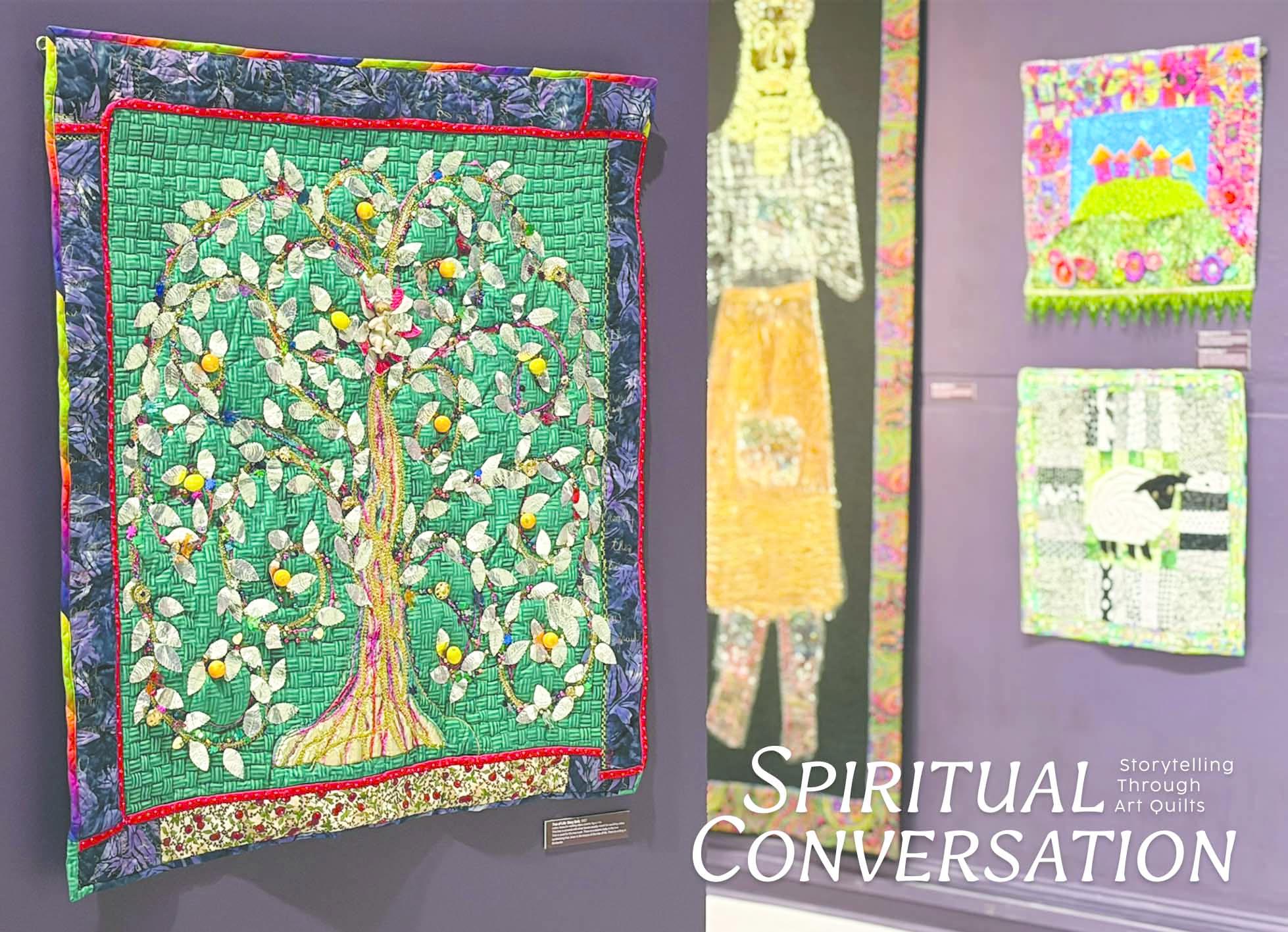
Spiritual Conversation
The Reece Museum presents Spiritual Conversation: Storytelling Through Art Quilts, featuring the work of fiber artist Kristy Ottinger. The exhibition of narrative art quilts marries the practices of quilting and storytelling. Intricately designed textile wall hangings narrate themes in spirituality and illustrate how stories are passed down from one generation to the next. Ottinger’s visionary fiber works showcase meticulous sewing skill and an imaginative incorporation of found objects.
A reception will be held at the Reece Museum on Thursday, Oct. 8, from 5 p.m. to 7 p.m. The event is free and open to the public. Come meet the artist and enjoy provided refreshments.
About the artist:
Kristy Ottinger dabbled in other art forms throughout her formal art education, eventually earning a Master of Fine Arts in painting from East Tennessee State University. In 1994, Ottinger received a scholarship to Burren College of Art in Ireland, where she developed an appreciation for quilting that led to a fiber art practice. Today, she is best known for her narrative art quilts, notable for their embellishments of found objects, embroidery, paint, and sometimes writing. -
The Tennessee Frontier Room (July 27, 2026 - June 4, 2027)
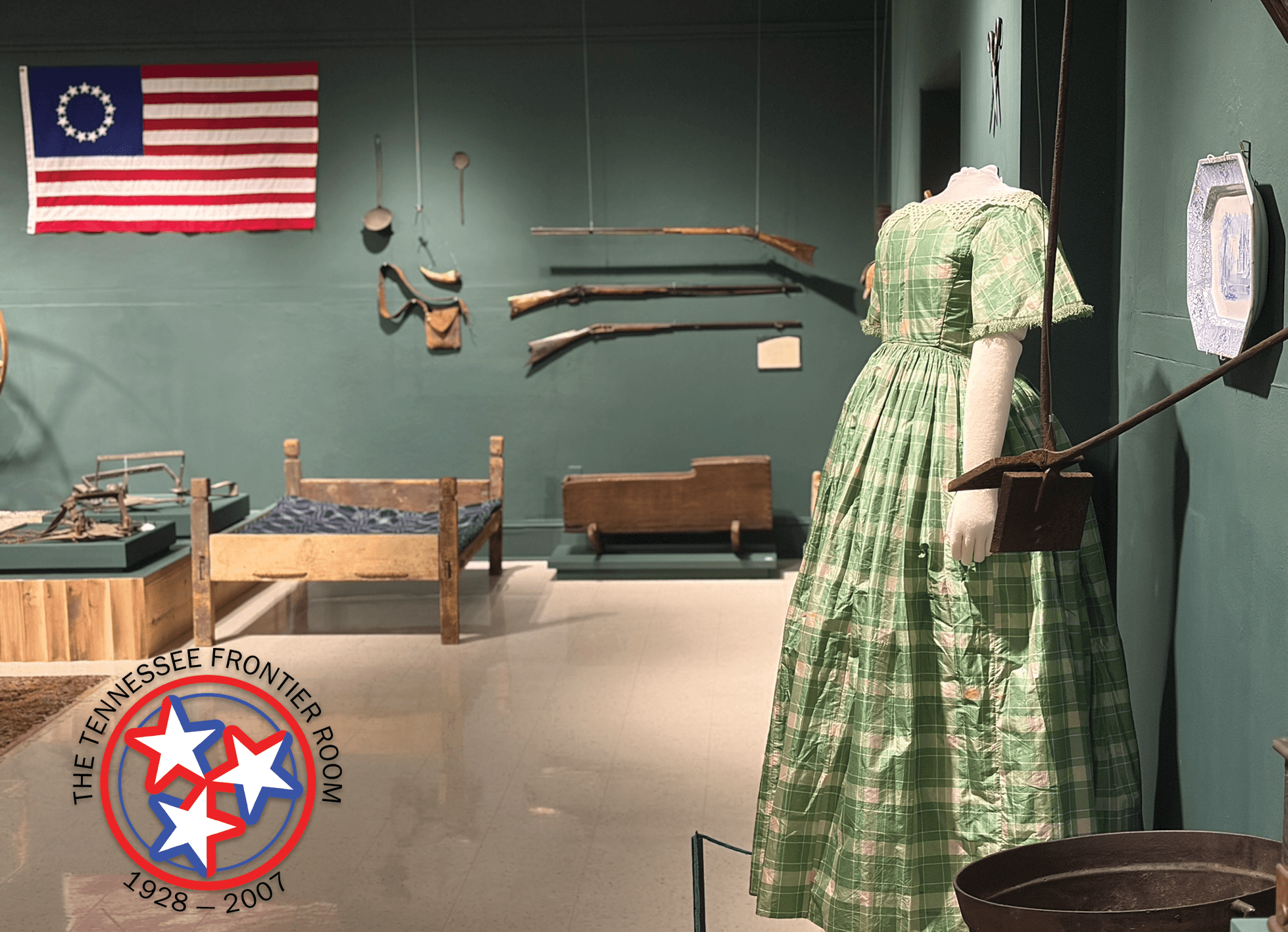
The Tennessee Frontier Room
From 1928 through 2007, East Tennessee State University hosted an exhibition that represented a folkloristic approach to documentation and historical interpretation of a mythological place called the Tennessee Frontier. The exhibit began as a classroom project that grew into public displays hosted in Gilbreath Hall (1928-1932), Sherrod Library (1933-1964), and the Reece Museum (1965-2007). As part of the ETSU America 250 events happening across our campus this year, many of the artifacts from this nostalgic exhibition have been brought out of the collections room to be shared with the public once again.
The Tennessee Frontier Room: 1928-2007 revisits institutional and regional history, with a focus on pieces of family and collective lore that contribute to greater regional mythohistories about the pioneers, explorers, and Indigenous inhabitants of East Tennessee between 1750 and 1840. From lithic tools created by ancient civilizations to a silk evening gown, the exhibit and accompanying publication showcase the cultural artifacts left behind by a people in flux. Building on work begun during the 1976 Bicentennial celebrations, this Semiquencentennial exploration of our shared history revisits the golden age of folklore, when the First Congressional District was branded “Tennessee’s First Frontier.”
-
Clay, Culture, and Change: Southern Folk Pottery and the Tennessee Valley Transformation (July 27 - October 23)
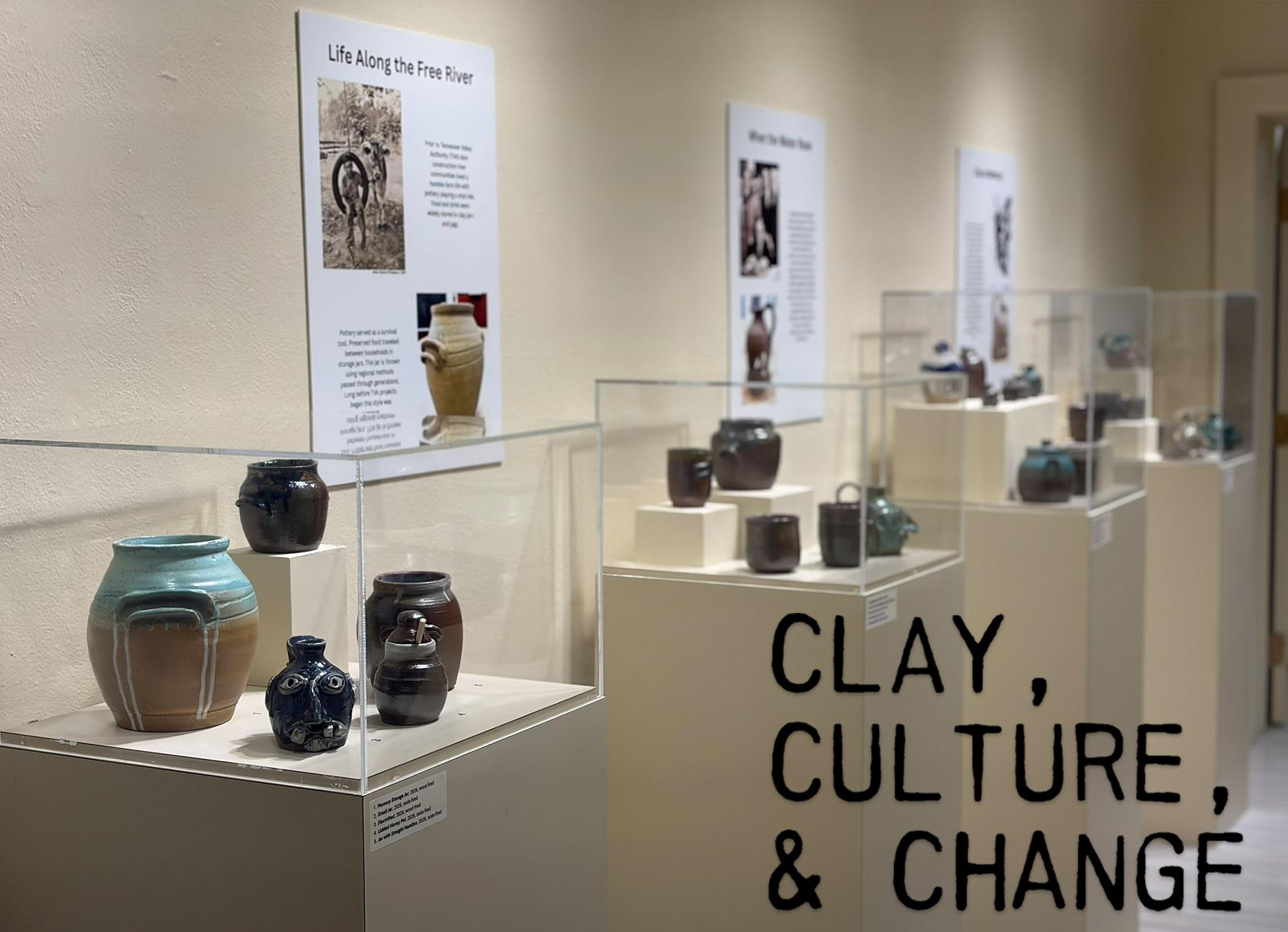
Clay, Culture, and Change: Southern Folk Pottery and the Tennessee Valley Transformation
An exhibition by artist Rack Cross, Clay, Culture, and Change explores the ceramics of Southern Appalachia that have been associated with land and water for generations. Pottery once functioned as a necessity for storage and transport. With the Tennessee Valley Authority (TVA) transformation of river systems in the twentieth century, the Holston Valley and surrounding regions experienced rapid and widespread change. Flood control and electrification changed lifestyles on the farms and beyond. Because of this transformation, folk pottery also shifted from strictly utilitarian ware toward decorative and collectible pieces. Face jugs, with their sculpted features, became far more popular than the once familiar and simple jug form. This exhibition traces that adaptation where clay continues to be witness and evidence to the cultural change that includes pottery moving from the farmstead springhouse to the gallery gift shop.
-
ETSU Athletics: A Retrospective (June 22 - November 13)
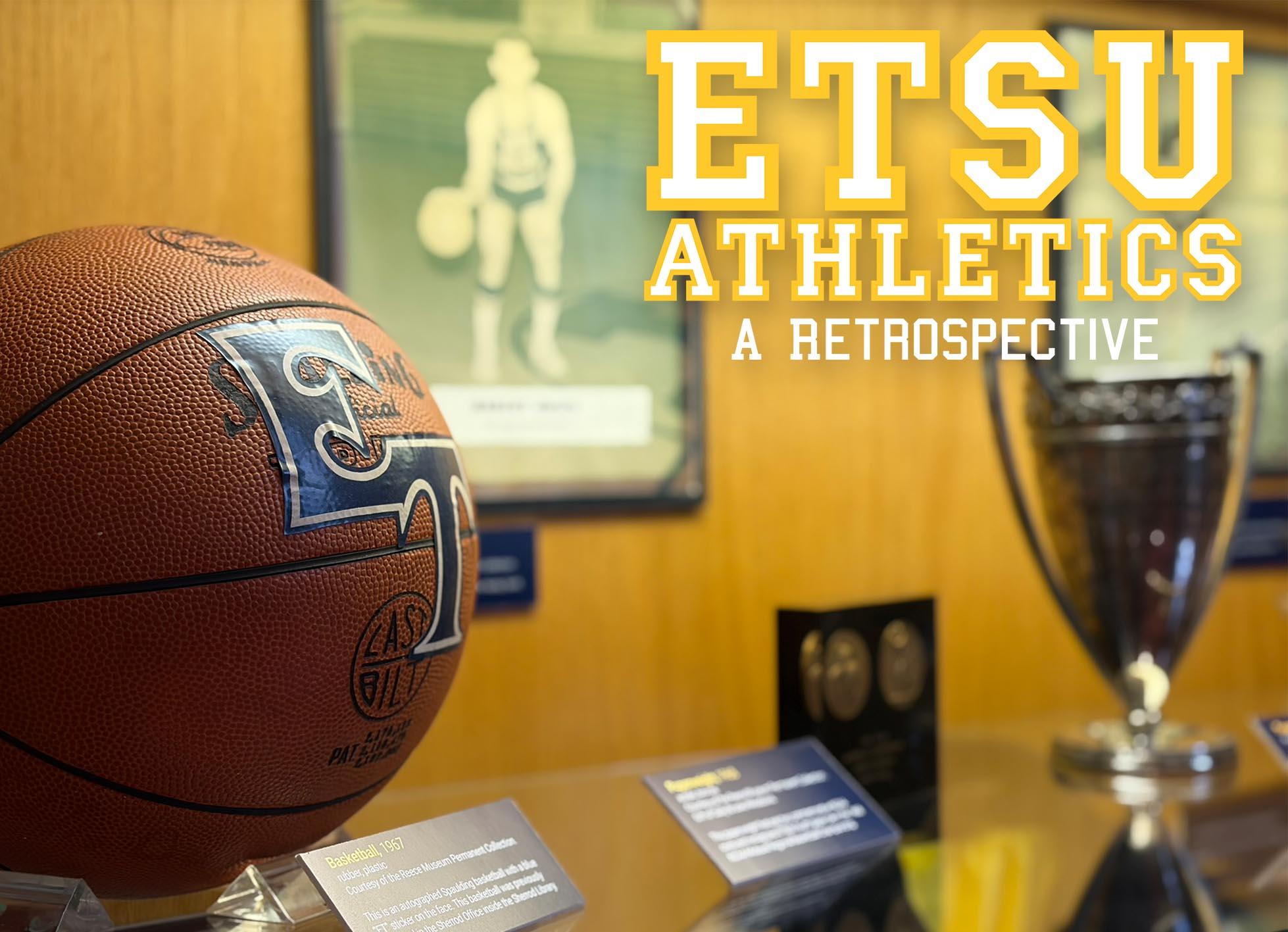
The Reece Museum has a decades-long history of collecting artifacts related to ETSU history, and more specifically, the history of ETSU athletics. One of the first artifacts collected was a commemorative trophy that designates the East Tennessee State Normal School team as Reach Trophy Champions during their 1915 season as part of the Interscholastic Baseball League, which was added to the permanent collection in 1982 (shown on the top shelf of this exhibition). Most recently, the Reece Museum was honored to acquire a letterman jacket used by former NFL Coach Kenneth “Mike” Smith, who continued the early years of his football career at ETSU between 1977 and 1981 (shown on the middle shelf of this exhibition).
The exhibition is curated by Reece Museum graduate assistant, Craig Charles. In his first year here Charles showed an interest in learning more about our ETSU Athletics subcollection and helping us assess what we have successfully collected over the years. This display was curated in part to show that the museum stewards significant artifacts related to ETSU athletics history, but that there are gaps that still need to be filled. The Reece Museum is committed to continually evaluating its permanent collection. We aim for a collection that features the stories of all demographics present in the Appalachian region and bolsters our relationship with donors of all identities in the Appalachian region, particularly as they pertain to the campus culture and history of ETSU.
ETSU Athletics: A Retrospective celebrates the stories that have been collected so far, and the stories that will continue to be collected in the future with the help of dedicated students, faculty, and community members.
-
Window into the Soul: The Work of Amanda Renfrow (June 1 - December 4)
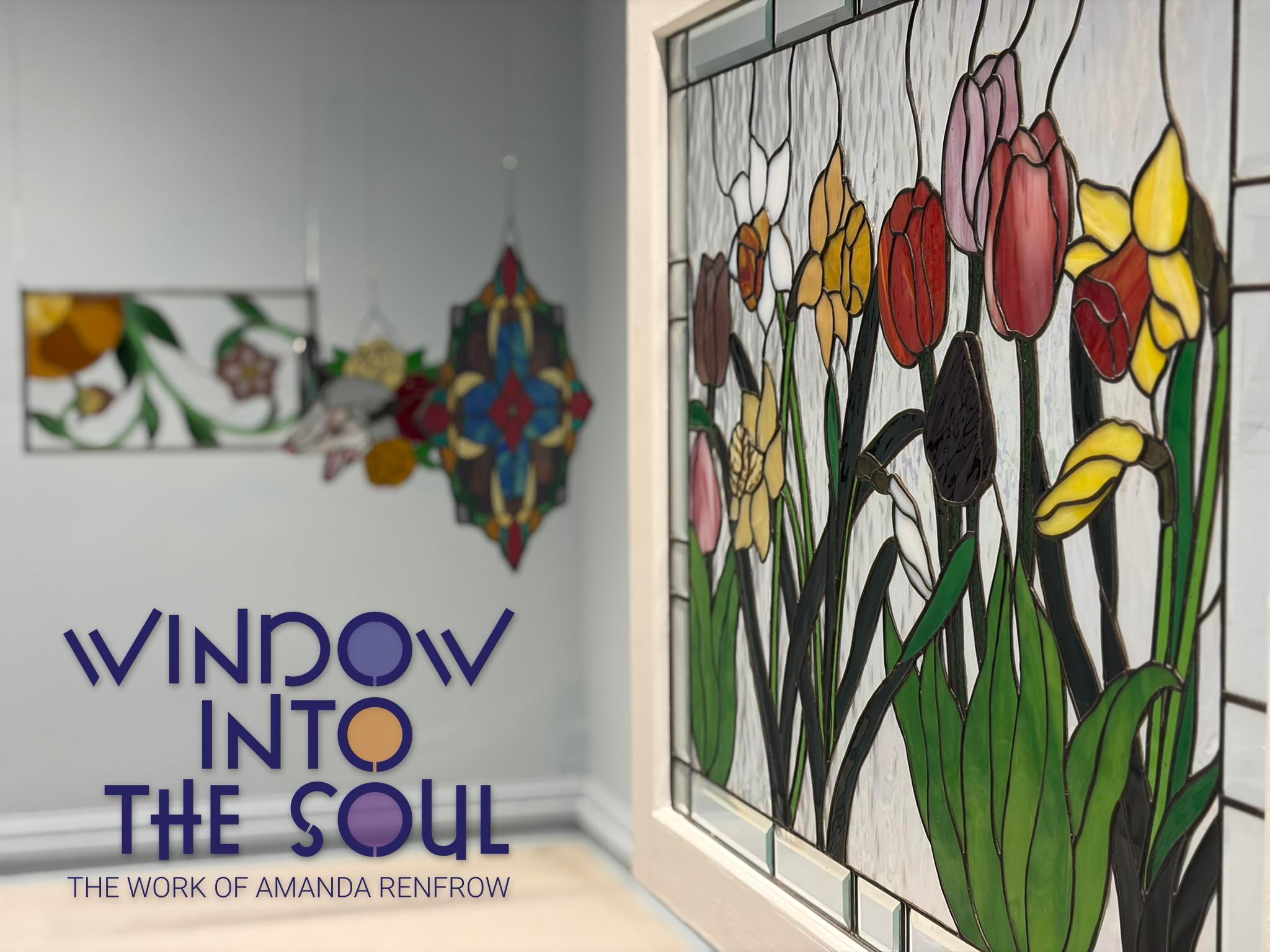
The Reece Museum presents Window into the Soul: The Work of Amanda Renfrow, an exhibition featuring the stained glass work by local artist Amanda Renfrow.
Window into the Soul, showcasing twenty-five stained-glass works by Renfrow, offers a retrospective of her eight-year practice. A native of Oklahoma, Renfrow moved to Appalachia in 2018 and began her artistic practice in glass. Starting as an apprentice to Steve Cook, a renowned glass artist in Jonesborough, Renfrow has since gained notoriety, with work frequently exhibited and housed in private and public collections, including the Reece Museum Permanent Collection.
"This exhibition brings together works that trace my artistic development from the smallest butterfly to the largest sun, reflecting the evolution of my approach over time,” says Renfrow.
A public reception will be held on Friday, June 26 from 5 to 7 pm.
-
Rising Sun: The Musical Legacy of Clarence "Tom" Ashley (March 2, 2026 - February 19, 2027)
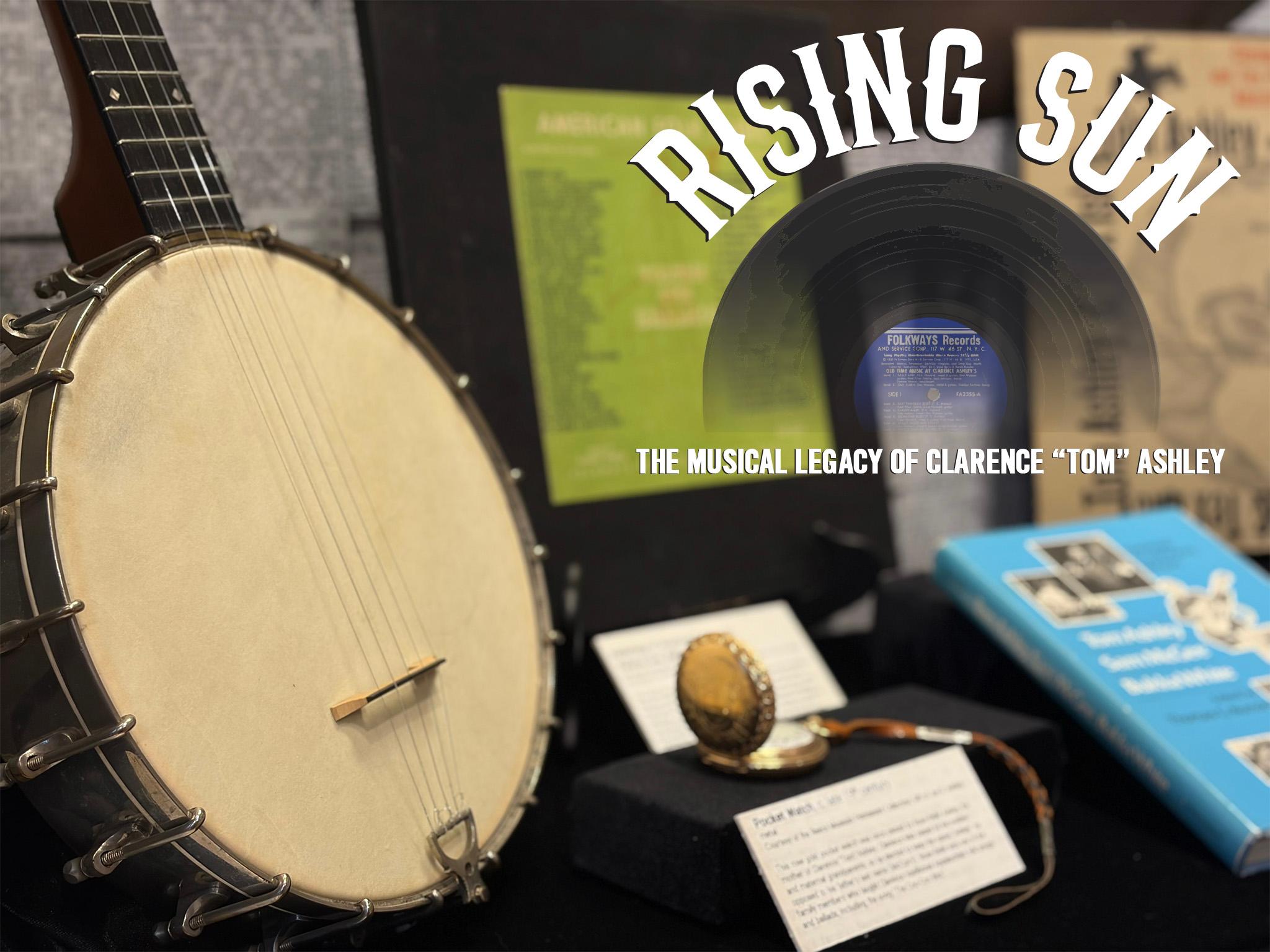
Clarence "Tom" Ashley (September 29, 1895 - June 2, 1967) was a musician from Mountain City, Tennessee. Clarence began making music at medicine shows and local fiddler's conventions as early as 1911. He was active as both a solo recording artist and a member of various string bands in the early twentieth century, from the mid-1920s until approximately 1943. One of his most notable recordings includes The Coo-coo Bird, which was recorded during the pivotal Johnson City Sessions in 1929. Following a serious hand injury, there was a gap of time in which Clarence stopped making music altogether. However, in the early 1960s, he was encouraged by friends and local musicians to try making music again, just in time to participate in the revival of American folk music that swept the nation throughout the 1960s.
Rising Sun features a collection of artifacts donated by Joe Ashley, Clarence "Tom" Ashley's grandson, in memory of Clarence "Tom" Ashley’s musical legacy.
Schedule a Tour:
Click here to schedule a tour. Please schedule your tour at least one week in advance. We look
forward to having you and your group in the Reece Museum!