Tennessee Music Pathways Exhibitions
Launched by the Tennessee Department of Tourist Development in 2018, Tennessee Music Pathways is an online planning guide that connects visitors to the state’s rich musical heritage. From the largest cities to the smallest communities, Tennessee Music Pathways stretches across all 95 counties and features hundreds of landmarks from the seven genres of music that call Tennessee home.
The Center of Excellence for Appalachian Studies and Service was honored to be selected as one of the initial sites in 2018, with the Reece Museum serving as the “Welcome Hub” for visitors following the Pathways. The Center includes the Reece Museum, the Archives of Appalachia, the Regional Resources Institute, and the Institute for Appalachian Music and Culture.
The Reece Museum displays a year-long exhibition in the designated Tennessee Music Pathways display in the B. Carroll Reece Classroom. Beginning with rotating exhibitions of select posters from the Archives through 2021, the Reece then exhibited Tune on my Memories: The Work & Play of Richard Blaustein in 2022. Since then the Reece and displayed multiple Tennessee Music Pathways exhibitions, and currently has Rising Sun: The Musical Legacy of Clarence "Tom" Ashley exhibited.
In addition to the music exhibitions, the gallery also features the Interactive Music Kiosk. The Interactive Music Kiosk, first unveiled in 2007, features three digital books created by ETSU faculty members Roy Andrade and Lee Bidgood. The third book, The Early History of Country Music in the Tri-Cities, was developed from a slideshow and script first written in 1982 by Dr. Richard Blaustein, the first director of the Center of Excellence for Appalachian Studies and Services. The book was co-authored by country music scholar Charles Wolfe through the Appalachian Outreach Program, an initiative of ETSU’s Archives of Appalachia.
PAST TENNESSEE MUSIC PATHWAYS EXHIBITIONS
-
Spotlight on Old-Time: A Governor's School Exhibition (June 23, 2025 - February 6, 2026)
The Governor’s School for Tennessee History and Environmental Studies (formerly Scientific Exploration of Tennessee Heritage) has been operated by the Center for Excellence in Appalachian Studies and Services since 1987. Our School was the fifth Governor’s School to be chartered and today is one of only 11 in the state. Our school is distinctive among Tennessee Governor’s Schools as the only one dedicated to studying the history and heritage of the state, and by its focus on a broad range of field experiences in the beautiful southern Appalachians. We engage students in hands-on learning, with such activities as building pioneer shelters at the ETSU Valleybrook campus, hiking on Roan Mountain, digging for fossils at the world-renowned Gray Fossil Site, contra dancing in Jonesborough, cycling on the Tweetsie Trail, conducting environmental surveys at Rocky Fork State Park, and working with Reece Museum staff to engage with and interpret Appalachian material culture
During the month of June, 25 Governor’s School students worked with Reece Museum and Archives of Appalachia staff to research and interpret artifacts from the Reece’s and Archive’s permanent collections. Students worked individually to shed light on numerous artifacts and print materials through labels they wrote. The Reece is proud to present their work in the new Tennessee Music Pathways exhibition: Spotlight on Old-Time.
-
Rappalachian Soundbox: A Retrospective (October 28, 2024 - May 16, 2025)
The Reece Museum and the Black American Studies Program partnered to develop an annual series of events called Hip Hop History: A Cultural Celebration. In the summer of 2021, the U.S. Senate passed a resolution that designated November 2021 as “Hip Hop History Month,” elevating Hip Hop’s status to equal other uniquely American genres such as jazz, blues, gospel, and rock and roll. Senate Resolution 331 states that “Hip Hop artists and supporters, originally of African heritage, now transcend many different ages, ethnicities, religions, locations, political affiliations, and socioeconomic statuses, which demonstrates the melting-pot quality of Hip Hop art and culture.”
The event series, held every November since 2021, was designed to be a holistic cultural experience that would open up connective spaces between participants and audiences through scholarship and academic lectures, visual art and an exhibition, community building and outreach, and of course, music and performance. Throughout the month of November, the Reece Museum hosted scholars, artists, community members, and musicians who were interested in exploring Appalachian identity through the lens of Hip Hop culture. “Rappalachian Soundbox” is a phrase coined by Joseph “Black Atticus” Woods, soul writer, recording artist, and member of the Good Guy Collective, to describe the sound produced during a jam that included rap and R&B artists, banjo, fiddle, and guitar. The phrase captures the vibe of the moment when two distinct sounds and culture groups were able to cross over into new territory, blending Old-Time music with Hip Hop beats and bass lines, which Good Guy Collective artists and jam participants could freestyle over.
The event series, which won an award from the Tennessee Association of Museums in 2021, is a scholarly exploration of Hip Hop’s influence on local culture and its evolution into a popular genre that “gives voice to the voiceless” (Good Guy Collective). Dr. Daryl A. Carter, Black American Studies Program director and associate dean says, “this partnership and collaborative exercise highlights the importance of Black Americans and their contributions to America, especially in Appalachia.”
This Tennessee Music Pathways showcase explores and celebrates the ongoing collaboration that is “Rappalachian Soundbox.” Rebecca Proffitt, director of the Reece Museum, says; “This collaboration represents an opportunity to think about the ways that art forms create connective spaces between communities. I think it’s important to recognize that many art forms that we think of as being traditionally Appalachian are rooted in African and Indigenous cultural expressions, and represent a long history of the sharing of ideas and knowledge between culture groups.”
-
Ballet in Appalachia: 75 with Bristol Ballet (July 17, 2023 - June 28, 2024)
Ballet in Appalachia: 75 Years with Bristol Ballet is a historical retrospective of one of the oldest arts institutions in the Tri-Cities region. This Tennessee Music Pathways exhibition includes photographs, program books, costumes, and other archival materials from the 75-year history of this local arts organization in both Tennesseee and Virginia.
Bristol Ballet, in its 75-year history, has a long tradition of serving and being a part of the Appalachian community surrounding it. The ballet company has provided quality dance training and performances since 1948, and has integrated and interacted with the Appalachian region from the beginning, when Constance Hardinge, the founder, fell in love with the mountains.
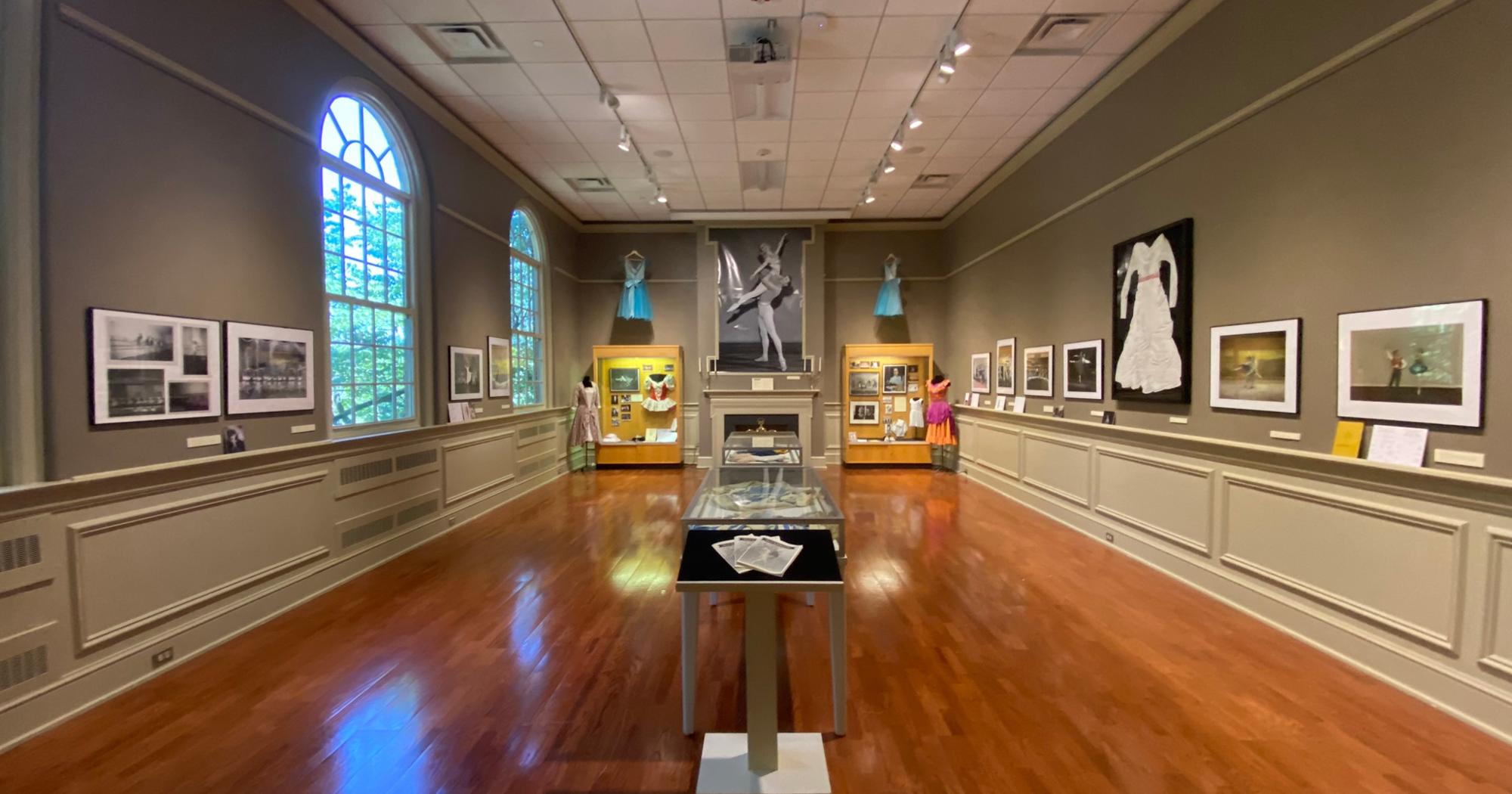
The exhibition, curated by Bristol Ballet's Moira Frazier Ostrander and Amanda Hairston is made possible through the support and collaboration of the Archives of Appalachia, Bristol Ballet, and the Reece Museum.
Tennessee Music Pathways connects you to the people, places and genres that make Tennessee the Soundtrack of America. From the largest cities to the smallest communities, this state-wide program identifies, explains, and preserves the legacy of music in Tennessee. Whether it is a story of the past, a star of the present, or the promise of the future, Tennessee Music Pathways let you follow the music. It’s an experience that can only be Made in Tennessee.
-
Tune in on My Memories: The Work and Play of Richard Blaustein (April 2022 - June 30, 2023)
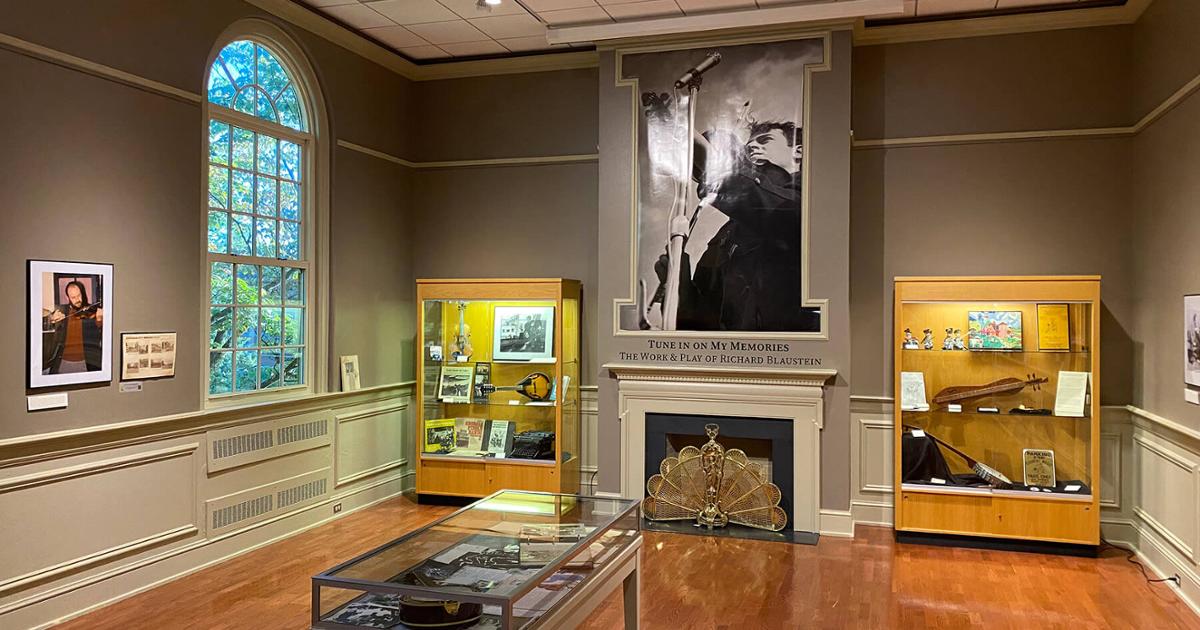
In collaboration with the Archives of Appalachia, Bluegrass, Old-Time, and Roots Music Studies, and the Blaustein family, the Reece Museum presents Tune in on My Memories: The Work and Play of Richard Blaustein, a Tennessee Music Pathways exhibition. The physical exhibition was on display from April 2022 through June 2023. Please enjoy this online version of Tune in on My Memories below.
Watch Gallery Walkthrough with Roy Andrade.
Tune in on My Memories is curated by Roy Andrade, ETSU professor and director of Old-Time Music Studies, with Reece staff. Comprised of audio and video of Blaustein'ss music, instruments, photographs, scholarly work, original art, and museum artifacts. The exhibition celebrates the life of Dr. Blaustein, a consummate old-time musician, ETSU anthropology professor, and first director of the Center of Excellence for Appalachian Studies and Services at ETSU.
 As a young man, Dr. Richard Blaustein fell in love with the music and culture of rural
America — he said he related to country people more than he did his Brooklyn neighbors.
In 1972 he relocated to East Tennessee and began his career at ETSU in Sociology and
Anthropology. Over the years he touched the lives of many with his passion and humor,
intellect and imagination, and gentle spirit.
As a young man, Dr. Richard Blaustein fell in love with the music and culture of rural
America — he said he related to country people more than he did his Brooklyn neighbors.
In 1972 he relocated to East Tennessee and began his career at ETSU in Sociology and
Anthropology. Over the years he touched the lives of many with his passion and humor,
intellect and imagination, and gentle spirit. 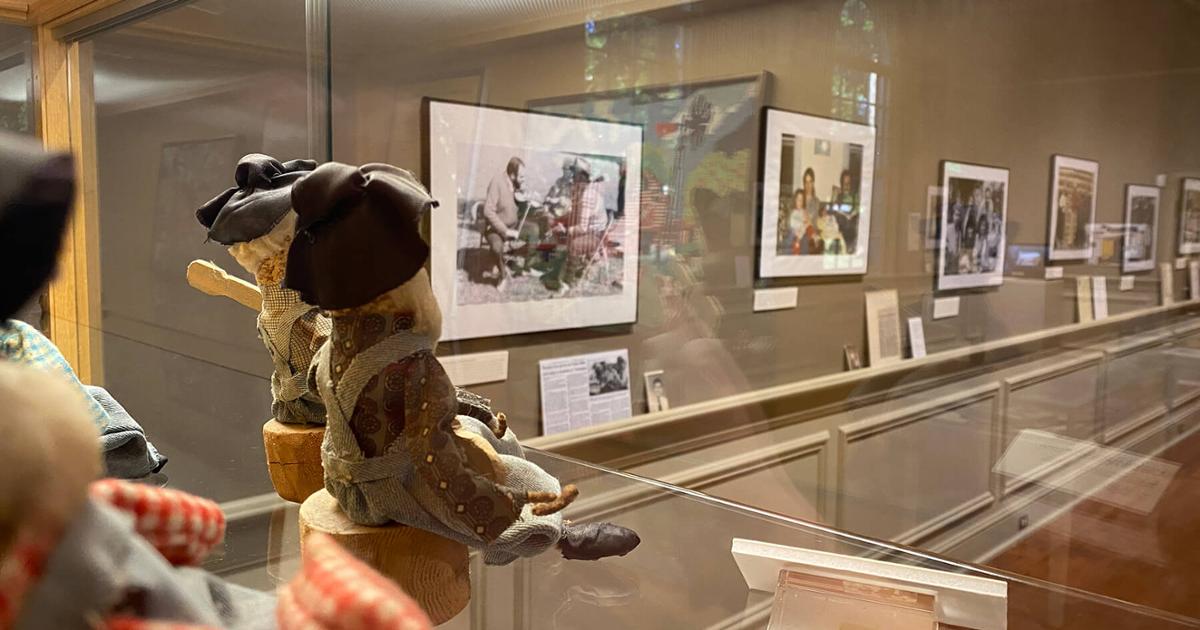
Richard Blaustein saw all folk music as connected and was not concerned with labels. He thought of his own music as "country" music. Coming of age during the 1960s folk revival in New York City, Blaustein spent time with the New Lost City Ramblers, Bob Dylan, David Grisman, and many others. His education in folk culture led him through Bloomington, Indiana, where he made meaningful connections before settling here in East Tennessee. The music presented here captures his gentle spirit, intelligence, and soulfulness as a musician. It is only a sampling of his many musical endeavors, from jug band music to songs he wrote for a theater production. However, professional musical pursuits were an aside for him. As his friends all know, he was most comfortable in a living room or on a porch somewhere, laughing and playing music.
Richard Blaustein realized the importance and power of video just as the new medium was becoming available outside of professional studios. Inspired by the groundbreaking work of fellow professors Thomas Burton and Ambrose Manning, he wrote grants, procured equipment, and went to great lengths to use video to document local music culture. Like Burton and Manning, he involved his students in the new technology. His folklore students learned to operate the equipment and were tasked with documenting their fieldwork experiences on video. He also used video to capture the various events he organized and participated in. Blaustein’s video recordings, audio recordings, and papers now reside in the Archives of Appalachia at East Tennessee State University and are available to the public.
A Central Figure in Establishing Appalachian Studies at ETSU: While numerous people played a role in developing Appalachian studies at ETSU, none was more influential than Richard Blaustein. In the late 1970s, Richard was the lead author on a prospectus for a proposed Institute for Appalachian Affairs. The mission of the institute was to coordinate a comprehensive program of preservation, education, and research about the Appalachian region. Significantly, Richard stressed that the Institute would always remain focused on the region and its residents: “In its efforts to implement programs and projects to educate, inform, and advise, the Institute utilizes all local resources as possible to fully take advantage of the area’s greatest asset—the individuals that make up the Appalachian culture.” The Institute was formed in 1978.
In the early 1980s, Governor Lamar Alexander announced the creation of Tennessee Centers of Excellence, funded by the Tennessee Higher Education Commission THECC). Richard led the way with a proposal to combine the Institute, the Archives of Appalachia, and the Reece Museum into a leading regional center and in 1984 the ETSU Center of Excellence for Appalachian Studies and Services was established. Richard served as the founding director of the Center into the 1990s. Under his leadership, the Center expanded its programming, outreach, and research, and founded Now and Then: The Appalachian Magazine. Richard’s expertise in old-time and folk music played a major role in his work and led to a longstanding and fruitful partnership with Jack Tottle and the fledgling Bluegrass program.
Richard Blaustein’s legacy lives on in today’s Department of Appalachian Studies, which now includes not only the Center of Excellence, but also the renowned undergraduate program in Bluegrass, Old-Time, and Roots Music Studies, a range of undergraduate minors, and thriving graduate programs in Appalachian Studies and Heritage Interpretation and Museum Studies. Graduates of the program have gone on to successful careers in music, museum and heritage site administration, non-profit administration, education, and many other fields, and will make an impact for years to come.
Dr. Ron Roach,Director, Center of Excellence for Appalachian Studies and Services, February, 2022
Blaustein as an Organizer: Held from 1979 to 1986 in Jonesborough, the Old-Time Country Radio Reunion was conceived by Blaustein as a celebration of local musicians who performed on country music radio during its formative years. The festival was dear to Blaustein and he put much energy into the organizing. Featured musicians included the Roan Mountain Hill toppers, Ralph Mayo, George Simerly, the Bailes Brothers, Wade Mainer, Clint Howard, the Powers Family, and others.
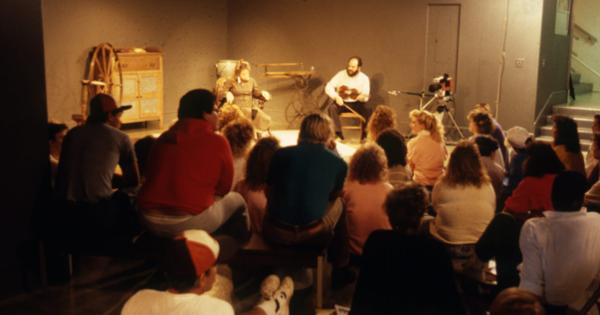
Homefolks Festival: The Homefolks Festival was a tradition at ETSU dating back to 1963. Top bluegrass and old-time groups performed at the festival, including Flatt & Scruggs, Doc Watson, Clarence Ashley, and Albert Hash, among many others. In the early 1970s the festival languished, but was revived by Blaustein in 1985.
The Southern Appalachian Video Ethnography Series (SAVES): SAVES was an initiative that Blaustein undertook in the early 1970s to document music and folkways of the Southern Appalachian Mountains. In cooperation with Johnson City’s Broadside TV (with which Blaustein was also heavily involved), and with support from the National Endowment for the Arts and the Tennessee Arts Commission, SAVES was launched in 1974. Blaustein used the new outlet in the classroom, and inspired his anthropology students to conduct fieldwork of their own under his philosophy of “each one, teach one.” He and his students documented and preserved an important body of folklife, including the footage and interviews for the Thomas Burton film They Shall Take Up Serpents.
Click Here to view Blaustein discussing and demonstrating ballad singing.
Click Here to view Blaustein in the classroom in 1978. (Starts at 31:00)
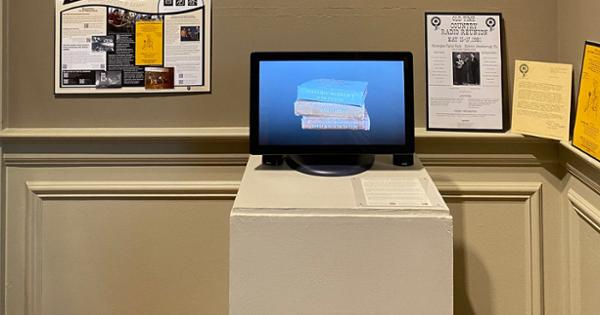
Interactive Music Kiosk: The kiosk, still physically accessible in the Museum's Multi-Purpose Room, features three digital books created by ETSU faculty members Roy Andrade and Lee Bidgood. The bottom book, The Early History of Country Music in the Tri-Cities, was developed by Andrade from a script and slideshow written for the classroom in 1982 by Richard Blaustein and esteemed country music scholar Charles Wolfe as part of the Appalachian Outreach Program, an initiative of ETSU’s Archives of Appalachia. The kiosk version of the slideshow is separated into chapters and augmented by photos and video from the Archives. Several videos feature Blaustein in performance and in the classroom.
Funding for the script came from the National Endowment for the Humanities. Ongoing installments to the kiosk project were made possible with support from other funding partners, including the Tennessee Film, Entertainment and Music Commission; the Tennessee Higher Education Commission; ETSU’s College of Arts and Sciences and Department of Literature and Language; and the Center of Excellence for Appalachian Studies and Services.
The kiosk was unveiled at the Reece Museum in 2007, featuring the first installment, The Early History of Country Music in the Tri-Cities. In 2010, My Ballad Book was added, followed by Country Music and Community in the Tri-Cities in 2013.
The kiosk project represents an ongoing examination of the rich musical culture of Southern Appalachia and more specifically, the development of traditional music and folkways in the Tri-Cities region. Each kiosk installment draws heavily on material from the Archives of Appalachia, the Reece Museum’s sister unit in the Center.
Learn more about the original script and background information for Country Music in the Tri-Cities.
View the Country Music in the Tri-Cities slideshow tape in its entirety.
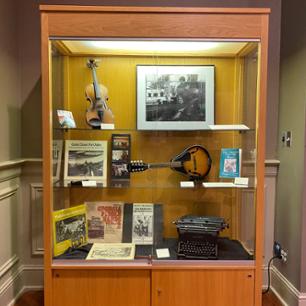
The Story Behind the Pathways: Tennessee Music Pathways connects you to the people, places and genres that make Tennessee the Soundtrack of America. From the largest cities to the smallest communities, this state-wide program identifies, explains, and preserves the legacy of music in Tennessee. Whether it is a story of the past, a star of the present, or the promise of the future, Tennessee Music Pathways let you follow the music. It’s an experience that can only be Made in Tennessee.
Tune in on My Memories is made possible through the support and collaboration of ETSU’s Archives of Appalachia, Bluegrass, Old-Time & Roots Music Studies, and the Blaustein family.
The Reece Museum is a unit of the Center of Excellence for Appalachian Studies and Services, which is housed in the ETSU Department of Appalachian Studies. The Reece Museum is located on the campus of East Tennessee State University and is open Monday through Friday, 9 a.m. to 4:30 p.m. For more information, please phone (423) 439-4392. ETSU is an AA/EEO employer.