-
Plan ahead
Let your parents know what your holiday plans are before you arrive at home. Give fair warning about how often you plan to be away from home. Expect to make compromises in order to meet your parent’s reasonable expectations for family time. You may need to negotiate in order to accommodate everyone's needs. But make sure to leave room for activities that are important to you! -
Find Joy
Control what you can control. No one can touch your thoughts, so think what you want, laugh to yourself and give yourself tremendous amounts of compassion as you navigate your complicated family landscape.
Look for joyful moments. Toss out all notions of achieving perfection, but try to create moments that are special to you. Maybe that is sitting in front of the fire in cozy winter socks sipping eggnog when everyone has left. Or just enjoy the simplicity of your family members’ presence without expecting a lot.
-
Be mindful of family drama.
If your home life is particularly stressful or dysfunctional, be realistic about ongoing problems when you return home. Avoid hot topics. Beware of relationship triangles—when one family member wants to draw you into the drama of another. Focus on common interests and activities instead.
It may help to stay in touch with some of your college friends. If necessary take a time out from difficult family members, or make plans to stay somewhere else and visit your family during the day.
-
Recognize that change happens.
Be open to new things in yourself and at home. Change creates both opportunities and challenges. Some families have a harder time adjusting to change, and some conflict is normal.
-
Maintain your health.
Don’t neglect self care. Overeating and drinking, together with changes in your daily schedule and sleep routine can leave you feeling irritable, depressed and moody. After a sugar high from all the holiday treats, you should expect a crash. This is predictable. Try to avoid overindulging if you can.
Remember that you have a right to be healthier than those around you. Maintain your personal wellness goals by planning in advance to avoid relapse.
-
Don’t be surprised by the Holiday Blues.
Some holiday crankiness is normal. It is less about the people and the situation and more about the body’s response to overstimulation. Try to focus on maintaining moderation and balance.
However, holiday stress can exacerbate preexisting mood and anxiety disorders. In addition, grief from the past often resurfaces during the holidays. Be mindful of extreme changes in your mental health.
-
Communicate
You are more independent now. Your parents, however, may still see you as a child. Make an effort to talk about what is going on in your life at school—what is exciting you; where you might be less sure of yourself. You may want to set aside additional time to talk about difficult topics: money and grades.
-
Respect household boundaries
It is still your home, but it’s your parents’ house. Respect their space. You and your parents may need to renegotiate some house rules— chores, use of the car, guests, sleeping late, etc. Work out compromises that best suit your family.
With regard to a curfew, at school you are used to being out as late as you wish. Depending on your family rules, this may not be so easy at home. Talk it over with your parents. They might agree to drop a curfew if you agree to let them know where you are.
-
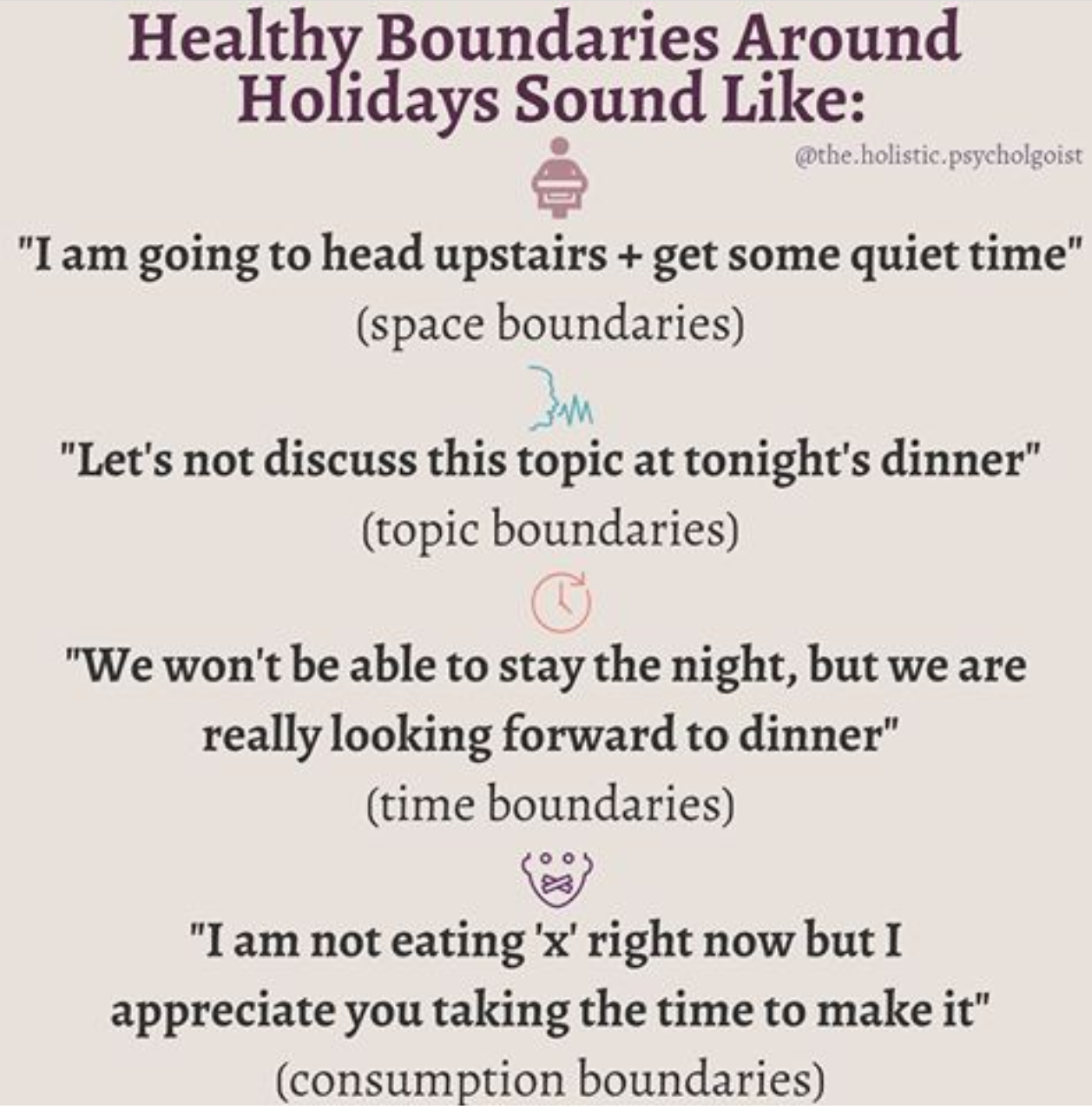
Setting Boundaries
It’s OK to say no. It’s fine to say no to some invitations and fine to say no to those asking for favors. Remember, this is your holiday too!
-
Get help if you need it
Talk to a trusted family member or friend. Call a help line. Contact a local counselor. Visit your primary care physician if necessary.
The ETSU Counseling Center remains open during break, except for official University holidays, including the week after Christmas. Contact us to make an appointment.
For more information click here