Global Health Program Overview
The Global Health Program at the Quillen College of Medicine offers electives in five countries: Cambodia, Sierra Leone, Zambia, Belize and Ecuador. We offer global health experiences for students as well as residents in all speciality areas.
Global Health Experiences Why ETSU? Make a Gift Today
Goals of the Global Health Program
- Inspire students and residents to adopt values that foster a commitment to service to people living in resource-limited, medically underserved areas.
- Provide students and residents with opportunities for service-learning in resource-limited and medically under-served settings in domestic and international settings.
- Working with local and global partners, create programs that build local capacity in clinical care and research.
Global Health Initiative in Monze, Zambia
ETSU Quillen College of Medicine's Global Health Initiative in Monze, Zambia, is a bidirectional partnership that exchanges medical knowledge and training to strengthen health care in Zambia and rural Appalachia.
-
Video Transcript: ETSU Quillen College of Medicine's Global Health Initiative in Monze, Zambia
[Speaker: Dr. Bill Block] The Quillen College of Medicine continues its mission focus on training physicians interested in rural and primary care. To expand this, we’ve added our Global Health Program.
Please enjoy this short video highlighting our efforts in Zambia. Thank you. [Speaker: Sister Joyce Miyanda] Welcome to Zambia.
[African Music]
[Speaker: Sister Joyce Miyanda] My name is Sister Joyce Miyanda This is Monze Mission Hospital.
[African Music]
[Speaker: Dr. Sufyan Ibrahim] One would know Monze Mission Hospital is located in the center of Southern Province. It's a 280 bed referral facility.
It's one of the premier institutions in the country. One of the oldest institutions in the country. It's been in existence for over 60 years now.
It's as old as this country is.
[Speaker: Sister Joyce Miyanda] Initially, it was to help mothers so that they shouldn't deliver from home, but that they should deliver from some facility.
And as we went on, we also managed to open a school that was training the midwives so that we could have enough human resources to attend to the mothers.
[Speaker: Dr. Katongo Hope Mutengo] So, right now we have the big four, as we call them, which is general medicine, internal medicine, surgery, obstetrics and gynecology, and pediatrics.
These are our four main clinical areas, but I would want us to expand more into the subspecialties.
We have internal medicine, which I'm passionate about, but I would want us to have specialties like a cardiology section, a rheumatology section.
[Speaker: Sister Joyce Miyanda] It is very busy. First, the population that we cover is actually very huge.
We cover about 800,000. For the ETSU people, the benefit that they get is that they come to learn on how to work in an environment that has a huge disease burden, but with very little resources.
[Speaker: Dr. Luther Ward] The Global Health Initiative at ETSU is designed to create benefits for both sides of the relationship.
On the host country side, we look for hospitals that are number one teaching hospitals. Number two are high volume hospitals.
And number three have subsidized patient care.
One of those hospitals is Monze Hospital, which is where we're at right now On the ETSU side, what we're looking to do is to create a couple different levels of training that goes from medical student all the way up to fellow.
[Speaker: Dr. Brad Feltis] First and foremost, we aim to achieve a bi-directional sharing of information. This initiative at the Quillen College of Medicine.
This international global initiative is so important to expose students at an earlier and earlier time in their training so they can see
just the high level quality of care that can be delivered in a resource limited environment. [Speaker: Ashli Black] We are going to the O.R.
to the operating theater to do a pediatrics case with Dr. Feltis and Dr. Bowder, and I am so excited to get to go to the theater with them.
So, one of the things you learn in an environment such as this one, where resources are not always readily available, you don't always have running water.
So, one of the ways that they've kind of remedied that is by coming up with inventions such as these.
So, this is hand welded by somebody here in Monze. And so we have our water tank. I'll push on this to release the water.
For the soap, you step here. Dispenses the soap. And then you can scrub as normally.
[Speaker: Dr. Brad Feltis] People in developed countries, especially in wealthy countries, could learn so much about cost containment, about cost control, about having amazing outcomes
without running everyone through $1 million worth of tests before you even come up with a diagnosis and treatment plan.
[Speaker: Dr. Katongo Hope Mutengo] So, once they come here, they are not going to run short of complex medical decision, and they are going to learn how to make instant decisions.
But once you come to a resource limited setting, you have to find that it's very pragmatic.
So, you have to see what's on the ground, what do you have, what adjustments you need to do. So, they will be exposed to that.
[Speaker: Sister Joyce Miyanda] They learn a lot of diseases that maybe they just read in books and yet come here and find them in reality.
[Speaker: Dr. Brad Feltis] The ETSU Global Health Initiative has been very successful in placing surgeons, surgical trainees, medical students interested in surgery with our colleagues at the Monze hospital.
What we're hoping to do is expand that to all of the other specialties, particularly primary care, family practice, pediatrics, obstetrics and gynecology, internal medicine.
[Speaker: Dr. Deidre Pierce] Sending the students, fellows, residents.
Even in internal medicine, which is what I can speak to the most here in a low resource environment, teaches you to use the physical exam skills.
It also teaches you to look at certain formularies and things that are low cost alternatives.
And so, it just hammers home the underserved approach to medicine. [Speaker: Dr. Dawn Tuell] The NICU here doesn't have any ventilators.
Our colleagues here are relying on their clinical skills. They’re relying on limited blood work, and they are still providing excellent care.
[Speaker: Dr. Jason Moore] Opportunities in global health go hand in hand with people who want to serve in rural Appalachia. That translates beyond boundaries and beyond borders.
So, the same people that we want to serve in rural Appalachia, have a heart to serve elsewhere as well.
[Speaker: Ashli Black] When you send students here. When you send teams here. That care and that education and that that learning experience directly translates to the care you’re getting back home.
[Speaker: Dr. Luther Ward] The fellow will spend a year living here, and they will start to understand the reasons for the disparities between health care in some of these poorer health care systems compared to America.
When those fellows return back to America, they will have an ability to go to where there's a disparity health care in America, which means they can go to rural America,
and they can make huge differences in rural hospitals and help give health care to places where there aren’t very many physicians. So, it helps fill the need in America as well as a need here.
[Speaker: Dr. Christy Lawson] The mission of the Quillen College of Medicine has always been and will always be, to serve the rural population of Appalachia and Upper East Tennessee.
The Global Health Initiative will provide unique ability to do that.
Students and residents and fellows who come here and immerse themselves in this hospital system will go back better able to render quality care to underserved populations
by using limited resources, being cost conscious physicians, and better providers to deliver compassionate care to a wide range of people groups.
[Speaker: Dr. Sufyan Ibrahim] We share ideas. And, yeah, in the end, it makes whatever we do, you know, more holistic and better for the people that we attend to.
So yeah, we are very grateful to East Tennessee State University, Quillen Medical School for, you know, taking the time, the effort and the resources to make this thing happen.
We're happy that it’s happened, and we're hoping that it’s going to culminate into something more substantial and tangible
with a long term objective, that this is going to benefit the patients that we're going to see.
Contact Us
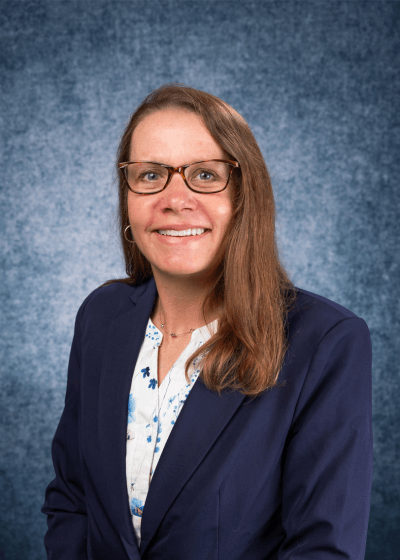
Lisa Ward, ScD, MSPH
Director of Program Operations
Email: WardLP@etsu.edu
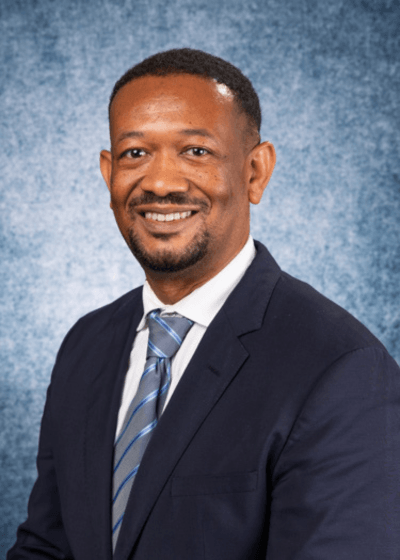
Michelson Padovany, MD, MMSc-GHD
Medical Director
Global Health Program
Email: Padovany@etsu.edu
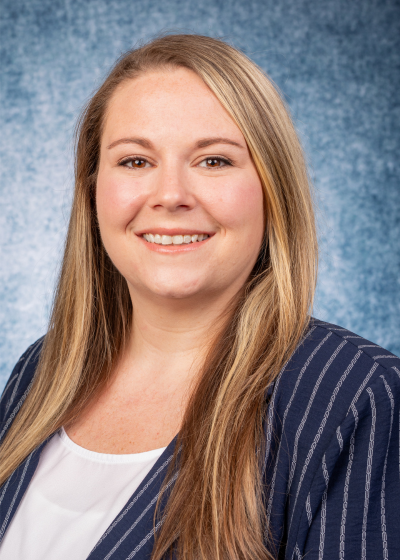
Valerie Suiter
Global Health Coordinator
Email: SuiterV@etsu.edu